Summary

  1. Trump says Israel-Lebanon ceasefire extended by three weekspublished at 22:24 BST 23 April
    Breaking

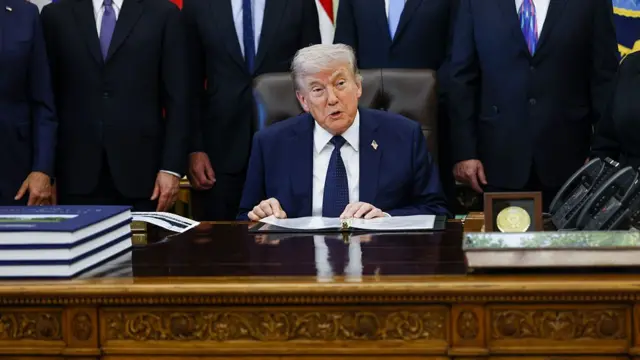
    US President Donald Trump has announced that the Israel-Lebanon ceasefire has been extended by three weeks.

    In a post on Truth Social he says it follows a meeting between Israeli and Lebanese officials in the Oval Office.
  2. Another US aircraft carrier nears Middle Eastpublished at 22:14 BST 23 April

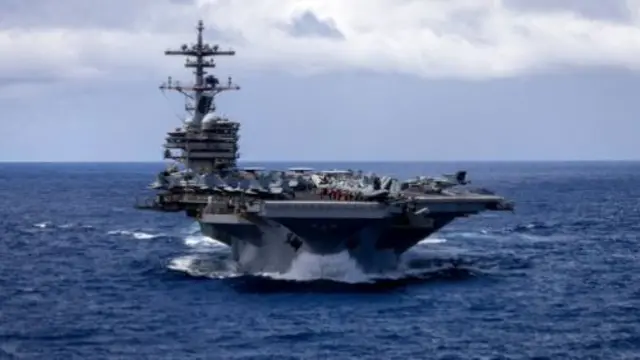
    big military aircraft carrier ship sailing in blue oceanImage source, US Central Command

    American aircraft carrier USS George HW Bush is nearing the Middle East and has entered US Central Command's area of responsibility, the command says.

    Centcom shared a picture on X showing the Nimitz-class supercarrier sailing in the Indian Ocean today.

    It's not clear if the carrier will be joining existing ships in the region, or coming to replace one, as some media have reported.

    The world's largest aircraft carrier, the USS Gerald R Ford, "continues to operate in the Red Sea, supporting maritime security in US 5th Fleet", Centcom said earlier today.

  3. Iranian commander is latest official to tout Iran's unity after Trump's 'infighting' claimspublished at 21:55 BST 23 April

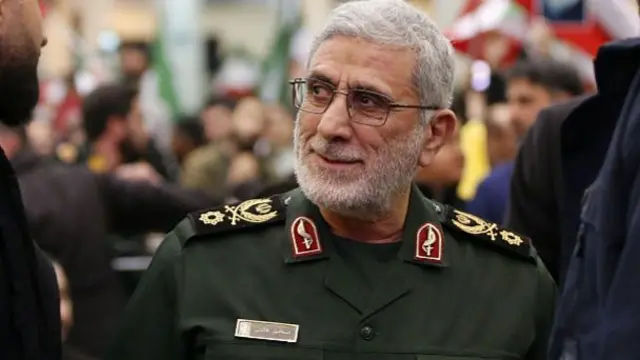
    Quds Force Commander Esmail Qaani commemorates Iranian Revolutionary Guards Corps (IRGC) Lieutenant General and Commander of the Quds Force Qasem Soleimani, during a ceremony marking the 6th anniversary of his death, at the Mosallah Mosque in Tehran, Iran, on January 01, 2026Image source, Getty Images

    Esmail Qaani, commander of Iran's Islamic Revolutionary Guard Corps (IRGC)'s Quds Force, has become the latest Iranian official to back Iran's "unity" after "infighting" claims from US President Trump.

    In a message posted on social media, Qaani says the "backbone" of Iran's fighters is the "unity of the streets and the cohesion of officials".

    "With the ironclad unity of the nation and government, and by fully obeying the supreme leader, we will make the criminal aggressor regret it," the statement reads.

    It follows earlier unity-forward statements from Iran's president, foreign minister and parliamentary speaker.

  4. What happened when BBC's Sarah Smith cold-called the US president?published at 21:44 BST 23 April

    In this episode of BBC's Americast, North America editor Sarah Smith and correspondent Anthony Zurcher thoroughly unpack Smith's phone call with Donald Trump, how she planned the interview, and what happened when the US president unexpectedly called her back.

    Smith also asks Trump about his past threat to “wipe out” an entire civilisation in Iran. Press play below to listen.

    Media caption,

    The president talks to Americast’s Sarah Smith about Starmer, the King and Iran.

  5. Trump says he will not use a nuclear weapon in Iranpublished at 21:28 BST 23 April

    Trump says he will not use a nuclear weapon in Iran saying that US has achieved its military aims in a conventional way.

    "Why would I need it?" Trump says when asked by a reporter if he would use a nuclear weapon in Iran, describing the question as "stupid".

    He adds: "Why would I use a nuclear weapon when we have totally - in a conventional way decimated them without it?"

    "A nuclear weapon should never be allowed to be used by anybody."

    The president took a number of other questions on other topics before the press was ushered out of the Oval Office.

  6. More expensive petrol is price for nuclear-free Iran, says Trumppublished at 21:20 BST 23 April

    Trump is asked if Americans should plan on spending more on gas for the foreseeable future.

    The president doesn't directly answer the question, responding: "And you know what they get for that? You know they get for that? Iran without a nuclear weapon that's going to try and blow up one of our cities, or blow up the entire Middle East."

    He then pivots to talking about the stock market, before turning back to the price of oil.

    "I thought oil would go up to maybe $200 a barrel, and oil is a very different number than anyone thought," he says. "In fact, this country is much lower because we have all the oil we can use."

    Trump adds that ships from all over the world are now coming to the US to get oil.

  7. Trump says he wants to make the best deal with Iranpublished at 21:13 BST 23 April

    Donald TrumpImage source, Gett

    President Trump says he is under no pressure to end the conflict and that he wants to make the best deal with Iran.

    He says the US has "total control" of the Strait of Hormuz and when Iran makes a deal, the vital shipping lane will open up, adding that he does not want Iran to make hundreds of millions of dollars in oil sales during the ceasefire.

    "I don't want them to make $500 million a day until they settle this thing," he says. "I'm the one that kept it closed... If they don't want to make a deal, then I will finish [the war] up militarily."

    "I don't want to rush myself," he says.

  8. Trump takes questions on Iranpublished at 21:12 BST 23 April

    At an event focused on healthcare, President Trump is now taking questions from the media.

    The president is asked about the timeframe of the war, and he repeats many of his past talking points about the Iranian regime and the conflict so far.

    He says the US has taken out 75% of its targets, but has stopped for the ceasefire. The US naval blockade of Iranian ports, he adds, is 100% effective.

    With the extended ceasefire, the US is giving the Iranians extra time to sort out their internal "turmoil", he says.

  9. Contact with Netanyahu 'never on the table', says Lebanese president ahead of peace talkspublished at 20:44 BST 23 April

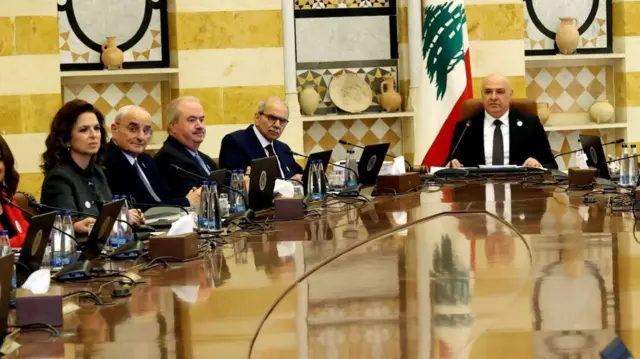
    President Aoun sitting at the head of the Labense cabinet tableImage source, Lebanese President's Office

    Lebanon's President Joseph Aoun says contact between himself and Israeli Prime Minister Benjamin Netanyahu was "never on the table" ahead of further peace talks between the two nations which are set to begin soon at the White House.

    Speaking to cabinet minister in Lebanon, Aoun says this second round of talks will focus on stopping the "destruction of homes" and "attacks on civilians", with Lebanon also looking to address ceasefire "breaches".

    "This is what Lebanon’s Ambassador to the United States, Nada Hamadeh Moawad, will carry to the meeting, and she will do everything in her power to secure these items," says Aoun.

    If things "proceed as they should" Aoun says he hopes to be able to visit Washington to brief the US president in person on the situation in Lebanon.

  10. Iran's central bank confirms deposit of Strait of Hormuz toll, Iranian media reportspublished at 20:23 BST 23 April

    Iran's central bank says it has received the deposit from a toll levied by Iran on shipping in the Strait of Hormuz, according Iran's Fars news agency, which is affiliated with Iran's Islamic Revolutionary Guard Corps (IRGC).

    It follows Iran's deputy parliament speaker, Hamidreza Haji Babaei, earlier stating the first toll revenue had been deposited into the central bank.

    Fars reports, citing the bank, that the deposit was made in "cash". It's not known who paid the toll - or how much it was.

    US President Donald Trump has previously threatened to target any ships that paid a toll to Iran for using the strait.

  11. Trump addresses dismissal of US Navy Secretary on social mediapublished at 20:04 BST 23 April

    Bernd Debusmann Jr
    White House reporter

    For the first time, Trump has addressed yesterday's removal of US Navy Secretary John Phelan - a move which as a surprise to many at a time in which US naval forces are heavily committed to the conflict with Iran and subsequent blockade.

    In a social media post, Trump said that Phelan - a long-time ally - did an "outstanding job" in the role.

    The president noted that he "decided to move on" from the position - a stark difference from US media reporting which suggested that he was forced out, or sacked.

    The position of Secretary of the Navy is purely an administrative one, rather than an operational one.

    In practice, this means that the impact of Phelan's departure on naval operations in the Persian Gulf and Strait of Hormuz is minimal.

    Despite that, Phelan's departure - and the total lack of official information on what led to it - has raised eyebrows among many former defence insiders and critics of President Trump's.

  12. Trump to host Oval Office event shortlypublished at 19:49 BST 23 April

    Morgan Gisholt Minard
    Reporting from the White House

    I’m at the White House where the president will shortly invite us, the White House pool reporters and cameras, into the Oval Office for an event with representatives from pharmaceutical company Regeneron.

    President Trump hasn’t spoken to the press pool in two days - in fact, not since he announced he was extending the ceasefire with Iran via Truth Social on Tuesday evening.

    Trump has appeared in person for a sports-related ceremony since that announcement, but he did not mention the conflict in the Middle East.

    Healthcare is a top issue for voters, especially ahead of the midterm elections - something President Trump has been keen to offer cost-savings on for Americans.

    But the crisis in Iran, with deepening financial impacts both here and abroad, will continue to dominate any public events he does have - we’ll see if he takes questions today.

  13. 'The clock is ticking' for Iran, Trump says in new postpublished at 19:42 BST 23 April

    President Donald Trump has just posted on Truth Social.

    He says he disputes media reports that he is "anxious" to end the war.

    "I have all the time in the World, but Iran doesn’t — The clock is ticking!" he writes.

    He continues: "A Deal will only be made when it’s appropriate and good for the United States of America, our Allies and, in fact, the rest of the World."

  14. Trump to greet Lebanese, Israeli envoys at the White Housepublished at 19:36 BST 23 April

    Bernd Debusmann Jr
    White House reporter

    A US official has confirmed that President Trump will meet Lebanese and Israeli envoys at the White House shortly, an important meeting that the administration hopes will result in, at the least, an extension of the ceasefire between the two countries.

    The White House has repeatedly said that it views any ceasefire between Israel and Lebanon as separate from the Iran conflict. Iran, on the other hand, has suggested that it views Lebanon as a key part of any negotiated settlement.

    The fact that the meeting was moved to the White House at the last minute could be a sign of the importance that the administration has given the second-round of talks. The president's presence, even in passing, was not previously anticipated.

    Trump has already pointed to the ceasefire between the two as what he claims is the 10th war he has ended, a widely disputed figure.

    It is also unclear what will come of the meeting, given Hezbollah's anger it is taking place and the fact that the IDF continues to occupy parts of southern Lebanon.

    Any positive steps in the right direction, however, are likely to be lauded as a victory by the Trump administration at a time in which it is unclear when its own next talks with Iran will take place, or how long the ceasefire will last.

  15. Israel-Lebanon ceasefire talks coming to White Housepublished at 19:29 BST 23 April

    Tom Bateman
    US State Department correspondent

    The second round of direct talks between Lebanon and Israel are due to start in the next couple hours here in Washington.

    The ambassador-level talks aim to extend a 10-day ceasefire that was first agreed last week.

    The new round of talks were due to take place here at the State Department, but I’ve just heard they are now moving to the White House, with a US official saying Trump will greet the two countries’ ambassadors on arrival.

    As far as I can tell the venue change is more to do with logistics than any particular sign of hopes for the talks' longer term prospects, about which many in the region are pessimistic.

    The discussions don't involve Hezbollah but are still extremely rare as Israel and Lebanon have never had formal relations.

    They will be between the Lebanese and Israeli ambassadors to the US - Nada Hamadeh Moawad and Yechiel Leiter, respectively - and will be mediated by the US ambassador to Lebanon, Michel Issa. Secretary of State Marco Rubio's likely to be there for the top of the meeting.

  16. Iran's foreign minister touts 'iron unity' in countrypublished at 19:15 BST 23 April

    Iran's Foreign Minister Abbas Araghchi says Iranian's are "united, more than ever before" in a statement posted on X.

    It follows a similar joint statement posted a few moment prior by Iran's president and top negotiator, in which they described Iran's "iron unity".

    Earlier US President Trump said Iranian's "don't know" who their leader is due to "infighting" within the country.

    In his statement, Araghchi says Iran's "state institutions continue to act with unity, purpose, and discipline".

    "The battlefield and diplomacy are fully coordinated fronts in the same war. Iranians are all united, more than ever before," it reads.

  17. Air defences heard firing in Tehranpublished at 19:00 BST 23 April
    Breaking

    Iranian media has reported the sound of air defence systems firing in the capital, Tehran.

    Iran's state news agency IRNA says "anti-aircraft gunfire" has been reported in both west and east Tehran. And, the Islamic Revolutionary Guard Corps (IRGC)-affiliated Mehr news agency reports: "Air defence systems were heard in parts of Tehran to counter hostile targets."

    The BBC has also spoken to people in Tehran who have described hearing what they believe to be air defences.

    It's not clear what the situation is yet, but we'll provide more information as soon as we have it.

  18. Top Iranian figures speak of 'iron unity' after Trump's claims of infightingpublished at 18:42 BST 23 April

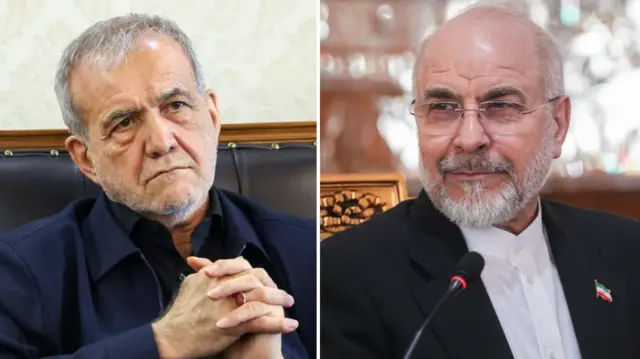
    Composite image of  Pezeshkian and GhalibafImage source, Getty Images

    Iran's President Masoud Pezeshkian and top negotiator Mohammad Bagher Ghalibaf say there "are no radicals or moderates" in Iran hours after Donald Trump claimed the country's leadership was embroiled in factional infighting.

    Earlier, Trump posted on Truth Social Iran was "having a very hard time figuring out who their leader is".

    "They just don’t know!" wrote Trump, claiming there is "CRAZY!" infighting in the country between "hardliners" and "moderates".

    Pezeshkian and Ghalibaf - who is also the Iranian parliament's speaker - say there "are no radicals or moderates" in Iran.

    "We are all 'Iranian' and 'revolutionary,' and with the iron unity of the nation and government, with complete obedience to the Supreme Leader," the statement reads.

    "We will make the aggressor criminal regret his actions."

  19. Thousands join funeral held for Lebanese journalist killed by Israeli strikepublished at 18:09 BST 23 April

    Hugo Bachega
    Middle East correspondent, reporting from Lebanon

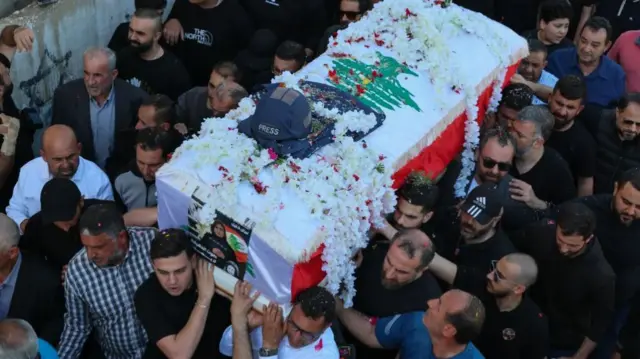
    A group of mourners carry a coffin draped with the Lebanese flag, and a press helmet and jacket.Image source, EPA/SHUTTERSTOCK

    Amal Khalil’s casket, wrapped with the Lebanese flag, was taken through the narrow streets of her village, together with her blue helmet and flak jacket, which had the word press written on it. From the roofs and balconies of houses, women in black threw flowers, as journalists mourned the loss of another colleague killed by Israel.

    Thousands joined the funeral in Baisariyeh, in southern Lebanon, carrying posters with her smiling face, chanting prayers, and crying. Gunfire and fireworks celebrated her life.

    Lebanese officials say Khalil was deliberately targeted by Israel while seeking shelter after an earlier air strike in southern Lebanon yesterday, and that the Israeli military then intentionally targeted an ambulance, preventing it from reaching her. Israel denies this, and says it does not target journalists and that it is reviewing the case.

    The Committee to Protect Journalists says Israel has killed at least seven other reporters in Lebanon during this war, and dozens more before both here and in Gaza.

    Khalil’s friends and colleagues are calling for an investigation, knowing that there has not been justice for journalists killed by Israel in Lebanon in the past.

    “Amal was a special journalist. We feel the injustice that has been documented in all this targeting of journalists,” Elsy Moufarrej, the head of the journalists’ union in Lebanon, told me. “We’re still pursuing justice but so far haven’t had it yet.”

    After a final round of applause, Amal Khalil’s body was buried in the land she loved - the land where an Israeli strike killed her.

  20. Israel awaiting US green light to return Iran to the 'stone ages' - defence ministerpublished at 17:46 BST 23 April
    Breaking

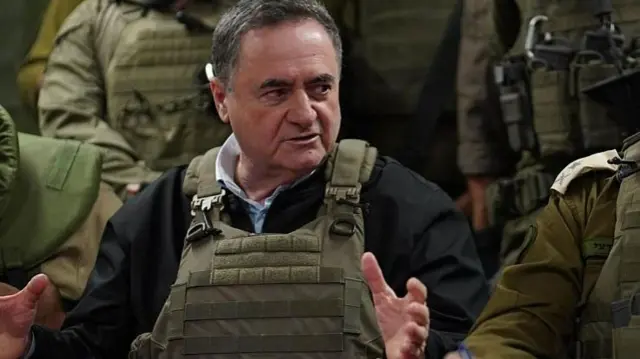
    Israel Katz is pictured wearing a khaki military vest and dark jacket. He is gesturing with his hands and looking off-camera.Image source, Getty Images

    Israel's defence minister says his country is prepared to renew its war against Iran and return it "to the dark and stone ages".

    Israel Katz says the Israeli military is "waiting for the green light from the US - first and foremost to complete the elimination of the Khamenei dynasty" (Iran's Supreme Leader, Ayatollah Ali Khamenei, was killed by US-Israeli strikes on the first day of the war).

    He also threatens to return "Iran to the dark and stone ages" by attacking energy and economic infrastructure.

    "The attack this time will be different and deadly and will add devastating blows in the most painful places - that will shake and collapse its foundations," Katz says.

    It echoes a threat earlier in April from US President Donald Trump, who pledged to bomb Iran "back to the Stone Ages" unless it reached an "acceptable" deal to end the war.