Summary

  1. Iranian leadership sends message aimed at conveying unitypublished at 09:40 BST 24 April
    Lyse Doucet
    Chief international correspondent, in Iran

    President Trump is aiming his social media fire at Iran’s new leaders, describing them as “in turmoil” and “seriously fractured".

    Here in Tehran, just past midnight, a text was sent on local Iranian mobile networks to all their subscribers.

    It was called a “common message” from the president, parliamentary speaker, head of the judiciary, and other high-ranking officials, in response to President Trump’s efforts to “sow discord”.

    “There’s no such thing as hardliners or moderates in Iran,” the text read. “We are all Iranian and revolutionary…one nation, one course.”

    Over the past week, some signs of disagreement on smaller tactical issues did play out on Iranian media linked to different institutions including the Islamic Revolutionary Guard Corps (IRGC).

    And we’ve met both supporters and critics of Iran’s leadership here.

    This text was meant to convey that at the top, on major decisions which matter in negotiations with the US, consensus prevails.

    That’s an assessment shared by many Iran watchers about the system which has emerged through weeks of war and the assassination of senior clerics and commanders.

    There are many decision makers now. Some are seen as more pragmatic, others more hardline.

    But their red lines on issues from the nuclear programme to the Strait of Hormuz are clear.

    The BBC's chief international correspondent Lyse Doucet is reporting from Tehran on condition that none of her material is used on the BBC's Persian Service. These restrictions apply to all international media organisations operating in Iran.
  2. Ceasefire extension will help people 'get going with their lives' - Lebanese MPpublished at 09:12 BST 24 April

    The Israel-Lebanon ceasefire extension has been praised by Lebanese MP Najat Saliba. She says people in Lebanon will now have a chance to restore their lives to a semblance of normality.

    "Everybody is relieved that the ceasefire is going to continue for another three weeks,” she tells Newsday on the BBC World Service.

    “This is going to help a lot of people go back to their homes, check out their homes and get going with their lives."

    When asked about how the Iran-backed Hezbollah group could respond to the ceasefire extension, Saliba says "we don't expect things to go forward very smoothly".

    But she adds the Lebanese government is "very firm about going forward with the discussion in order for us to find a common ground that will relieve the people from all the bombing and killing."

  3. EU calls for nuclear experts in Iran peace talkspublished at 08:39 BST 24 April

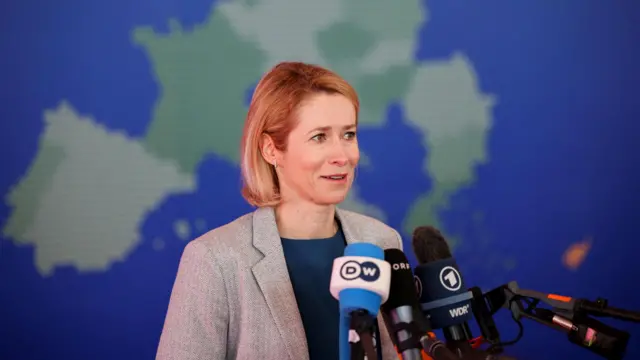
    Kaja Kallas, with short brown hair, dressed in a grey suit stood in front of a map of Europe with microphones in front of herImage source, Reuters

    Away from the Israel-Lebanon ceasefire extension, the EU’s foreign policy chief says threats from Iran could become "more dangerous" if nuclear experts are not involved in peace talks.

    Speaking at a meeting of EU leaders in Cyprus, Kaja Kallas says there is a danger that any agreement could be weaker than the Joint Comprehensive Plan of Action (JCPOA), the Iran nuclear deal agreed in 2015 during the Obama administration which President Trump withdrew from in his first term.

    Under that accord Iran agreed to limit its sensitive nuclear activities and allow in international inspectors to the country in return for the lifting of economic sanctions.

    "If the talks are only about the nuclear (programme) and there are no nuclear experts around the table, then we will end up with an agreement that is weaker than the JCPOA was," Kallas says.

    "And (if) the problems in the region, missile programmes, their support to proxies, also hybrid and cyber activities in Europe are not addressed, we will end up with a more dangerous Iran," she adds.

  4. Ceasefire was at request of Lebanese government - information ministerpublished at 08:17 BST 24 April

    A senior Lebanese minister suggests the country’s government is willing to take “substantial steps” in deploying the Lebanese army to disarm the Iran-backed Hezbollah group, but says this would require the withdrawal of Israeli forces from the country.

    Minister of Information Paul Morcos tells Newsday on the BBC World Service that the three-week ceasefire extension was at the request of the Lebanese government, with its main demand being “stopping the Israeli attacks, whether by air, by sea or by land, against Lebanon”.

    As part of the ceasefire, Beirut must take "meaningful steps" to prevent Hezbollah and all other "rogue non-state armed groups" from carrying out attacks against Israeli targets.

    Morcos says the Lebanese government has already taken “substantial steps” to deploy the Lebanese army and to work towards the military having a “monopoly of arms in Lebanon.”

    But he argues that the Israeli “occupation” and “attacks” were an “obstacle against those improvements” that he says the government was making before this war began.

    “We are willing to restart those substantial steps forward in order to deploy again the Lebanese army [to] the borders,” he says.

  5. What we know about the Israel-Lebanon ceasefirepublished at 07:41 BST 24 April

    Israel and Lebanon initially agreed to a 10-day ceasefire, which took effect on 16 April.

    Following talks between the two countries' envoys in Washington yesterday, President Trump announced it had been extended for a further three weeks.

    Here's what the agreement said, according to details provided by the US State Department when it was originally announced:

    • Israel retains its "right to take all necessary measures in self-defence, at any time, against planned, imminent, or ongoing attacks"
    • Lebanon must take "meaningful steps" to prevent Hezbollah and all other "rogue non-state armed groups" from carrying out attacks against Israeli targets
    • Those involved recognise that Lebanon's security forces have exclusive responsibility for Lebanon's security
    • Israel and Lebanon requested that the US continues to facilitate further direct talks with the objective of "resolving all remaining issues"

    The statement added that the truce was a "gesture of goodwill" by Israel intended to enable "good-faith negotiations towards a permanent security and peace agreement" between the two parties.

    The two countries do not have diplomatic relations, and before this month's talks, the last direct, high-level discussions between them took place in 1993.

  6. Hezbollah and IDF accuse each other of ceasefire violationspublished at 07:14 BST 24 April

    The Israel Defence Forces (IDF) and Hezbollah have each accused each other of ceasefire violations.

    Earlier, the IDF said it had intercepted several projectiles launched from Lebanon, with sirens sounding in the Shtula area. Hezbollah said on Telegram that it targeted the area in a rocket attack.

    In a statement on X, the IDF adds that it has killed three people it identifies as "Hezbollah terrorists" after they "unsuccessfully" launched a missile toward an Israeli Air Force aircraft.

    It adds that in two separate incidents, Hezbollah launched rockets towards IDF soldiers in southern Lebanon.

    "The actions constitute blatant violations of the ceasefire understandings," it said.

    On Thursday evening, Hezbollah said it had fired rockets at northern Israel in response to an Israeli "violation of the ceasefire".

    The Lebanese state-run National News Agency is reporting that Israel has carried out strikes in Tyre in the south of the country this morning.

  7. Israel and Lebanon leaders to visit White House after truce extensionpublished at 06:31 BST 24 April

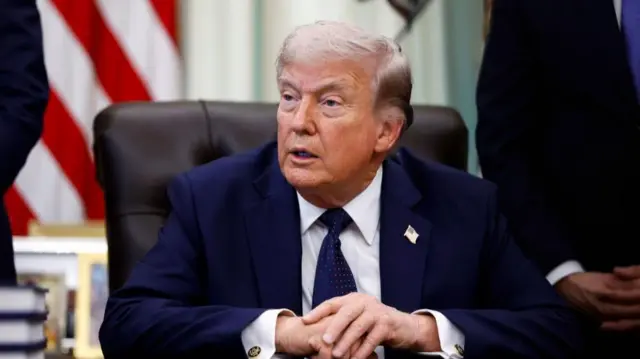
    President Trump sat behind a deskImage source, EPA

    US President Donald Trump has announced that the Israel-Lebanon ceasefire has been extended by three weeks. Here's a quick recap of developments in Washington:

    • Trump says Lebanon’s President Joseph Aoun and Israel’s Prime Minister Benjamin Netanyahu will visit the White House in the coming weeks as the US seeks to broker a longer lasting peace deal
    • Oil prices have edged higher in Asia even after the announcement of the extended Israel-Lebanon ceasefire
    • Trump says he is under no pressure to end the conflict with Iran. "I don't want to rush myself," he says, adding the US has "total control" of the Strait of Hormuz
    • Asked by the BBC about his threats towards Iran, Trump says that "whatever I’m doing, it seems to be working very well”
    • He also says he will not use a nuclear weapon in Iran, saying that US has achieved its military aims in a conventional way

  8. Journalist kidnapped in Iraq thanks those involved in her releasepublished at 05:48 BST 24 April

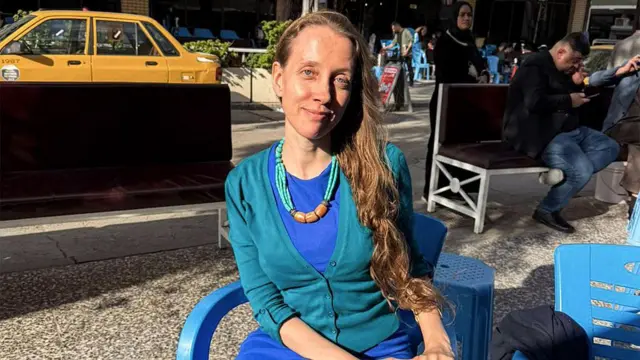
    Shelly Kittleson, who has long dark blonde hair and wears a blue dress with a turquiose cardigan, sits on a plastic chair in the sun in a Baghdad streetImage source, Getty Images

    A US freelance journalist who was released two weeks ago after being kidnapped in the Iraqi capital Baghdad says she is "incredibly grateful to those who worked for my release".

    In her first comments on social media since she was freed by Iran-backed militia group Kataib Hezbollah, Shelly Kittleson says: "So many people – including but not limited to government officials, press freedom organisations, and my wonderful community of fellow journalists and friends – put an immense amount of effort into ensuring that the level of attention to my case remained high. Thank you all so very, very much."

    The abduction on 31 March came amid ongoing attacks by Iran and its allied Iraqi Shia militias on US-associated targets across Iraq and the region since the outbreak of the US-Israeli war on Iran.

  9. Pope calls for US and Iran to return to peace negotiationspublished at 04:57 BST 24 April

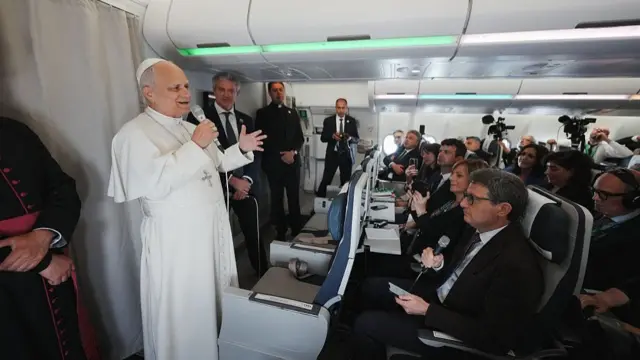
    Pope Leo XIV speaks to journalists aboard the papal flight from Malabo to Rome, on April 23, 2026Image source, AFP via Getty Images
    Image caption,

    People Leo speaks to journalists on his flight from Equatorial Guinea

    Pope Leo XIV has urged the US and Iran to continue peace talks aimed at ending the war, saying the conflict has left "an entire population in Iran of innocent people suffering".

    His comments come after a high-profile spat with US President Donald Trump, who posted a lengthy attack on the pontiff, a vocal critic of the US-Israeli military operation in Iran.

    "I would encourage the continuation of dialogue for peace, that all sides make every effort to promote peace, remove the threat of war, and respect international law," he said on a flight back to Rome following a visit to four African countries.

    "As a pastor, I cannot be in favour of war and I would like to encourage everyone to make efforts to seek answers that come from a culture of peace, not hatred and division."

    He also revealed he carries with him the picture of a Muslim child in Lebanon who was photographed holding a "Welcome Pope Leo" sign during his visit to the country last year.

    "In this latest phase of the war he was killed," the Pope said.

  10. Israel-Lebanon ceasefire extension fails to ease oil pricespublished at 04:02 BST 24 April

    Oil prices edged higher on Friday in Asia even after the announcement of the extended Israel-Lebanon ceasefire.

    Brent, the global benchmark for crude, rose by 0.7% to just shy of $105.80 (£78.60) a barrel, while US-traded oil climbed by 0.6% to $96.50.

    Oil prices have pushed upwards since Donald Trump said the US would hold off strikes until Iran presented a "unified proposal".

    Meanwhile, shipments across the Strait of Hormuz are still largely at a standstill, disrupting global energy flows.

  11. Ceasefire in Lebanon 'not 100%', Israeli UN envoy sayspublished at 03:07 BST 24 April

    Israel's ambassador to the United Nations says he's not sure the newly extended ceasefire will fully stop conflict between Israel and Iran-backed Hezbollah in Lebanon.

    "The Lebanese government have no control of Hezbollah," Danny Danon says in an interview with CNN.

    "Hezbollah is sending rockets trying to sabotage the ceasefire, and Israel – we have to retaliate. Every time we see a threat, we take action."

    His comments come after the Israeli and Lebanese ambassadors to the US met at the White House where Trump announced a three-week extension to the existing 10-day ceasefire.

    "It’s not 100%," he says referring to the new agreement. "I hope… to see that the Lebanese military are actually able to implement and to enforce this ceasefire."

  12. Israeli military says it intercepted attacks from Lebanonpublished at 02:06 BST 24 April

    The Israeli military says its air force intercepted several projectiles launched from Lebanon, with sirens sounding in the Shtula area.

    Hezbollah says on Telegram that it targeted the area in a rocket attack.

    It came as negotiations between Lebanon and Israel were under way in Washington DC, according to Lebanese national media.

    The Israeli military later said it had struck the launcher that fired rockets at Shtula.

  13. Iranian media reports 'small drones' triggered Tehran air defencespublished at 01:15 BST 24 April

    Iran's IRGC-affiliated Fars news agency reports that the presence of small drones was responsible for air defences being fired in Tehran earlier.

    It follows reports from several Iranian sources that the sounds of air defences firing could be heard across the Iranian capital.

    It is not clear who launched the drones from the Fars report, or if any damage was caused.

  14. Analysis

    Long-term peace between Israel and Lebanon contends with Hezbollahpublished at 00:25 BST 24 April

    Tom Bateman
    US State Department correspondent

    When Donald Trump announced the Israel-Lebanon truce extension from the Resolute Desk in the Oval Office, he was flanked by his vice-president and secretary of state, alongside ambassadors from each country.

    Each of them lavished praise on the president with words about making history.

    While significant, the ceasefire still amounts to an attempt to stem the renewed fighting that broke out when Trump himself, along with his Israeli allies, launched their war on Iran – any settlement of which is still elusive.

    As for the desire to strike longer-term peace between Israel and Lebanon, it is highly ambitious and involves a demand for the disarmament of Hezbollah.

    The Iran-backed group has long been the most powerful force in Lebanon. But, the US and Israel believe its degradation – combined with Iran’s weakening over the last few years – creates an opportunity for Hezbollah's demilitarisation.

    However, for its own acquiescence in such an effort the Lebanese state needs strong pro quos – starting with Israel's withdrawal from its current occupation and a guaranteed end to Israeli attacks, along with much more support from Washington to strengthen the formal Lebanese armed forces.

    Hezbollah sees itself as the country's only viable armed resistance to Israel, and a US formula involving only pressure and no incentives to dismantle it could fuel renewed sectarian tensions in Lebanon, which never fully recovered from its devastating 15-year civil war.

  15. Trump: 'We have all the ingredients' to help Israel and Lebanon deal with Hezbollahpublished at 23:57 BST 23 April

    Morgan Gisholt Minard
    Reporting from the White House

    I was in the Oval Office for the unexpected announcement that following talks with representatives from Israel and Lebanon, the ceasefire in Lebanon would be extended for another three weeks.

    In his statement posted on Truth Social just before we were called back to the Oval Office, Trump wrote that the US would "work with Lebanon in order to help it protect itself from Hezbollah".

    I asked him what does "work with Lebanon" actually look like?

    "Well, we've just got to work with them – I mean, we have a good relationship with Lebanon. The amazing thing is [Lebanon] actually have sort of a good relationship with Israel, and they don't deal with each other. But now they’re going to deal with each other, we’re putting them together."

    I pressed him again. Does he mean he intends to provide any material support as part of this renewed commitment to combat Hezbollah – or is this more of a diplomatic pledge?

    "I think you have all the ingredients," he said.

    "So we're gonna work together, and I think Israel’s gonna be terrific. But they do have a common problem, and it’s Hezbollah."

    It sounds like the progress made today was heavy on the big picture, with the finer details very much yet to be sorted.

  16. Rubio says Iran not barred from the World Cuppublished at 23:32 BST 23 April

    No-one from the US has told Iranian athletes that they can't participate in World Cup matches happening across the US this summer, Secretary of State Marco Rubio says during the Oval Office press conference.

    He says there's been speculation that Iran may not participate and that Italy will fill their spot, but adds that if Iran doesn't come it's their own choice.

    The problem with Iran participating in the World Cup, he says, isn't their athletes, but some of the people who they would bring with them.

    "What they can't bring is a bunch of IRGC terrorists into our country and pretend that they're journalists and athletic trainers," he says.

  17. Ambassadors say focus is on stopping Hezbollahpublished at 23:19 BST 23 April

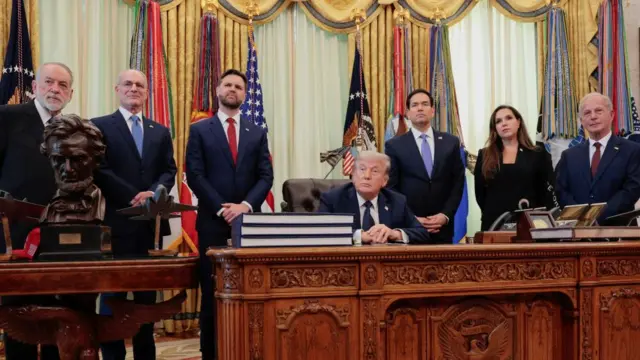
    Donald Trump sits at his Oval Office desk, flanked by the vice president, secretary of state and four ambassadorsImage source, Reuters

    Top negotiators from each country express their gratitude for the ceasefire extension while speaking alongside Trump, Vance, and Rubio in the Oval Office.

    Lebanese Ambassador to the US Nada Hamadeh Moawad, Israeli Ambassador to the US Yechiel Leiter, US Ambassador to Lebanon Michel Issa, and US Ambassador to Israel Mike Huckabee each praise Trump for his role in the negotiations.

    "Mr President, under your leadership, Iran has been so degraded, the possibility of degrading Hezbollah and liberating Lebanon from their occupation is real," Leiter says, adding that Israel and Lebanon are united in their aim to rid Lebanon of "this malign influence called Hezbollah".

    Huckabee compares Hezbollah to a kid throwing rocks at everyone's windows in a neighbourhood. Once the kid can be stopped, he says, then the rest of the neighbours, like Lebanon and Israel, can live in peace.

  18. Trump says leaders of Lebanon and Israel will visit White House 'in coming weeks'published at 22:55 BST 23 April

    Trump says the Lebanese President Joseph Aoun and Israeli Prime Minister Benjamin Netanyahu will be coming to the White House in the coming weeks as the US seeks to broker a longer lasting peace deal.

    "They do have Hezbollah to think about," he says. "We are going to be working with Lebanon to get things straightened out in that country," he says. "I think it will be a wonderful thing to get this worked out simultaneously with what we are doing in Iran."

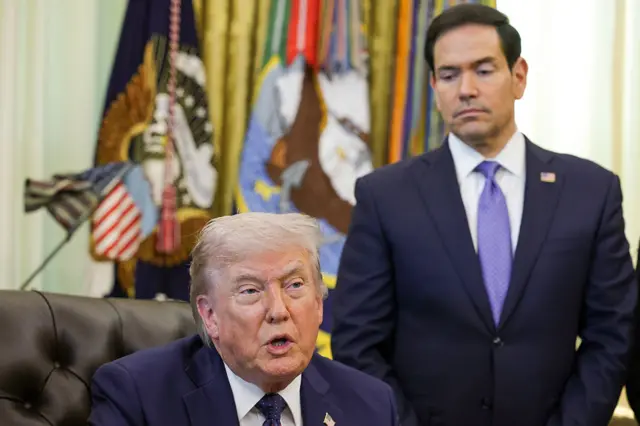
    Marco Rubio looks down at Donald TrumpImage source, Getty Images
  19. Vance commends Trump's efforts in seeking Israel-Lebanon ceasefirepublished at 22:51 BST 23 April

    Speaking from the Oval Office, Vice-President JD Vance says the three-week extension of the Lebanon-Israel ceasefire is a "major, historic moment".

    The negotiations between the two countries, which began with a first round earlier this month at the White House, are their first direct talks with each other since 1993.

    "Of course, it wouldn't have happened without the president’s direct engagement," Vance says.

  20. Trump says US will work with Lebanon to 'protect itself from Hezbollah'published at 22:29 BST 23 April

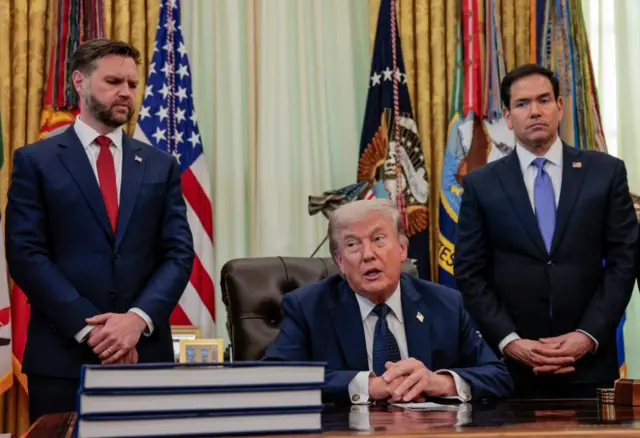
    Donald Trump sits at the Oval Office desk flanked by JD Vance and Marco Rubio who stand behind himImage source, Reuters

    In his announcement, Trump says the meeting, in which Vice-President JD Vance and Secretary of State Marco Rubio were also present, went "very well".

    "The United States is going to work with Lebanon in order to help it protect itself from Hezbollah," he writes.

    He says it was a "great honour" to be a participant of this "very historic meeting" and says he looks forward to hosting Israeli Prime Minister Benjamin Netanyahu and Lebanese President Joseph Aoun in the future.

    Trump is speaking to the media in the Oval Office for the second time today, flanked by Vance and Rubio, as well as the US ambassadors to Lebanon and Israel, as well as the ambassadors of those countries to the US.

    We'll bring you more on what they say.