


The rise of Republicanism
After the failure of the second Home Rule Bill, a series of Conservative administrations attempted to defuse the Irish issue by increasing the attractiveness of unionism through a series of political 'sweeteners', such as the Wyndham Land Act of 1903. Nonetheless, Irish MPs continued to press for self determination.
The dawn of the 20th century saw a cultural renaissance in Ireland and efforts were made to reverse the erosion of Gaelic culture. Organisations such as the Gaelic Athletic Association and the Gaelic League aimed to preserve the native Irish language and passtimes.
At the same time, Republicanism saw a resurgence with the founding of Sinn Fein ('ourselves alone') in 1905 and the revival of the Irish Republican Brotherhood (IRB). But the broad appeal of these groups was stifled amid optimism that Home Rule was about to become a reality.
A Third Home Rule Bill had been introduced by Prime Minister HH Asquith's Liberal administration in 1912, when the Home Rule Party held the balance of power. In another positive development, the legislative veto of the House of Lords had been removed by the Parliament Act of 1911.
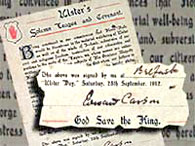
But Unionists remained implacably opposed to Home Rule. Dublin Unionist MP Edward Carson threatened armed resistance if Ulster was governed from Dublin. Between 1912 and 1914, hundreds of thousands of Unionists signed the Solemn League and Covenant to this effect.
Private armies were also created, with the Protestants forming Ulster Volunteer Force and the nationalists forming the Irish Volunteers. Both had memberships exceeding 100,000 men and armed themselves with weapons smuggled in from Germany.
The unionists, aware they could no longer resist Home Rule, began lobbying for the exclusion of six of Ulster's nine counties from the arrangements. The spectre of civil war hung over Ireland.
Published: 2007-02-01