


An English king
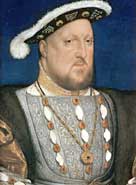
Henry VII was basically too weak in England to dominate in Ireland. His son, Henry VIII, was in an altogether stronger position. His break with Rome placed him at loggerheads with the pope and much of Catholic Europe, which meant that Ireland now took on strategic importance as a potential launch pad for a French or Spanish invasion of England.
An Irish revolt by the Kildare heir, Thomas, Lord Offaly, in 1534 was swiftly put down. Offaly and other senior members of the family were later executed, destroying the power of the Kildare family and handing control of Ireland to English officials and administrators.
'Offaly's attempt to rally the Irish in a 'Catholic crusade' introduced religion into Irish politics for the first time.'
Significantly, Offaly had attempted to rally the Irish in the cause of a 'Catholic crusade' against the Protestant English king, introducing religion into Irish politics for the first time. Henry went on to impose his Reformation by force - with indifferent results - creating further religious division. In 1541, Henry VIII was declared king of Ireland by the Irish parliament.
New policies for controlling the thinly-colonised island were attempted, including 'plantation', which was first introduced under Edward VI. English settlers were given lands confiscated from rebellious Irish families, and the native Irish were supposed to be driven out. However, manpower shortages often made this impractical.
The process began in Laois and Offaly, but would eventually absorb Munster, Ulster and elsewhere.
Published: 2007-02-01