

BBC HomeExplore the BBC
This page has been archived and is no longer updated. Find out more about page archiving.

18 September 2014
Accessibility help
Recent History - Iraq: Conflict in Contextbbc.co.uk/history

BBC Homepage

Contact Us

The Lost Palaces of Iraq

By Dan Cruickshank
Nineveh

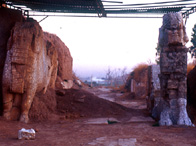
Assyrian mythical beasts stand guard close to the palace at Nineveh
Assyrian mythical beasts stand guard close to the palace at Nineveh ©
Mosul is a sprawling city, which has a medieval core formed by closely packed courtyard houses that cascade down to the Tigris, and which boasts a curious 12th-century minaret that was built so that it leans to one side in a cheerful manner. Around the core are soulless developments and ugly roads and bridges, reminiscent of any western city. On the edge of Mosul stands the vast ruined city of Nineveh, which - along with Nimrud, just to the south - was enthusiastically excavated by British archaeologists from the 1840s onwards. These were thrilling times for the archaeologists, because the exploration of these Assyrian cities meant no less than the discovery of a long lost - almost mythical - civilisation that was known only from brief, enigmatic and far from flattering descriptions in the Bible.

'Particularly striking are the large-eyed Sumerian gods...'

From Nineveh, Nimrud and nearby Khorsabad, British and French archaeologists acquired (thanks to the Ottoman authorities) vast libraries of clay tablets, as well as the gigantic winged-bulls and finely sculpted panels of Assyrian kings, courtiers, gods and warriors that now grace galleries in the British Museum and the Louvre. This was rare booty indeed. But not all was carried abroad. The museum at Mosul - like the Iraq Museum in Baghdad - is packed with artefacts of international importance, including world-famous objects dating back 7,000 years or more.

Particularly striking are the large-eyed Sumerian gods, with their patient and benign smiles. But all the most precious and vulnerable items have now been packed away and put in store to protect them from attack. The ghastly question is, will they ever be seen again? If there is an invasion, it is likely that Iraq will be plunged into lawless chaos, and those museum items not destroyed will be looted and lost forever in the international art market - a market that has recently swallowed much of the culture of other countries, such as Afghanistan, recently torn by war. The prospects are grim indeed.

Published: 2003-02-16


About the BBC | Help | Terms of Use | Privacy & Cookies Policy