


Birth of civilisation
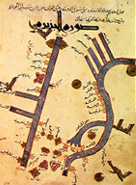
'...people here had discovered the wheel and key aspects of mathematics...'
As I was driven northwards I passed through a landscape that revealed much of its remarkable past. This was the ancient land of Mesopotamia - the 'land between the rivers' as the Greeks termed it - whose geographical position was the key to understanding some of the extraordinary and pioneering developments that occurred here, 8,000 years ago.
Between the Rivers Tigris and Euphrates was a great alluvial plain - Mesopotamia - and the soil, although sun-baked, was immensely fertile. The people that dwelled here 8,000 years ago had learned to irrigate the land by means of canals and ditches, and had mastered the arts of agriculture. From this came plenty, which relieved man of the need to fight for survival, and thus gave his creative energy the chance to flourish. Civilisation was born.
By about 5,500 years ago the first ever form of writing - cuneiform - had evolved in the region, and people here had discovered the wheel and key aspects of mathematics (the concept of zero, the division of a circle into 360 degrees). They had also developed the crafts, arts and many aspects of theology now familiar in the Judaic, Christian and Muslim religions. And although it was the Assyrian Empire that evolved and refined these achievements, it is known that civilisations and empires flourished in Mesopotamia even before the rise of the Assyrians.
Published: 2003-02-16