Quick pre-show Facebook Livepublished at 22:06 BST 10 May 2016
Our guests tonight have just taken some of your questions over on the BBC News Facebook page. You can catch up here, external.
EU special – what would Brexit mean for immigration?
Presented by Evan Davis on location in Boston, Lincolnshire, one of the UK's immigration hotspots
Find out what politicians from both sides, a panel of experts and a group of undecided voters had to say
Get involved in the EU referendum debate on Twitter using #newsnight
Our guests tonight have just taken some of your questions over on the BBC News Facebook page. You can catch up here, external.
Want to brush up on your knowledge of the latest arguments about EU migration? Here's a few articles to get your teeth stuck into to start you off.
Immigration: what do leavers think?, external - Roland Smith's interesting summary of the diverse reasons why voters might choose to leave the EU.
Most EU citizens in UK would not meet work visa rules, data show, external - what could happen to EU workers already in the UK if we voted to leave? The Financial Times takes a look.
Iain Duncan Smith: EU favours 'haves over the have-nots' - the former work and pensions secretary says "uncontrolled migration" drives down wages and increases the cost of living in this BBC article.
Brexit ‘unlikely to mean deep migration cuts but may lead to 2p tax increase’ , external- The Guardian reveals economist Jonathan Portes' views that Brexit could mean the government struggles to meet its fiscal targets.
 Ian Katz
Newsnight Editor
For centuries, the Lincolnshire town of Boston has been most famous for the spectacular 14th-Century St Botolph’s church with its almost ludicrously tall tower, rather endearingly known locally as “the stump”.
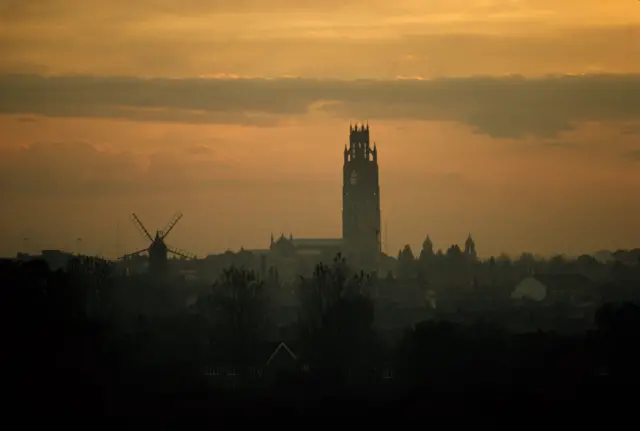 Image source, Getty Images
The 272-foot tower of St Botolph's church at twilight
Over the past decade or so, though, Boston's become better known as one of the hot spots of Eastern European migration to the UK, with perhaps the highest concentration of immigrants anywhere outside London.
That’s why we’ve come to St Botolph’s to explore the impact of EU migration in the fourth of our special programmes examining the big issues in the referendum debate.
We’ll hear from politicians, migration experts, local figures and an audience of Bostonians, new and old.
They won’t have to look far for signs of Europe’s changing impact on this market town. At one end of the church lies a memorial to the 14th-Century Munster merchant Wessel de Smalenburgh, a reminder of how Boston’s medieval wealth – and ultimately St Botolph’s itself, was built on its membership of the Hanseatic League, perhaps the earliest precursor to the EU.
And in the side chapels just off St Botolph’s expansive nave, a more contemporary reminder of the town’s changing complexion: some of the 15,000 votive candles lit each year in the church – most of them, according to the rector, by Eastern Europeans.
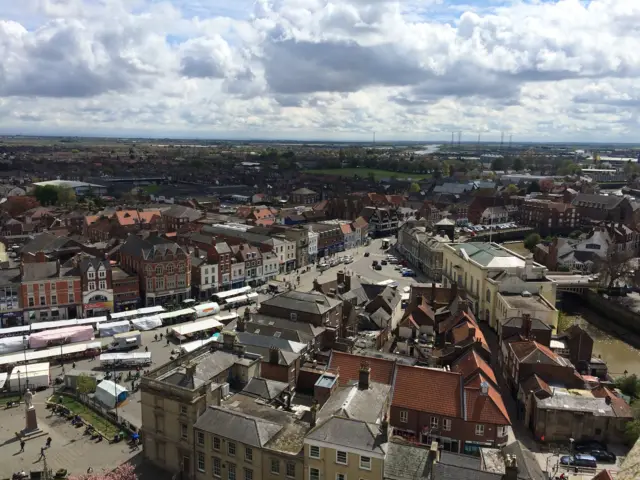 Image source, BBC/Scott Dalton
Live from Boston, Lincolnshire
Tonight, Newsnight comes live from the town of Boston in Lincolnshire, which has one of the highest levels of EU immigration in the country. Evan Davis is joined by politicians on both sides of the argument, a panel of experts, and a group of undecided voters.
We'll be updating this page from 10pm, see you then....