Summary

  • EU special – what would Brexit mean for immigration?

  • Presented by Evan Davis on location in Boston, Lincolnshire, one of the UK's immigration hotspots

  • Find out what politicians from both sides, a panel of experts and a group of undecided voters had to say

  • Get involved in the EU referendum debate on Twitter using #newsnight

  1. Fact check: What effect does migration have on jobs and wages?published at 22:50 BST 10 May 2016
    Job queueImage source, Getty Images

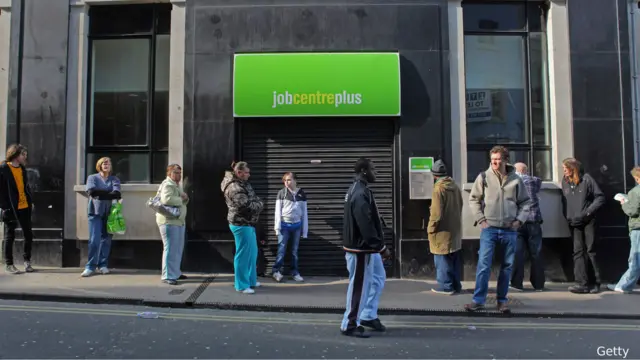
    OK, here’s a biggie – what impact does EU migration have on wages and jobs?

    We’ve crunched the numbers. Firstly, on jobs, the stat often trotted out is that for every 100 migrants employed 23 UK-born workers are displaced.

    Is it true? Well, it’s worth noting that this was based on data from 1995-2010 and it refers specifically to migrants coming from outside the EU. No statistically significant effects were found for migration from within the EU.

    So how about wages? There is some truth in the claim, made particularly by those on the Left who want to leave the EU, that migration has had an effect here.

    A Bank of England paper, external last year found that a 10% increase in the proportion of immigrants working in the services sector would be associated with a 1.88% reduction in pay.

    Important to note, though, that in the 18 years between 1997 and 2015 the proportion of non-UK nationals working here only increased by 6.4%.

    It’s also worth noting that in both the case of jobs and wages, it’s the overall strength of the economy which will have the biggest effect, not migration per se.

    For more EU fact checking, head over to our colleagues at BBC Reality Check.
  2. Employing migrant workers "allows us to be competitive"published at 22:49 BST 10 May 2016

    Darren Bevan
    Image caption,

    Darren Bevan

    Quote Message

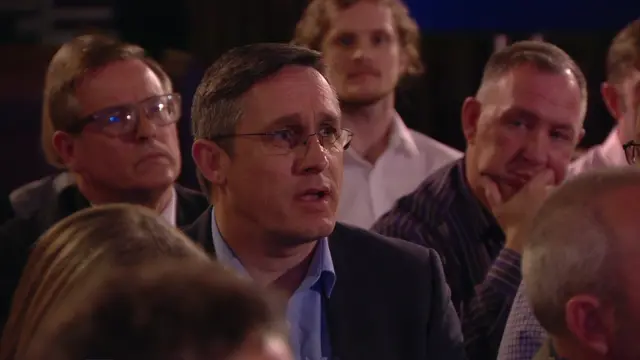
    It allows us to be competitive within our business arena

    Darren Bevan, Food processing

  3. Boston business owner on immigrant HGV driverspublished at 22:48 BST 10 May 2016

    Quote Message

    All they have to pay for their living is about £35 a week to live in the caravan plus the food. Now our drivers could not compete with that.

    Angie Cook, Former boss, HGV driver agency

    Business owner
    Image caption,

    Angie Cook says non-immigrant drivers on a minimum wage cannot compete with an agency that employs lower cost immigrant drivers

  4. EU Migration: Unemployment 'unaffected' but wages 'driven down' at lower endpublished at 22:46 BST 10 May 2016

    Professor Christian Dustmann
    Quote Message

    We find basically very little evidence that immigration has done anything in terms of increasing unemployment

    Professor Christian Dustmann, University College London

    Councillor Paul Gleeson
    Quote Message

    The main effects have been its driven down wages. We have some of the lowest wages in the country. We're always in the bottom five

    Councillor Paul Gleeson, Labour

  5. Immigration since 1992: The figurespublished at 22:44 BST 10 May 2016

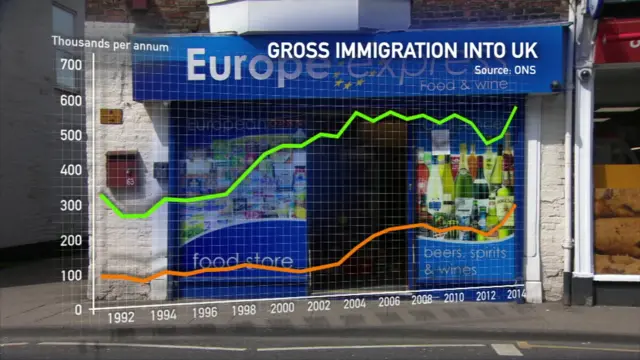
    Graph of Gross Immigration to the UK
    Image caption,

    The orange line represents EU immigration to the UK, and the green line represents total immigration to the UK

    Total EU immigration was running at about 100,000 people a year until 2004, when it rose as a group of Eastern European countries joined the EU. Annual EU immigration is now a bit under 300,000 people a year.

    EU immigration is less than half of total immigration, which is over 600,000 people, but it drove the medium term rise.

    Remember, people leave too. Net immigration is about half of those totals.

    Some of those East Europeans come here temporarily, living in cramped housing and saving up. Then they go home again.

  6. Poll results: Giving the public what they wantpublished at 22:43 BST 10 May 2016

    We thought you'd be interested in one more snippet from the new Ipsos MORI poll we got our hands on for tonight's immigration special. 

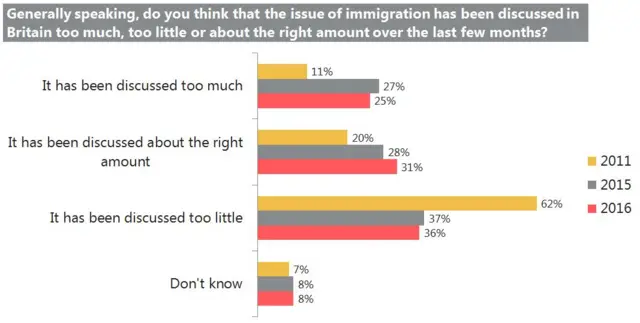
    They asked whether respondents thought the issue of immigration has been discussed too much in Britain, too little or just about the right amount.

    As you can see from the results, more people think it has been discussed too little (36%) than too much (25%), or indeed those who think it's been discussed the right amount (31%).

    Those numbers are pretty consistent with when the pollsters asked the same question last year - but look at the difference from two years ago, when 62% thought immigration had been discussed too little and just 11% thought it had been discussed too much.  

    Never say we here at Newsnight don't give the public what they want! Maybe the pollsters should re-run that question once our special comes off-air and see if the numbers change...

    Poll
  7. Audience members stimulating debatepublished at 22:41 BST 10 May 2016

  8. Fact check: How are schools affected by EU migration?published at 22:39 BST 10 May 2016

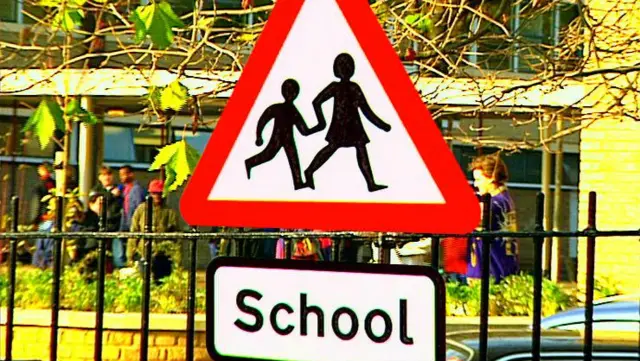
    School sign

    The new claim from the Leave camp - debuted today by Iain Duncan Smith - is that the taxpayer needs to build the equivalent of 27 new average-sized secondary schools or 100 new primary schools to cope with EU migration.

    This claim is based on an estimate made by National Statistician, John Pullinger, external, who used data from the annual International Passenger Survey, external to estimate the level of immigration of EEA nationals aged 5-18. For 2014, the most recent year available, the figure is 25,000, considerably higher than in previous years.

    As Iain Duncan Smith says, that’s the equivalent of about 27 average-sized secondary schools or about 100 average primary schools.

    In fact, he probably could have gone further because the 25,000 is just one year’s worth of immigration. But without more details about the age of the children who arrived, it’s difficult to be sure about the total long-term impact.

    And let’s put it into some perspective. While 25,000 is undoubtedly a big number, it’s less than one pupil for each school in the country.

    For more EU fact checking, head over to our colleagues at BBC Reality Check.
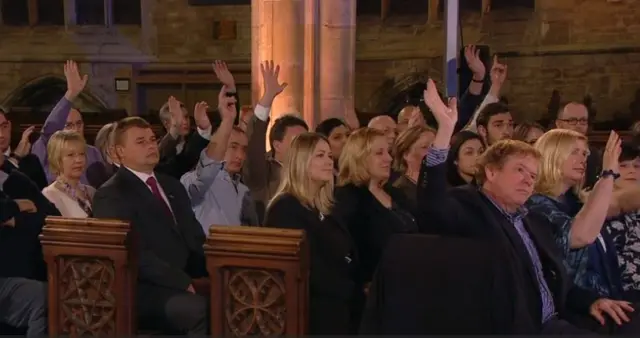
  9. How many of you think immigration has gone too far in this country?published at 22:38 BST 10 May 2016

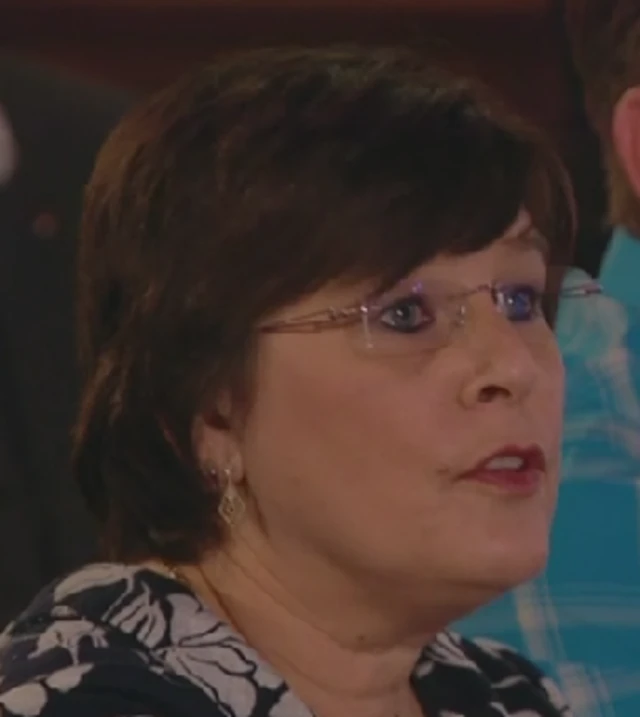
    About half the audience raise their hands
    Image caption,

    What the audience think about immigration

  10. Poll results: Public want to see immigration numbers reducedpublished at 22:38 BST 10 May 2016

    Let's delve back into that new poll by Ipsos MORI, which - rather conveniently - contains good news for both sides.

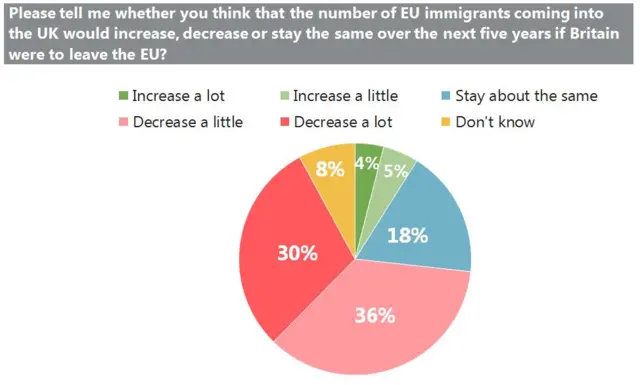
    Firstly the Brexiteers will find succor in the fact that 66% think the number of immigrants from Europe will decrease over the next five years if Britain leaves the EU. Just 9% think numbers will increase.

    Poll

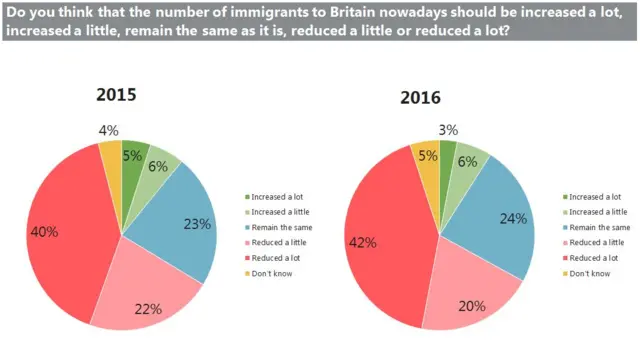
    That's important because a full 62% of those polled think that the numbers of immigrants to Britain nowadays should be reduced - that includes a very significant 42% who say the number of immigrants should be reduced a lot.

    Poll

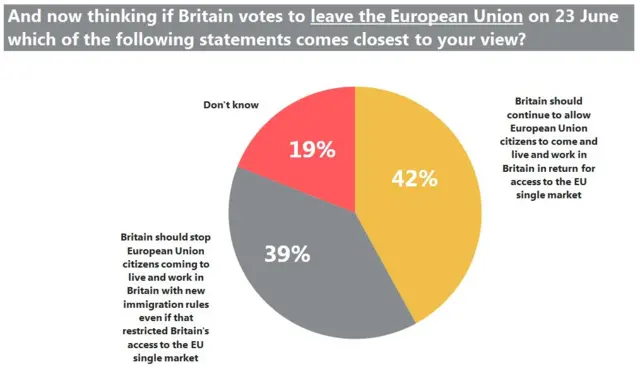
    So, how about the good news for the Bremainers? Well, when forced to choose, more people prefer we continue to allow freedom of movement from the EU in order to maintain our access to the single market.

    But there's a but. 

    The numbers are tighter than a gnat's bottom, with 42% picking that option and 39% going the other way, preferring to see access to the single market restricted in order to stop EU citizens living and working in Britain. The other 19% can't make up their minds.

    Poll

    Stay tuned for one more polling snippet!

  11. Do you like our set tonight?published at 22:36 BST 10 May 2016

  12. In the back up chairpublished at 22:36 BST 10 May 2016

    Mark Urban
    Newsnight Defence and Diplomatic Editor

    It falls to me to do that Scotty (or maybe Chekhov…) thing on the bridge of the Enterprise thing while Evan is beamed down to Boston tonight. If for some reason the signal fails to cling on (geddit?!) they may suddenly turn the cameras on me. Hopefully I will not look too stunned. In the meantime I will follow the debate up there and maybe chip in the odd comment into the live feed.  

  13. New poll: Immigration crucial to deciding referendum votepublished at 22:34 BST 10 May 2016

    We've got our hands on a rather tasty poll from Ipsos MORI, which we can now [trumpet fanfare] bring exclusively to you.... 

    The key finding: immigration is the third most important reason in helping people decide how they will vote. A full 48% say immigration will be an important deciding factor for them, just pipped to the top spots by the impact on Britain's economy and Britain's ability to make its own laws. Here's how people rated issues in the Ipsos MORI poll:

    1. Impact on Britain's economy - 57%
    2. Britain's ability to make its own laws - 50%
    3. Number of immigrants coming into Britain - 48%
    4. Cost of EU immigration on Britain's welfare system - 47%
    5. Impact on British jobs - 46%
    6. Number of refugees coming to Britain to claim asylum - 42%
    7. Britain's ability to trade with countries in the EU - 40%
    8. Impact on the rights of British workers - 37%
    9. Britain's relationships with other countries - 36%
    10. Regulations by the EU on British businesses - 32%

    Interestingly enough, when asked which one factor will be most important for the public overall, immigration comes joint top with the economy, each getting 24%. Britain's ability to make its own laws comes a long way third, with 9%.  

    The poll has a whoppingly large sample – with 4,000 people taking part – and was conducted online over the second half of April.

    Keep your eyes peeled for more titbits from the results over the course of the evening!

  14. On tonight's Newsnight specialpublished at 22:33 BST 10 May 2016

  15. And we're off...published at 22:32 BST 10 May 2016

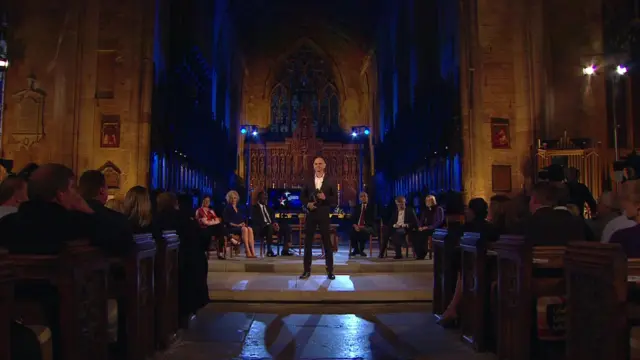
    Tonight's topic is migration...  What impact would a possible Brexit vote have on EU migration? 

    We're live in Boston, Lincolnshire for a one-hour special on BBC 2 and at the top of this page NOW.  

    Evan Davis
    Image caption,

    Our Newsnight special on Immigration ahead of the EU Referendum is underway

  16. What do our undecided voters think?published at 22:24 BST 10 May 2016

    Those from Vote Remain and Vote Leave will doubtless have strong opinions on immigration, but what does it mean to our ordinary voters? 

    Holly Anderson
    Image caption,

    Holly Anderson

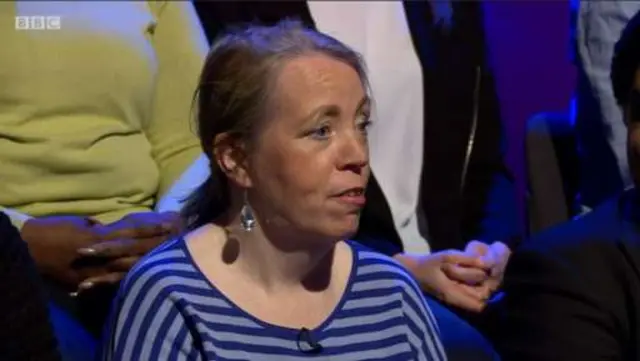
    The issue is fairly clear-cut for Holly Anderson, who says: "We have to carry on with free movement because migrants contribute massively to the jobs market... they are doing jobs that English people don't want to do".

    She doesn't think an 'emergency brake' on in-work benefits for migrants would work, because "most immigrants aren't coming to the UK to be benefit tourists... they are here to work".

    Bipin Dattani
    Image caption,

    Bipin Dattani

    Bipin Dattani has mixed opinions and says that without migrant workers, certain industries like infrastructure and healthcare could suffer.

    Bipin says he's concerned migrants could be "driving down wages" and making it difficult for young British people to find work. 

    If the UK voted for Brexit, "we could prevent a lot of benefits scroungers", he says, "putting in controls so that immigrants have to have the means to support themselves".

    Angela Garvin
    Image caption,

    Angela Garvin

    The number of migrants entering the country is something Angela Garvin's interested in too, as well as those already here.

    "There seem to be no real curbs... and the planned restrictions don't go far enough," she says.

    Shan Abidazeh
    Image caption,

    Shan Abidazeh

    Shan Abidazeh says: "It seems that we have an 'open door' policy where anyone from Europe can come in... people think they are getting jobs and homes. 

    "I believe in a strong Europe, and maybe we should be part of that. But my concern is for my children – how do we deal with the people who are already here?"

  17. Is migration a big deal for you?published at 22:19 BST 10 May 2016

    Will migration from EU countries be a factor in how you vote in the EU referendum?

    Do you think the result – whether we remain or leave – will have an impact on future migration from EU countries?

    Let us know your thoughts by tweeting us @BBCNewsnight, external using #newsnight

    Quote Message

  18. A bit about Boston...published at 22:16 BST 10 May 2016

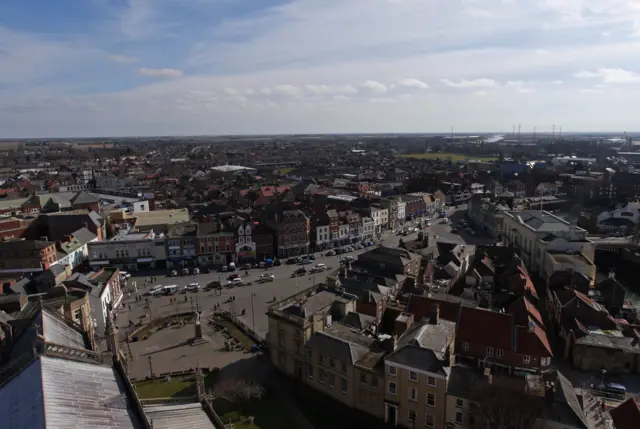
    Birds-eye view of Boston in Lincolnshire.Image source, AFP/Getty Images

    Tonight we're coming live from Boston in Lincolnshire... Why?

    Well according to the 2011 census, it is home to more than 65,000 people - but around 10,000 of them are born abroad.

    Many migrants move to the area to take up seasonal farm work in the county, including jobs harvesting fruits and vegetables.  

    Boston has the largest proportion of non-British EU passport holders outside of London - 12.1% of the town's residents - and in January the think-tank Policy Exchange named Boston, external as the "least integrated place" in England and Wales.

    Residents are divided over whether EU immigration is a good thing.

    They largely fall into two camps: those who say the migrants have created new jobs and brought wealth to the rural town; and those who say migration has only had a negative effect by driving down wages, taking jobs away from locally-born residents, and pushing out "English" shops.

  19. Migration matterspublished at 22:12 BST 10 May 2016

    Evan Davis
    Newsnight Presenter

    Migration is surely the most troublesome issue for the Remain camp in the referendum.

    Why? Partly because it matters to people. A lot. According to an Ipsos Mori poll published this evening, about half of us consider it "very important", not too far behind the economy and virtually level but with sovereignty. 

    And it is also a vulnerability for Remain because in a campaign in which facts are often disputed and confusion is deliberately sewn, migration appears to have one big certainty associated with it. If we are willing to leave the EU and the single market, we can choose what our immigration policy is: we can choose to continue letting EU citizens enter freely if we want to. Or we can restrict entry. In short, we lose no options, but we gain others. No need to debate the merits of immigration – Brexit clearly allows us to finesse our policy as we please.

    And then there are other difficult questions for Remain: the official population projections for the UK have the population growing to 80 million by 2060. That number sounds a lot to most people, especially considering that England is already among the most densely populated nations of Europe.

    In programmes on the economy and security, it was easy for the Remain side to contrast the risks of leaving the EU with the safety of staying put. Immigration is the one issue where it feels the boot is on the other foot. 

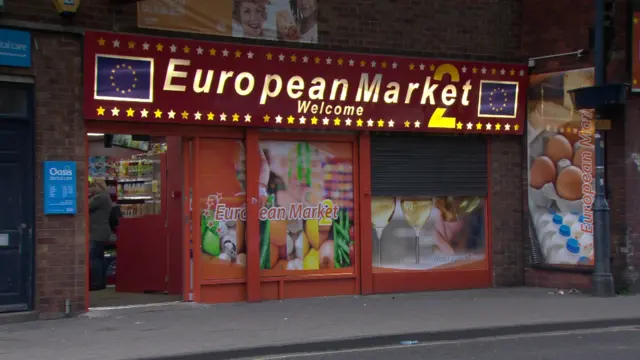
    Shop in Boston, Lincolnshire
    Image caption,

    Shop in Boston, Lincolnshire

  20. The team are in place – hope you are too!published at 22:09 BST 10 May 2016