Anderson on dealing with endometriosispublished at 19:52 BST 26 July
Women's 100m freestyle semi-finals (19:47 BST)
 Sophia Hartley
BBC World Service in Glasgow
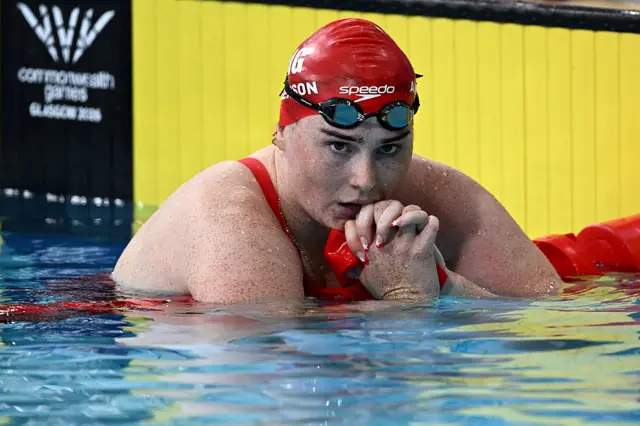 Image source, Getty Images
Swimming is one of the most gruelling sports at the Commonwealth Games but it can be even harder when faced with a chronic condition like endometriosis.
That’s the reality for English swimmer Freya Anderson, who has been navigating the challenges of balancing elite training with chronic pain for over 10 years.
“When I first started having periods, I just knew something was off," she told the BBC.
“None of my friends had struggles that I did. The severe pain, the bleeding. I actually went on hormonal contraception when I was 16, so quite young.”
Anderson didn’t get a diagnosis until just last year when she was at a training camp for the World Championships.
“I felt a relief but then you now have this long journey ahead of you, and you've just been diagnosed with a chronic health condition that has no cure.”
Endometriosis affects one in 10 women and those assigned female at birth from puberty to menopause, although the impact may be felt for life. In the UK, that’s over 1.5 million living with the condition.
Anderson was able to get surgery to remove the endometriosis in December 2025.
Anderson says it has helped but she still faces difficulties with the illness.
She has set up a Fast and Female initiative to educate and support young girls, and help them stay involved in sport.
“When I have bad flare-ups, I notice it on my skin, I notice it in my joints, like, I have knee problems, I have shoulder problems through swimming on my back. It’s kind of a lot to juggle."