|
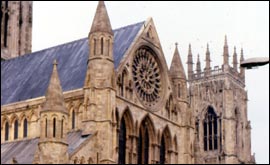
Despite original materials and techniques being used during the
restoration of York Minster's South Transept, there were quite a
few small but significant changes made.
Because of the demand for so much seasoned timber to rebuild the
vaulted ceiling it was decided to use laminations of dried oak timber.
Although unseasoned timber could be used for the roof structure,
the vaulted ceiling relies on tight joints to hold it together.
If unseasoned timber had been used this would have shrunk over
time causing joints to become loose with potentially disastrous
results.
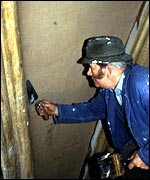 |
| Plastering
the ceiling |
The carvings on the 68 bosses were originally a simple foliage
design, but the Dean at the time decided on something more interesting.
So the carvers were each given a theme from the creation of the
world and allowed to interpret the verses through their carvings.
That's all except six bosses designed by children for a Blue Peter
competition. Designs by Rebecca-Rose
Welsh, Richard Gaston, Laura Smith, Ben Kerslake, Tim Hutchinson
and Joanna Biggs were selected
from the thousands sent in.
There are also six small bosses that are the only pieces of medieval
timber to survive the fire and the fall from the roof.
The new roof and ceiling structure is compartmentalised so should
a fire occur again it will be contained in a small area and be easier
to tackle.
Because oak contains a lot of acid modern stainless steel nails
and bolts were used throughout the reconstruction.
A number of hatches are installed on the outside of the roof under
the leadwork. In the event of a fire in the roof void, the hatches
drop away. Fire fighters would then be able to break through the
lead and easily access the fire.
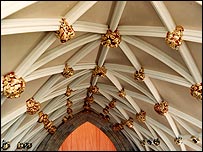 |
| The
completed vaulting and bosses after painting |
The position of smoke detectors was criticised after the fire and
so a new, more sophisticated fire detection system was installed
throughout the cathedral. The lightning conductors were also improved.
Finally the vaulted ceiling in the South Transept originally had
thin oak boarding between the ribs, like the North Transept. During
the fire this burned readily providing tinder dry fuel and helping
the fire spread rapidly.
The new ceiling is thick plaster so not only does it look like
the rest of the vaults in the cathedral, apart from the North Transept,
but plaster is also fire retardent.
|