Summary

  • Denmark and Norway have suspended use of the Oxford-AstraZeneca vaccine after a woman who received a dose died from a blood clot

  • AstraZeneca says its vaccine is safe and both the EU and UK drugs regulators say there is no evidence of a link between the vaccine and the death

  • Four more cases of the Covid variant of concern first found in Brazil have been identified in England, bringing the total in the UK to 10

  • The World Health Organization (WHO) officially declared Covid-19 a pandemic one year ago today

  • Since then, there have been more than 118 million cases and 2.6 million deaths across nearly 200 countries

  • The US has the highest number of deaths, with 527,039 now recorded; Brazil is second with 270,656

  • Research suggests cancer patients are less protected against Covid-19 than other people after one dose of the Pfizer vaccine

  1. Scotland reports further 22 Covid deathspublished at 12:41 GMT 11 March 2021
    Breaking

    First Minister Nicola Sturgeon is updating MSPs on coronavirus in Scotland.

    Sharing the latest daily figures, she says a further 591 people have tested positive for Covid and 22 more people have died within 28 days of a positive test.

    That brings the total number of Covid deaths in Scotland by that measurement to 7,483.

    National Records of Scotland figures published on Wednesday revealed that, as of 7 March, a total of 9,725 deaths had been registered where Covid-19 was mentioned on the death certificate.

    Our colleagues in Scotland are providing further updates on their First Minister's Questions live page.


  2. Derbyshire Covid spike 'linked to outbreak in prison'published at 12:37 GMT 11 March 2021

    HMP SudburyImage source, Google

    A Covid outbreak at a prison is the reason a rural area of Derbyshire has the highest infection rate in the country, health bosses have said.

    In the Derbyshire Dales district, the rate per 100,000 people jumped from 63.6 to 160.4 in the week to 6 March. England's current average weekly infection rate is 60.1 per 100,000 people.

    Derbyshire's director of public health Dean Wallace says the local spike is due to an outbreak at an open prison, HMP Sudbury.

    In a statement, the prison said it was working with Public Health England to "keep everyone safe and minimise the spread".

    Last month, an outbreak at a prison in Rutland caused England's smallest county to rise to the top of the infection rate table, while at one point in January a quarter of all inmates at an open prison in Suffolk had the virus.

  3. Cautious easing of rules 'may help Wales avoid third wave'published at 12:23 GMT 11 March 2021

    A lone woman walking past shut shops in Cardiff city centreImage source, Getty Images

    Wales could avoid the worst of a third wave of Covid-19 if there is a cautious easing of restrictions between now and the summer, scientific advisers have said.

    Case rates could be kept low if alert level three, external restrictions are in place until June and schools reopen gradually, the Welsh Government's Technical Advisory Cell (Tac) says., external

    Its report is based on modelling by scientists at Swansea University.

    The Welsh government is expected to announce a "stay local" rule on Friday.

  4. Portugal considers easing rules, but state of emergency set for renewalpublished at 12:18 GMT 11 March 2021

    Alison Roberts
    Portugal Correspondent, Lisbon

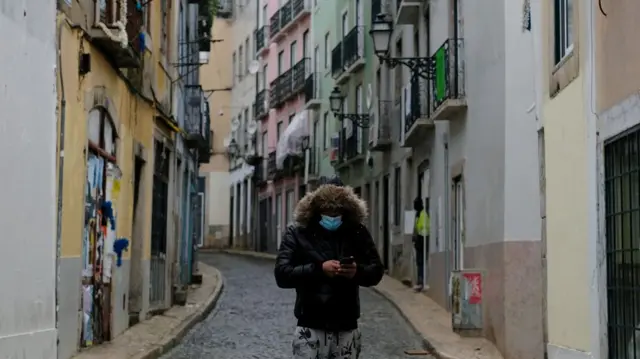
    A person wearing a protective mask walks in Bairro Alto neighborhood during the national lockdown in Lisbon, Portugal, 23 January 2021Image source, Reuters

    Portugal's government is meeting to discuss plans for easing the lockdown that has been in place on the mainland for almost two months, even as its parliament is set to renew the national state of emergency until the end of March.

    Lawmakers will this afternoon debate and vote on a presidential decree proposing a new 15-day period of emergency - the maximum allowed under the constitution - from next Thursday.

    With both the governing Socialists and the main centre-right opposition in favour, the legislation is sure to pass.

    The president, Marcelo Rebelo de Sousa, and the prime minister, António Costa, dined together last night after the former sent the draft decree to parliament.

    Earlier, the minister of economy had said that the conditions were in place for some restrictions to be lifted "before Easter" but that it had still not been decided which ones and how fast.

    A lockdown was imposed across the whole of mainland Portugal on 15 January, with face-to-face classes in schools suspended a week later.

    Portugal's infection rate has in recent days been the lowest in Europe, but for several weeks earlier in the year it topped global rankings for new cases and deaths.

  5. Hundreds of hospital staff refuse Covid jabspublished at 12:10 GMT 11 March 2021

    Eddie Bisknell
    Local Democracy Reporter

    Figures suggest around 900 staff at Derby and Burton hospitals have not had the Covid vaccine for undisclosed or non-health reasons.

    Jabs have been available to all 15,862 front-line staff at the the Royal Derby Hospital and Queen's Hospital in Burton for four months.

    Royal Derby HospitalImage source, Google

    Figures show 1,587 staff have not yet had their vaccines.

    Of these, 687 have said they are delaying the jab, mostly for health reasons such as pregnancy.

    Another 68 have declined outright for non-health reasons, which have not been specified.

    The remaining 832 have so far not explained why they have not come forward.

    The trust has confirmed staff who have declined vaccines are still in work and reiterate that the jabs are not mandatory.

  6. Scotland's housing market slump 'worst in UK'published at 12:02 GMT 11 March 2021

    HousesImage source, PA Media

    The market for homes has slowed with lockdown, and more so in Scotland than other parts of the UK.

    The Royal Institute of Chartered Surveyors (RICS) is reporting that interest from potential buyers was down in February.

    The number of properties being put on the market was also down, for the fourth consecutive month.

    More surveyors reported prices rising than falling.

    RICS expects the easing of Covid restrictions in coming months to bring more activity back.

    Here's the full picture of the property market in Scotland.

  7. Circus welcomes children back to schoolpublished at 11:55 GMT 11 March 2021

    Media caption,

    Circus arrives at Haverhill school to welcome back pupils

    Children in their first week back at a school have received a surprise visit from a circus to make their return to the classroom more fun.

    The children at Westfield Primary Academy in Haverhill, Suffolk, were taught tricks including plate-spinning, as teachers welcomed them back after the latest lockdown.

    Deputy head Fiona-Catherine Thompson says it was a chance to boost pupils' wellbeing after a long break away from friends.

  8. Slight fall in number of contacts traced in Englandpublished at 11:49 GMT 11 March 2021

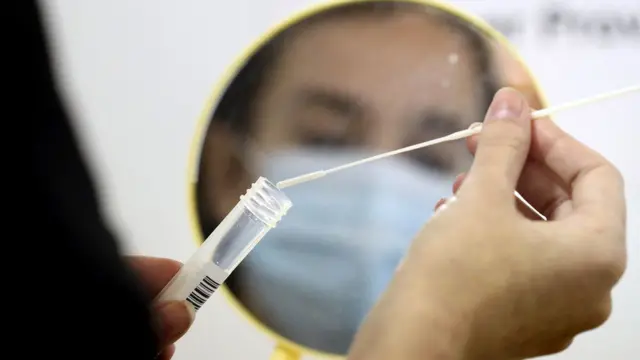
    Person taking a Covid testImage source, PA Media

    Of the 44,508 people transferred to the Test and Trace system in England in the week to 3 March, 88.6% were reached and asked to provide details of recent close contacts, the latest statistics show.

    This is down slightly from 89.1% the previous week.

    Some 10.9% of people transferred to the system were not reached, while a further 0.5% did not provide any communication details.

    A total of 88.7% of people tested at an in-person site received a test result within 24 hours, the data shows, the highest figure since 8 July.

  9. The last football match before everything changedpublished at 11:42 GMT 11 March 2021

    Liverpool fans at Anfield, 11 March 2020Image source, Getty Images
    Image caption,

    Liverpool fans welcomed the team bus to Anfield in the same way as any other big European night

    11 March 2020. 22.31 GMT.

    With seconds left, Atletico Madrid's Alvaro Morata slides a shot past Liverpool's Adrian to complete a remarkable victory at Anfield.

    As the ball hits the net, 3,000 Atletico fans erupt and manager Diego Simeone celebrates before them.

    But as the lights went out on Liverpool's Champions League defence, so they did on football - Covid-19 shutting the game down for three months and leaving European grounds empty indefinitely.

    A subsequent investigation found the game was one of two major sporting events in the UK that week, along with the Cheltenham Festival, that "caused increased suffering and death".

    Indeed, by the end of March last year, Liverpool was a suspected coronavirus hotspot, with one of the highest suspected number of cases in the country.

    One year on from the last match before a full house, we've spoken to those who were inside Anfield to find out what it was like.

  10. Positive test results in England at lowest level since Septemberpublished at 11:33 GMT 11 March 2021

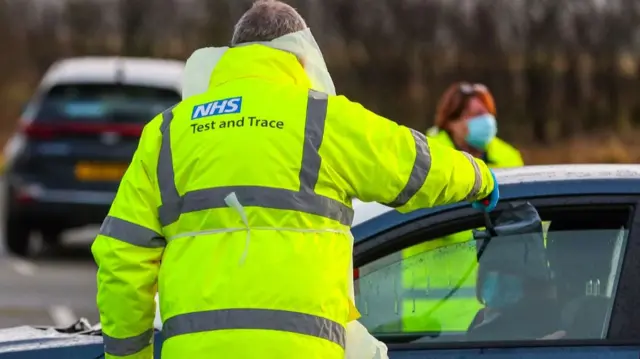
    Test and Trace worker puts a test through a car windowImage source, PA Media

    A total of 45,229 people tested positive for Covid-19 in England at least once in the week to 3 March, the latest NHS Test and Trace figures show.

    That is down 34% on the previous week - and is the lowest number since 23 September.

    There were 2.8 million lateral flow - or rapid - tests conducted in England in the week to 3 March. That is the highest weekly total since rapid testing began, while 1.1 million lab-processed PCR tests were conducted, the lowest volume since mid-October.

    The figures come a day after the Public Accounts Committee said the impact of Test and Trace was unclear despite £37bn having been set aside for it.

    Read more on how Test and Trace works here.

  11. When can I go on holiday again?published at 11:27 GMT 11 March 2021

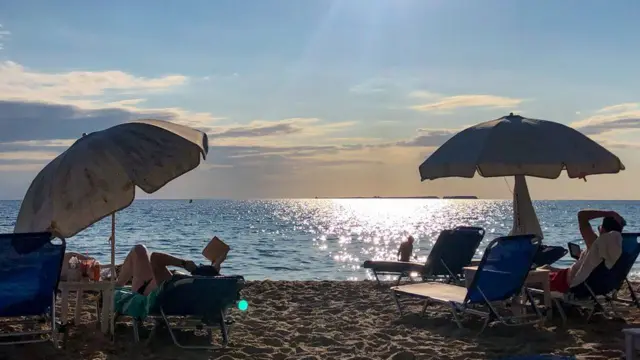
    A woman on a beach smilingImage source, Getty Images

    As spring approaches, the question many of us are asking is: "When can we go on holiday again?"

    While we'll have to wait for a report on international travel on 12 April for that, Transport Secretary Grant Shapps says he expects there will need to be a combination of vaccinations and testing "in order to have international travel work again".

    He also reminds people that holidays abroad are banned until 17 May, at the earliest, and says there is "a lot of work to be done" ahead of that date.

    Here is a reminder of the current travel situation.

  12. Vaccine information translated into five South Asian languagespublished at 11:17 GMT 11 March 2021

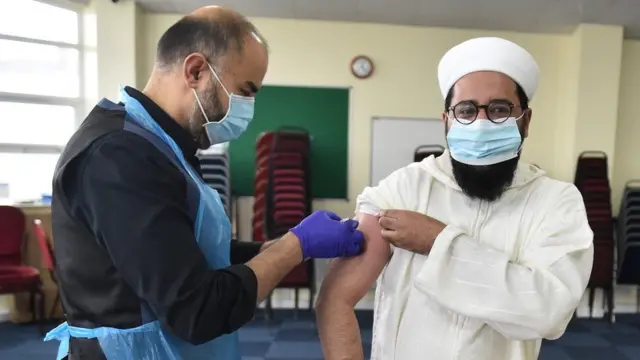
    A man is given a vaccinationImage source, Getty Images

    To help make sure people have access to accurate information about coronavirus vaccines, BBC Asian Network is teaming up with doctors to translate advice into South Asian languages.

    You can find vaccine information in Tamil, Punjabi, Urdu, Sylheti and Gujarati here.

  13. Uganda begins Covid-19 vaccination campaignpublished at 11:10 GMT 11 March 2021

    Patricia Oyella
    BBC News, Kampala

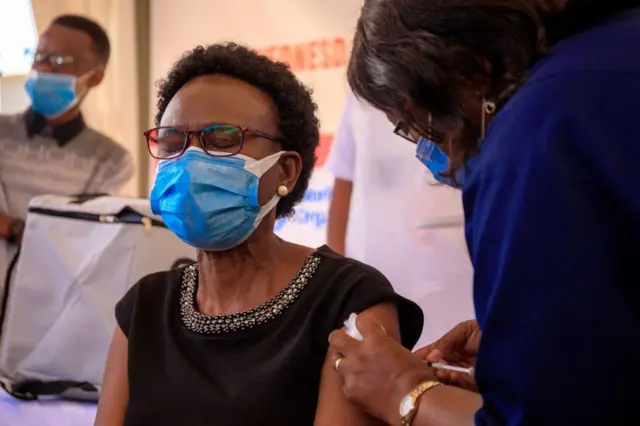
    Health minister Jane Ruth Aceng receives an injection of the Oxford AstraZeneca Covid-19 vaccine in KampalaImage source, Getty Images
    Image caption,

    Health minister Jane Ruth Aceng was the first to get the jab

    Uganda kicked off mass vaccination against Covid-19 on Wednesday, after receiving 864,000 doses of the Oxford-AstraZeneca vaccine last week.

    Health Minister Jane Ruth Aceng was the first to receive a jab at the main hospital in the capital, Kampala.

    Priority is being given to health workers in the country and many of them lined up at Mulago referral hospital in Kampala to receive it.

    Other groups scheduled to receive the vaccine are security personnel considered essential in supporting the Covid-19 response, teachers, adults aged over 50 years, and people with underlying health conditions.

    The vaccination campaign will spread to health centres countrywide for the next five days.

    Those vaccinated now will receive their second doses in May and June.

    An additional supply of 2,688,000 vaccine doses from the Covax scheme is expected in June.

    Uganda plans to vaccinate 49.6% of its population in a phased manner.

  14. Analysis: Surge in virus cases hit non-Covid carepublished at 11:00 GMT 11 March 2021

    Nick Triggle
    Health Correspondent

    The surge in Covid cases in January hit non-Covid care, data published by NHS England shows.

    Fewer than half the expected number of operations were done, pushing the waiting list to a record-high of 4.6 million.

    More than 300,000 of those have been waiting more than a year for treatment - compared with 1,600 before the pandemic began.

    Surgeons describe it as a dire situation that even caused some cancer treatments to be postponed.

    Tim Mitchell, of the Royal College of Surgeons of England, says: "Behind today's statistics are people waiting in limbo.

    "Many will be in considerable pain, others will have restricted mobility and be at risk of isolation and loneliness.

    "Dealing with this daunting backlog will take time, and also sustained investment in the NHS."

    NHS England says that, given the scale of Covid admissions seen in January, some disruption was unavoidable.

    Medical director Prof Stephen Powis says that admitting more than 100,000 Covid patients to hospital in a single month "inevitably had a knock-on effect on some non-urgent care".

    But hospitals treated more than a million people with other conditions in January, at the peak of the winter wave, nearly twice as many as they did last April.

    You can read more from Nick here.

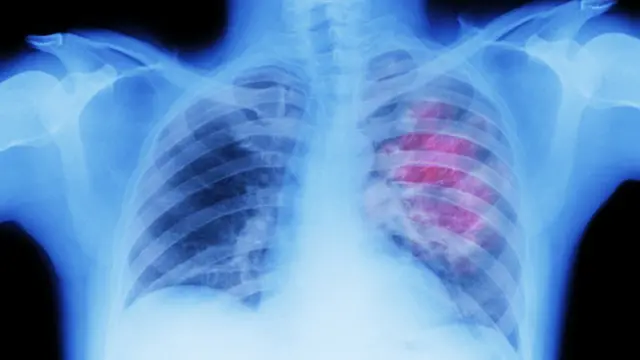
  15. Urgent cancer referrals down 11% in Englandpublished at 10:51 GMT 11 March 2021

    An x-rayImage source, Getty Images

    We've got more on the NHS England figures out this morning.

    They're giving us a picture of hospitals in England this January compared to January 2020, before the coronavirus pandemic.

    They show that a total of 171,231 urgent cancer referrals were made by GPs in England in January 2021, compared with 191,852 in January 2020 - a year-on-year drop of 11%.

    This follows year-on-year increases of 7% in December 2020 and 2% in November.

    Urgent referrals where breast cancer symptoms were present - although not initially suspected - were down from 14,299 in January 2020 to 12,437 in January 2021, a fall of 13%.

  16. AstraZeneca says Covid vaccine is safe after woman dies of blood clotpublished at 10:37 GMT 11 March 2021

    We've had a statement from AstraZeneca after Denmark suspended use of one batch of its coronavirus vaccine.

    The move came after a woman died from blood clots after having received a dose.

    A spokesman says: “Patient safety is the highest priority for AstraZeneca.

    "Regulators have clear and stringent efficacy and safety standards for the approval of any new medicine, and that includes [the so-called] Covid-19 Vaccine AstraZeneca.

    "The safety of the vaccine has been extensively studied in Phase III clinical trials and peer-reviewed data confirms the vaccine has been generally well-tolerated.”

    The EU regulator EMA has said there is no indication the vaccine causes blood clots.

  17. UK looking at international travel certificationpublished at 10:29 GMT 11 March 2021

    A beach in GreeceImage source, PA Media

    Transport Secretary Grant Shapps has told the House of Commons that the government's Global Travel Taskforce will introduce a travel certification to allow people to travel abroad.

    He says this could be done by using schemes like the International Air Transport Association's travel pass or the World Economic Forum's common pass.

    He says he has been having conversations with his US counterparts and "many others around the world" in order to get "travel going again".

    The transport secretary says the Global Travel Taskforce report will be made public on 12 April.

    Shapps said on Wednesday that it was still too early to book a holiday.

    Here is an explanation of how such certificates or vaccine passports could work.

  18. Analysis: Denmark's suspension of AZ vaccine batch a precautionpublished at 10:28 GMT 11 March 2021

    Michelle Roberts
    Health editor, BBC News online

    VaccinationImage source, Getty Images

    We've heard that officials in Denmark say they have received reports of fatal or life-threatening blood clots in a small number of people who had recently received a dose of the Oxford-AstraZeneca coronavirus vaccine.

    The news from Denmark may sound worrying, but it is not yet known if there is any connection between the vaccine and fatal or life-threatening blood clots.

    Europe’s drugs regulator, the EMA, says there is currently no evidence to link the vaccine to the illnesses.

    It was on Sunday that a 49-year-old woman in Austria died from multiple blood clots. She had been vaccinated 10 days earlier. Another person who received a shot from the same vaccine batch was also hospitalised for a blood clot in the lung.

    As of 9 March 2021, two other reports of thromboembolism have been received for this batch, ABV5300, that contained a million doses and was delivered to 17 EU countries, including Austria and Denmark.

    A full investigation into batch quality is ongoing, but a defect is considered unlikely.

    Overall, 22 cases of thromboembolic events have been reported among the three million people vaccinated with the AstraZeneca vaccine in the European Economic Area.

    Any approved treatment, including vaccines, carries a risk of some side effects for some people, but most are usually mild and severe ones are rare.

  19. A&E attendances down 33%, NHS England sayspublished at 10:19 GMT 11 March 2021

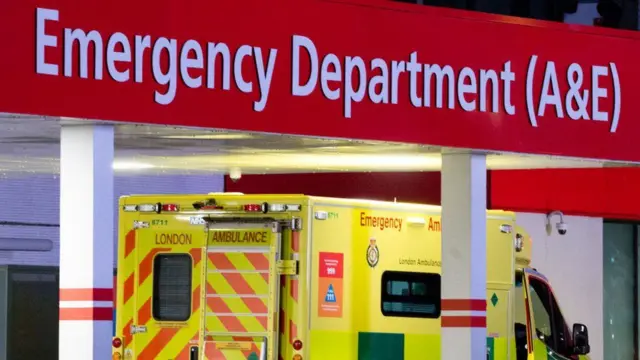
    A&EImage source, Getty Images

    A&E attendances at hospitals in England continue to be below levels of a year ago, according to the latest figures from NHS England.

    A total of 1.3 million attendances were recorded in February 2021, down from two million in February 2020.

    After adjusting for the leap year in 2020, NHS England says attendances are down year-on-year by 33%.

    NHS England says the drop is "likely to be a result of the Covid-19 response" - suggesting that people are still staying away from A&E departments because of the coronavirus outbreak.

  20. Denmark suspends AstraZeneca batch over blood clot fearspublished at 10:16 GMT 11 March 2021
    Breaking

    Michelle Roberts
    Health editor, BBC News online

    Denmark has suspended use of one batch of the AstraZeneca vaccine after a woman who received a dose died from blood clots.

    Another person, who received a jab from the same batch ABV5300, was also hospitalised with clots.

    EU regulator EMA says there is currently no indication, external that vaccination has caused these conditions, which are not listed as side effects with this vaccine.

    EMA’s safety committee PRAC, external is investigating the cases reported with the batch as well as all other cases of thromboembolic events, and other conditions related to blood clots, reported post-vaccination.

    The information available so far indicates that the number of thromboembolic events in vaccinated people is no higher than that seen in the general population.

    As of 9 March 2021, 22 cases of thromboembolic events had been reported among the three million people vaccinated with AstraZeneca's vaccine in the European Economic Area.

    How do we know Covid vaccines are safe?