Summary

  1. Who were the victims of the Nottingham attacks?published at 11:17 BST 30 April
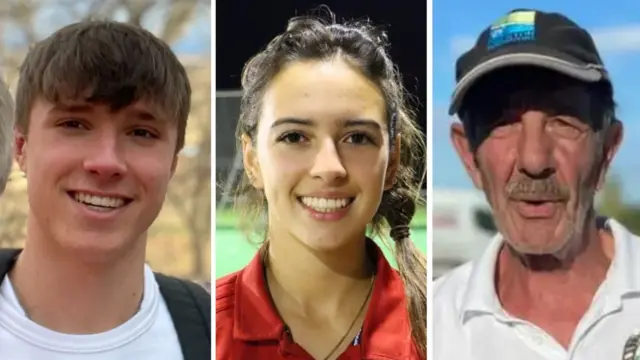
    Barnaby Webber, Grace O'Malley-Kumar and Ian CoatesImage source, Supplied

    Three people were killed by Valdo Calocane.

    Barnaby Webber and Grace O'Malley‑Kumar were both 19‑year‑old University of Nottingham students.

    The friends were walking home from a night out on 13 June 2023 when they were killed.

    Grace was a medical student, who had been a talented hockey player, representing clubs at a high level and previously playing for England age‑group teams, while Barnaby was studying history and had a passion for sport, particularly cricket.

    The third victim, Ian Coates, was a 65‑year‑old school caretaker who was on his way to work when he was killed.

    Ian, who was four months from retirement at the time, has been described as a "devoted family man" and "a gentle, dependable presence" at work.
  2. 'He said he'd text or call'published at 11:11 BST 30 April

    Inquiry team barrister Craig Carr asks if a mental health assessment should have been made at this point, Parsonage disagreed, but said: "He said he'd text us or call us again, although there was a change in presentation, he's more guarded.

    "It comes down to risk, but he evidently needs closely monitoring."

    She added: "I imagine that our plan was to keep contacting VC and refer to crisis if our concerns remained."

    But Carr tells the inquiry that no plan was documented.

  3. 'Strange and out of character' for Calocane to visit mental health wardpublished at 11:09 BST 30 April

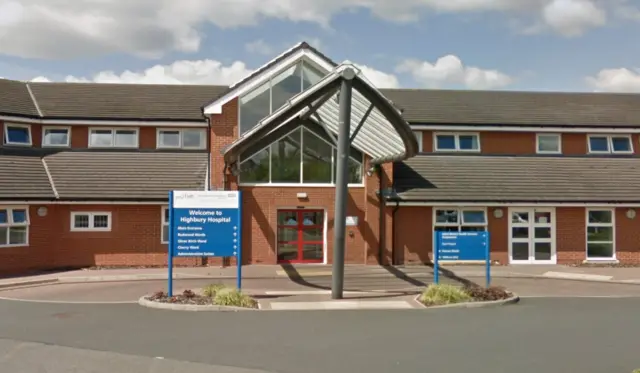
    On 16 October 2021, Calocane attended the Rowan One Ward - a psychiatric ward at Highbury Hospital - where he had been previously detained and asked staff members if they heard voices on the ward.

    He also asked whether they communicate with artificial intelligence.

    Parsonage accepted that was "strange and out of character".

    She made a telephone call to him and recorded that he was "fine" but that his speech was "monosyllabic".

    She agreed to meet him three days later.

    Carr asked: "Why not go to see him more urgently than that? Why was it safe to wait three days?"

    Parsonage replied: "I think it would have been seeing other patients, potentially, other cover.

    "I wish now that I had seen him that day."

    Highbury HospitalImage source, Google
  4. Calocane was 'adamant' he was taking medication, nurse sayspublished at 11:07 BST 30 April

    The inquiry heard Parsonage visited Calocane on another occasion after his mother Celeste had raised concerns he was "not doing well".

    During a visit in June 2021, she recorded Calocane as being "bright and reactive in mood" and did not think he had relapsed.

    "He is adamant he takes them [oral medication] daily," she recorded in her notes.

    Carr asked: "Now, were you aware at this stage that VC had disclosed during his second admission, having misled clinicians as to the symptoms he was suffering?"

    Parsonage replied: "No."

    Carr said: "Do you consider that VC might mislead?"

    Parsonage added: "Yeah."

    Carr said: "Were you sceptical?"

    Parsonage replied: "I imagine so, yeah."

    Carr asked: "Was this an occasion where you could have asked to see VC's medication box?"

    Parsonage said: "Yeah."

    Calocane's medication box was not checked on this occasion, and a referral was not made to the crisis team, which would have been able to monitor medical concordance.

  5. Valdo Calocane 'told medics his condition was improving'published at 11:00 BST 30 April

    The following year, early in 2021, Abigail Parsonage attended an outpatient appointment with Calocane and Dr Bilal Burri, a doctor who was involved in Calocane's care for a period, and who also gave evidence to the inquiry this week.

    Notes from the meeting by Parsonage suggested Calocane believed his condition had improved, and that he was not suffering from psychosis.

    Parsonage said: "At this point he seems OK, he's able to recognise the voices have calmed down although they're still there."

    He told this appointment that he was taking his medication.

    In February 2021, Calocane had a phone call with Parsonage.

    She noted he "was bright in his mood" and she graded him as "low risk to himself and others".

    He told the nurse the voices "were quieter and in the distance".

    Parsonage said: "Voices can get worse or more intense for various reasons, not just medication."

    A further call took place in March.

  6. 'Evidence of a deteriorating patient'published at 10:56 BST 30 April

    The inquiry is told consultant psychiatrist Dr Faizal Seedat (pictured below), who previously gave evidence to the inquiry about Calocane's two stays at Highbury Hospital in 2020, contacted Parsonage in November 2020 to say he had been approached by Calocane.

    Parsonage did not record this as "an issue of concern".

    Carr said what Seedat suggested "is further evidence, following on from the reports by Celeste Calocane, of a potentially deteriorating patient".

    Dr Faizal SeedatImage source, The Nottingham Inquiry
  7. Calocane told mother to stop speaking to him for two months, inquiry hearspublished at 10:50 BST 30 April

    In October 2020, Calocane's mother, Celeste Calocane, contacted the EIP - reporting that her son had not spoken to her, and that she had been unable to contact him.

    The inquiry heard Celeste told the team this was out of character and wanted them to visit Calocane.

    She told the team her son had told her not to speak to her for two months.

    Parsonage visited his address the day that call was received, the inquiry heard, and spoke to Calocane's housemate, who stated that he was OK and she had "no concerns".

    Parsonage admitted she was reassured at the time, despite not having seen Calocane.

    The nurse added there was no indication of a change in mental state.

    Inquiry team barrister Craig Carr asked: "Why doesn't that [report from Celeste Calocane] indicate a change or potential change in mental state?"

    Parsonage replied: "I think it does indicate a change in mental state and presentation that needs to be assessed to understand more.

    "I think it's important that it was followed up the next week, and I don't think at that time it would have met the threshold for a referral to the crisis team."

  8. Nurse admits note-taking in killer's case 'was poor'published at 10:40 BST 30 April

    Reflecting on her note-taking with Calocane, Parsonage admits it "was poor".

    The nurse did not note his presentation in detail, and while "on occasion" multi-disciplinary team meetings were documented, they were not noted routinely.

    She said: "It was almost a new service. Whereas now we have a template which we follow, at the time we didn't."

    She added the roles and responsibilities of a covering care co-ordinator were not the same, saying "you're not necessarily part of the long-term care plans".

  9. 'No legal framework' to see if tablets had been takenpublished at 10:36 BST 30 April

    Parsonage is now being quizzed on medication and if the EIP teams could see if patients were taking medication.

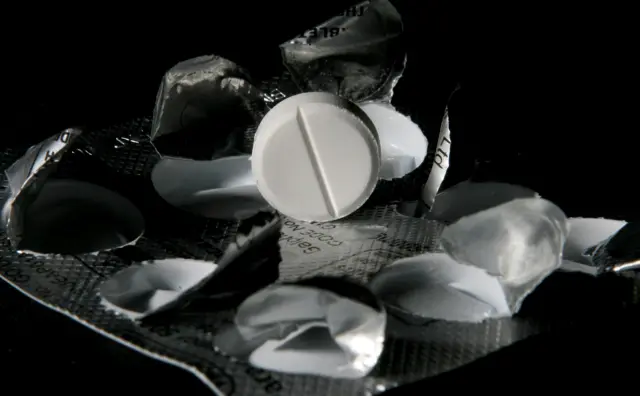
    It is being outlined to the inquiry that there is "no legal framework" to force patients to show their blister packs to see if pills had been taken.

    Parsonage said crisis teams could ask patients to take medication in front of them, but EIP teams did not visit daily.

    Parsonage tells the inquiry she had not had formal training in "medication concordance".

    Asked if she could have asked Calocane if he had taken his medication and requested to see his blister pack, she said: "Regarding doubts about medication concordance, there would have to be a change of presentation or a change in risk, I don't agree that you'd then refer to the crisis team.

    "I think it would be to continue to monitor their presentation, perhaps increase contact with them."

    The inquiry previously heard that Calocane had stopped taking his prescribed anti-psychotic medication on a number of occasions.

    A medication in a blister packImage source, PA Media
  10. Mental health nurse admits she did not look at triple killer's notespublished at 10:31 BST 30 April

    The inquiry has heard that Parsonage accepted she did not look at Calocane's notes.

    In her witness statement to the inquiry, she said she realised "there is a lot I did not know about VC".

    Asked about the fact she did not look through Calocane's notes, she said: "Due to the staffing and the pressures on the services, I wouldn't have had capacity to go through the notes."

    Parsonage said she was aware of Calocane's "risk and his presentation" from discussions with his care co-ordinator at the time, Claudia Birtles, who gave her evidence on Wednesday.

    She added the EIP was not running as a "fully resourced" team at the time.

  11. Patient note-taking changed after the Nottingham attackspublished at 10:23 BST 30 April

    Parsonage is explaining how logging of a patient's risk has changed since Valdo Calocane carried out his fatal attacks on 13 June 2023.

    She said: "Now we're advised to do someone's background, what triggers them to be aggressive to others, what are we doing as a service when there's a risk of aggression to others."

    She says these were part of day-to-day practices prior to the attacks and "we had those discussions", but "they weren't fully captured in the documentation".

  12. Nurse had numerous interactions with Calocane, inquiry toldpublished at 10:18 BST 30 April

    Parsonage has been a member of the Early Intervention in Psychosis (EIP) team since 2019, working at the Stonebridge Centre in Nottingham.

    The inquiry heard that from 2020 to 2022, she had a number of interactions with Calocane - who is being referred to throughout the inquiry as VC.

    She said since the attacks carried out by Calocane, her team had been given in-person training on assessing risk as well as e-learning.

    Parsonage added the trust's new policy incorporated protecting the public and managing risk to the public "much more".

  13. First witness sworn inpublished at 10:12 BST 30 April

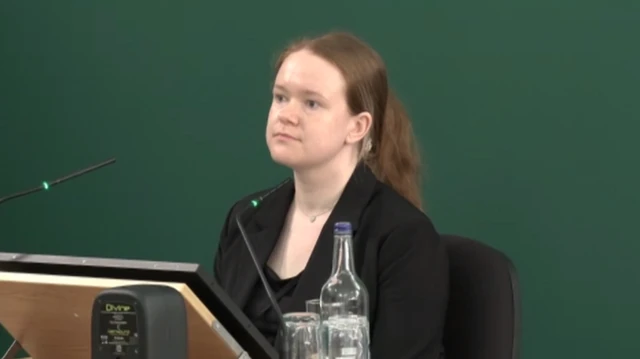
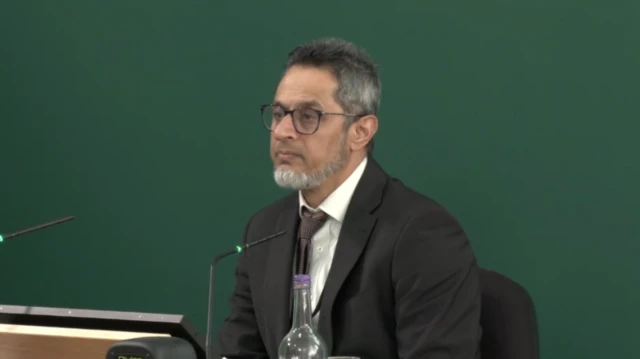
    Abigail Parsonage has been sworn in, and her evidence has begun.

    She is being questioned by barrister for the inquiry team, Craig Carr.

    Abigail ParsonageImage source, The Nottingham Inquiry
  14. Nottingham Inquiry: This week's evidence so farpublished at 10:09 BST 30 April

    On Monday, we heard from a mental health nurse and consultant psychiatrist who were involved in Calocane's care.

    Busayo Ajewole, who was a clinical lead at Highbury Hospital - where Calocane was admitted on a number of occasions - admitted she made errors in his mental health records.

    Ajewole admitted her notes were at times lacking information, copied and pasted and fundamentally wrong.

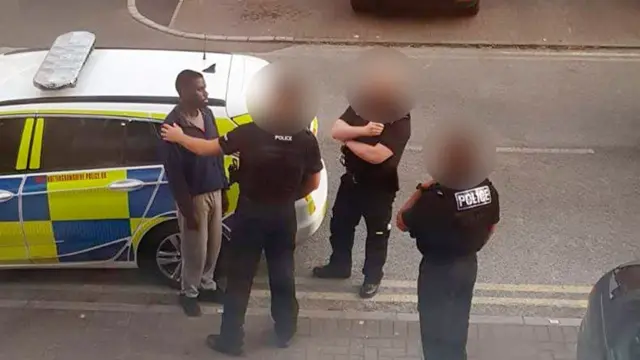
    Calocane being spoken to by police after breaking into a flat in May 2020Image source, Supplied

    Dr Omar Manzar was involved with four of Calocane's Mental Health Act assessments and agreed it was "astonishing" the University of Nottingham - where Calocane was a student - was not informed of his attack on a police officer or incidents involving his neighbours.

    Two others doctors, Dr Benjamin Lomas and Dr Bilal Burri, also gave evidence to the inquiry on Tuesday.

    And on Wednesday, we heard from Claudia Birtles, a nurse on the EIP team which co-ordinated his care for almost two years.

    Birtles admitted to mistakes in record keeping and told the inquiry Calocane was difficult to assess because he was "quite good at hiding" his symptoms.

  15. Who is Valdo Calocane?published at 10:05 BST 30 April

    Valdo Calocane, the man who killed three people and attacked three others, was born in Guinea-Bissau in 1991 and moved with his family from Portugal to Wales when he was 16.

    At his sentencing to an indefinite hospital order with restrictions under the Mental Health Act, Nottingham Crown Court was told his schooling in the UK was "largely uneventful".

    Calocane chose not to do A-levels and began working as a labourer and cleaner, but later went back into education and did a degree in mechanical engineering at the University of Nottingham.

    He graduated in June 2022, when he was aged 30, and was still living in the city at the time of the attacks.

    Calocane had a long‑documented history of mental health issues and was diagnosed with paranoid schizophrenia, and in 2020 was sectioned twice at Highbury Hospital in the city.

    The public inquiry has heard how he had carried out a number of violent attacks including on police and neighbours, and frequently disengaged from treatment and stopped taking his prescribed anti-psychotic medication.

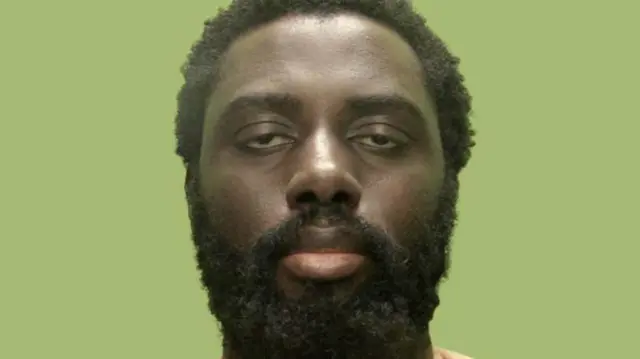
    Valdo CalocaneImage source, Nottinghamshire Police
  16. How does the Nottingham Inquiry work?published at 10:03 BST 30 April

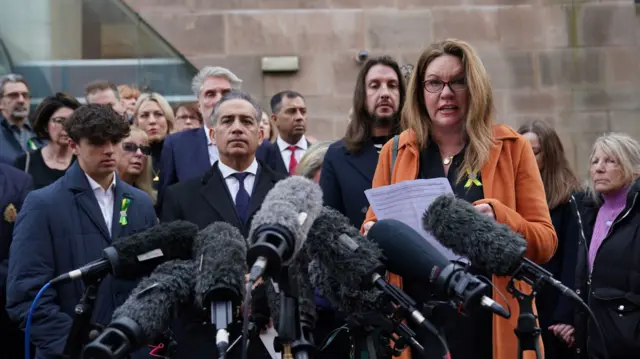
    This inquiry is being chaired by retired senior judge Deborah Taylor KC - who will listen to all the evidence and make findings in a final report.

    Following Calocane's sentencing, a series of failings by authorities emerged, including by the police and mental health services - which the killer was known to - prompting calls for a statutory inquiry.

    The families of the bereaved lobbied for a public inquiry, which was confirmed by Prime Minister Sir Keir Starmer last year.

    Families of the bereaved outside Nottingham Crown CourtImage source, PA Media

    A statutory inquiry means witnesses, who are called forward, are legally compelled to give evidence under oath.

    Evidence from the Nottingham Inquiry hearings in London began on 23 February this year and were initially expected to last nine weeks.

    However, this week marks the ninth week of evidence and a number of witnesses are still to give evidence.

    You can read more about how the inquiry works here.

  17. Who are the witnesses set to give evidence today?published at 10:02 BST 30 April

    We are expecting to hear from two nurses, who were involved in Calocane's care, Abigail Parsonage and Gary Carter.

    They both worked in the Early Intervention in Psychosis (EIP) team, which was responsible for Calocane's care in the community.

    Parsonage undertook a number of home visits to see Calocane, while Carter became Calocane's care co-ordinator in April 2022 until his discharge in September that year.

    We heard in the opening of the inquiry that Carter - according to his written witness statement - believed none of his colleagues were willing to work with Calocane.

  18. What happened during the Nottingham attacks?published at 10:01 BST 30 April

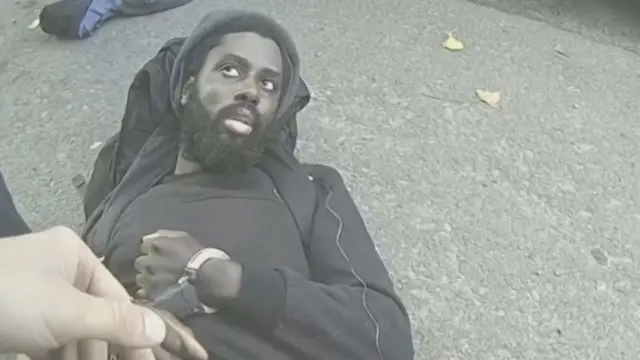
    On 13 June 2023, Valdo Calocane - who was diagnosed with paranoid schizophrenia in 2020 - stabbed to death 19-year-old students Barnaby Webber, Grace O'Malley-Kumar and Ian Coates.

    He then took Ian's van and drove into the city centre, where he struck Wayne Birkett, Sharon Miller and Marcin Gawronski, leaving them with life-changing injuries.

    Valdo Calocane being arrested on 13 June 2023Image source, Nottinghamshire Police

    Calocane was sentenced to a hospital order in January 2024 after pleading guilty to three counts of manslaughter on the grounds of diminished responsibility, and three counts of attempted murder.

    The judge-led inquiry is examining the events that led up to the attacks, what happened on the day and the aftermath.

  19. Welcome to our live coveragepublished at 10:00 BST 30 April

    Good morning and welcome to day 36 of evidence from the Nottingham Inquiry, external.

    The public inquiry is examining fatal attacks in Nottingham on 13 June 2023, carried out by Valdo Calocane.