Summary

  1. Notes made after visit to Calocane's flatpublished at 14:22 BST 30 April

    Carter said following the visit, he wrote that Calocane "may require a mental health assessment".

    Birtles referred him for one on the same day, the inquiry heard.

    Notes were made by Carter about how Calocane's flat was at the end of a long corridor, which could have made leaving "promptly" a problem.

    "Not just in this case, you always look for a safe exit," he said.
  2. Calocane seemed 'agitated' during home visitpublished at 14:19 BST 30 April

    Carter has resumed his evidence, speaking about being part of a visit to Calocane in August 2021 alongside his then care co-ordinator Claudia Birtles, where he seemed "quite agitated" and Carter was aware he probably wasn't taking his medication.

    He said: "He looked very preoccupied with his thoughts, he was quite paranoid, he felt we were working with the police.

    "I had to pull out my ID card to reassure him I was a nurse.

    "I wasn't entirely convinced he was reassured by that.

    "He just unnerved me to see him like that, and to be perfectly frank with you, I was glad when we both exited the room."

    Calocane said he did not want further visits and confirmed he was not taking his medication, according to Carter's statement to the inquiry.

  3. Gary Carter's evidence so farpublished at 14:04 BST 30 April

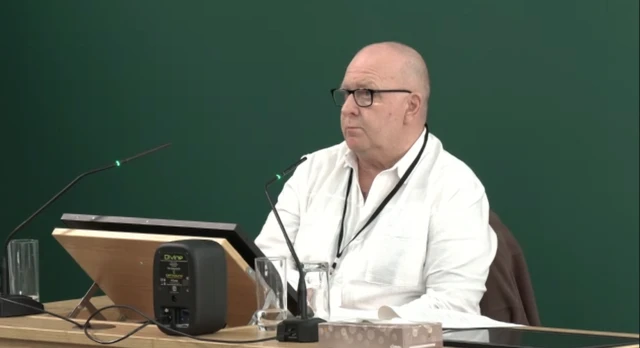
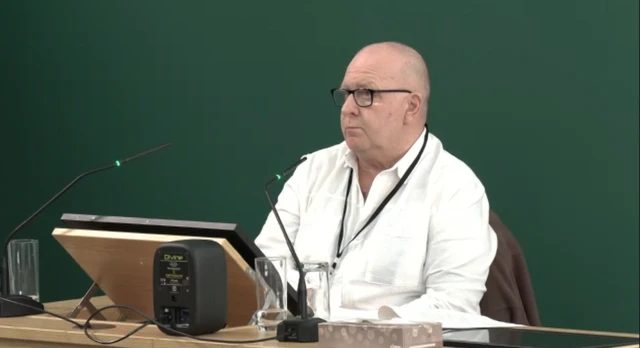
    Gary CarterImage source, The Nottingham Inquiry

    Gary Carter, who was a nurse on the Early Intervention in Psychosis team and led Calocane's care for a period in 2022, said the killer had "lied" and "out-manoeuvred" medical staff "on the ward and in the community".

    Carter admitted he had not been able to read Calocane's file in full so was unaware of the extent of his illness and offending.

    But Carter had been involved in visits to Calocane as far back as 2020.

    He said there were differences in Calocane's presentation then and when he was under his care two years later.

    Calocane had not been taking his medication but this was not flagged as a concern.

    The inquiry heard Carter resigned from Nottinghamshire Healthcare NHS Foundation Trust on 30 April 2025 and is facing disciplinary proceedings.

  4. What Abigail Parsonage told the inquiry this morningpublished at 13:46 BST 30 April

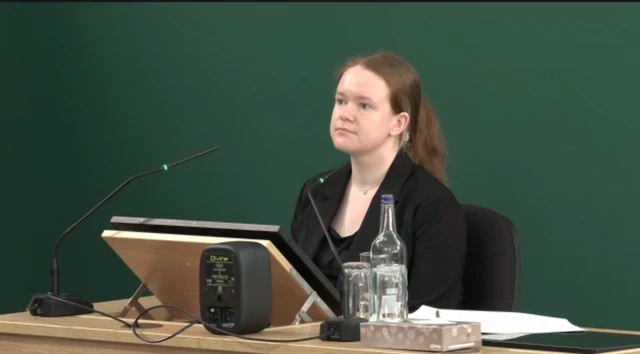
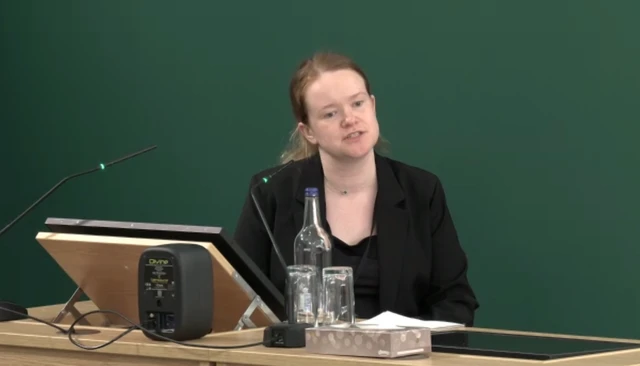
    Abigail ParsonageImage source, The Nottingham Inquiry

    Abigail Parsonage, a nurse with the Early Intervention in Psychosis (EIP) in Nottingham, said the way patient notes were recorded had changed since the attacks to fully capture risks.

    Parsonage said pressures on the service meant she did not read Calocane's notes.

    Calocane had a history of not taking his medication but the EIP teams lacked legal powers to check if he was complying or not.

    In 2020, Calocane told his mother he would not speak to her for two months but this was not seen as a concern.

    Calocane was reporting to medics that he was taking his tablets daily.

    Calocane's state deteriorated and by January 2022, he needed a mental health assessment after assaulting a housemate but this was delayed by a lack of beds.

    Despite not being heard from for a month, Calocane was discharged from the EIP to primary care, and went on to miss five appointments.

  5. 'Wrong' not to ask questions about missed medicationpublished at 13:30 BST 30 April

    On 6 November 2020, Carter and Parsonage visited Calocane with medication but he had 10 tablets left.

    The inquiry heard that meant he had not been taking them when he should have.

    Carter raised concerns with the community consultant Dr Tuhina Lloyd, who asked him to contact a doctor on the team to arrange an assessment.

    Asked if he questioned Calocane on that, Carter said: "I think Abi [Parsonage] asked that."

    He added: "I don't recall asking him."

    The inquiry heard there was no note in Calocane's records that he was asked why he still had tablets left or whether he had been taking them.

    "If neither of us asked that question, both of us were quite wrong not to do so," Carter said.

    Carter resigned from the Nottinghamshire Healthcare NHS Foundation Trust in April 2025 and is facing disciplinary proceedings, the inquiry was told.

    The inquiry has now broken for lunch.

  6. Doctor urged face-to-face visitspublished at 13:18 BST 30 April

    The Early Intervention in Psychosis (EIP) team was contacted by consultant psychiatrist Dr Faizal Seedat after Calocane attempted to speak to him.

    Carter, who was not at this point Calocane's care co-ordinator, and his colleagues were urged "to visit face-to-face" by Seedat.

    An email was sent back to Seedat by Carter's EIP line manager, Dr Tuhina Lloyd, saying attempts were being made weekly to visit Calocane but he was not engaging.

  7. Killer was not taking his medication in fullpublished at 13:07 BST 30 April

    On another occasion, Carter visited Calocane's address with Parsonage as his medication prescription was overdue and his tablets would be running low.

    He said: "Having 10 tablets left, that's concerning. It's non-compliant."

    Carter did not record this as an issue of concern.

    "That's my mistake," he said.

  8. Carter told Calocane to give his mother a callpublished at 13:03 BST 30 April

    Carter says that with concerns being expressed by the family, he accepts that Calocane should not have been left without a face-to-face meeting for long periods, sometimes up to three weeks.

    He said: "I didn't go and see him, it's quite obvious I didn't. All I can say is I was probably dealing with other clients on my caseload."

    Carter did visit Calocane's address, a shared home, on one occasion and spoke to Calocane up a flight of stairs.

    "I explained to him that his mum was a little concerned and it might be a good idea to perhaps give her a ring, reassure her he was OK. He said 'I'll do that'," recalled Carter.

  9. Calocane 'looked and sounded like a different man'published at 12:59 BST 30 April

    Carter told the inquiry he recalls comparing how Calocane looked in the early stages of his care and later.

    He said at first, he looked "pretty good" and "comfortable".

    "Prior to admission, he looked like a different man, he sounded like a different man and he was behaving differently," Carter added.

  10. Handover process was 'inadequate', nurse sayspublished at 12:56 BST 30 April

    Carter told the inquiry when he was made care co-ordinator, the handover process was "inadequate".

    Asked if he agreed that record-keeping around risk assessment was "effectively non-existent", he said: "Judging by what I've heard over the last couple of months, watching various people give evidence, I would think that that was probably a fair statement."

    Carter said he was aware there was a need to monitor Calocane's medication taking, saying it was "brought up in MDT [multi-disciplinary team] meetings on a regular basis".

    He accepted monitoring was required to keep Calocane safe and others safe, however, the need to keep others safe was not expressed on records, the inquiry heard.

    "Well if it's not expressed, it was certainly understood," Carter said.

  11. Carter previously met Calocane on a home visitpublished at 12:51 BST 30 April

    Carter, then new to the service having joined a fortnight prior, visited Calocane in September 2020.

    "I met him in the kitchen," said Carter. "He seemed like a pleasant chap. He seemed interested in what Claudia [Birtles, a mental health nurse] had brought him, he asked questions.

    "I personally had no concerns about his mental state. He looked fine, he sounded fine.

    "I think I did ask him what he was studying at university and he told me it was mechanical engineering.

    "If he was masking his symptoms, he did a good job in my opinion."

  12. Care co-ordinator did not read killer's full historypublished at 12:40 BST 30 April

    Carter is asked if he looked at the background notes on Calocane when he came into his care in 2022, in particular notes from consultant psychiatrist Dr Faizal Seedat from his time at Highbury Hospital in 2020 about his lack of insight and remorse and the suggestion that "perhaps VC will end up killing someone".

    Carter says he recalls looking back as far as admissions in 2021 but "not that far back".

    He was not aware of his arrest after the incident where a neighbour was injured fleeing out of a window after he broke into her flat.

    "Ideally I should have started at page one and started reading about this man, but it just didn't work like that," Carter said. "His notes amount to 273 pages in length, I arrived as a CCO at 267. It would have been fantastic but that would have taken some time."

    He admits it would have been "extremely useful" to know the extent of Calocane's illness, and of texts sent to his brother referencing "red rum", a reference to murder, and saying "I can break their heads with my hands".

  13. Calocane 'outmanoeuvred' medical staffpublished at 12:35 BST 30 April

    Gary Carter was on the Early Intervention in Psychosis team and became Calocane's care co-ordinator (CCO) from April 2022 to September 2022, when he was discharged.

    He said in that time, he saw Calocane twice as CCO and each time for "less than five minutes".

    Asked what went wrong with Calocane's care in the community, he said he had learned 95% of what he knew about Calocane since the fatal attacks in June 2023.

    "Basically, this man in a nutshell, he lied, he deceived, he out-manoeuvred medical staff in particular, on the ward and in the community. He wasn't honest," he said.

    Carter added: "I think it's very easy to see this now where at the time, without the benefit of hindsight, he out-manoeuvred medical and nursing services within the trust."

    He also said the team was "never quite sure where he was at any given time", adding he moved from one address to the other.

  14. Next witness ready to give evidencepublished at 12:31 BST 30 April

    Gary Carter has been sworn in and is due to be questioned by counsel to the inquiry Rachel Langdale KC.

    Carter was Calocane's lead care co-ordinator from April 2022 until his discharge later that year.

    Gary CarterImage source, The Nottingham Inquiry
  15. Calocane's mother not kept updated, inquiry toldpublished at 12:18 BST 30 April

    Calocane's family representative Adam Straw KC starts by looking into his mother Celeste's phone calls with mental health services in October 2020, asking if anyone had made contact with her son.

    While his lead care co-ordinator Gary Carter then made contact with Calocane, nobody let her know.

    Parsonage agreed it would have been "appropriate" to feed back to Celeste.

    And after another contact with her in May 2021, when she worried Calocane "was becoming unwell", again nobody went back to report to her what was going on.

    Asked if she rang Celeste, Parsonage said: "No, and I should have done."

    Again, after raising concerns in October 2021 about her son's discharge, nobody contacted her.

    Parsonage told the inquiry: "It's important to contact family members and include them in any discharge planning."

    Parsonage has now concluded her evidence.

    Abigail ParsonageImage source, The Nottingham Inquiry
  16. Calocane missed five appointments after discharge from hospitalpublished at 12:17 BST 30 April

    Following his third admission to hospital and subsequent discharge, Calocane missed five appointments with the Early Intervention in Psychosis (EIP) team between 15 November 2021 and 17 January 2022.

    Earlier today, Parsonage said she was concerned in December, following a medication collection, about Calocane possibly deteriorating.

    She also said a referral to the crisis team would have been necessary when there was a change in risk or presentation.

    Asked if a referral to the crisis team should have been made at that point, Parsonage said there could have been "close monitoring" but that the threshold was "low" for a further referral.

    On 15 January, following a number of those missed appointments, Calocane assaulted his flatmate Christopher.

  17. Calocane had not been heard from for a monthpublished at 12:06 BST 30 April

    At the point of discharge, Calocane had not been in contact for about a month, with his last contact with the Early Intervention in Psychosis (EIP) team being a text.

    Carr says attempts should have been made to locate Calocane, according to policy documents, but these were not done, and other agencies such as the police were not approached.

    "I don't agree with it but the practice at that time - and it's very different now - was to be discharged back to their GP and be informed how they can re-access services should they require it," said Parsonage.

    Carr says Calocane's history was marked by violence and disengaging with medication.

    Parsonage's statement to the inquiry accepted she should have tried to assess his mental state.

    She said at the time she was not "overly concerned" about the discharge.

    "The reason people disengage is different for each person," she said.

  18. Inquiry told of decision to discharge Valdo Calocanepublished at 11:59 BST 30 April

    The final notes on Valdo Calocane's records show the decision at a multi-disciplinary meeting to discharge him back into primary care from the Early Intervention in Psychosis (EIP) team.

    Neither of Calocane's main care co-ordinators were present, but Parsonage said she was present for part of the meeting and said: "Discharge had been discussed several times... and there would have been an opportunity to challenge that decision if it was disagreed with."

    Craig Carr notes the meeting heard VC had graduated and disengaged from student mental health services, and that police "were not concerned" about recent contact.

    Parsonage said: "Nothing had been raised, but I think from the inquiry and all the other information, it's evident that information sharing wasn't really there."

  19. Lack of beds 'delayed mental health assessment'published at 11:45 BST 30 April

    The inquiry heard Valdo Calocane was supposed to have a Mental Health Act assessment in January 2022, after he assaulted one of his housemates.

    In an email to a mental health worker at the University of Nottingham, where Calocane was studying at the time, Parsonage said "they are waiting for a bed before the assessment can be done".

    She added in that email, "such a shame there were no beds yesterday".

    Carr asked: "So is it the position that the Mental Health Act assessment on VC had to be delayed because of a lack of beds?"

    Parsonage replied: "I think it was probably as well because of what had happened at the last Mental Health Act assessment, and that they needed police presence, and they needed to be able to take him to a safe place.

    "So I think it probably would have been a few factors, perhaps."

    Asked if there was a problem of assessments or detentions not going ahead because of a lack of beds, Parsonage said: "I think on occasion, yeah."

  20. Killer noted as being 'fixed in his staring'published at 11:34 BST 30 April

    On 17 December 2021, Parsonage recorded that Calocane had been "curt" during a medication collection from the Stonebridge Centre and was "fixed in his staring".

    She said that showed "sort of hostility and possible paranoia that he might have felt towards me".

    Parsonage said she was concerned Calocane was deteriorating at that point, but no-one then contacted him until 31 December.

    Inquiry team barrister Craig Carr asked: "In light of the concerns that you were raising - would have expected action to have been taken sooner than 31 December?"

    Parsonage replied: "I don't know what else was going on in the team at the time, so I can't really comment on that."

    Carr said: "Did those concerns justify him being seen much sooner than 31 December?"

    Parsonage replied: "Perhaps, or a conservation with him on the telephone."