Summary

  1. US 'willing to go as far as we need', says Hegsethpublished at 01:46 GMT 9 March
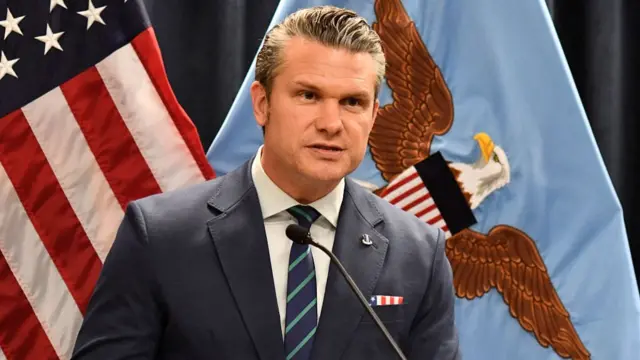
    US defence secretary Pete HegsethImage source, Getty Images

    US Defence Secretary Pete Hegseth says the US is "willing to go as far as we need to be successful" in the war with Iran.

    "You don’t tell the enemy, you don’t tell the press, you don’t tell anybody what your limits would be on an operation," he says in an interview with the BBC's US partner CBS's 60 Minutes.

    Hegseth says the US is "fighting to win" and Donald Trump will "set the terms" of Iran's surrender.

    "We'll know they are not capable of fighting... whether they know it or not, they will be combat ineffective, they will surrender."

    Iran's navy, Hegseth adds, is "largely no more" and will continue to diminish.

    "This is only just the beginning."
  2. Iran launches first missiles at Israel under new leaderpublished at 01:13 GMT 9 March

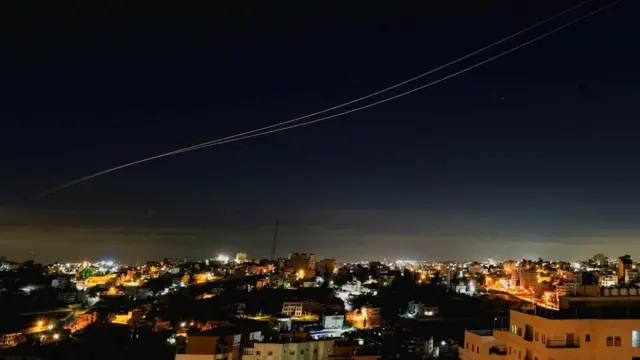
    Missiles flyingImage source, Reuters

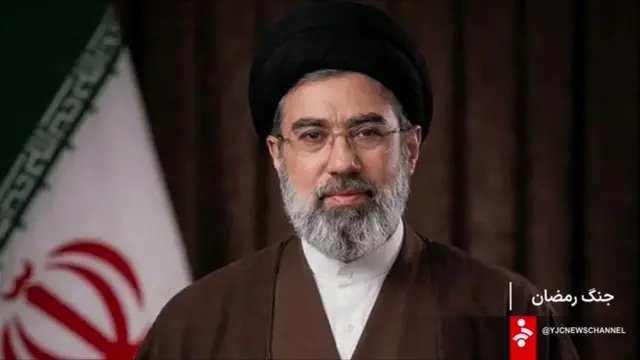
    Iran has launched its first wave of missiles under its new leader Mojtaba Khamenei, state broadcaster IRIB said in a post on its Telegram channel.

    It also posted a picture of a projectile bearing the slogan: "At Your Service, Sayyid Mojtaba".

  3. Mojtaba Khamenei's appointment is a fight for survival for the regimepublished at 00:56 GMT 9 March

    Jeremy Bowen
    International Editor

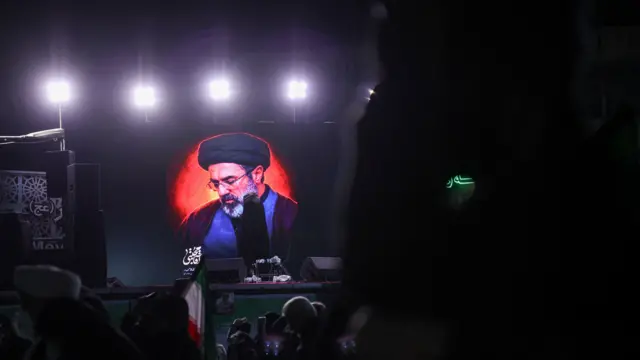
    A picture of Iran's new supreme leader, Mojtaba Khamenei, is displayed on a screen in TehranImage source, Reuters

    Mojtaba Khamenei's name has been mentioned in the past as a possible candidate, but we have to remember that everybody inside Iran whether or not they're in the regime, whether or not they support the regime, is under immense pressure right now.

    While Mojtaba Khamenei has got the job, he clearly is not going to have the same powerful position as his father who built his influence up over 40 years.

    His job now might be trying to referee between the different splits within the senior parts of the regime.

    We’ve heard very different messages coming out from the president and others as well, and this is just another layer of change, uncertainty and difficulty in this war, which in only a week has produced a great deal of all of the above.

    But from the perspective of the 88 member clerical body that selected Mojtaba Khamenei, it’s a fight for survival.

    He was known as his father’s gatekeeper so he must have known a great deal of what was going on inside the regime.

    Mojtaba Khamenei was someone who was essentially in the office, even if he wasn’t in the right chair, he’s now behind the desk.

  4. Stock markets slide as oil prices soarpublished at 00:49 GMT 9 March

    Peter Hoskins
    Business reporter, Singapore

    Shares prices are falling sharply across the Asia-Pacific region in early morning trading after oil jumped above $100 a barrel for the first time in four years.

    Japan's Nikkei 225 fell by more than 6%, the Kospi was more than 7% lower while the ASX 200 in Australia was almost 4% lower.

    Fresh waves of US and Israeli airstrikes on Iran over the week have increased concerns that major disruption to energy supplies from the region threatens to push up prices for consumers and businesses around the world.

  5. Analysis

    Oil price spike likely to increase petrol pricespublished at 00:27 GMT 9 March

    Faisal Islam
    Economics editor

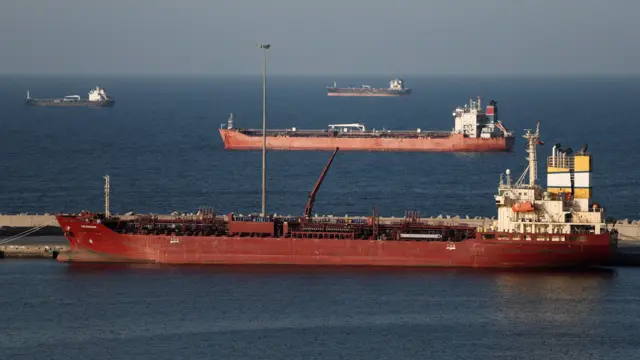
    A red oil tanker is pictured in the Strait of HormuzImage source, Reuters

    As we told you a little earlier, the price of a barrel of crude oil has surged in early Asian trade, breaching the $100 mark, at one point hitting $111 a barrel, up 20% in a matter of minutes.

    Many in the markets predicted that oil would hit the $100 a barrel mark this week. In the event it took about a minute to jump 10%, and then another 15 minutes to rise a further 10% in early Asian trading.

    Last week the markets had been relatively relaxed about the seeming nightmare scenario for millions of barrels of crude and liquefied gas to be trapped in the Gulf, with tankers unable or unwilling to transit the Strait of Hormuz. But the escalations over the weekend, alongside scenes of destruction of energy infrastructure both in Iran and across the Gulf, saw the markets take rapid fright.

    The question now is where does this go? Some analysts argue that if the shutdown in the Strait lasts until the end of March, record oil prices above $150 a barrel could occur.

    The existing rise is likely to further increase petrol prices, and important derivative products such as jet fuel and vital precursors for fertilisers.

    The physical supplies from the Gulf are mainly consumed in Asia. Already, however, there are signs that Asian consumers are bidding up prices for US gas, with some tankers originally heading for Europe turning around in the mid Atlantic.

  6. US orders embassy staff to leave Saudi Arabiapublished at 00:07 GMT 9 March

    With the Gulf states continuing to see drone attacks from Iran, the US State Department is ordering non-emergency US government employees and US government employee family members to leave Saudi Arabia, citing safety risks.

    The department is also repeating its call for its citizens to reconsider travel to Saudi Arabia, citing "risk of Iranian drone and missile targeting of American interests, armed conflict, terrorism, exit bans and local laws regarding social media activity".

  7. Watch: Regime supporters celebrate Khamenei's electionpublished at 23:52 GMT 8 March

    Media caption,

    Supporters of the Iranian regime celebrate announcement of new supreme leader

    Supporters of the Iranian regime have taken to the streets to celebrate their new supreme leader.

    Mojtaba Khamenei will replace his father, Ayatollah Ali Khamenei - who was killed in the first wave of US and Israeli strikes last week - as the country's spiritual leader and highest authority.

    Many expect he will continue his father's hardline policies.

  8. Trump says rise in oil prices 'very small price to pay'published at 23:30 GMT 8 March

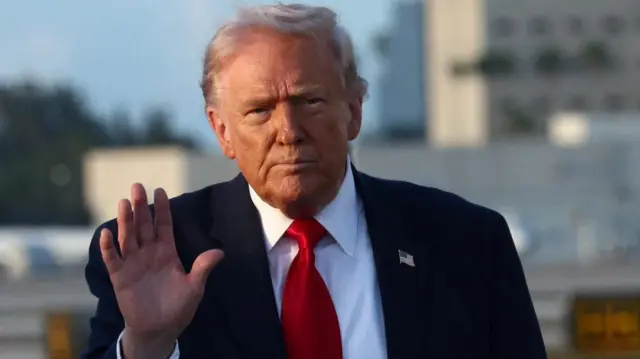
    Donald Trump waves his right handImage source, EPA

    US President Donald Trump says a sharp increase in oil prices (see earlier post) due to the conflict in the Middle East will correct itself and is a small price to pay for global security.

    "Short term oil prices, which will drop rapidly when the destruction of the Iran nuclear threat is over, is a very small price to pay for USA and World, Safety and Peace," he writes in a post on Truth Social.

    "ONLY FOOLS WOULD THINK DIFFERENTLY!"

    The increase in price of crude oil is the highest since the Russian invasion of Ukraine in February 2022.

  9. Message of defiance by picking a man Trump called 'unacceptable'published at 23:20 GMT 8 March

    Lyse Doucet
    Chief international correspondent

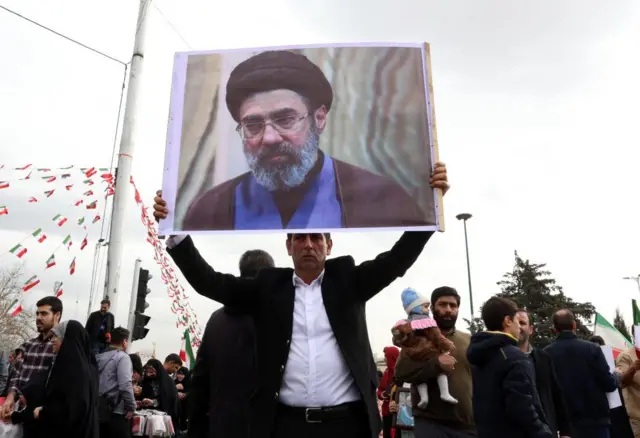
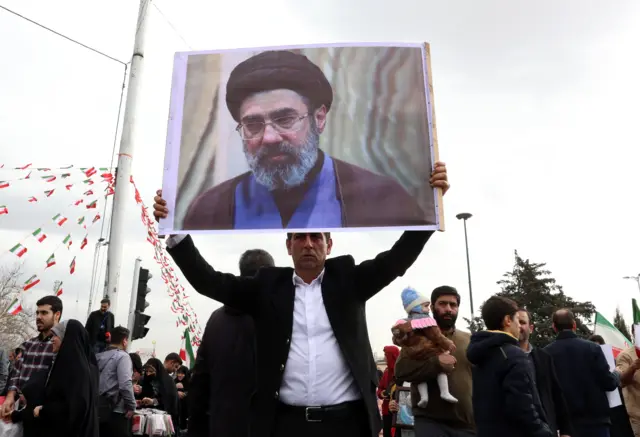
    A man holds a picture of Mojtaba KhameneiImage source, EPA

    The son who worked for decades in the shadow of his father has assumed his mantle, in his conservative mould.

    Mojtaba Khamenei is also closely linked to Iran's Islamic Revolutionary Guards Corps, the powerful paramilitary force he joined straight out of high school before studying with senior clerics.

    It's that continuity and connection that pulled him to the helm.

    Two years ago, his father had ruled his son out of the succession, shunning the hereditary rule of the monarchy they ousted. But the besieged clerical rule he left behind is now fighting an existential battle.

    The real power now calling the shots is the hardline IRGC who control every lever of power.

    Iranians who denounced his father as a dictator will hope his son's days are numbered.

    But he sends a message of defiance to President Trump who called him "unacceptable", and to Israel who’s vowed to kill him too.

  10. Oil price tops $100 a barrelpublished at 22:45 GMT 8 March

    Peter Hoskins
    Business reporter, Singapore

    The price of crude oil rose above $100 (£75) a barrel on Sunday after major energy producers in the Middle East cut production.

    This was in response to the Strait of Hormuz, one of the world's most critical chokepoints for oil and gas shipments, staying effectively closed due to the US-Israeli war with Iran.

    Brent crude was 18% higher at $108.68 a barrel. The US oil, WTI, increased by almost 20% to $108 a barrel.

    This is the highest jump since the Russian invasion of Ukraine in February 2022, when the price of crude soared well above $100 a barrel.

  11. IRGC 'ready for complete obedience' to new supreme leader - Iranian mediapublished at 22:22 GMT 8 March

    Iran's state broadcaster Irib and the semi-official, IRGC-affilitated Tasnim news agency have both shared a statement credited to the Islamic Revolutionary Guard Corps welcoming the appointment of Mojtaba Khamenei.

    The statement describes Khamenei as an "all-encompassing jurist, a young thinker and the most knowledgeable on political and social issues".

    The IRGC also says it declares its "respect, devotion and obedience" to Khamenei, saying that its members are "ready for complete obedience and self-sacrifice in carrying out the divine commands of the Guardian Jurist".

    For context: The IRGC is an armed force charged with protecting and preserving the Islamic Republic, and influences all its levers of power, from security to the economy.

  12. New supreme leader chosen in spite of threats - Iran security chiefpublished at 22:15 GMT 8 March

    The secretary of Iran's Supreme National Security Council has thanked the Assembly of Experts for selecting Ali Khamenei's successor despite "Trump's threat to bomb it", according to multiple Iranian news agencies.

    Ali Larijani says Tehran's "enemies" thought the country would "reach a deadlock" following the death of Ali Khamenei but the Assembly ultimately proceeded with the selection of Mojtaba Khamenei.

  13. What was Mojtaba Khamenei's role in the Islamic Republic before becoming supreme leader?published at 21:54 GMT 8 March

    Ghoncheh Habibiazad
    Senior reporter, BBC Persian

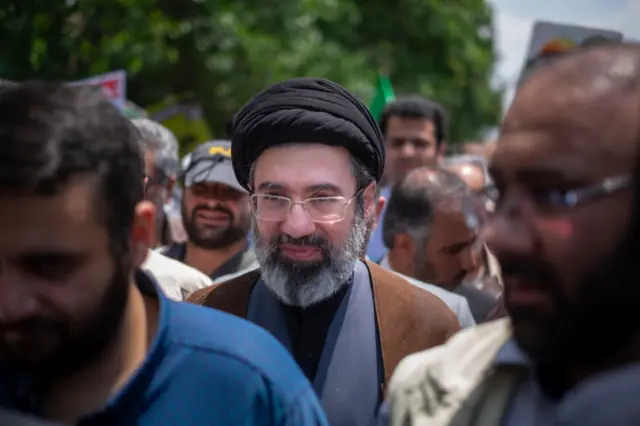
    Mojtaba Khamenei in cleric dress with brown cloak and black head cover walks in a crowdImage source, Getty Images
    Image caption,

    Khamenei attending a demonstration in Tehran in 2019

    Mojtaba Khamenei, 56, was regarded as exerting influence behind the scenes, and has been accused of having hands in presidential elections, commanding the Basij militia, and maintaining close ties with the Islamic Revolutionary Guard Corps (IRGC).

    Despite reports and speculation about his considerable influence, he has not held any official position in the Islamic Republic.

    Both his father Ali Khamenei and his predecessor, the founder of the Islamic Republic Ruhollah Khomeini, had criticised hereditary succession in the context of the Pahlavi monarchy, which was overthrown in the 1979 Islamic Revolution.

    In 2019, Mojtaba Khamenei was sanctioned by the United States as part of a group of individuals “who are appointees of or have acted for or on behalf of” Iran’s then Supreme Leader Ali Khamenei.

  14. US and Israel likely to object to Mojtaba Khamenei's appointmentpublished at 21:47 GMT 8 March

    Photo of Mojtaba Khamenei shown on Iranian state TV following the announcement of his selectionImage source, IRINN
    Image caption,

    Photo of Mojtaba Khamenei shown on Iranian state TV following the announcement of his selection

    Over the past week, and again earlier today, US President Donald Trump said he wanted to play a role in the selection of the new Iranian supreme leader.

    While he signalled he would be open to someone linked to the old leadership taking over, he made clear his opposition to that someone being Mojtaba Khamenei - who's just been confirmed as his father's successor.

    "Khamenei's son is unacceptable to me," Trump said earlier this week. And only a few hours ago, he said that, without his approval, whoever takes over is "not going to last long".

    Israel issued a warning before Khamenei's second son was confirmed as the new supreme leader - saying that they will "continue to pursue every successor" to the late ayatollah.

  15. Who is Mojtaba Khamenei?published at 21:31 GMT 8 March

    An Iranian man holds a picture of Mojtaba Khamenei, the son of the Iranian Supreme Leader, as he takes part in celebrations of the 47th anniversary of the Islamic Revolution in Tehran, Iran, 11 February 2026.Image source, EPA

    Born on 8 September 1969 in the northeastern city of Mashhad, Mojtaba is the second of Ali Khamenei's six children.

    He received his secondary education at the religious Alavi School in Tehran.

    At age 17, Mojtaba served in the military for several short periods during the Iran-Iraq War, according to Iranian media. The eight-year bloody conflict made the regime even more suspicious of the US and the West, which supported Iraq.

    In 1999, Mojtaba went to Qom, a holy city which is considered an important centre of Shia theology, to continue his religious studies. It is notable that he did not wear clerical clothing until this time.

    Unlike his father, Mojtaba has largely kept a low profile. He has never held any government office, nor has he given public speeches or interviews. Only a limited number of photos and videos of him have been published.

    However, there are longstanding rumours about his influence as a gatekeeper to his father.

    US diplomatic cables, which were published by WikiLeaks in the late 2000s, described him as "the power behind the robes" who was widely regarded as a "capable and forceful leader" within the regime, according to the Associated Press.

  16. How Khamenei's selection was announcedpublished at 21:29 GMT 8 March

    A statement from the Assembly of Experts was read aloud by the presenter on state TV:

    “Despite the acute wartime conditions and the direct threats of the enemies against this popular institution, and despite the bombing of the offices of the Secretariat of the Assembly of Experts, which resulted in the martyrdom of several staff members and members of its security team, did not pause even for a moment in the process of selecting and introducing the leadership of the Islamic system.”

    The presenter then shouted “Allahu Akbar, Allahu Akbar, Khamenei is the leader.”

  17. Mojtaba Khamenei to become Iran's new supreme leaderpublished at 21:17 GMT 8 March
    Breaking

    Iran's Assembly of Experts has chosen Mojtaba Khamenei to replace his father, Ayatollah Ali Khamenei, as the country's new supreme leader, state media reports.

  18. Iranian missiles cannot reach US soil, says Iran's foreign ministerpublished at 21:06 GMT 8 March

    We can bring you more now from Iran's foreign minister, Abbas Araghchi, who's been speaking to US media today.

    Araghchi tells NBC News that President Trump was wrong to say that Iran "already had missiles capable of hitting Europe and our bases, and would soon", when confirming US-Israeli strikes had started.

    "This is not true. This is, in fact, misinformation," says the foreign minister, adding that while Iran does have the capability to build missiles, they have "intentionally limited ourselves to below 2000km (1242 miles) of range".

    "We don't want to be felt as a threat by anybody else in the world," Araghchi adds. "We have not started any plan to increase the range of our missiles [to] more than what it is right now."

    Correction 9 March: This post has been updated to correct the distance given by the Iranian foreign minister. The original post quoted him as saying Iran had limited itself to "200km" of range. The update also changes the word "disinformation" to "misinformation".

  19. Ballistic missile aimed at air base intercepted - Saudi defence ministrypublished at 20:45 GMT 8 March

    Saudi Arabia's Ministry of Defense says it has intercepted and destroyed a ballistic missile "launched towards Prince Sultan Air Base".

    The military base is located in Al Kharj, 101km (62 miles) southeast of the capital, Riyadh.

    Earlier, the ministry had said on X it had foiled two drone attacks "after shooting them down north of Riyadh city".

  20. 'Nobody's business but Iranian people's to select new leader,' says Iranian FMpublished at 20:26 GMT 8 March

    The foreign minister of Iran, Abbas Araghchi, says no foreign actor will have a role in the selection of the new supreme leader.

    US President Donald Trump earlier in the week suggested that the US wants to help choose the successor of Ali Khamenei.

    But speaking to NBC News, Araghchi says Iran "allow[s] nobody to interfere in our domestic affairs".

    "This is up to the Iranian people to elect their new leader," he says. "They have already elected the Assembly of Experts and the Assembly will do their job. It’s only the business of the Iranian people and nobody else’s business."

    As we mentioned in our earlier post, we've been monitoring reports in Iranian media on whether a successor to Khamenei has been selected and when an announcement might come. We'll bring you the latest here.