Summary

  1. Chemical pollution from bombing oil sites can create toxic conditionspublished at 11:54 GMT 9 March

    Esme Stallard
    Climate and science reporter
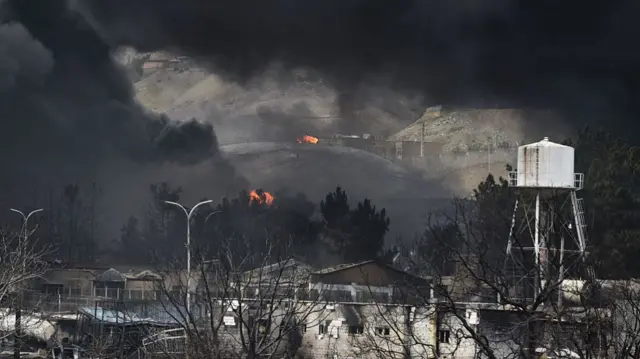
    Plumes of smoke rise over the oil depot tanks hit by joint Israel-U.S. over night in a station north west of the capital on March 8, 2026Image source, Getty Images
    Image caption,

    Smoke rises from an oil depot to the north west of Tehran on Sunday

    As well as the immediate threat to civilians in Iran from aerial bombardment, they are now facing potentially severe health risks from pollution being emitted by damaged oil infrastructure.

    Oil depots, refineries and fields have been damaged across Iran and the Middle East in the past week.

    In Tehran, thick black smoke has been seen covering the city after an oil depot was hit.

    This is because there is incomplete burning of the oil – which means there is not enough oxygen. Instead of carbon dioxide and water being released, you get a mix of hazardous substances including carbon monoxide, soot particles and with some fuel types sulphur dioxide and trioxide.

    All of these are toxic to humans, causing skin, eye and lung irritation, and with extended exposure can increase the risks of some cancers. Children are particularly at risk, according to the World Health Organization, external, as they are closer to the ground where these heavier particles sink to and have smaller airways that can become more easily blocked.

    There is also the risk that oil and heavy metals can leak into the surrounding soil and water sources which poses long-term risks to the environment and people.
  2. Israeli Air Force launches strikes on three areas of Iranpublished at 11:43 GMT 9 March
    Breaking

    The Israeli Air Force says it has launched a wave of strikes across three areas of Iran.

    It says it is targeting Tehran, Isfahan and southern Iran simultaneously.

  3. Collapsed buildings and burned out cars after Israeli strikes on Beirutpublished at 11:26 GMT 9 March

    Media caption,

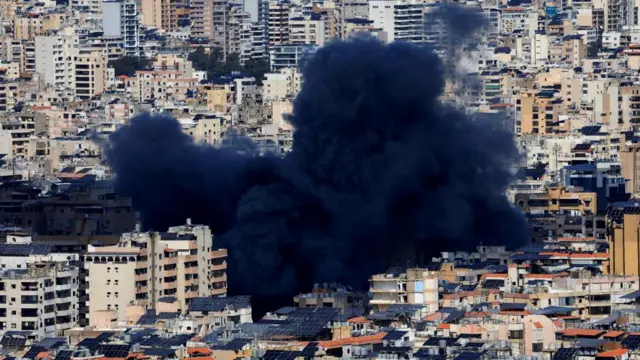
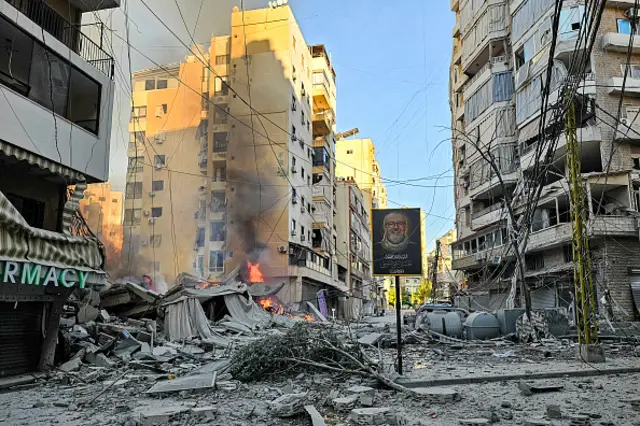
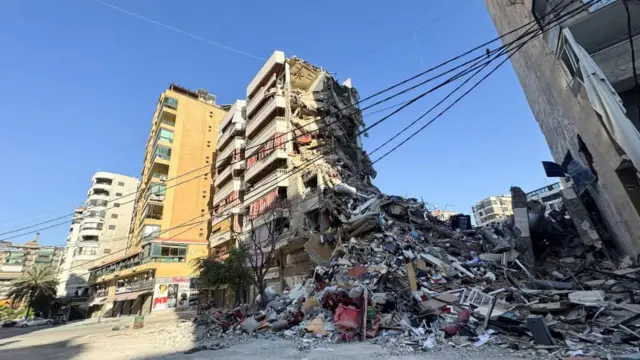
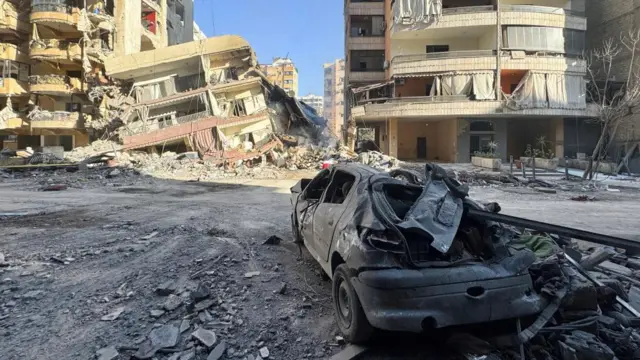
    Collapsed buildings after Israeli strikes in Beirut

    Thick clouds of black smoke were seen in the southern suburbs of Beirut on Monday morning following Israeli strikes.

    Israel Defence Forces (IDF) spokesperson Avichay Adraee earlier urged people to evacuate, saying the IDF was acting "forcefully against the terrorist infrastructure belonging to the Al-Qard Al-Hassan Association".

    Israel says AQAH finances Hezbollah’s military activities - something the group denies. AQAH says it only provides small, interest-free loans to ordinary Lebanese people.

    On Sunday, Lebanon's health minister Rakan Nassereddine said Israeli strikes on Lebanon had killed 394 people over the past week.

    Half of a tower block in Beirut is reduced to rubble and lies next to the remains of the buildingImage source, Reuters
    A car appears burnt and badly damaged, with a partially collapsed building behindImage source, Reuters
    A large thick cloud of black smoke coats tower blocks in BeirutImage source, Reuters
  4. How Iran's supreme leader is chosenpublished at 11:06 GMT 9 March

    Ghoncheh Habibiazad
    Senior reporter, BBC Persian

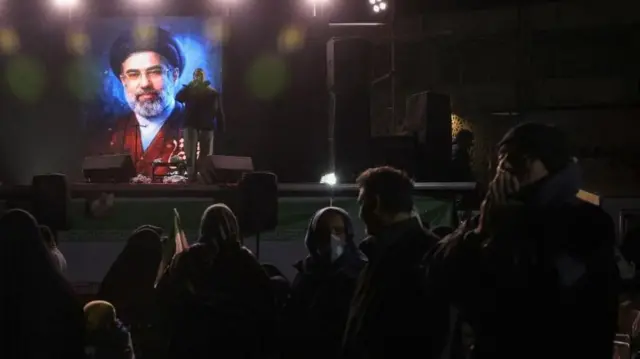
    A picture of Iran's new supreme leader, Mojtaba Khamenei, displayed on a screen in Tehran last nightImage source, Reuters
    Image caption,

    A picture of Iran's new supreme leader, Mojtaba Khamenei, displayed on a screen in Tehran last night, after his appointment was announced

    In Iran, the supreme leader is not elected by direct vote.

    Instead, he is appointed by a body of senior clerics known as the Assembly of Experts.

    The Assembly of Experts is a constitutional body consisting of 88 members, responsible for both the election and supervision of the supreme leader.

    The assembly also has the authority to dismiss the supreme leader if he is deemed incapable of fulfilling his duties or otherwise unqualified for the post.

    Its members are elected by direct vote every eight years.

    But all candidates for the assembly must first be vetted and approved by another body, the Guardian Council, which restricts the pool of candidates.

    While the vote is technically "direct", the choice of candidates is limited.

    As we've been reporting, Mojtaba Khamenei - the son of Ayatollah Ali Khamenei, who was killed nine days ago by US-Israeli strikes - has now been named as Iran's new supreme leader.

    This is the first instance of a father-to-son election for the supreme leader in the history of the Islamic Republic.

    Both Ali Khamenei and his predecessor Ruhollah Khomeini had criticised hereditary succession before.

  5. Putin congratulates new supreme leader and reaffirms 'unwavering support' for Iranpublished at 10:50 GMT 9 March

    Ben Tavener
    Reporting from Moscow

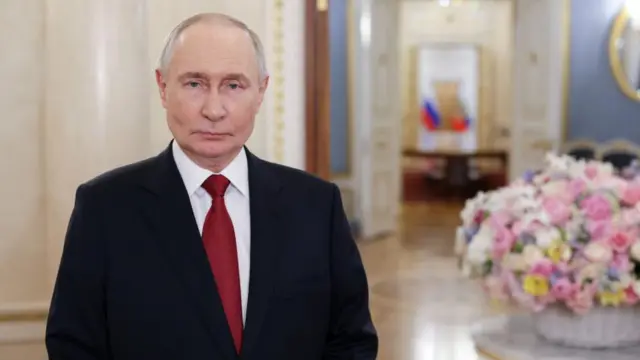
    Russian President Vladimir PutinImage source, Sputnik

    Russian President Vladimir Putin has congratulated Mojtaba Khamenei on becoming Iran’s new supreme leader and reaffirmed Moscow’s support for Tehran.

    "Please accept my sincere congratulations on your appointment as supreme leader of the Islamic Republic of Iran,” Putin says in a message published on the Kremlin website.

    The Russian leader says he "reaffirms [Russia’s] unwavering support for Tehran and solidarity with our Iranian friends" and promises to "remain a reliable partner".

    "At a time when Iran is confronting armed aggression, your actions in this high position will undoubtedly require great courage and dedication. I am confident that you will honourably continue your father’s work and unite the Iranian people in the face of this severe ordeal," he says.

  6. Croatia imposes price cap for fuelpublished at 10:46 GMT 9 March

    Guy Delauney
    Balkans correspondent

    Croatia’s government has imposed maximum prices for the retail price of fuel.

    The measure will be applied tomorrow and will remain in force for at least two weeks.

    Prime Minister Andrej Plenkovic says the price of Eurosuper petrol will be capped at €1.50 (£1.30) per litre, with Eurosuper diesel at €1.55.

    He adds that without government measures, the prices would have risen to €1.55 and €1.72 respectively.

    Croatia had previously regulated fuel prices in the wake of Russia’s invasion of Ukraine, but ended the measures last July.

    As we reported earlier, authorities in South Korea have said they will introduce a similar cap for the first time in nearly 30 years.

  7. Analysis

    What does oil price surge mean for wider inflation?published at 10:40 GMT 9 March

    Dharshini David
    Deputy economics editor

    This Flourish post cannot be displayed in your browser. Please enable Javascript or try a different browser.

    The week’s started with a blistering surge in oil prices - and another jump in gas costs on global markets.

    And with it, talk of the mounting costs of filling a car, and the domestic energy price cap here in the UK jumping to perhaps more than £2,000 in July.

    What does this mean for wider inflation?

    It depends on the ultimate degree and duration of the increase in energy costs.

    At current rates, economists are warning that predictions of inflation being maintained at the 2% target seem set to be derailed; it could be considerably higher.

    But they’re not expecting a return to the double digit inflation seen just a few years ago.

    The war in Ukraine also caused spikes in the prices of basic foodstuffs - wheat and edible oil - due to the role of Ukraine in producing those items. That is not the case now.

    And food inflation doesn’t just affect pockets today - they are also the key determinant of our expectations of inflation in the future, and so affect behaviour. For example, asking for bigger pay rises, which in turn can keep inflation elevated.

    This is, of course, a rapidly changing story.

  8. Shares across Europe drop on oil price surge - but BP and Shell are uppublished at 10:23 GMT 9 March

    Nick Edser
    Business reporter

    Shares across Europe have been sinking this morning as investors react to the oil price surge.

    London’s FTSE 100 index has fallen 1.1%, while Germany’s Dax and France’s Cac 40 are both down by about 2%.

    Nearly all shares are trading lower, but the UK index has not fallen as much because London-listed oil giants BP and Shell are among the few shares to have risen this morning.

    Earlier, Asian stock markets dropped sharply, with Japan’s Nikkei 225 index sinking more than 5%.

    Susannah Streeter, chief investment strategist at Wealth Club, says the spike in oil prices has the potential for "a toxic combination of shocks to economies".

    The spike in prices is set to push up inflation, which may mean central banks have to keep interest rates higher for longer - and this combination of higher energy prices and borrowing costs would be "a drag on growth", she says.

  9. Asked about Trump criticism, Starmer says decisions about British interests are for UK PMpublished at 10:20 GMT 9 March

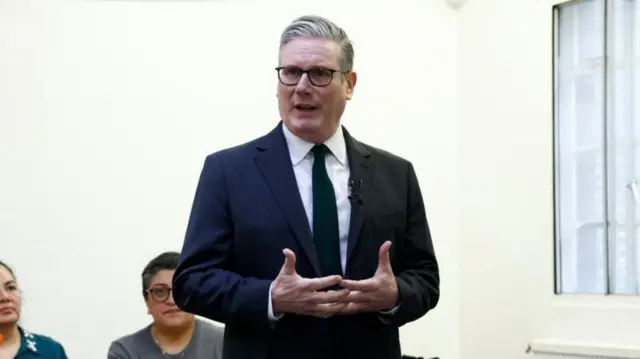
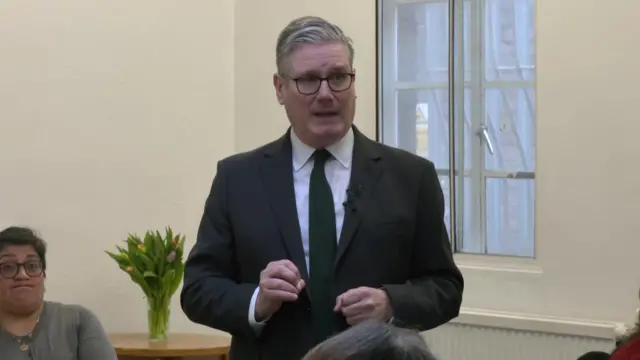
    Starmer speaks to a small group at a community centreImage source, PA Media

    Back to Keir Starmer, who has been asked about recent criticism from US President Donald Trump over the UK's response to its attacks on Iran.

    Starmer says the two countries are continuing to work together and that he spoke to Trump on the phone yesterday.

    But he adds: "Decisions about what’s in Britain’s best interest are decisions for the Prime Minister of Britain.

    “And that’s how I’ve approached all of the questions and all of the decisions I have had to make."

    The US president has made a number of comments critical of Starmer since the war began, writing over the weekend "we don't need people that join Wars after we've already won!", and labelling Britain "our once great ally".

    It follows Starmer's initial decision not to allow the US to use UK bases to attack Iran. He has since allowed the US to use British bases for what he has characterised as defensive strikes on Iranian missile sites.

  10. One killed in missile strike in central Israelpublished at 10:04 GMT 9 March
    Breaking

    Sophie Williams
    Reporting from Jerusalem

    One person has been killed and another seriously injured after a missile struck a construction site in central Israel, according to a spokesperson from the Israeli emergency services.

    Meanwhile, a man in his 30s has been taken to hospital with severe shrapnel wounds at another location.

  11. Starmer says the longer the war goes on, the more likely an economic impact will bepublished at 10:01 GMT 9 March

    Starmer speaks to a group of people in a community centreImage source, UK Pool

    Starmer says the UK is talking to other nations about what can be done jointly to minimise the economic impacts on people and businesses.

    "The longer this goes on, the more likely the potential for an impact on our economy, impact into the lives and households of everybody and every business," he says.

    He adds the government's job is to "get ahead of that".

    He says the Labour government has done a lot of work to make the country more economically resilient and Chancellor Rachel Reeves has been speaking to the governor of the Bank of England "on a daily basis".

    The government is "talking to our international partners as well about what we can do together to reduce the likely impact on people here, and businesses here", he says.

  12. Starmer speaking about Middle East - watch livepublished at 09:44 GMT 9 March

    UK Prime Minister Keir Starmer is speaking about the latest in the Middle East during a visit to a community centre in London.

    You can watch live at the top of this page.

  13. Analysis

    Unless there's a sudden dip in oil prices, fuel will get a lot more expensive for driverspublished at 09:42 GMT 9 March

    Theo Leggett
    International business correspondent

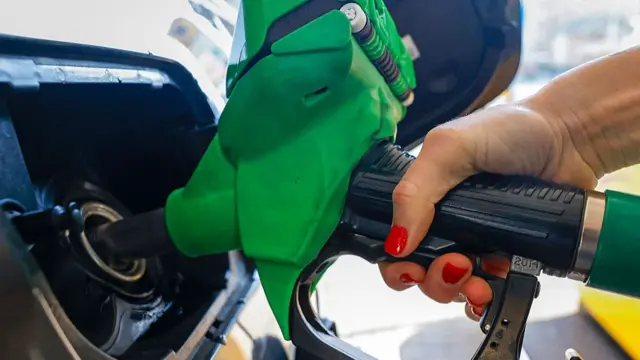
    A file photo of a person putting petrol in their carImage source, AFP via Getty Imates

    Petrol and diesel prices are already rising, and unless there’s a sudden dip in the cost of crude oil, things are going to get a lot more expensive for drivers.

    According to analysts, every $10 increase in the oil price pushes up pump prices by roughly 7p a litre.

    There is normally a time lag, with movements in the oil markets taking about a fortnight to affect what we pay for fuel.

    It’s still less than two weeks since the US-Israeli war with Iran began, but by Friday average petrol prices had already gone up by nearly 4p and diesel prices by 6p, according to the RAC.

    With oil prices having jumped more than $30 since the start of the crisis, average petrol prices of more than 140p a litre look inevitable, while 150p/l could soon be breached if oil prices don’t fall back.

  14. Surging oil prices will help Russia with its war in Ukrainepublished at 09:30 GMT 9 March

    James Landale
    Diplomatic correspondent in Kyiv

    Diplomats say the surging oil price will help Russia repair its public finances and keep its war economy afloat.

    In recent years, Russia has suffered from international energy sanctions following its full-scale invasion of Ukraine, low global oil prices, and an EU/UK price cap, currently set at $44 (£33) a barrel of oil.

    Such was its financial pain, Russia had to sell gold reserves and raise consumer taxes. But higher oil prices will now help fill Kremlin coffers.

    The lack of oil supplies via the Strait of Hormuz may make some countries keener to buy more accessible Russian oil.

    This comes only days after the US temporarily eased sanctions to allow India to buy Russian oil already at sea.

    Kyiv may also feel yet more pressure from the European Union to reopen a pipeline – damaged by Russian strikes – that normally carries Russian oil to Hungary.

    The US-Israel war with Iran may not only be distracting global attention from Ukraine, it may also now be helping its enemy.

  15. Heavy explosions heard in Tehran - reportspublished at 09:26 GMT 9 March

    Heavy explosions have been heard in the Iranian capital of Tehran, according to reports from the AFP news agency.

    It was not immediately clear what was targeted in Tehran but the blasts were heard across several parts of the city, the agency reports.

  16. UK gas prices have jumped - but we're not at 2022 levelspublished at 09:11 GMT 9 March

    Mitch Labiak
    Business reporter

    As well as oil prices, gas prices are also rising due to the conflict - with production and transport of fuel across the region slowing or stopping entirely in many cases.

    The benchmark UK gas price jumped to 158p per therm this morning - it had been 137p on Friday. For context, the price was below 80p before the war started less than two weeks ago.

    However, this is still well below the spike we saw following Russia’s invasion of Ukraine in 2022. Back then, UK gas prices surged to well over 600p per therm, causing the UK government to step in with an energy bills support scheme.

    We’re not at that level, but British people are still being affected. Last week, energy suppliers pulled a raft of fixed-price tariffs from the market, citing the price uncertainty.

    The energy price cap means those on a variable tariff won't see a price rise in their energy bills until at least July, and those on a fixed rate won't see a rise until their term ends.

    But if gas prices stay high, this could translate to a higher price cap for the summer.

  17. Analysis

    Mojtaba Khamenei had long stayed in the shadows. Now he's the new leader of Iranpublished at 09:01 GMT 9 March

    Parham Ghobadi
    BBC Persian senior reporter

    Iran’s new Supreme Leader, Mojtaba Khamenei, has taken the most dangerous job in the world, after the US and Israel vowed to target his father Ali Khamenei’s successor.

    It’s not a job many would hope for.

    There had been rumours for decades that he would be the next Iranian leader. He was believed to have very close ties to the Revolutionary Guards, as well as being the man behind the scenes who was running the show.

    Now it appears there was some substance to those rumours.

    Mojtaba Khamenei is a person who has stayed in the shadows. He has never officially been in charge, nor are there many pictures or videos of him.

    He has suddenly assumed power as Iran’s new leader - at a time when his father has not yet even been buried, because of the ongoing war.

  18. The latest images from the region as strikes continuepublished at 08:54 GMT 9 March

    A fire burns at the site of a collapsed building surrounded by apartment blocks following an Israeli airstrike on Beirut's southern suburbsImage source, Getty Images
    Image caption,

    A fire burns at the site of a collapsed building following an Israeli airstrike on Beirut's southern suburbs

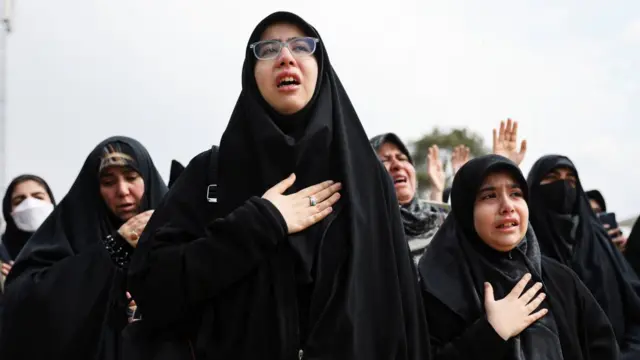
    Women wearing black, religious dress in Tehran have their right hands over their chests as they mourn.Image source, Reuters
    Image caption,

    A funeral ceremony is held for victims of Israeli and US strikes in Tehran

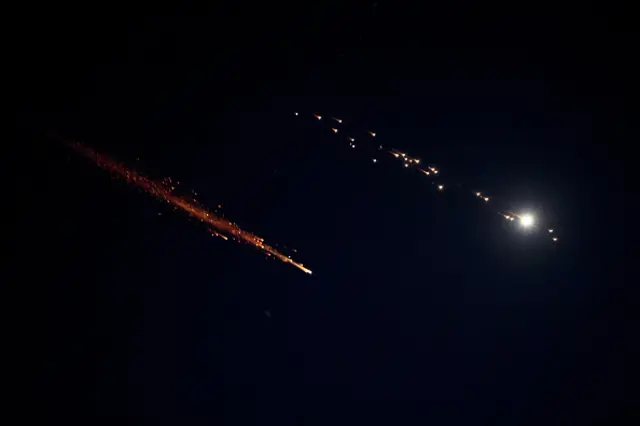
    Missile fire is seen in the sky above the Israeli coastal city of Netanya, during a fresh barrage of Iranian strikes overnightImage source, Getty Images
    Image caption,

    Projectiles in the sky above the Israeli coastal city of Netanya during an Iranian attack overnight

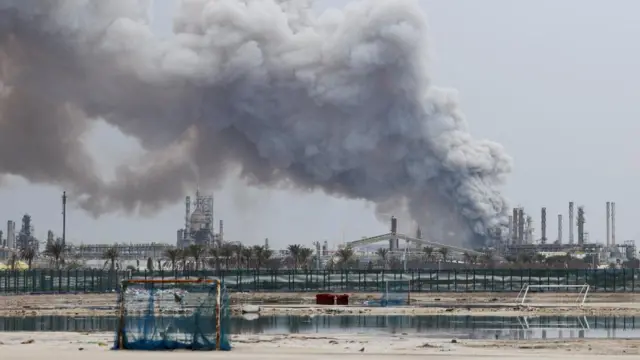
    A large grey smoke plume rises over an oil refinery.Image source, Reuters
    Image caption,

    A smoke plume rises over the Bapco Oil Refinery on Sitra Island in Bahrain, following an Iranian strike

  19. IDF says it is striking suburbs in Beirut, Lebanonpublished at 08:50 GMT 9 March

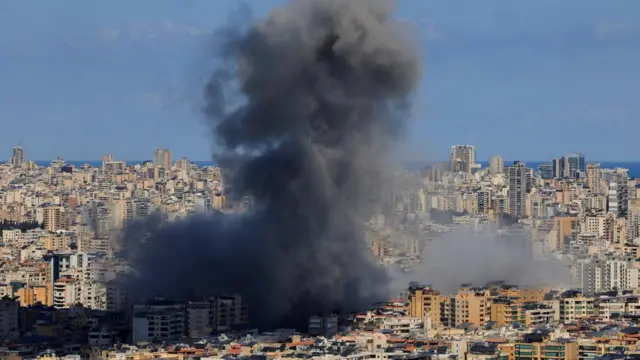
    A large plume of smoke rising from an area packed with buildingImage source, Reuters
    Image caption,

    Smoke rises over Beirut's southern suburbs after an Israeli strike

    The Israel Defense Forces says it's now striking Hezbollah infrastructure in the Dahieh area of Beirut.

    Earlier, IDF spokesperson Avichay Adraee urged people to evacuate, saying they will "act forcefully" against "terrorist infrastructure".

  20. Oil and gas price rises no 'cause for undue alarm yet' - UK cabinet ministerpublished at 08:37 GMT 9 March

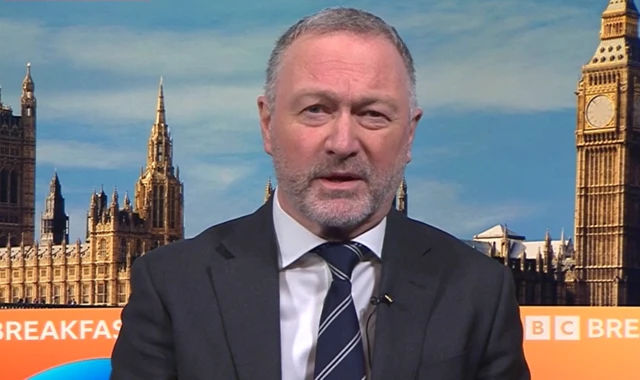
    Labour minister Steve Reed speaks to BBC Breakfast with an image of Westminster in the background.

    UK cabinet minister Steve Reed tells BBC Breakfast there is no "cause for undue alarm yet" over rising energy prices linked to the war in the Middle East.

    The secretary for housing, communities and local infrastructure says the situation in the Middle East is "very concerning", but says the UK has supplies of oil and gas and the government is monitoring the situation.

    "I don’t think that there is cause for undue alarm yet," he says. "I think the sensible and rational response from government is to monitor the situation and make sure we’re prepared."