Summary

Media caption,
'I can't be too hopeful' says PC Harper's mum
  1. Burnham 'confident' early release of most serious offenders can be stoppedpublished at 17:24 BST 11 August

    Madeleine Lake
    Live reporter

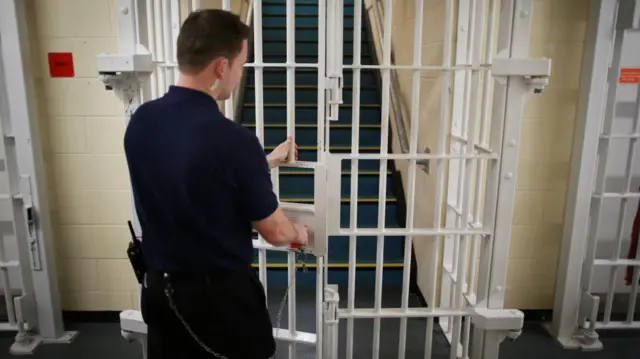
    Prison guard locking a large white door with bars.Image source, PA Media

    Prime Minister Andy Burnham says he is "increasingly confident" the government can free up space in overcrowded prisons in England and Wales to prevent the early release of the "most serious offenders".

    He has outlined three key areas the government will be looking at, including the rate of removal of foreign nationals, finding a resolution to IPP sentences and using female prison estates for male offenders.

    It comes as the early release scheme, set to launch in October, has faced mounting scrutiny - including over the possible early release of two of PC Andrew Harper's killers.

    PC Harper was killed while on duty in 2019. His mother Debbie Adlam tells the BBC she is in "turmoil" due to conflicting reports about whether Jessie Cole and Albert Bowers - who were sentenced to 13 years for his manslaughter in 2020 - will be eligible for release next year.
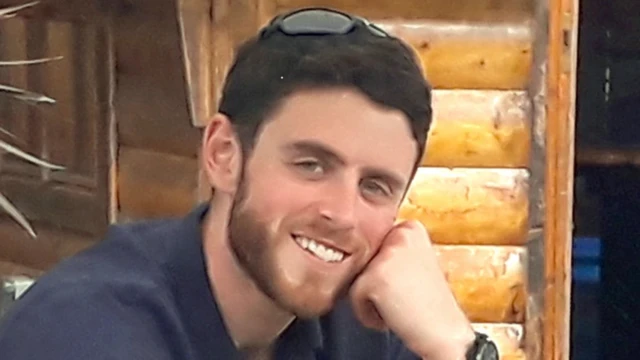
    PC Andrew Harper, a white man with dark hair, wearing a dark blue shirt and sunglasses on his head. Smiling into the camera with hand head resting on his hand.Image source, Thames Valley Police
    Image caption,

    PC Andrew Harper was killed just four weeks after getting married in 2019

    The road to early prison release scheme has been winding for some time, it was introduced in the effort to reduce overcrowding and create headspace in prisons. But it's been met with criticism, as it would mean some offenders could serve as little as 33% of their sentence.

    This is the first big communications test for the new prime minister, who prides himself on being able to deliver messages effectively, our political correspondent writes.

    Shadow home secretary Chris Philp says U-turns are "re-traumatising victims", after Burnham's announcement today seemed to contradict Downing Street's message yesterday that it was "not possible" to exempt "one or two offenders" convicted of manslaughter from the early release scheme.

    It's not yet clear how the government's plans will work in practice, but Justice Secretary Alex Norris has been tasked with coming to Parliament in September with a plan to keep the most serious offenders in prison.

    We're now ending our live coverage, but you can keep up to date in our news story.

  2. Women's Aid urges government to exclude domestic abusers from early releasepublished at 16:56 BST 11 August

    Malu Cursino
    Live reporter

    Women's Aid Chief Executive Farah Nazeer tells me it is "unacceptable" that domestic abuse offenders are not exempt from early release under the latest Sentencing Act review.

    Campaigners warn of "grave concerns" to survivors if perpetrators are eligible for early release from prison.

    Nazeer says the nature of domestic abuse means there is a higher risk of re-offending, which poses "profound" danger.

    While Women's Aid welcomes the decision to bar rape, certain child sex offences and other grooming offences from sentence changes, Nazeer says they are "deeply concerned" by the government's lack of understanding of the danger posed by perpetrators of domestic abuse.

    Not including perpetrators of domestic abuse in the review "sends a shocking message to both survivors and perpetrators".

    "We urge the government to use the coming weeks, before these measures come into force, to work with us to exclude perpetrators of abuse from the scheme and to take further action to keep survivors safe," Nazeer adds.

  3. 'Sentence inflation' to blame for overcrowding crisis, prison charity sayspublished at 16:50 BST 11 August

    Rachel Flynn
    Live reporter

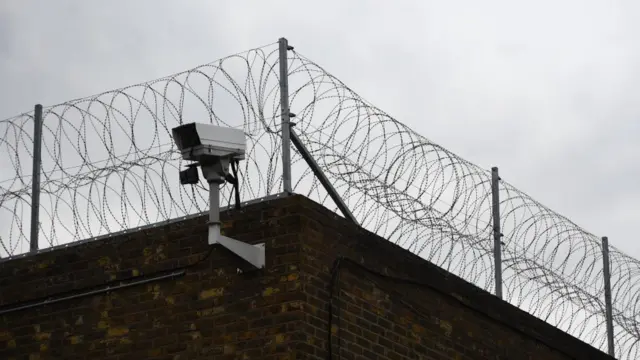
    A camera on the corner of prison railingsImage source, PA Media
    Image caption,

    Government figures predict the prison population in England and Wales will rise to 103,600 by March 2030 - it currently stands at around 86,000 people

    Prison charity Howard League says "sentence inflation" is the "key driver behind the overcrowding crisis" in prisons.

    "Sentences have got longer and longer over the course of several decades, it has got to the point where despite spending billions, the government cannot effectively provide prison places," Andrew Neilson, Howard League's Director of Campaigns, tells me.

    Neilson says the government is "buying time in terms of not running out of cells" instead of saving prison spaces, and that there's a debate to be had about which sentences could be shortened.

    He adds that there are more short-term solutions that the government could be looking at - including looking at the population of people on remand who are using up prison spaces while awaiting trial.

    That population is at its highest level in 50 years, Neilson says, and suggests some people could be on bail in the community rather than in custody.

  4. 'Prison not necessary for many women, releasing some is not an out there idea'published at 16:42 BST 11 August

    Freya Scott-Turner
    Live reporter

    A woman with short hair and a gilet stands in a forestImage source, Jackie Lowthian

    Jackie Lowthian, who co-ordinates a network of charities supporting women in prisons in England and Wales, tells me releasing female prisoners to free up prison capacity is "not an out there idea".

    Prime Minister Andy Burnham earlier proposed "using the female estate for male offenders" as an option to free up space as he faces mounting pressure over the government's early release scheme.

    Lowthian, who works for the charity Clinks, says there has "long been acceptance" that "for an awful lot of women, for the kind of offences they’re convicted of, prison is not necessary nor is it effective".

    Releasing female prisoners to free up space has not "been attempted before in such a clear cut way", she tells me, "but it's certainly not an out there idea".

    Lowthian says you can trace these conversations as far back as 2007, to the Corston Report - commissioned by the then-Labour government - which recommended significantly reducing the female prison population.

    Most women's prisons are standalone, she says, but there are also some that have female wings that could be closed.

    She emphasises that reducing the female prison population must come hand-in-hand with "access to effective treatment and support in the community".

  5. How does Burnham say he will free up prison space?published at 16:25 BST 11 August

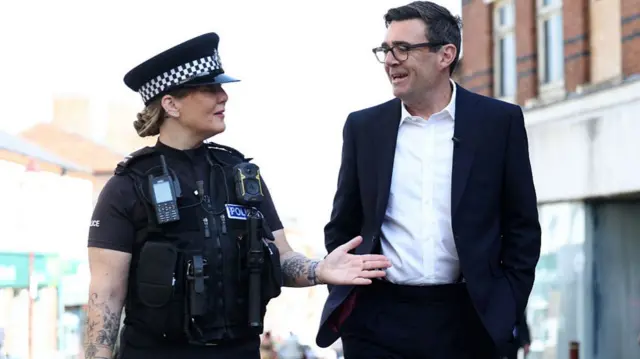
    Britain's Prime Minister Andy Burnham (R) talks with a police officer as they walk past shops in the town centre of Ilkeston, Derbyshire, central England on August 11GImage source, Getty Images

    Prime Minister Andy Burnham today said his Justice Secretary Alex Norris was looking into three key areas to free up prison space in a bid to prevent the early release of the "most serious offenders". They are:

    Increasing the "rate of removal" of foreign national offenders to their country of origin

    • As of the end of June, there were more than 10,000 foreign nationals held in prisons across England and Wales - about 12% of the total prison population
    • The PM has not yet clarified what steps would be taken, or how they would be implemented

    Finding "an early resolution" to Imprisonment for Public Protection (IPP) sentences

    • These are sentences with no maximum term aimed at people who are dangerous but whose offence did not lead to a life sentence - they were scrapped in 2012, but not retrospectively applied
    • BBC Verify has found that more than 2,000 people are still in prison on IPP sentences
    • Burnham says finding a resolution could allow "lower-risk prisoners" to be released - but we don't know how this would be achieved

    Making more use of "the entire prison estate", including "using the female estate for male offenders"

    • Female offenders represent a small proportion of the overall prison population - making up 3.9% in England and Wales at the end of June
    • Burnham has not yet expanded on what "using the female estate" for male offenders would look like

    Norris has been tasked with presenting a plan to Parliament, "early next month", on how these proposed changes would work in practice.

  6. Only one way to stop early release of PC Harper's killers, lawyer suggestspublished at 16:13 BST 11 August

    Wedaeli Chibelushi
    Live reporter

    Placing a blanket ban on manslaughter cases is the only realistic way of stopping PC Harper's killers from being released early, criminal barrister and Nottingham Law School lecturer Mark Thomas tells me.

    Two of Harper's killers, Jessie Cole and Albert Bowers, were sentenced to 13 years for manslaughter in 2020. Under changes to the Sentencing Act made this year, they will become eligible for release from custody next January after serving half of their sentences.

    In theory, the government could restrict manslaughter cases where the victim was an emergency worker, but Thomas says this would involve a "significant undertaking".

    He says it would mean manually looking at the record of every single person who has been convicted of manslaughter and checking the case details to see if the person killed was an emergency worker.

    Thomas tells me he understands nothing like that has been attempted in the history of UK law.

  7. Prisoners might not cope with being let out early, former prison officer sayspublished at 16:03 BST 11 August

    Madeleine Lake
    Live reporter

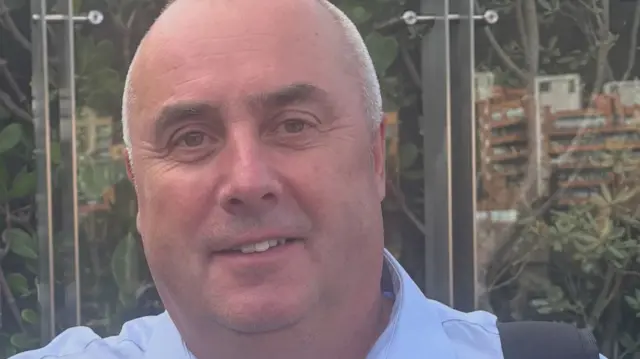
    Phil Hannat, a white man wearing a blue shirt and looking at the camera.Image source, Phill Hannat

    Phil Hannat, a former prison officer who sits on the Prison Officers Association's National Executive Committee, says concerns remain over the government's early release scheme.

    He tells me that though murder, rape, serious child sex and other grooming offences are exempt from the scheme there are "still a lot of other violent crimes" that aren't .

    Hannat also says "we have to consider victims" who find out that their perpetrator could have their sentence reduced. "When they're given a sentence you'd expect they'd serve it," he says.

    He also tells me he is concerned that prisoners who are released early may not have the support in place that they need. "People might not cope being let out early," he says.

    The appropriate infrastructure needs to be put in place both in and outside of prisons, he adds.

  8. BBC Verify

    More than 2,000 people still in prison on IPP sentences - which were abolished in 2012published at 15:48 BST 11 August

    By Nicholas Barrett

    Andy Burnham has said he wants to resolve "the long-running injustice of IPP sentences, which could allow for the release of lower-risk prisoners".

    Imprisonment for Public Protection (IPP) sentences came into force in England and Wales in 2005 for offenders who were considered a danger to the public but whose crime did not merit a life sentence.

    Those who received an IPP sentence were given a minimum term to spend in prison, known as a tariff, after which they could apply for parole. But because the parole board could reject successive applications some prisoners faced the prospect of being detained indefinitely.

    IPP sentences were abolished in 2012. But those prisoners already serving an IPP sentence were still bound by the same parole conditions - meaning some are still in prison.

    According to Ministry of Justice data, 2,271 people are serving IPP sentences as of June. Of those, 856 have never been released.

  9. Probation officers back strike action, saying staff are 'at breaking point'published at 15:41 BST 11 August

    Members of probation union Napo have overwhelmingly backed strike action, warning the government that probation staff "are at breaking point, putting public safety at risk".

    In a statement, it says the results "should come as a blow to government as it prepares to expand early release from prison and implement Sentencing Act changes".

    Under the early release scheme, some 5,000 prisoners are expected to be released under sentencing changes. They will all need to be managed in the community by probation staff.

    Napo adds probation officers are facing "chronic staff shortages, excessive workloads, and burnout".

    "The government cannot keep treating probation as the place where the consequences of failures elsewhere in the criminal justice system are dumped. If you overload probation, you increase risk. It really is that simple," the statement adds.

    The Ministry of Justice says they are "disappointed with the outcome" after securing "the biggest probation pay increase in over a decade in April".

    "Our Probation staff do a vital job, working tirelessly to cut crime and keep the public safe," the MoJ adds.

  10. 'Doing nothing is not an option': Some charities welcome early release schemepublished at 15:19 BST 11 August

    Wedaeli Chibelushi
    Live reporter

    The government's early prisoner release scheme has been facing scrutiny ahead of its expected launch in October, but some charities have welcomed it.

    Unlock, a charity helping former prisoners rebuild their lives, says prisoners who have been risk-assessed and want to get into work and contribute to society should be allowed to do so.

    "There are numerous protections in place as part of the scheme to protect the public," charity spokesperson Sam Christopher tells me.

    Housing Secretary Angela Rayner highlighted some of these protections on BBC Radio 4 earlier, saying prisoners who are released early will be tagged.

    Andy Keen-Downs, CEO of the Pact charity which supports people going through the justice system, tells me "our prisons are dangerously overcrowded and doing nothing is not an option".

    He adds that the early release scheme is "intended to create enough capacity for prisons and probation services to plan properly".

  11. Burnham receiving dreadful advice, former prison governor sayspublished at 14:51 BST 11 August

    John Podmore is standing in front of a fence in a gardenImage source, John Podmore
    Image caption,

    John Podmore is the former governor of several large UK prisons including HMP Belmarsh and HMP Brixton

    The former governor of three British prisons, including Belmarsh and Brixton, says there are "more immediate" alternatives to tackle prison overcrowding that the PM is not considering.

    John Podmore tells Radio 4's World at One one of these alternatives is looking to release some of the "13,000 thousand prisoners on remand" - those in custody that are awaiting trial without bail or awaiting sentencing.

    "A good quarter of those on remand... will get sentences which are less than the time they've been on remand," he says.

    Another issue, he says, is the almost 50,000 people a year that are recalled to prison after being released on licence. He says this is "very often for technical breaches".

    When asked why Burnham is not focusing on these two areas, Podmore says it is because he’s receiving "dreadful advice".

  12. BBC Verify

    Female offenders make up less than 4% of the prison populationpublished at 14:35 BST 11 August

    By Lucy Gilder

    Moving male offenders into spaces created in women’s prisons in England and Wales is one of the measures proposed by Prime Minister Andy Burnham to deal with capacity issues.

    Burnham posted on Facebook earlier that among the options being considered is "making greater use of the entire prison estate including using the female estate for male offenders".

    Female offenders represent a small proportion of the overall prison population.

    There were 3,350 women prisoners in England and Wales at the end of June - just 3.9% of the total prison population at that time.

    Nearly 80% of those prisoners - including female offenders of all ages - had been sentenced while about one-fifth were on remand awaiting trial or sentencing.

    Up to the end of June there were just over 1,000 women in prison for violence against the person, while several hundred are serving sentences for non-violent crimes - these include 427 for theft and 117 for public order offences.

  13. PC Harper's mum in 'turmoil' as Burnham 'confident' killers will stay in prison - what we've heardpublished at 14:14 BST 11 August

    Thousands of prisoners in England and Wales will be eligible for earlier release under a new policy due to begin in October to address overcrowding in prisons.

    Anger and upset has grown after it was revealed two of the killers of PC Andrew Harper, Jessie Cole and Albert Bowers, will be eligible for early release from next January.

    The scheme is the first big communications test for the new prime minister, our political correspondent writes.

    So, what have we heard?

    PC Harper's mum, Debbie Adlam, told BBC Breakfast the handling of the situation had been a "hash". She says she is in "turmoil" over the conflicting reports about whether or not her son's killers can be excluded from the early release scheme.

    One of PC Andrew Harper's colleagues, Aileen O'Connor, has said she is "optimistic" the government will prevent his killers from being released. She organised a petition against the killers' early release, which has amassed more than 900,000 signatures.

    Prime Minister Andy Burnham said he is "increasingly confident" the early release of PC Harper's killers can be prevented by freeing up space in prisons. He said he has "not accepted that it is impossible to do more" but "it is simply not possible to prevent all offenders from being released early without the prison system collapsing".

    It seems to contradict comments made by Downing Street yesterday. It said it was "not possible" to exempt "one or two offenders" convicted of manslaughter from the early release scheme.

    Justice Secretary Alex Norris, who has been asked by the PM to update Parliament with a plan in September, has said his team are looking at "every serious option" to have more capacity in prisons.

    Shadow home secretary Chris Philp criticised the government over its changing policy, and accused them of "re-traumatising victims and their families with their constant u-turns".

  14. How has Scotland's early prisoner release scheme fared?published at 13:44 BST 11 August

    Angus Cochrane
    BBC Scotland senior political reporter

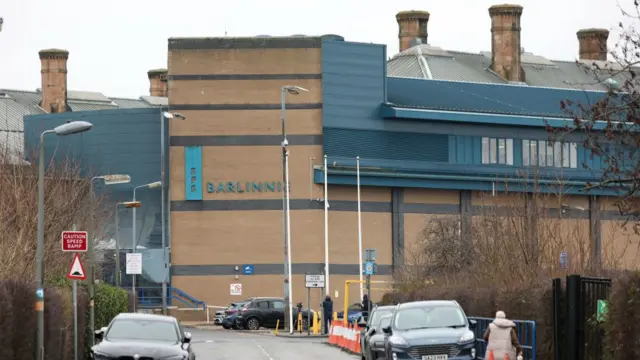
    A general view of Barlinnie Prison on the first day of prisoners early release scheme in an attempt to ease overcrowding in jails on February 18, 2025 in GlasgowImage source, Getty Images

    Court backlogs, prison overcrowding and some of the highest incarceration rates in Europe are not unique to England and Wales.

    Since June 2024, more than 1,400 prisoners in Scotland have been freed early in three waves of emergency releases.

    Despite these efforts, Scotland's prison population reached a historic high of 8,603 in May.

    That same month, the Scottish government began allowing some short-term prisoners - excluding those convicted of sexual offences and domestic abuse - to be automatically released after serving 30% of their sentence, down from 50% a couple of years ago.

    However, government analysis found, external that such efforts have had a “minimal” impact on the prison population, warning that if current trends continue then the number of inmates could rise to between 8,100 and 9,150 by March 2027.

    Holyrood ministers are now considering more radical measures.

    These include encouraging judges not to issue jail terms of less than two years - up from the current 12 months.

  15. Locals remember 'outrage' over PC Harper's death, and say PM faces testpublished at 13:19 BST 11 August

    Yasmin Malik
    BBC Newsbeat

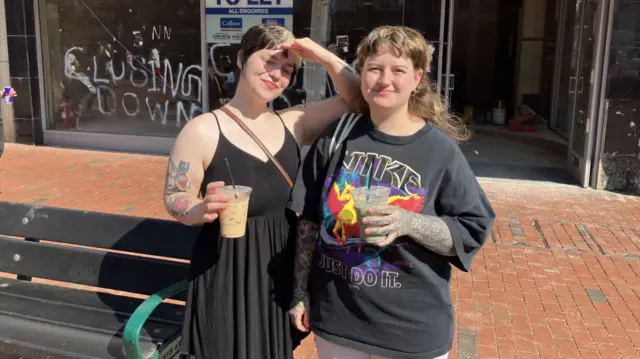
    Mallory (left) and Madeleine (right) wearing a dress and the other a t shirt and shorts
    Image caption,

    Mallory (left) and Madeleine (right)

    BBC Newsbeat has been speaking to residents and shoppers in Reading town centre, a few miles from where PC Andrew Harper was killed.

    "I’ve lived here my whole life, and I don’t remember anything that horrible ever happening," says Madeleine Daniels, who lives in the town with her wife Mallory.

    The 27-year-old remembers the "outrage" that people in the local area felt.

    "I can understand why people are upset," she says of the possible early release of PC Harper's killers.

    And Madeleine believes this is an important test for the new PM.

    "There's no right way to come into leading a country because all the attention is on you and everybody wants everything fixed.

    "But I think because this [case] is so massive and there's so much attention drawn to it, I think [Burnham] has no choice."

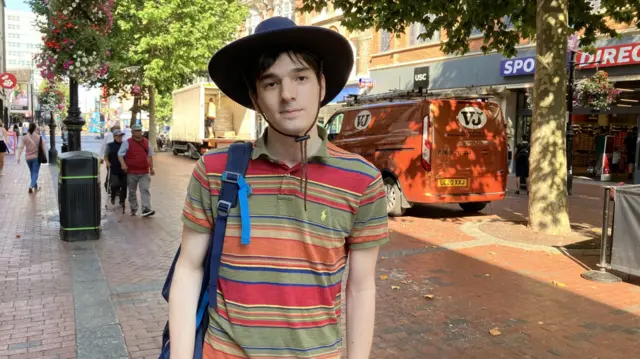
    Bora Chaworth-Musters, wearing a stripey shirt and a black hat

    Bora Chaworth-Musters is also out in the town centre to meet a friend and says that there should be a personalised approach with the early release scheme.

    "It should be done on a case-by-case basis," says the 21-year-old.

  16. 'Devastated': Families have spoken out against early releasepublished at 13:04 BST 11 August

    Calvin Buckley poses for the camera wearing a purple hoodie and black jacket
    Image caption,

    Calvin Buckley said he was "shocked and disappointed" the killer of his partner and unborn child could be released early

    PC Harper's family have not been not alone in their calls for the government to rethink the early release scheme.

    Calvin Buckley, whose pregnant partner, Frankie Jules-Hough, was killed in a 92mph motorway crash, previously told the BBC he was "devastated" that the killer would be eligible for early release.

    "Our justice has been taken away," Buckley said last week.

    Elsewhere, Claire Corkery's parents, Sue and Tom, were killed by a speeding driver who would also be eligible for early release.

    She told the BBC: "It's almost like a tiered system, treating what has happened to us as less serious."

  17. Burnham is 're-traumatising victims' with U-turns - shadow home secretarypublished at 12:50 BST 11 August

    Tory MP Chris PhilipImage source, PA Media

    Conservative MP Chris Philp has criticised the government over its changing policy on the prospect of an early release for PC Andrew Harper's killers.

    In a post on X, the shadow home secretary writes: "Andy Burnham and Labour are re-traumatising victims and their families with their constant u-turns."

    "It’s clear that good vibes and a snazzy t-shirt do not make for competent government. Mr Burnham is letting down victims and their families on a daily basis. It’s not good enough," he adds.

    It comes after the prime minister's statement this morning seemed to contradict No 10's comments yesterday that it was "not possible" to exempt "one or two offenders" convicted of manslaughter from the early release scheme.

    • You can read more about the changes in the government policy here
  18. Justice secretary echoes commitment to keep serious offenders in prisonpublished at 12:37 BST 11 August

    Alex Norris wears a white shirt and blue suitImage source, Getty Images

    Justice Secretary Alex Norris says the government has been clear about their commitment to "go further in keeping more of the most serious offenders in prison".

    Writing on X, Norris says the public "rightly expect prison places to be there for serious criminals".

    Echoing remarks made by Andy Burnham, Norris adds his team are looking at "every serious option" to have more capacity in prisons.

    These include "deporting foreign criminals faster, looking at whether we can safely make better use of the women’s estate and reviewing IPP sentences so we are holding the right people in the right way".

  19. The early release scheme at a glancepublished at 12:21 BST 11 August

    The policy, designed to ease prison overcrowding and due to begin in October, will mean thousands of prisoners in England and Wales being eligible for earlier release:

    • Offenders serving standard fixed sentences, who were due to be released after 50% of their term, will leave jail after 33%
    • Serious sexual and violent offenders on fixed terms, who would have been released at 66% of their sentence, will be released after 50%
    • These offenders would be intensively supervised and could lose the privilege of being out if they don't make progress towards rehabilitation
    • The most serious offenders - including life prisoners and those who are subjected to extended monitoring - were already not eligible under the scheme
    • On 3 August the government said the changes would no longer apply to people guilty of rape, serious child sex and other grooming offences
  20. BBC Verify

    More than 10,000 foreign nationals in prison in England and Walespublished at 12:09 BST 11 August

    By Lucy Gilder

    In his statement earlier about what the government could do to free up prison spaces, Prime Minister Andy Burnham said "increasing the rate of removal of foreign national offenders" would be one of "a range of options" being considered.

    There were 10,134 foreign nationals held in prisons across England and Wales at the end of June 2026, according to updated figures initially published for the first quarter of this year.

    This made up 12% of the total prison population at that time.

    Most had already been sentenced, but about a third were on remand, meaning they were awaiting trial or sentencing.

    The top five most common foreign nationalities were:

    • Albanian
    • Irish
    • Polish
    • Romanian
    • Indian

    The home secretary has a legal duty to deport any non-UK or non-Irish national sentenced to at least one year in prison, with certain exceptions. These include if deportation would breach the European Convention on Human Rights or the UK’s obligations towards refugees.

    The Starmer government announced last November that the new Sentencing Bill means any eligible foreign national offender can be deported at any time after sentencing, "allowing for deportations to happen earlier". At the moment foreign national offenders can be removed up to 18 months before their earliest release date, as long as they have served at least half of their custodial sentence.

    Foreign nationals can also be deported when their removal is considered "conducive to the public good". However, human rights claims can sometimes block these attempts or the prisoner’s country of birth may refuse to take them back.

    In the year to March 2026, the Home Office recorded 5,858 foreign offender returns. This is higher than the number of returns recorded between the calendar years 2010 and 2025 which averaged 4,897 a year.

    More than two-fifths of returned foreign offenders last year had drug-related convictions.