Summary

  1. Southeast Asia continues to face fuel shortages and price risespublished at 05:39 GMT 25 March

    Suranjana Tewari
    Asia Business correspondent
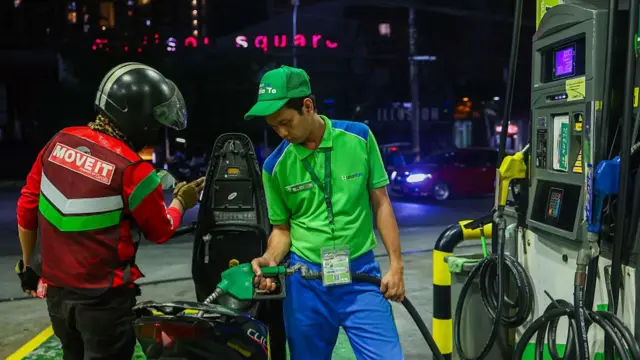
    A worker refills a motorcycle with petrol at a gas station, after Philippines President Ferdinand 'Bongbong' Marcos Jr. declared a state of national energy emergency, in Metro Manila.Image source, Getty Images

    The Philippines is scrambling to shore up fuel supplies after declaring a national energy emergency.

    The government says it is working with Washington to secure access to oil from countries under US sanctions, as it looks to widen its supply options.

    Local media also report that a shipment of Russian oil - the first in five years - has arrived in the country, part of efforts to diversify sources.

    The emergency powers allow authorities to fast-track imports, secure contracts and take steps to stabilise prices amid volatile global markets.

    Across Southeast Asia, fuel prices are still under pressure. In Vietnam, diesel prices have more than doubled since the start of the Middle East conflict, according to government figures released on Wednesday.
  2. Strikes across the region overnightpublished at 05:17 GMT 25 March

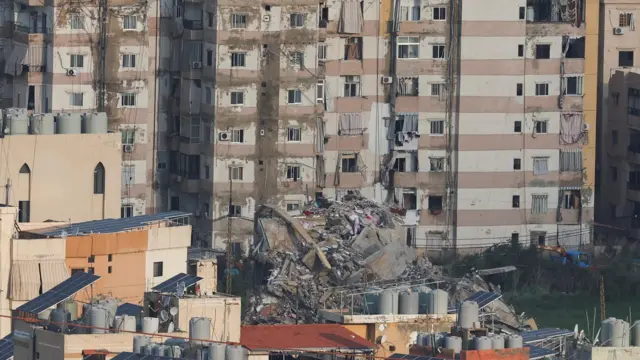
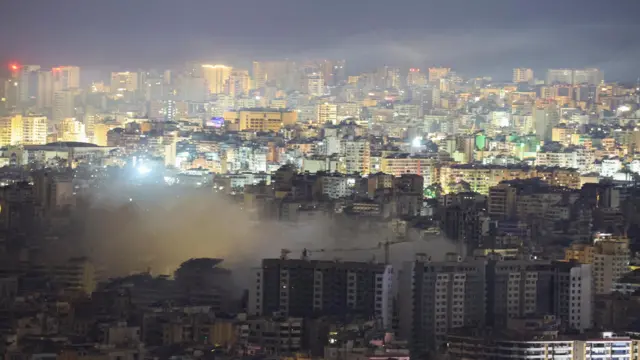
    Overnight, Israel exchanged strikes with Iran, while residents of southern Beirut, in Lebanon, were warned to evacuate by the IDF.

    There was also a drone strike at Kuwait International Airport, which led to a fire but no casualties.

    Saudi Arabia also reported intercepting drones overnight, while Bahrain's Ministry of Interior warned citizens to head to a safe place after the air strike siren sounded.

    Debris and damaged buildings in the aftermath of Israeli strikes in Beirut, Lebanon.Image source, Reuters
    Image caption,

    Beirut, Lebanon

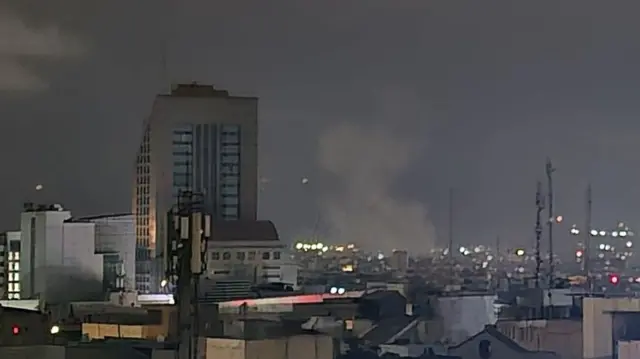
    Smoke rises against skyscrapers and a dark sky in Beirut, Lebanon on 24 March.Image source, Reuters
    Image caption,

    Beirut, Lebanon

    Grey smoke rises against a dark sky in Tehran, Iran, with multi-storey buildings visible in the foreground.Image source, Getty Images
    Image caption,

    Tehran, Iran

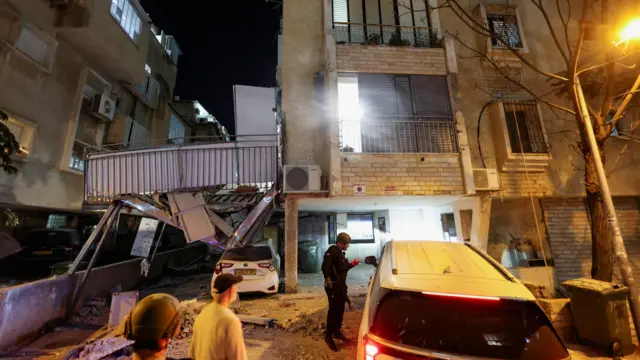
    Collapsing building structures crush a car, while people in military uniform and helmets are visible in front of the building.Image source, Reuters
    Image caption,

    Central Israel

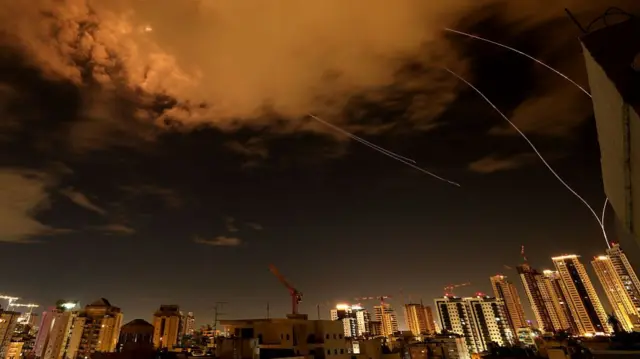
    Streaks of light and orange clouds are seen against a night sky.Image source, Getty Images
    Image caption,

    Central Israel

  3. Why have oil prices fallen today?published at 04:44 GMT 25 March

    Osmond Chia
    Business reporter

    The price of Brent crude is around 4.5% lower on Wednesday, just shy of $100 (£74.61) a barrel, after jumping close to $110 a day before. In early trading, it fell by around 6%.

    US-traded oil is currently lower by around 3.5%, trading at about $89.

    The drop is "significant" despite how choppy the energy market has been since the war started, Goh Jing Rong from the Singapore Management University told BBC News.

    The decline suggests the market now thinks the chances of a prolonged supply disruption and other worst-case scenarios are less likely than before, he said.

    Trump's comments that negotiations to end the war are happening "now" have raised hopes that hostilities will ease, but the drop in oil prices will only last if there is "tangible" change to the conflict, Goh said.

    Prices could stay lower "only if we actually see real evidence of de-escalation, safer passage through the Strait of Hormuz and fewer threats to energy infrastructure", he said.

    Read more here.

  4. Iranians tell BBC Persian what they make of the possibility of talks to end the warpublished at 04:07 GMT 25 March

    Ghoncheh Habibiazad
    Senior reporter, BBC Persian

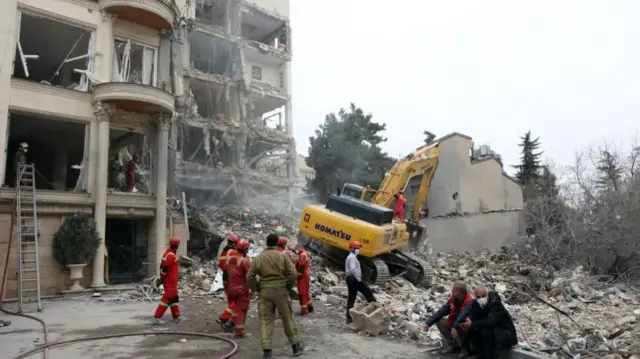
    Emergency workers wearing red and grey outfits at the site of a residential building damaged in an attack where a yellow digger is in the rubble; three people wearing civilian clothes, one wearing a red helmet and two face masks, are also in the picture, two of them sitting on the curb edge.Image source, EPA
    Image caption,

    Emergency workers at the site of a damaged building in Tehran

    BBC Persian has been speaking to Iranians about the conflicting reports surrounding talks between Iran and the US.

    Most have been expressing their disbelief at the reports.

    "I don't think that they will negotiate," says one man in Karaj, a city near Tehran.

    "Even if the war stops, it will start again at some point," he says, adding that the Islamic Republic is "very much in place right now".

    A woman in Tehran shares a similar view: "Trump is buying time for himself to take the war to another phase... I don't think that he's going to make a deal with them".

    One woman in her 20s says she "just wants to blink and have it all done and over".

    "I don't know how to feel," she says, adding: "I don't even want to think about the next steps."

    People in Iran are largely cut off from the world as a result of a government-imposed internet outage.

    You can read more of their insights here.

  5. Watch: Did Trump ignore Gulf warnings ahead of the war in Iran?published at 03:32 GMT 25 March

    As the war in Iran continues, Gulf states including the United Arab Emirates, Qatar and Bahrain have found themselves as victims of Iran's response to Israeli-US strikes.

    Earlier, the BBC's security correspondent Frank Gardner attended a press conference at Qatar's foreign ministry, where a spokesperson hinted that warnings about the consequences of the war were ignored by Trump.

    Watch him explain why in the video below:

    Media caption,

    Did Trump ignore Gulf warnings ahead of Iran war?

  6. Flights between Australia and New Zealand axed due to rising fuel costspublished at 03:02 GMT 25 March

    Simon Atkinson
    BBC Australia producer

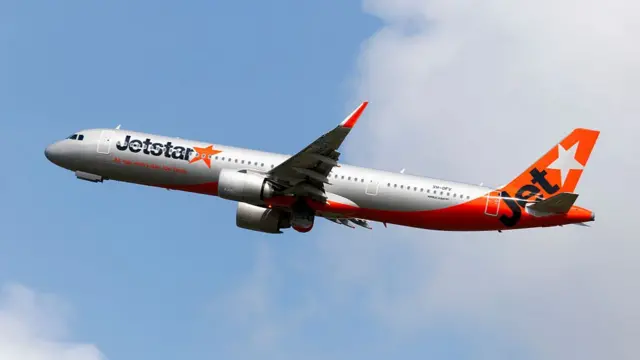
    An australian Jetstar Airways Airbus A321LR NEO takes off from Denpasar Bali Ngurah Rai airport.Image source, Getty Images

    Jetstar New Zealand has apologised after cancelling some domestic services and flights between Australia and New Zealand - citing a rise in jet fuel prices as war in the Middle East continues.

    It said 12% of flights in May had been impacted - between its main hub in Auckland and Christchurch, Wellington, Sydney and Brisbane.

    The airline said most passengers had been offered another flight on the same day as an alternative.

    “We have made some temporary changes to our schedule, including due to a rise in jet fuel prices as a result of the conflict in the Middle East and other rising costs,” a spokesperson said.

    “We are sorry for the inconvenience and thank our customers for their understanding."

    On Monday, Vietnam Airlines scrapped almost two dozen domestic flights a week because of concerns over fuel price and availability. Airlines in Myanmar also made cuts to their domestic schedule.

  7. Strikes kill six in Lebanon - state mediapublished at 02:13 GMT 25 March

    Lebanon's National News Agency has reported that Israeli strikes killed at least six people in the southern Sidon area on Wednesday.

    Citing the health ministry, it said four people were killed in an "Israeli enemy raid" on the town of Adloun, and another two in a strike on an apartment in the Mieh Mieh refugee camp.

  8. Oil at $150 will trigger global recession, says BlackRock bosspublished at 02:03 GMT 25 March

    Simon Jack
    Business editor

    Earlier today, the BBC interviewed BlackRock chairman and CEO Larry Fink, who said that if the price of oil hits $150 a barrel it will trigger a global recession.

    BlackRock is a financial colossus, controlling assets worth $14 trillion (£10.5tn), and is one of the biggest investors in many of the world's largest companies.

    Its size and spread gives Fink - who is one of the eight co-founders of the business, which started in 1988 - a unique insight into the health of the global economy.

    For Fink, it is too early to determine the ultimate scale and outcome of the conflict in the Middle East, but he believes it will be one of two extreme scenarios.

    In one, if the conflict is settled and Iran becomes a country that can be accepted again by the international community then the price of oil could fall back to below where it stood before the war.

    But if not, he says, then there could be "years of above $100, closer to $150 oil, which has profound implications in the economy" and an outcome of "a probably stark and steep recession".

    You can read the rest of Fink's analysis here.

  9. The Strait of Hormuz - why is it so vital?published at 01:30 GMT 25 March

    Media caption,

    Timelapse shows change in the flow of ships in the Strait of Hormuz

    The Strait of Hormuz - a critical waterway for global shipping - remains a focus of the conflict between the US, Israel and Iran.

    About 20% of the world's oil and liquefied natural gas (LNG) usually passes through the strait and the war has sent global fuel prices soaring.

    In a message posted by Iran's mission to the UN, Tehran says that "non-hostile vessels" will be allowed to pass through the Strait of Hormuz, provided they coordinate with the "competent Iranian authorities".

    As the BBC's diplomatic correspondent writes, the message essentially formalises a situation which has emerged in recent days, in which countries or companies have quietly negotiated safe passage for their vessels.

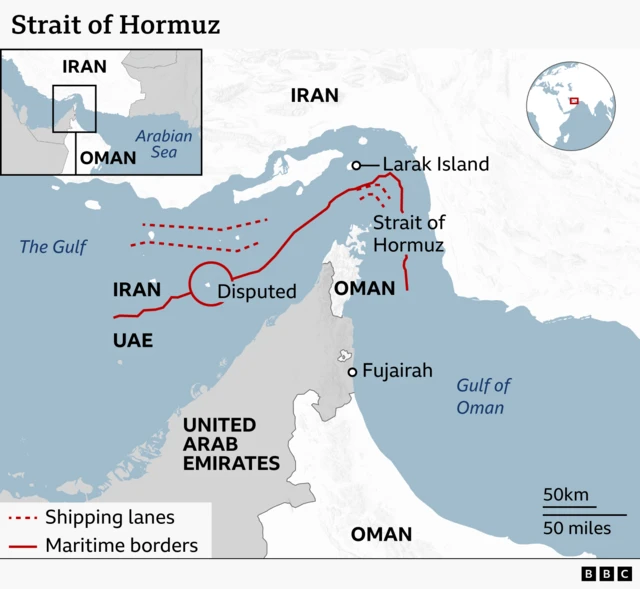
    The Strait of Hormuz, a narrow shipping route in the Gulf region, is one of the world's most important shipping routes. Bounded to the north by Iran and to the south by Oman and the United Arab Emirates (UAE), the Strait of Hormuz connects the Gulf with the Arabian Sea. The strait is deep enough for the world's biggest crude oil tankers, and is used by the major oil and gas producers in the Middle East - and their customers.

    Just under 100 ships have passed through the Strait of Hormuz since the start of March, according to data analysed by BBC Verify, with daily traffic down about 95% since the Iran war began on 28 February.

    Vessels that have successfully passed through the Strait of Hormuz since the start of the month include ships from China, India and Pakistan.

    However, President Donald Trump appears poised to deploy US ground troops to Iran, according to the BBC's US partner, CBS News.

    Military experts say a a possible deployment would likely be focused on increasing pressure on Iran to reopen the Strait of Hormuz, our Washington correspondent writes.

  10. Oil prices drop on Wednesday in Asiapublished at 01:06 GMT 25 March

    It's early trade in Asia on Wednesday and oil prices have fallen sharply following US President Donald Trump's comments that negotiations to end the Iran war are happening "now".

    Brent crude is down by 6.5% to $97.65 (£72.71) a barrel, a day after it had crossed $100.

    US-traded oil dipped by 6% to $86.77.

    Prices may have fallen but they are still well higher than before the Iran war started.

    Read more here.

    Close view of a red fuel pump used to top up a car a petrol station.Image source, Getty Images
  11. What's next in Trump's plan for Iran?published at 00:53 GMT 25 March

    Donald Trump speaks with reporters outside Air Force OneImage source, Getty Images

    What is next in US President Donald Trump's plan for the war in Iran - does he have an exit strategy?

    The BBC Global News podcast, external has spoken to North America correspondent Anthony Zurcher about what he learned about Trump's goals for the war as he travelled with the president to Tennessee this week - including to Elvis Presley's home Graceland.

    The president has said he is "winding down" the operation, yet he also threatened to "obliterate" Iran's power plants unless Tehran lifted its blockade in the Strait of Hormuz.

    He then postponed those strikes, saying there had been constructive talks with Iran. Iranian officials have denied that any contact with the US had taken place.

    A growing list of countries are said to be trying to mediate between Washington and Tehran, including Pakistan, Turkey and Egypt.

    And there are reports that Vice-President JD Vance, an outspoken opponent of long wars, could join the negotiations - which some analysts say is a possible change of strategy.

    Listen to the BBC Global News podcast to hear more.

    A man in a pale blue shirt and grey jacket looks directly at the camera.
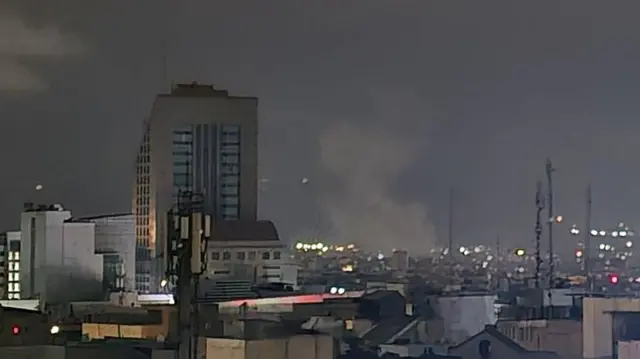
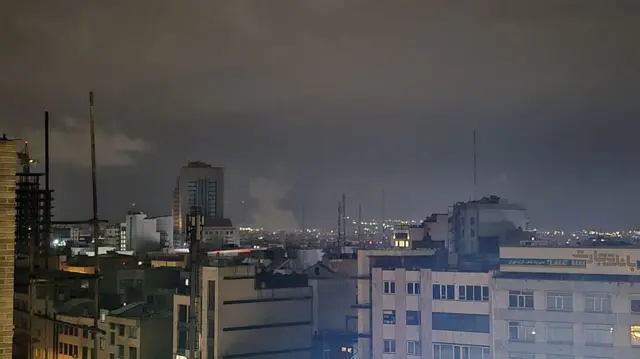
  12. Photos show smoke rising over buildings in Tehran after Israel confirms strikespublished at 00:28 GMT 25 March

    Israel has confirmed strikes on the Iranian capital of Tehran, with sources on the ground telling the BBC they have been hearing explosions.

    Photos show plumes of smoke rising over buildings in the early morning hours of Wednesday.

    Smoke rises over buildings in an otherwise dark Tehran, IranImage source, Getty Images
    Smoke rises over buildings in an otherwise dark Tehran, IranImage source, Getty Images
  13. Philippines on edge after emergency powers announcementpublished at 00:14 GMT 25 March

    Suranjana Tewari
    Asia Business correspondent in Manila

    A jeepney driver speaks with fellow drivers at a terminal in ManilaImage source, Getty Images

    The morning after President Ferdinand Marcos Jr declared a national energy emergency, the mood across Manila is uneasy.

    The government warns of an “imminent danger” to fuel supplies, after the conflict in the Middle East drove up global oil prices and disrupted shipments.

    The Philippines relies heavily on imported fuel from the region, leaving it exposed to sudden shocks.

    Officials say the country has around 45 days of fuel at current consumption, and they are now racing to secure additional supplies.

    The emergency, which could last up to a year, gives authorities more flexibility - from speeding up fuel imports to offering support for public transport and cracking down on hoarding of essential items like food.

    There are plans to rely more on coal to keep electricity prices from rising further. Ministers have also allowed limited use of a cheaper but dirtier type of fuel temporarily.

    On the streets, the strain is already visible. Jeepney drivers say their earnings have been cut as fuel prices climb, and commuters are bracing for higher fares.

    Labour group Kilusang Mayo Uno has criticised the move, calling it proof the government has failed to manage the crisis - and warning that limits on protests could silence workers.

    Thousands of transport workers, including ride-hailing drivers, are expected to strike later this week - and they say, for now, those plans remain unchanged.

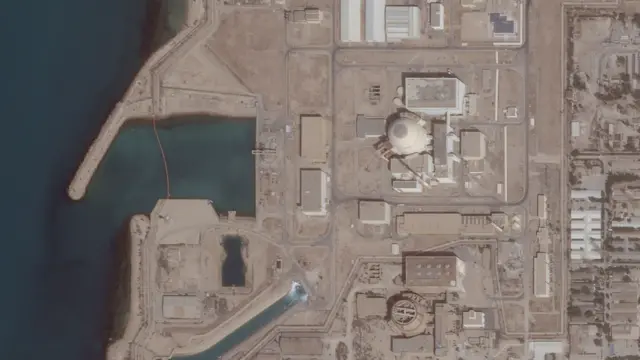
  14. Nuclear watchdog calls for 'maximum restraint' after Iran's nuclear power plant hit againpublished at 23:53 GMT 24 March

    Satellite image shows the Bushehr Nuclear Power Plant in IranImage source, Reuters

    The International Atomic Energy Agency (IAEA) says Iran informed the agency that another projectile has "hit the premises" of the Bushehr Nuclear Power Plant in Iran.

    "According to Iran, there was no damage to the NPP itself nor injuries to staff, and the condition of the plant is normal," it says.

    The head of the IAEA, Rafael Grossi, reiterated his call for "maximum restraint to avoid nuclear safety risks during conflict".

    Iran’s only operational nuclear power plant, in the southern city of Bushehr, was also hit last week but there were no reports of casualties or damage.

  15. No casualties after drone strike on Kuwait airport, officials saypublished at 23:38 GMT 24 March

    Drones have struck the Kuwait International Airport, leading to a fire but no casualties, the country’s civil aviation authority says.

    Firefighters are working to tame the blaze, and relevant authorities are involved, according to the statement.

  16. IDF confirms new strikes in Tehranpublished at 23:34 GMT 24 March

    The Israel Defense Forces (IDF) says they have begun a "new wave of strikes" in Tehran, targeting infrastructure from the "Iranian terror regime" across the nation's capital.

    The BBC has just heard from sources inside the city who were reporting explosions in the east, the north and the centre of Tehran.

  17. Analysis

    How could US troops potentially be deployed in Iran?published at 23:21 GMT 24 March

    Daniel Bush
    Washington correspondent

    The Trump administration appears poised to deploy US ground troops to Iran, according to reports published by US media today. But some of the information is conflicting, and it's unclear if President Trump has approved such a plan or whether the Pentagon has given the final order yet.

    The Pentagon is expected to send troops from the 82nd Airborne Division, including ground forces and a command element, according to CBS News, the BBC's US partner.

    Trump did not address a possible troop deployment in remarks on the war in the Oval Office earlier today, and the defence department has not announced any troop deployment.

    Military experts say a possible deployment would likely be focused on increasing pressure on Iran to reopen the Strait of Hormuz. Iran began targeting commercial oil tankers that use the strait after the US launched the war last month.

    US troops could be used to take over Kharg Island. The island houses oil storage and loading facilities and accounts for roughly 90% of Iran’s oil exports. Former US defence officials and military experts tell me that US troops could likely easily take control of the small island.

    But the island is roughly 500 miles from the Strait of Hormuz. A military operation there would not stop Iran from disrupting oil shipments in the strait, and it would expose US troops to attacks from Iranian forces.

    Trump has also discussed securing Iran's enriched uranium, sparking speculation that US troops could be sent to get the material - but military experts say that type of operation is riskier and less likely.

  18. Strikes heard in Tehranpublished at 22:53 GMT 24 March

    Ghoncheh Habibiazad
    Senior reporter, BBC Persian

    There have been strikes on Tehran, sources in the east and north of the Iranian capital tell me.

    Another in the centre of the city says the same.

  19. Iran makes clear it will continue to exert control over Hormuz - until a deal is struckpublished at 22:38 GMT 24 March

    Paul Adams
    Diplomatic correspondent

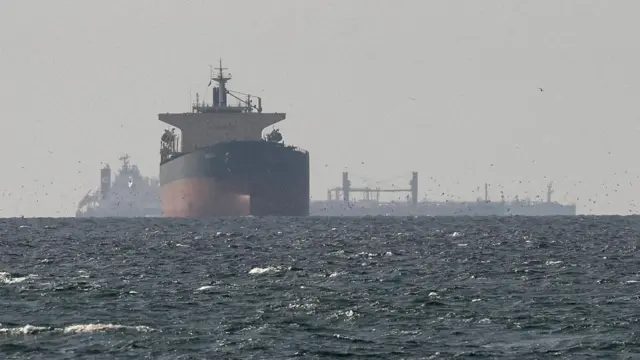
    Cargo ships in the Gulf near the Strait of HormuzImage source, Reuters

    In a message posted by its mission to the UN, Iran says that "non-hostile vessels" will be allowed to pass through the Strait of Hormuz, provided they coordinate with "the competent Iranian authorities".

    The message essentially formalises a situation which has emerged in recent days, in which countries or companies have quietly negotiated safe passage for their vessels as they pass through one of the world's most important shipping lanes.

    In a post on X, the Iranian UN mission says ships will benefit "provided that they neither participate in nor support acts of aggression against Iran and fully comply with the declared safety and security regulations".

    Vessels that have successfully passed through the Strait of Hormuz since the start of the month include ships from China, India and Pakistan.

    Rather than using the two narrow transit corridors closer to Oman, ships have been rerouting further north, through Iranian territorial waters north of Larak Island, allowing the Iranian authorities to monitor and control traffic.

    The issue of freedom of navigation through the Strait of Hormuz features prominently in a 15-point plan to end the war which the White House has sent to Iran via Pakistan, which has been reported by American and Israeli media.

    But until a deal is struck - something which still seems some way off - Iran is making it clear that it will continue to exert as much control as it can over this vital waterway.

  20. Iran firing missiles towards Israel, IDF sayspublished at 22:00 GMT 24 March

    The Israeli military says missiles have been fired towards the country by Iran.

    In a social media post, the Israel Defense Forces (IDF) says "defensive systems are operating to intercept the threat", and advises residents to follow alerts sent to mobile phones.

    We'll bring you more on this when we get it.