Summary

  1. First image of Vance in Islamabadpublished at 07:32 BST 11 April
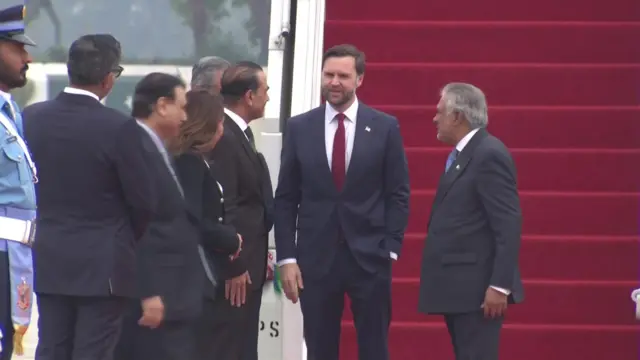
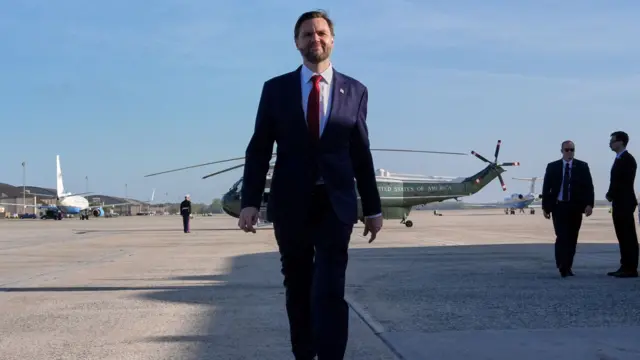
    Vance arriving in Islamabad, stood next to Pakistan's Foreign Minister Ishaq Dar and the country's Field Marshal Asim Munir..Image source, POOL

    As we've reported US Vice President JD Vance has touched down in Islamabad, Pakistan.

    He was met on the runway, after disembarking Air Force Two, by Pakistan's Foreign Minister Ishaq Dar and the country's Field Marshal Asim Munir.


  2. Analysis

    Getting US and Iran to Islamabad was first hurdle, it won't be the lastpublished at 07:18 BST 11 April

    Carrie Davies
    BBC Pakistan correspondent, Islamabad

    After weeks of speculation, talks in Islamabad seem about to commence.

    The sound of Pakistani jets echoed through the city’s skies just after midnight, as they accompanied in the Iranian arrivals.

    Leading their delegation is the Parliamentary speaker Mohammad Bagher Ghalibaf, along with the Foreign Minister Abbas Araghchi. They were met at the airport with a red carpet and flowers.

    Ghalibaf shared images of seats on their plane filed with the burnt school bags and pictures of the school girls killed in an air strike on the first day of the war.

    For the US, JD Vance has just landed in Islamabad.

    The stakes are high, and the gap between the two countries' positions wide. Getting both sides to Islamabad was the first hurdle – it will not be the last.

  3. US Vice President Vance arrives in Islamabad, BBC understandspublished at 06:54 BST 11 April
    Breaking

    US Vice President JD Vance has just arrived alongside the US delegation in Islamabad, an aviation source tells the BBC.

    He is due to attend talks with Iran later today, alongside special envoy Steve Witkoff and Jared Kushner.

    Vance and his team of negotiators set off from the US bound for Pakistan yesterday, and just before he left, the vice-president told reporters he is "looking forward to negotiations", but warned if Iran "try to play us" the US won't be receptive.

    We'll bring you the latest developments as we get them. Stay with us.

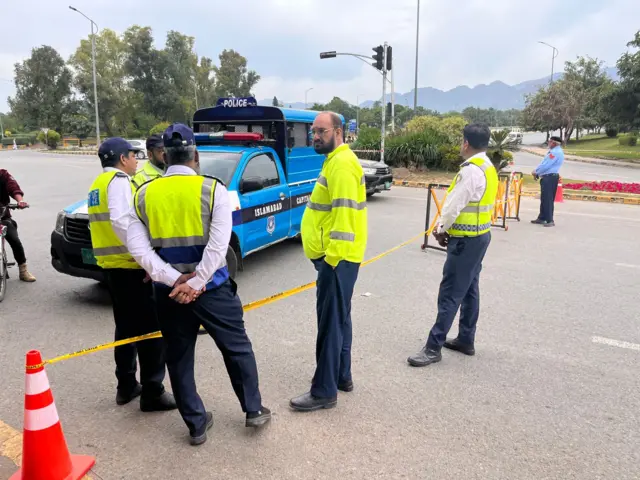
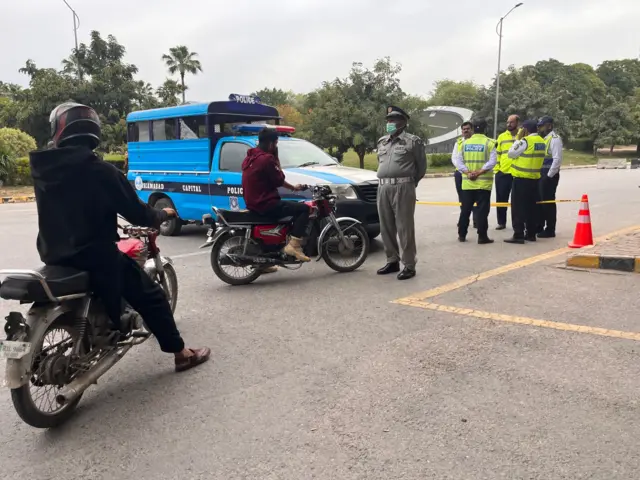
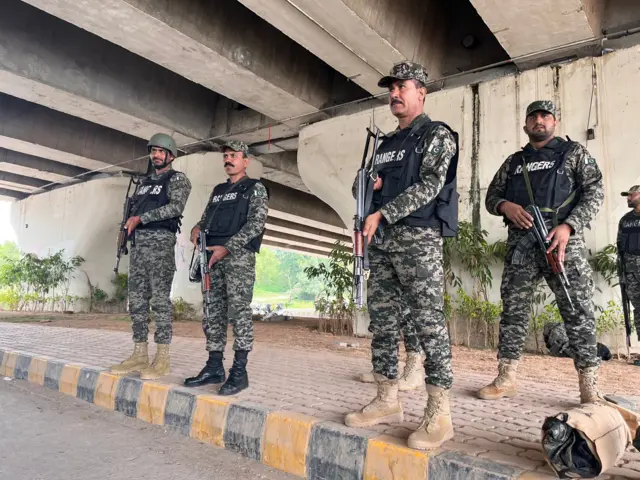
  4. Islamabad braces for peace talks, with tightened securitypublished at 06:53 BST 11 April

    The Iranian negotiators have arrived, as Islamabad is awaiting the arrival of the US delegation.

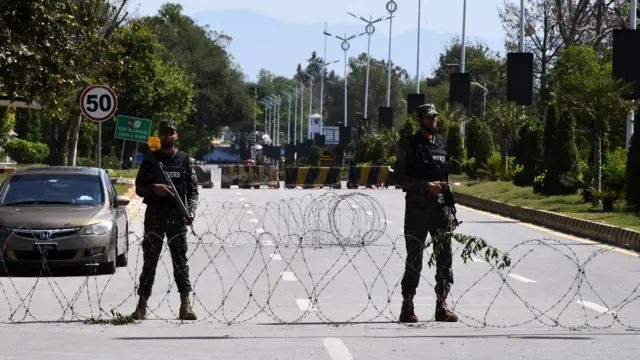
    In preparation over the past few days security has been tightened and roads closed - here are the latest images:

    A police checkpoint in Islamabad ahead of US and Iran peace talks in Pakistan
    A police checkpoint in Islamabad ahead of US and Iran peace talks in Pakistan
    A police checkpoint in Islamabad ahead of US and Iran peace talks in Pakistan
  5. Trump hands JD Vance his most difficult mission yetpublished at 06:34 BST 11 April

    Daniel Bush
    Washington correspondent

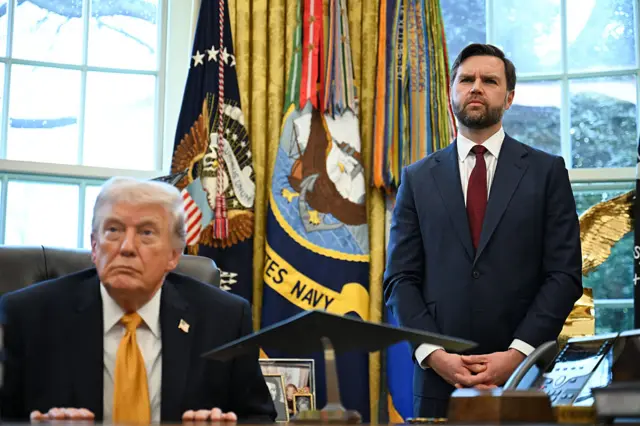
    US President Donald Trump and Vice President JD Vance listen to a repoerter's question after Trump signed an executive order on fraud in the Oval Office.Image source, Getty Images

    JD Vance is expected to arrive in Islamabad this morning, ahead of peace talks with Iranian delegates.

    In the middle of an Easter lunch at the White House, President Donald Trump went off script to address speculation about JD Vance's role in securing a deal to end the war in Iran.

    "If it doesn't happen, I'm blaming JD Vance," Trump joked, drawing laughter at last week's East Room event attended by senior administration officials including the vice-president, Secretary of State Marco Rubio, and Defence Secretary Pete Hegseth. And "if it does happen," Trump added, "I'm taking full credit."

    The remarks perfectly captured Vance's predicament as he leads a US delegation holding talks with Iran in Pakistan. It is the most challenging assignment of Vance's vice-presidency so far - one with a limited upside and plenty to lose if negotiations fail.

    Vance's diplomatic mission to Islamabad is a political minefield. To make progress in reaching a permanent agreement to end the war, he will have to satisfy several stakeholders with competing interests, and who all distrust each other after a six-week military campaign that has engulfed the Middle East and roiled the global economy.

    US allies are watching Vance closely to see how he'll perform, one European official said. Vance "needs to step into the room and deliver something," added the official, who spoke on the condition of anonymity. "Otherwise he will be diminished."

  6. Can the US and Iran find middle ground? It's hard to saypublished at 05:58 BST 11 April

    Azadeh Moshiri
    South Asia Correspondent, Islamabad

    It's still unclear what will come of these talks. What both sides are saying publicly is still very far apart – and it doesn't add up.

    Part of the reason for this is that what leaders and negotiators are saying publicly is more directed at audiences at home. Iran and the US are each trying to shape the narrative of this war, and dictate a picture of who begged who to come to the negotiating table for these talks.

    There's still hope for potential progress – at the very least maintaining this fragile ceasefire. But remember: the US and Iran were negotiating in February when the US left the table and helped launch this war alongside Israel.

  7. Ahead of US talks, key Iranian negotiator says they have 'good intentions' but 'do not trust'published at 05:42 BST 11 April

    Earlier we heard from Iran's parliamentary speaker Mohammad Bagher Ghalibaf, who is leading the country's delegation in peace talks with the US in Islamabad.

    "We have good intentions but we do not trust", he said after landing in Pakistan, according to the BBC's US news partner CBS.

    "Our experience in negotiating with the Americans has always been met with failure and broken promises," he continued.

    As we reported earlier, the head of the US delegation, Vice-President JD Vance had similarly said the US was going into the talks with a sense of optimism but warned Iran not to "play us".

  8. UN Secretary-General calls for Iran and the US to enter peace discussions in 'good faith'published at 05:31 BST 11 April

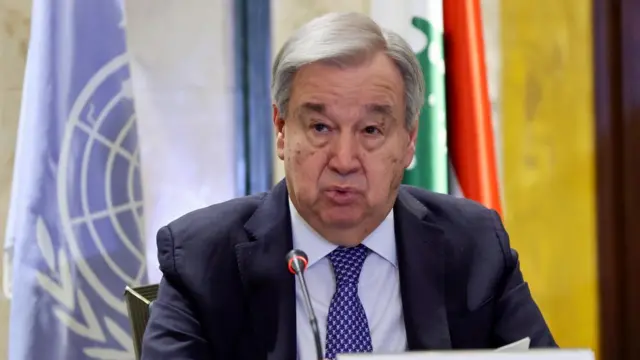
    António Guterres, an older man with grey hair, in a suit and blue tie speaking into a microphone.Image source, EPA

    UN Secretary-General António Guterres is welcoming the planned US-Iran peace talks and urging for both sides to go into them with "good faith".

    Speaking at the United Nations' press briefing on Friday, the secretary-general's spokesperson Stephane Dujarric said Guterres "calls on the parties to seize this diplomatic opportunity to engage in good faith toward a lasting and comprehensive agreement, with a view to deescalation and the prevention of a return to hostilities."

    "The Secretary-General reiterates that there is no viable alternative to the peaceful settlement of international disputes, in full accordance with international law, including the UN Charter," Dujarric said.

    Guterres's personal envoy is in the region to support diplomatic efforts, he added.

  9. What does it mean for Pakistan to host peace talks?published at 04:51 BST 11 April

    Umer Nangiana and Sarah Hasan
    BBC News Urdu, Islamabad

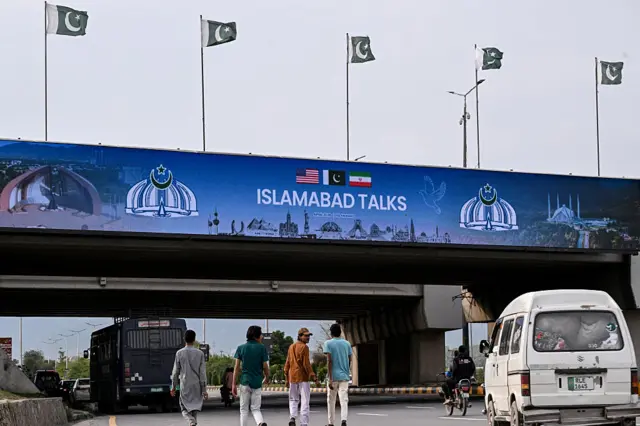
    Digital billboards reading "ISLAMABAD TALKS" can be seen on the streets of the capital, with flags from the US and Iran, with Pakistan's emblem sitting between themImage source, Getty Images

    Pakistan has been celebrating its role in helping broker peace between the US and Iran, after helping negotiate a two-week ceasefire ahead of the peace talks happening today in its capital city of Islamabad

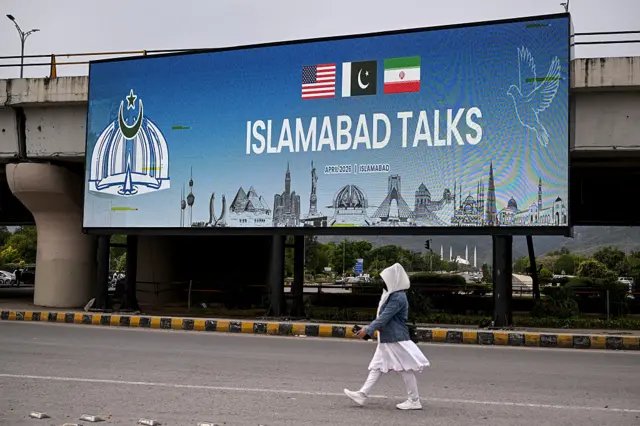
    Digital billboards reading "ISLAMABAD TALKS" can be seen on the streets of the capital, with flags from the US and Iran, with Pakistan's emblem sitting between them. The country even declared a two-day holiday to mark its role in peace talks.

    The stakes for the world are high – countries across the globe are keen to see an end to the fighting and the reopening of the Strait of Hormuz - but they are also high for Pakistan in other ways.

    And the South Asian nation will face a potential "nightmare scenario" if negotiations collapse, and it gets dragged into fighting with its neighbour Iran, says Abdul Basit, a South Asia expert at Nanyang Technological University in Singapore.

    Yet pride and excitement is taking over Pakistani social media, with different memes going viral.

    "It is a victory in the sense that no other country in the world was able to broker the ceasefire and we were on the verge of a possible catastrophe. Pakistan averted that," says Basit.

    The success is very much needed for a country that has endured years of political unrest, a fragile economy on the brink of a debt default only two years ago, and intense rivalry with India.

    Read more about the high-stakes diplomacy that led to Pakistan hosting the peace talks here.

    Digital billboards reading "ISLAMABAD TALKS" can be seen on the streets of the capital, with flags from the US and Iran, with Pakistan's emblem sitting between themImage source, Getty Images
  10. JD Vance and US delegation on their way to Pakistanpublished at 04:10 BST 11 April

    US Vice-President JD Vance is on his way to Pakistan to lead the US delegation in the peace talks with Iran.

    Before setting off, he told reporters "if the Iranians are willing to negotiate in good faith, we are certainly willing to extend an open hand." His plane, Air Force Two, made a scheduled refuelling stop in Paris.

    But the vice-president added a warning too: "If they're going to try to play us, then they're going to find the negotiating team is not that receptive."

    Trump, he said, had given the US negotiating team "some pretty clear guidelines".

    Also on the US delegation is the president's son-in-law, Jared Kushner, who served as an adviser during Trump's first term and US Special Envoy Steve Witkoff.

    Both of these men have been involved in ceasefire negotiations on behalf of the US for an end to the Israel-Gaza war and talks to stop fighting between Russia and Ukraine.

    US Vice-President JD Vance walking on an airport tarmac with a helicopter and a jet plane in the backgroundImage source, Reuters
  11. Iranian delegation suggests Tehran is serious about a dealpublished at 03:48 BST 11 April

    Ghoncheh Habibiazad
    Senior reporter, BBC Persian

    The Iranian delegation includes Iranian Parliament Speaker Mohammad Bagher Ghalibaf, who has recently emerged as a prominent figure in the Iranian government. He is heading the delegation, but in his recent posts on X, he has expressed Iran’s distrust of the US going into these talks.

    There were also unconfirmed reports during the recent war that the US administration was considering Ghalibaf as a potential partner and possibly even a future leader.

    Another figure is Iranian Foreign Minister Abbas Araghchi, a key player in the negotiations over Iran’s long-disputed nuclear programme, which has led to Western sanctions. The latest round of negotiations was held two days before the war began.

    Another figure is Abdolnaser Hemmati, governor of the central bank. Iran has signalled that one of its demands is the lifting of all economic sanctions on the country, which have crippled its economy for years.

    The current state of Iran’s economy is worse than before the war began, with the consequences of US and Israeli attacks on major industries such as steel and petrochemicals starting to emerge, as well as the effects of a government-imposed internet outage on businesses.

    The outage has remained in place since the start of the war on 28 February.

  12. Internet blackout in Iran passes 1,000th hourpublished at 03:24 BST 11 April

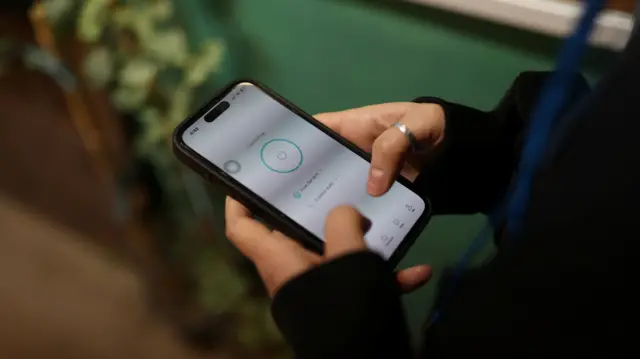
    Close up photo of a pair of hands, one with a thumb ring, holding an iPhone with a nearly all-white screen to illustrate the internet blackout in IranImage source, Reuters

    As Pakistan prepares to host Iranian and US officials for peace negotiations, the Iranian people have now marked more than 1,000 hours without internet connection.

    Most of the country has been cut off from the world wide web since the war began at the end of February and connectivity has been available only those who are willing to pay a steep cost.

  13. Historic peace talks between US and Iran must bridge deep distrustpublished at 02:52 BST 11 April

    Lyse Doucet
    Chief international correspondent

    If and when a photograph is taken of US Vice President JD Vance standing next to Iran's Parliamentary Speaker Mohammad Bagher Ghalibaf in Islamabad this weekend, it will make history.

    That moment would mark the highest-level face-to-face talks between the Islamic Republic of Iran and the United States of America since the 1979 Islamic Revolution shattered their strong strategic bond and cast a long shadow which still darkens relations to this day.

    The two men may not smile. They may not even shake hands.

    It would not make this troubled relationship any more easy, any less hostile.

    But it would send a signal that both sides want to try to end a war sending shocks worldwide, avoid an even riskier escalation, and turn to diplomacy to do a deal.

    There's zero chance though of President Donald Trump's optimistic prediction of a "peace deal" within this shaky two-week ceasefire; its terms were contested and broken since the moment it was announced earlier this week.

    Even until the eleventh hour, Iranians kept everyone guessing over whether they would still show up while Israel was insisting there would be no ceasefire in Lebanon.

    But if serious and sustained talks make a start, it would also mark the most significant push since Trump pulled out of the previous landmark nuclear deal in 2018, during his first term. He dismissed what was widely seen as the foreign policy highlight of the Obama administration as the "worst deal in history".

    Read more here from our Chief International Correspondent Lyse Douset who is reporting in Islamabad.

  14. Timeline of the road to Israel-Lebanon peace talkspublished at 02:21 BST 11 April

    As Israel says Hezbollah won't be included in ceasefire discussions with Lebanon, here's a look back at how this conflict came to a head amid the war in Iran.

    Israeli and Lebanese officials are set to meet in Washington, DC on Tuesday to begin talks.

    Officials have said more than 1,700 people have been killed since Israel launched its campaign in Lebanon last month.

    Here's how we got here:

    28 February - The US-Israel-Iran War begins and strikes are launched on Tehran. The strikes kill Iranian Supreme Leader Ayatollah Ali Khamenei and trigger regional upheaval.

    2 March - Israel launches strikes in Lebanon after Hezbollah fires rockets into northern Israel in retaliation for its attack on Iran. Israel launches broad strikes across the country and later announces it would send ground troops into the country.

    First week of the war - Lebanese President Joseph Aoun begins calling for direct talks between Israel and Lebanon. Israel was initially unresponsive.

    7 April - The US and Iran announce they have agreed to a 14-day ceasefire with talks to follow.

    8 April - Israeli jets conduct a 10-minute blitz across Lebanon - a massive aerial attack killing at least 303 people and wounding 1,150 others, according to Lebanon's health ministry. The strikes draw the condemnation of many in the international community who accuse Israel of violating the ceasefire.

    9 April - Israeli Prime Minister Benjamin Netanyahu says there is "no ceasefire in Lebanon" and says the deal with Iran did not include the country. Netanyahu says Israel will participate in peace talks with Lebanon while continuing its attacks on the country.

    10 April (today) - Israel and Lebanon say they have agreed to participate in talks moderated by the US on Tuesday. The Israeli and Lebanese ambassadors to the US reportedly spoke on the phone to set the meeting. The talks were planned as the US and Iran are planning to meet in Pakistan for their own peace talks - and Iran has said a ceasefire in Lebanon would have to be in place before any talks begin.

  15. Israel says it's not discussing ceasefire with Hezbollah as Lebanon talks to begin Tuesdaypublished at 01:37 BST 11 April

    Israel has agreed to start formal peace talks with Lebanese representatives during talks in Washington next week but says Hezbollah has not been part of those talks, Israel's ambassador to the US said on Friday.

    "Israel refused to discuss a ceasefire with the Hezbollah terrorist organization, which continues to attack Israel and is the main obstacle to peace between the two countries," says Israeli Ambassador to the US Michael Leiter.

    A call reportedly took place between the Lebanese and Israeli ambassadors in the US as well as the US ambassador to Beirut.

    The discussions planned on Tuesday, and mediated by the US, are said to be centered around a ceasefire in the Israel-Lebanon conflict, according to a statement from the Lebanese president's office.

  16. Trump says 'you don’t need a back up plan' but wishes Vance 'luck' before Iran talkspublished at 01:29 BST 11 April

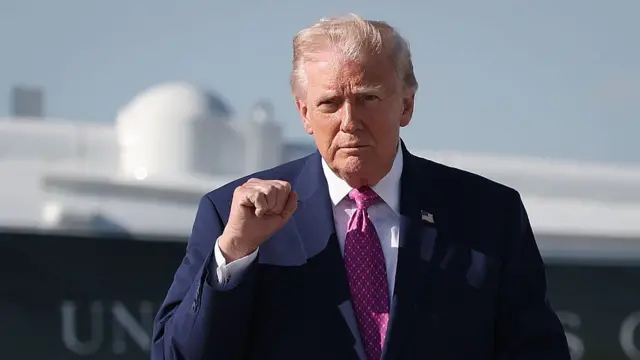
    Donald Trump stands on a tarmac. he is holding up his fist and wearing a suit with a red tieImage source, Getty Images

    Earlier, we heard from President Donald Trump, who spoke to reporters while boarding a plane on his way to Charlottesville, Virginia.

    When asked what he said to Vice President JD Vance before he flew to Islamabad for ceasefire talks, Trump says, "I wished him luck".

    He adds that he's not sure whether the US-Iran talks will be one and done, or if they will continue in the weeks to come. Asked if there was a back-up plan, he says "you don't need a back-up plan".

    Another journalist asked what a good deal with Iran would look like to him.

    "No nuclear weapon," he says, noting he feels regime change has already happened.

    He also says the Strait of Hormuz will open "with or without" Iranian cooperation, though he says that the US doesn't need it.

    "We will have that open fairly soon," he says.

    The president is asked about reports that Iran would toll ships that pass through the Strait, and he replies "we're not going to let that happen".

  17. Iran's preconditions give some indication of complexities of talkspublished at 01:24 BST 11 April

    Paul Adams
    Diplomatic correspondent

    The preconditions raised by the man leading Iran’s delegation – a ceasefire in Lebanon and the unfreezing of billions of dollars of Iranian assets – give some indication of the complexities now facing the negotiators.

    The nuclear issue is the biggest, and the oldest, lying at the root of the west’s long-standing concerns about Iran. The regime insists it has never tried to develop a bomb, but since Donald Trump withdrew from a previous, meticulously negotiated nuclear deal, eight years ago, Iran has enriched uranium way beyond what it might need for a civil programme.

    The US wants Iran to hand over what it has – a problem, as it’s thought to lie under the rubble of a facility near Isfahan – and commit to never pursuing a nuclear weapon. Iran says its right to enrich is non-negotiable.

    Then the Strait of Hormuz – not a problem before this war, but now one of Iran’s most potent weapons.

    Having established a choke hold on one of the world’s most important waterways, Iran wants to put in place a whole new set of rules governing maritime traffic, possibly involving the right to inspect shipping, impose tolls or simply deny access.

    That, for much of the world, especially the countries of the Gulf, is a non-starter. The problems don’t stop there. Israel and the United States want to end what they see as Iran’s malign regional influence. Iran wants the complete lifting of all international sanctions and compensation for the damage inflicted over the past month.

    Having been attacked twice in the past year when it thought it was still negotiating, it also wants guarantees that this won’t happen again.

    No-one really thinks any of these issues are going to be resolved in Islamabad. Given how fragile the situation is ahead of the talks, most people will be happy simply to see the ceasefire survive.

  18. Four things you need to know about peace talks in Pakistanpublished at 01:12 BST 11 April

    Welcome back to our live coverage.

    The Iranian delegation has arrived in Islamabad ahead of scheduled peace talks with the US later on Saturday.

    Here are the key things you need to know before the discussions:

    Pakistan has been acting as intermediary between Iran and the US over the last few weeks. It has a historic relationship with Iran while US President Donald Trump says the head of Pakistan's armed forces, Asim Munir, knows Iran "better than most".

    Trump said the US had received a 10-point proposal from Iran which he described as "a workable basis on which to negotiate".

    Iran's Foreign Minister Abbas Araghchi also mentioned a 15-point proposal that Trump's chief negotiators have said could end the conflict.

    Neither set of proposals has been formally unveiled – even though reported versions of both have been leaked - but appear to be oceans apart, our diplomatic correspondent reports.

    Israel's strikes on Lebanon continue to cast doubt on peace talks. Israeli prime minister Benjamin Netanyahu has insisted the ceasefire does not apply to Lebanon, and on Wednesday, its military bombed targets across the country, leaving more then 300 people dead, according to the Lebanese health ministry.

    On Friday evening, Lebanon said they would discuss a ceasefire with Israel next week in Washington.

    US Vice-President JD Vance is on his way to Islamabad to represent the US in the discussions, along with special envoy Steve Witkoff and Donald Trump's son-in-law and adviser Jared Kushner.

    Pakistani security officials at a checkpoint.Image source, EPA