Summary

  1. A key sticking point: Iran's nuclear abilitiespublished at 13:09 BST 11 April

    Tom Bateman
    US State Department correspondent

    The US has made clear since the start of the war that Iran should never have the ability to develop a nuclear weapon, something Tehran has said it never planned to do.

    Donald Trump said last June that Iran's nuclear capabilities were already "obliterated" by his bombing raids on nuclear sites at Isfahan, Fordow and Natantz. After a further five weeks of war, today Iran maintains its stockpile of near-weapons grade enriched uranium which is thought to be contained in gas cylinders under rubble.

    In the third week of the war, Rafael Grossi, the head of the global nuclear watchdog the IAEA, told me there could ultimately be no military solution to Iran's nuclear ambitions.

    Trump has said the US will now work "with Iran" to "dig up and remove all of the deeply buried… Nuclear Dust". But Tehran remains defiant on this issue and it will be a decisive one in the looming negotiations between the US and Iran in Islamabad.

    Arguably Tehran could now - with an even more suspicious leadership in place - become more, not less, determined to seek a nuclear capability to deter another US attack.
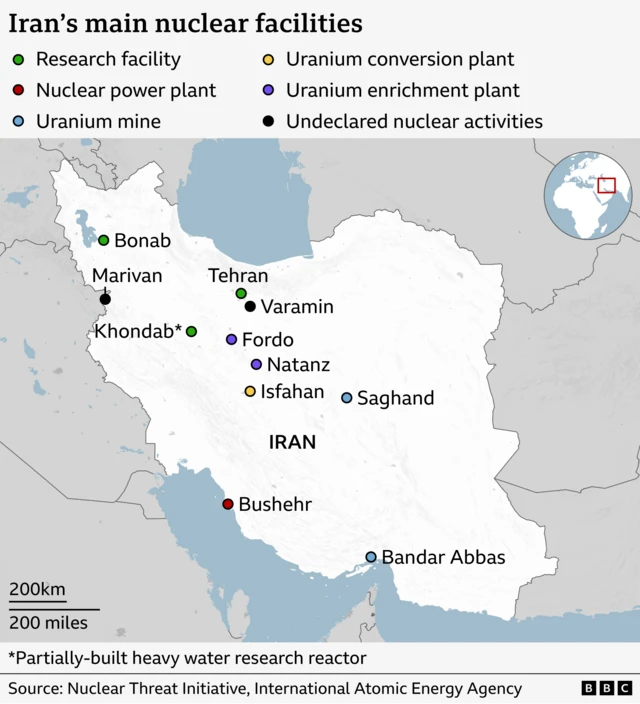

    Map of Iran showing the locations of its main nuclear facilities. Sites are marked with coloured dots representing different facility types: research facilities (green), nuclear power plant (red), uranium mines (blue), uranium conversion plant (yellow), uranium enrichment plants (purple), and sites of undeclared nuclear activities (black). Key locations include Natanz and Fordo (enrichment plants), Arak (research reactor), Bushehr (power plant), Isfahan (conversion plant), and others such as Tehran, Marivan, Varamin, and Saghand. A small inset map shows Iran’s location within the region. Source: Nuclear Threat Initiative and International Atomic Energy Agency.
  2. A key sticking point: Strait of Hormuzpublished at 13:07 BST 11 April

    The Strait of Hormuz has become a focal point in the US-Israel war with Iran after Tehran effectively choked off the vital oil shipping route.

    Roughly a fifth of the world's oil and liquefied natural gas passed through the Strait before the war but it has been brought close to a standstill.

    BBC Verify found that by 17:00 BST on 10 April only 19 ships had been tracked passing through the strait since the conditional two-week ceasefire agreed between the US and Iran on Tuesday.

    A key part of that conditional ceasefire is the safe passage of ships through the strait.

    One of the top concerns is whether ships face the possibility of having to pay Iran a toll to go through the Strait.

    This Flourish post cannot be displayed in your browser. Please enable Javascript or try a different browser.

  3. We'll take you through the key sticking points in US-Iran talkspublished at 13:06 BST 11 April

    Matt Spivey
    Live editor

    This morning, the US and Iranian delegations have both met Pakistani Prime Minister Shehbaz Sharif in separate talks ahead of peace negotiations.

    Details on how talks between the two nations will play out in Islamabad remain scarce, and there are still key issues to be resolved.

    Iran and the US have agreed to a conditional two-week ceasefire, but discussions today will be a chance for both sides to discuss the key sticking points. It's fair to say that a whole mountain of obstacles lie ahead, our diplomatic correspondent writes.

    In our next five posts, we'll take a closer look at the key sticking points in the US-Iran talks - stay with us.

  4. Trump hails US oil as 'best and sweetest' in the worldpublished at 12:53 BST 11 April

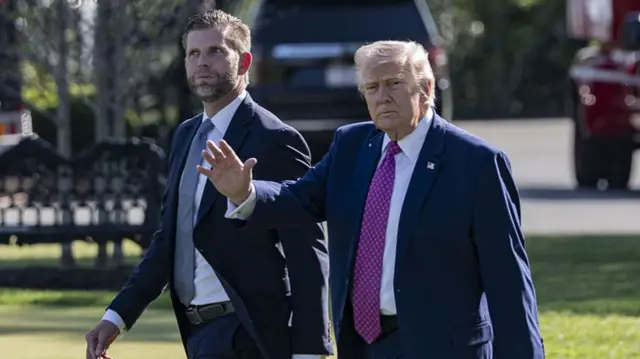
    US President Donald Trump (R) and his son Eric Trump (L) depart the White House.Image source, Getty Images
    Image caption,

    Trump pictured departing White House with his son Eric yesterday

    US President Donald Trump says "massive numbers" of empty oil tankers are heading to the US to "load up with the best and 'sweetest' oil (and gas!) anywhere in the World".

    In a recent post on Truth Social, Trump claims the US "have more oil than the next two largest oil economies combined - and higher quality. We are waiting for you. Quick turnaround!"

    This comes as global oil prices have fluctuated during the US-Israel war with Iran.

    Benchmark Brent crude oil prices rose to above $111 (£84) earlier this week before plunging 15% to just under $92 (£67) after the US and Iran agreed to a conditional two-week ceasefire deal, which includes the reopening of the Strait of Hormuz.

    Iran's effective closure to vessels in the Strait of Hormuz - a vital shipping lane - has led to a rise in petrol and food prices.

    However, oil prices remain higher than before the conflict started on 28 February. At the time, it was trading at around $70 a barrel.

  5. US official denies claims Washington agreed to unfreeze Iranian assetspublished at 12:19 BST 11 April

    Azadeh Moshiri
    South Asia correspondent, reporting from Islamabad

    US media is reporting that an American official has denied any frozen Iranian assets have been released, despite earlier reports to the contrary.

    Iran's speaker of parliament Mohammad Bagher Ghalibaf, who is leading the delegation, had said this would need to happen before negotiations could even begin.

    A move like that would be very difficult to justify to Donald Trump's supporters in the United States.

    Sources inside Pakistan's government and Iran's delegation have told the BBC that Prime Minister Shehbaz Sharif had met with senior Iranian officials. A photo was released of Sharif also meeting US Vice President JD Vance.

    But it's unclear whether Pakistan shuffling between the two sides will lead to historic face-to-face talks, or an agreement between the United States and Iran.

  6. Three killed in Lebanon in Israeli strikes - health ministrypublished at 12:13 BST 11 April

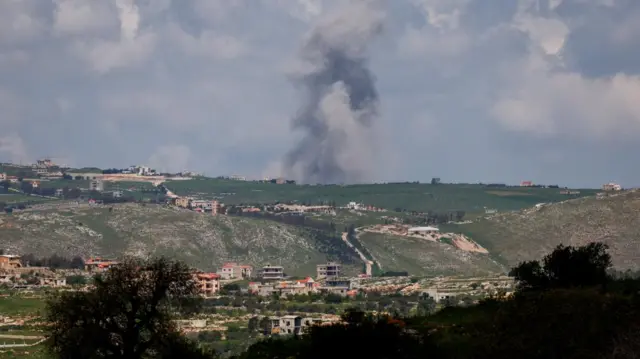
    Smoke rises following an airstrike in Lebanon, as seen from Israeli side of the borderImage source, Reuters
    Image caption,

    Smoke rises following a strike on Lebanon on 11 April, as seen in this image taken from the Israeli border

    Three people have been killed after Israel attacked the town of Zefta in Nabatieh, southern Lebanon, according to the country's Ministry of Health.

    The ministry says one of those killed was a member of Lebanese Civil Defense. Two others have been injured.

    It's not clear when they were killed. Images from Reuters show smoke rising after air strikes in Lebanon today.

    Israel's military said on Friday it had struck 40 "additional infrastructures" in southern Lebanon.

  7. Analysis

    Lebanon's government faces difficult situation as country is in deep crisispublished at 11:44 BST 11 April

    Hugo Bachega
    Middle East correspondent, in Beirut

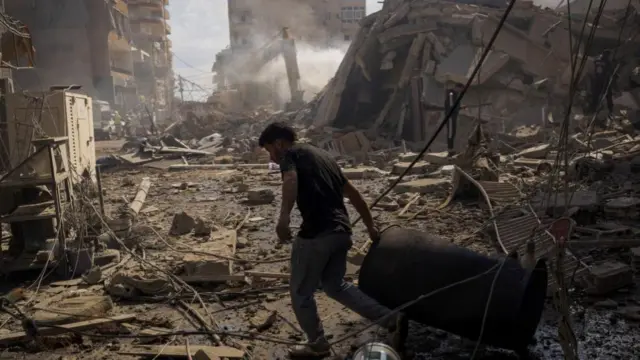
    A man pulls a drum at the site of an Israeli strike in Tyre, Lebanon.Image source, Reuters
    Image caption,

    A wave of Israeli air strikes on Wednesday led to the deaths of at least 300 people in Lebanon, the health ministry says. This image shows some of the destruction in the Lebanese city of Tyre

    If the war between Israel and Hezbollah in Lebanon is seen as jeopardising the ceasefire deal in Iran, it is likely President Trump will put pressure on Israel to stop.

    After inflicting widespread horror and destruction in the country with a wave of air strikes on Wednesday, Israel has decreased the scale of its attacks, and reports say that happened after American calls for restraint.

    The widely condemned attacks killed more than 300 people, at least a third of them women, children, according to Lebanon’s health ministry.

    They happened in the middle of the day without warning and some of them hit busy, densely populated neighbourhoods that had never been targeted before - places people felt they were safe.

    There is now the prospect of direct talks between Israeli and Lebanese officials, a significant development for countries that have no diplomatic relations.

    Lebanon, however, says no negotiations will happen before a ceasefire first. Israel says the war will continue. This is probably the easiest obstacle to be overcome.

    The Lebanese government is in a difficult situation: the country is under attack, in deep crisis, and the authorities cannot deliver Hezbollah’s disarmament.

    President Joseph Aoun, who made what he calls the "state monopoly on arms" one of his priorities, has warned that disarmament cannot be delivered by force. Without Hezbollah's consent, he has said, there is the risk of violence.

    Hezbollah has, so far, refused to discuss the future of its weapons. Its supporters call it "the resistance", the only force able to protect them.

    Since its creation in the 1980s it has been armed, trained, and financed by Iran. And observers say any decision about its arsenal will not be taken in Beirut, but in Tehran.

  8. Hezbollah lawmaker criticises Lebanese government over upcoming talks with Israelpublished at 11:28 BST 11 April

    Away from Islamabad, we can bring you an update from a lawmaker affiliated with Iran-backed Hezbollah:

    Lebanese lawmaker Hassan Fadlallah, a member of Hezbollah, has criticised the Lebanese government for holding talks with Israel.

    This follows Lebanon's president announcing that a meeting is set for next week in Washington DC. Israel says Hezbollah won't be included in ceasefire discussions with Lebanon.

    In a statement published by Hezbollah-run Al-Manar TV, Fadlallah calls the move "a blatant violation of the constitution and Lebanese laws", and says it "exacerbates domestic divisions" in Lebanon.

    He adds: "What the enemy has been unable to do on the ground... it will not obtain in negotiations with an authority that lacks decision-making power, has abandoned its most basic duties, has failed to protect its people and cannot be trusted to safeguard national sovereignty."

    In our next post, we'll bring you some analysis from the BBC's Hugo Bachega on the talks between Israel and Lebanon, and where Hezbollah fits in the ongoing discussions.

  9. Vance meets Pakistani PMpublished at 11:12 BST 11 April

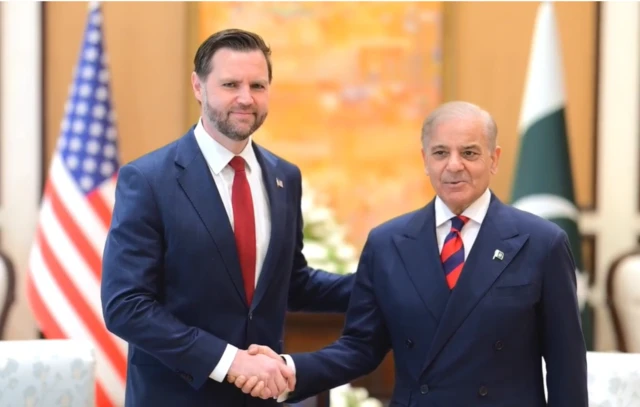
    Vance and Shehbaz Sharif in suits, shaking hands and looking at the camera.Image source, Pakistan Prime Minister's Office

    US Vice President JD Vance has met with Pakistan's Prime Minister Shehbaz Sharif.

    He was assisted by special envoy Steve Witkoff and Jared Kushner, and Sharif expressed hope that these talks would serve as a stepping stone toward durable peace in the region, according to a statement from the Pakistani prime ministers office.

    It follows a separate meeting between the Iranian delegation and Sharif - which our South Asia correspondent reported on a little earlier.

  10. Iran's 10-point plan: What are negotiators hoping for?published at 11:04 BST 11 April

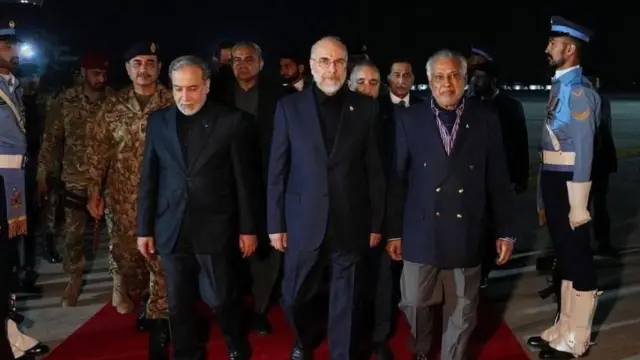
    An Iranian delegation arrived in Islamabad late on 10 April for planned talks with the United States.Image source, Iranian Foreign Ministry/EPA
    Image caption,

    Iran's delegation, including Parliament Speaker Mohammad Bagher Ghalibaf (C) and Iranian Foreign Minister Abbas Araghchi (L) arrived in Islamabad earlier

    Prior to today's scheduled negotiations, Iran and the US agreed to a conditional two-week ceasefire, during which shipping traffic will be allowed through the Strait of Hormuz.

    Iran also sent the US a 10-point plan, which US President Donald Trump described as "a workable basis on which to negotiate".

    Neither the Iranian proposal or Washington's 15-point plan have been formally unveiled – even though reported versions of both have been leaked.

    According to an Iranian state broadcaster, Iran's 10 points include, among other things, the complete cessation of war in the region; "full commitment" to lifting sanctions on Iran; the release of Iranian funds and frozen assets held by the US; and a "full payment of compensation for reconstruction costs" to Iran.

  11. Iranian TV says talks could be cancelled if Tehran’s conditions not metpublished at 10:46 BST 11 April

    Soroush Negahdari
    BBC Monitoring

    A correspondent reporting live from Islamabad on the Iranian state-run news channel IRINN has cautioned that talks could still be cancelled if Iran’s preconditions are not met.

    She said withdrawing from negotiations that fail to respect Iran’s "interests, demands and red lines" could itself be viewed as an "achievement" for what officials describe as "assertive diplomacy".

    Earlier this morning, the correspondent also said the Iranian delegation was expected to meet Pakistani Prime Minister Shehbaz Sharif first, after which further details – including the timing of any talks with the US delegation – would likely become clear - as we've just reported that conversation with Sharif has now happened.

    State TV is stressing Iran’s conditions and red lines, as well as a lack of trust in the US. The reports argue that Iran holds the upper hand and could proceed without talks if its conditions are not met.

  12. Iranian negotiators met Pakistani PM as reports suggest US agrees to unfreeze Tehran's assetspublished at 10:27 BST 11 April

    Azadeh Moshiri
    South Asia correspondent, reporting from Islamabad

    It's hard to get a sense of how these negotiations will unfold and whether the two sides will even meet face to face.

    But we do have an update from a source in the Pakistani government who has told the BBC that Prime Minister Shehbaz Sharif, has met with the Iranian delegation over lunch.

    As in previous negotiations, it's possible that Pakistan will shuffle between rooms with US officials and then with Iran's delegation to see if any progress can be made on various points of their proposals.

    Iran's speaker of parliament Mohammad Bagher Ghalibaf, who is leading the delegation, has said the United States must agree to unfreeze Iranian assets before negotiations can even begin.

    There are reports from Iran that this has taken place, but that certainly hasn't been confirmed from the American side, and would be a thorny issue to justify to Donald Trump's base in the US.

    • For context: Iran called for the release of Iranian funds and frozen assets held by the US as part of its 10-point plan, issued to the US.
  13. 'A very big weekend for us': Pakistanis proud of country's place on global diplomatic stagepublished at 10:18 BST 11 April

    Azadeh Moshiri
    South Asia correspondent, reporting from Islamabad

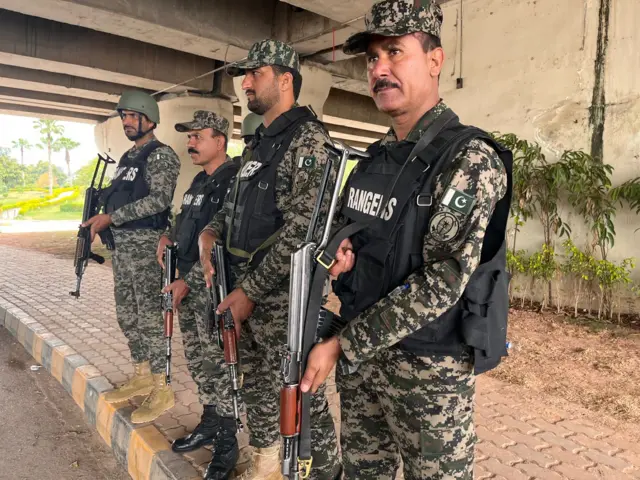
    Armed guards in Pakistan stand at a checkpoint.Image source, Usman Zahid/BBC

    We’ve passed multiple checkpoints here in Islamabad dotted across the capital, and trucks full of police officers and military rangers are driving through the streets.

    Many roads are being kept clear given the arrival of Iranian and US delegations.

    When you speak to people here, there’s a lot of pride about Pakistan being on the global diplomatic stage, no matter the outcome of the talks. One man told me "it’s a very big weekend for us".

    The rest of the world is likely more focused on what will actually come of these talks, and that is far from clear.

    Aside from conflicting statements from both sides, and how far apart they are on key issues, Mohammad Bagher Ghalibaf, Iran’s speaker of parliament, is leading these negotiations and has a background in the Islamic Revolutionary Guards Corps which is intent on preserving the regime's revolutionary values.

    Donald Trump may claim there has been regime change, but that is not how Iranians I’ve spoken to inside the country see it.

    Figures like the new Supreme Leader Mojtaba Khamenei, Ghalibaf are seen as more of the same. As one man in northern Iran told me: "the leaders are worse, not better".

  14. Mohammad Bagher Ghalibaf leads Iranian delegation, who is he?published at 09:51 BST 11 April

    Ghoncheh Habibiazad
    Senior reporter, BBC Persian

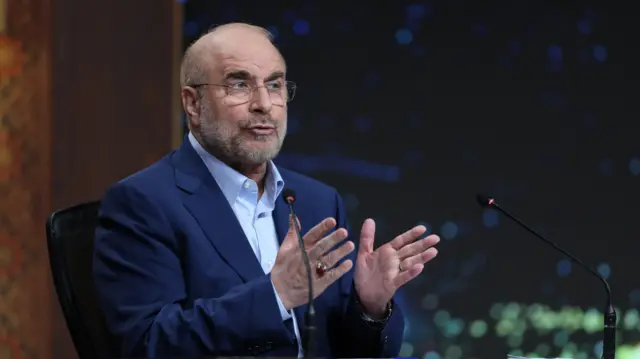
    Mohammad Bagher Ghalibaf pictured during the Iranian presidential election in 2024Image source, EPA
    Image caption,

    Mohammad Bagher Ghalibaf pictured during the Iranian presidential election in 2024

    Mohammad Bagher Ghalibaf is a conservative Iranian politician with a military background, who has been the speaker of Iran’s parliament since May 2020.

    He is leading the Iranian delegation in the planned discussions with the US in Pakistan later today. He's expressed both optimism and mistrust heading into the talks. He said negotiations with America have historically led to failures and "breaches of commitments," he said after arriving in Islamabad, according to the semi-official Tasnim news agency.

    Born in 1961, Ghalibaf joined the Islamic Revolutionary Guard Corps (IRGC) in 1980 and became one of its commanders during the Iran-Iraq War.

    Ghalibaf is known as Tehran’s longest-serving mayor. He held the post for 12 years from 2005. He is credited for infrastructure projects in the city, but he has also been accused of financial impropriety.

    He ran unsuccessfully for president four times, coming fourth in 2005 and second in 2013. He withdrew his candidacy in 2017 before the election and came third in the 2024 early election.

    His account on X has remained active recently, despite a government-imposed internet outage across Iran since the start of the war on 28 February which is still ongoing.

  15. US-Iran talks: Four key questions answeredpublished at 09:30 BST 11 April

    Jacob Phillips
    Live reporter

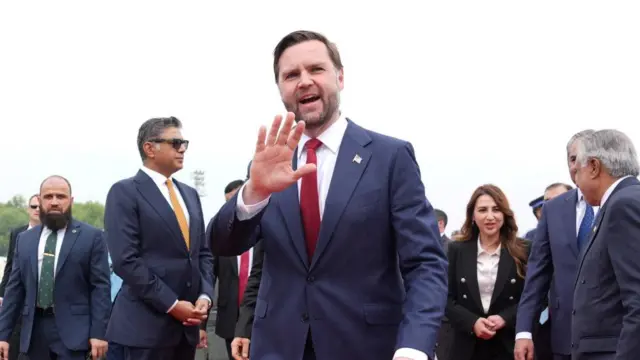
    US Vice President JD Vance waves after arriving for talks with Iranian officials in IslamabadImage source, Reuters

    It's set to be a day of talks between the US and Iran in Pakistan, but details remain scarce.

    We've taken a look at four of the key questions as the US and Iranian delegations are reportedly set to meet Pakistan officials in Islamabad - we'll have more on this shortly.

    Who is involved in the talks?

    US Vice President JD Vance has arrived in Pakistan's capital Islamabad alongside President Donald Trump's son-in-law Jared Kushner and Special Envoy Steve Witkoff for peace talks with Iran.

    Meanwhile, Iranian Parliament Speaker Mohammad Bagher Ghalibaf, who has recently emerged as a prominent government figure, and Foreign Minister Abbas Araghchi arrived in the middle of the night ahead of the talks.

    What is Pakistan's role?

    Both the sides were greeted by Pakistan's Foreign Minister Ishaq Dar and Pakistan's military chief Asim Munir. The country is a key mediator between the two warring nations, and played a part in securing a fragile two-week ceasefire.

    How long will talks last?

    In short, it's unclear. The Tasnim News Agency, which is linked with the Islamic Revolutionary Guard Corps, reports that talks are scheduled to take place for one day, possibly on Saturday evening.

    What are the sticking points?

    Key points of contention include Tehran's choke hold over the Strait of Hormuz, the ongoing conflict in Lebanon and Iran's stockpile of enriched uranium. Our diplomatic correspondent explains more here.

  16. Lebanon should be included in ceasefire negotiations, Pakistani minister tells BBCpublished at 09:10 BST 11 April

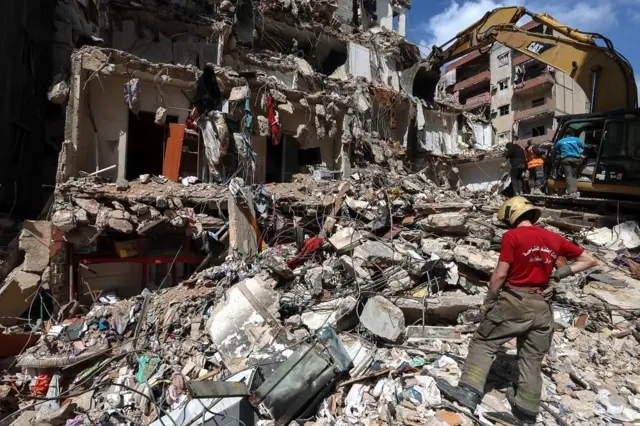
    A person in a red top and firefighting outfit stands on a pile of rubble as a bulldozer works to clear the debris of a partially destroyed building.Image source, EPA/Shutterstock
    Image caption,

    First responders operate as a bulldozer clears the rubble of a partially destroyed building targeted by an Israeli air strike in the suburbs of Beirut, Lebanon, on 10 April

    A senior member of the Pakistani government has told the BBC that Lebanon should be included in the ceasefire negotiations between Iran and the United States.

    Ahsan Iqbal, Pakistan’s minister for Planning and Development and Special Initiatives, tells the BBC's World Service Weekend programme that Pakistan believes that it "has to be a package ceasefire" and it hopes that Israel "will not act as a spoiler for this historic opportunity".

    "We cannot have one part of the region bleed and have discussions on the other part. I think Israel has to have a more responsible role and not try to extract some spoil before these talks really go anywhere."

    Iqbal said that Pakistan will try its best to bring the two sides together to "come to an agreement" adding that he would consider the talks a "success" if the parties agreed to "extend the ceasefire and have another round of talks".

    • For context: The US and Iran have agreed a two-week ceasefire to halt war in the Middle East, but fighting has continued between Israel and Hezbollah in Lebanon. The US and Israel have indicated Lebanon does not form part of the agreement, while Pakistan - a key mediator in the talks - has said it does.
  17. How Pakistan helped secure a fragile ceasefire between the US and Iranpublished at 08:58 BST 11 April

    Caroline Davies
    Pakistan correspondent, in Islamabad

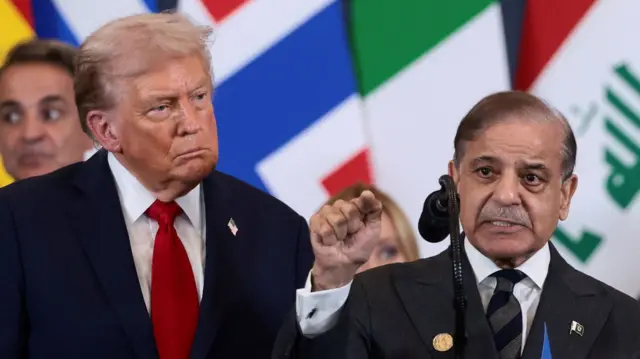
    Donald Trump standing behind Pakistani Prime Minister Shehbaz Sharif as he speaks on a podiumImage source, Reuters

    Peace talks due later today in Islamabad are an offshoot of a two-week ceasefire between the US and Iran that was brokered by Pakistan.

    How did officials in Islamabad broker the truce? Pakistani officials operated as intermediary, passing messages between Iran and the US - we have a full recap of the ceasefire here.

    Those conducting the negotiations from Pakistan's side consisted of "a very small circle" and that the mood was "sombre and serious but still hopeful that a cessation of hostilities will be the outcome," according to a source.

    Pakistan has a historic relationship with Iran, a shared border and regularly refers to its "brotherly" relationship with the country.

    As for the US, President Trump has referred to the head of Pakistan's armed forces, Field Marshal Asim Munir - who greeted Vance in Islamabad a little earlier - as his "favourite" Field Marshal and said that he knows Iran "better than most".

  18. Iran and US still disagree on some key issues - watch BBC report from Islamabadpublished at 08:32 BST 11 April

    The BBC is reporting from the ground in Islamabad ahead of high-level talks between Iran and the US.

    The question of whether the US and Iran would arrive in Pakistan has now been answered, but the two delegations still don't agree on some key issues, our correspondent Azadeh Moshiri says.

    Watch her report below:

    Media caption,

    BBC correspondent in Islamabad ahead of talks

  19. Pakistan's foreign minister says he hopes Iran and US will engage constructivelypublished at 07:56 BST 11 April

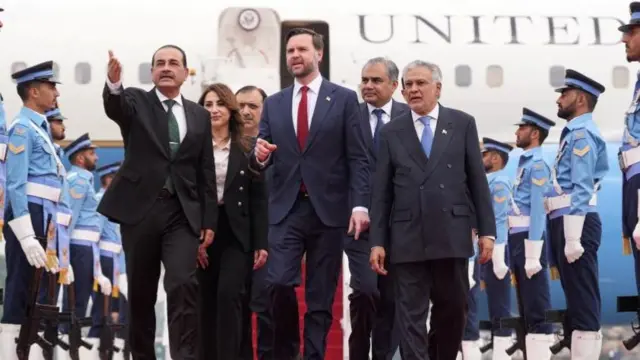
    U.S. Vice President JD Vance walks with Pakistan's Chief of Defence Forces and Chief of Army Staff Field Marshal Asim Munir, and Pakistani Deputy Prime Minister and Foreign Minister Mohammad Ishaq Dar.Image source, Reuters
    Image caption,

    Mohammad Ishaq Dar, on the right of this image, greeted Vance as he arrived

    Pakistan's Foreign Minister Mohammad Ishaq Dar commended the United States' commitment to achieving lasting regional and global peace as he greeted JD Vance in Islamabad.

    In a statement released by the country's foreign ministry, Dar is quoted as saying he hopes Iran and the US will "engage constructively, and reiterated Pakistan’s desire to continue facilitating the parties towards reaching lasting and durable solution to the conflict".

  20. Iran-US negotiations today, Israel-Lebanon talks on Tuesday - what's the latest?published at 07:46 BST 11 April

    Matt Spivey
    Live editor

    US and Iranian negotiators are now all in Islamabad, Pakistan, for peace talks expected later today. On Tuesday, Israel and Lebanon are set to hold discussions.

    We've taken a moment to spell out the difference between the multiple talks and the latest on the ceasefire:

    Talks

    US-Iran: Peace talks are scheduled to take place in Pakistan between the US and Iranian delegations today. US-Vice President JD Vance and his team have just disembarked Air Force Two, hours after their Iranian counterparts arrived.

    Lebanon-Israel: Israeli and Lebanese officials are set to meet in Washington, DC on Tuesday to begin talks. Israel says Hezbollah won't be included in ceasefire discussions with Lebanon.

    Ceasefire

    On Tuesday, a conditional ceasefire between US and Iran was agreed, and is scheduled for two weeks.

    It was first announced by Trump on social media, and Tehran later confirmed that the two countries had come to an agreement - contingent on the reopening of the Strait of Hormuz and a pause in strikes against Iran.

    However, the full details of what was agreed at the time have not been released and exactly how a long-term ceasefire will be negotiated remains unclear.

    Lebanon has become a sticking point in the ceasefire, as fighting has continued. The US and Israel have indicated Lebanon does not form part of the agreement, while Pakistan - a key mediator in the talks - has said it does.