Summary

  1. Concern over 'siloed' divisions of trustpublished at 13:36 BST 18 May

    Majid has told the inquiry that when he joined the organisation, he was concerned about the relationship between the three divisions the trust's services were split into - mental health, community health and specialised services, and forensic services - all of which were led by a group director, nurse director and associate medical director.

    He said colleagues told him they did not know where decisions were made.

    Majid said: "I was concerned they were siloed in nature. I didn't feel there was opportunity for sharing best practice for sharing, learning and therefore improving.

    "And I was also concerned that the divisions all had slightly different structures, they had slightly different governance processes."
  2. Who is Ifti Majid?published at 13:30 BST 18 May

    Ifti Majid was a practising mental health nurse for the first half of his career before moving into various management and leadership roles.

    He said he became the director of operations for the trust in 2010, and told the inquiry he had been in executive roles "for some 10 years".

  3. CEO begins giving evidence to the Nottingham Inquirypublished at 13:29 BST 18 May

    Ifti Majid has begun giving evidence to the Nottingham Inquiry.

    The CEO of the hospital trust at the time of the attacks on 13 June 2023 is being questioned by Rachel Langdale, counsel to the inquiry.

  4. Outgoing NHS trust CEO set to give evidencepublished at 13:18 BST 18 May

    Ifti Majid, the outgoing CEO of Nottinghamshire Healthcare NHS Foundation Trust, has been sworn in and is set to begin giving evidence to the Nottingham Inquiry.

    Majid joined the trust in December 2022, after Calocane was discharged. He was in post at the time of the Nottingham attacks on 13 June 2023.

    Majid announced his retirement in November last year. He had intended to retire on his 60th birthday in October but the trust said at the time, he would be staying in post for the public inquiry with a view to leaving in June.

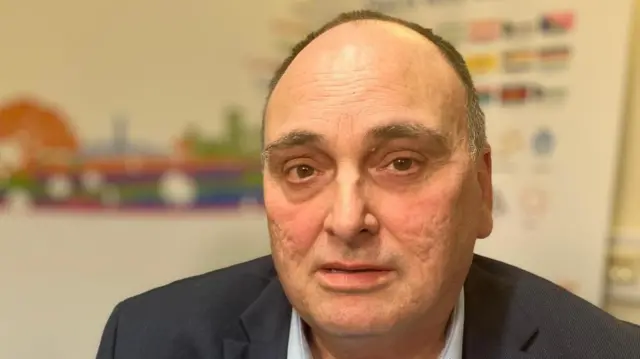
    Image of Majid
  5. Need to Know: Recap of last week's evidence from Valdo Calocane's familypublished at 13:17 BST 18 May

    If you'd like to find out about more of the evidence heard in the Nottingham Inquiry so far, you can get up to speed with the latest as part of our Need to Know series.

    Last week we heard from Valdo Calocane's brother Elias, and his mother Celeste.

  6. What have we heard so far today?published at 13:03 BST 18 May

    This morning, we heard evidence from John Brewin, who was CEO of the Nottinghamshire Healthcare NHS Foundation Trust from January 2019 to August 2022.

    This covers almost the whole period Nottingham triple killer Valdo Calocane was under the trust's care after his paranoid schizophrenia diagnosis.

    Here's a recap of what we've heard at the inquiry this morning:

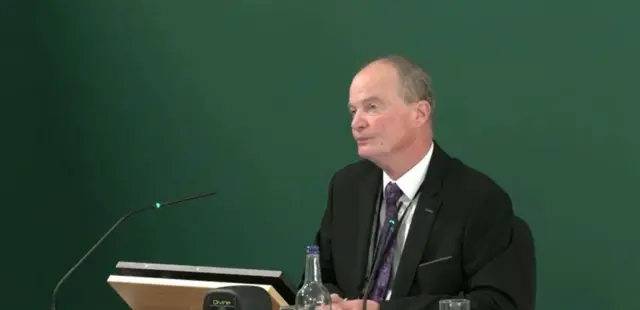
    Brewin at the inquiryImage source, The Nottingham Inquiry
  7. How does the Nottingham Inquiry work?published at 12:48 BST 18 May

    Following Calocane's sentencing in 2024, a series of failings emerged by authorities, including the police and mental health services - both of which the killer was known to - prompting calls for a statutory, public inquiry.

    A statutory inquiry means witnesses who are called forward are legally compelled to give evidence under oath.

    The Nottingham Inquiry, which began hearing evidence on 23 February this year, is examining the lead-up to the attacks, the investigation that followed and the aftermath.

    It is being chaired by retired senior judge Deborah Taylor KC - who will listen to all the evidence and draw up her findings as part of a final report.

    You can read more about how the inquiry works here.

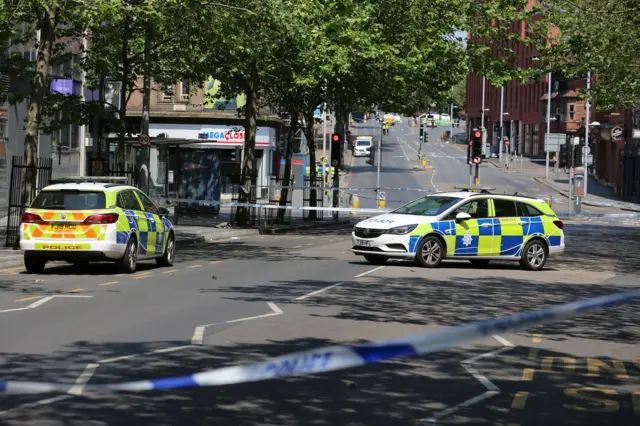
    Police cordon in NottinghamImage source, Nottinghamshire Police
  8. Former NHS trust boss completes evidencepublished at 12:40 BST 18 May

    Brewin has now completed his evidence to the inquiry. His witness statement will be published later on the Nottingham Inquiry website.

    The hearing has now paused for a lunch break until 13:20 BST.

    Ifti Majid, the outgoing chief executive officer (CEO) and Brewin's replacement, is expected to begin his evidence after the break.

  9. Did triple killer's community team focus on the wrong thing?published at 12:39 BST 18 May

    The chair of the inquiry, retired senior judge Deborah Taylor KC, has put to Brewin that audits showed the EIP team appeared to be "consistently good at physical examinations - but not in relation to mental health".

    She said: "Do you agree with that? Perhaps the emphasis was on the wrong thing?"

    Brewin said targets for physical assessments were "relatively easy" to meet but added "the broader church of mental health interventions is a much more challenging area".

  10. Inquiry hears of 'failings' to report Valdo Calocane's historypublished at 12:25 BST 18 May

    Continuing his questioning of Brewin, Carr asked whether he considered there had been failings to report Valdo Calocane's history in relation to the incident in which a neighbour fell from a window trying to escape him.

    In response, Brewin said: "Yes, I do."

    The inquiry previously heard Calocane was a student at the University of Nottingham when he experienced his first episode of psychosis in May 2020.

    On the night of 24 May 2020, he broke into a woman's flat in Brook Court, Radford, in the city.

    The inquiry previously heard the woman, who was studying to be a nurse, broke her spine and needed surgery when she fell from the window.

  11. 'Lack of training' in community care team, inquiry toldpublished at 12:18 BST 18 May

    Inquiry team barrister Craig Carr has now asked Brewin: "Were you aware of a lack of administrative support to EIP teams, which meant MDT [multi-disciplinary team] meetings were not minuted?"

    Brewin said: "Yes."

    Carr asked: "Were you aware there was a lack of training to members of the EIP team, such that they weren't receiving any training on managing disengaged patients?"

    Brewin replied: "[I was] not specifically aware that there was a lack [of training], no."

  12. Audits show mental health team was underperformingpublished at 12:05 BST 18 May

    The inquiry is now shown reports from the National Clinical Audit of Psychosis, which is co-ordinated by the Royal College of Psychiatrists.

    The Nottingham City Early Intervention in Psychosis (EIP) team and the Nottingham City South EIP - which was responsible for Calocane's care in the community - had been mostly underperforming between 2018 and 2021, according to the audits undertaken.

    According to audit results from 2021, the City South team fell below the national average score for most of the areas the audit scrutinised, including its cognitive behavioural therapy (CBT) services, and how it managed family intervention.

    However, there had been improvement in the timeliness in which patients could access services.

    Brewin said in light of these audits, the leader of the mental health division negotiated with commissioners to secure additional funding and created a specialist team to help with administrative duties.

  13. 'Significant concerns' raised about early intervention in psychosis programmepublished at 11:48 BST 18 May

    The inquiry heard in 2018, a report into the early intervention in psychosis (EIP) team identified care co-ordinators were managing case loads of 20 to 27, which was above the recommended number, and identified a series of recommendations for the trust.

    Asked whether it was Brewin's understanding that the recommendations were implemented, he told the hearing he could not recall "specifically".

    He added when he started the role of CEO of the trust, he understood there were "significant concerns" about the EIP programme.

    According to an audit carried out in 2018-2019, the trust was below national average standards in relation to EIP.

  14. Coroners raised similar issues to healthcare watchdogpublished at 11:40 BST 18 May

    The inquiry is told that coroners - following inquests into people's deaths - were raising the same issues as the CQC in their reports, especially around risk assessments.

    Brewin agreed it was evident the trust took "insufficient steps" to address the problems raised, but added the pandemic made issues "doubly difficult" to address.

    Asked if concerns raised by staff or coroners were disclosed to the CQC, Brewin said: "I can't remember specifically but I think probably yes.

    "Automatically - in the relationship that we had with the CQC - we would be very open and candid about issues that were arising, because it is important to keep them abreast of the challenges we were facing."

    He said the trust had "regular conversations" with the CQC.

  15. Mental health had to fight for 'fair proportion' of budget, ex-boss sayspublished at 11:35 BST 18 May

    A doctor who previously gave evidence to the Nottingham Inquiry said a lack of beds had the potential to make community treatment orders less effective, because the power of recall [to hospital] would be meaningless if there was not a bed to put someone in.

    Asked if Brewin agreed with that, he said it was difficult to say because he completed clinical practice in 2018 when this was an "emergent issue".

    However, he said the limited number of beds in acute wards was a "regular point of concern" at meetings with local healthcare commissioning groups and regional NHS teams.

    Brewin said when working at "board level" in the NHS, there were lots of "competing interests in terms of how limited resources are used and from a mental health perspective".

    He described mental health services as a "Cinderella service" that had to fight for "what we would regard as a fair proportion of the national budget".

  16. Reduction in beds for psychiatric patients a 'national issue'published at 11:23 BST 18 May

    The inquiry heard from Brewin that the reduction in the number of beds for psychiatric patients was a "national issue".

    He told the hearing nationally there were fewer than 18,000 beds for psychiatric patients.

    Brewin said in his view there had been an "over-reliance" on reducing beds, which he said was something he felt "strongly" about.

  17. Incident investigations stopped as part of improvement planpublished at 11:16 BST 18 May

    In an improvement plan sent to staff in November 2021, ward managers were told to stop undertaking investigations until 2022.

    That meant incidents that would usually warrant an internal investigation would not be looked into.

    Brewin said "this was crisis point" and added the decision "wasn't just done on a whim".

    The former trust boss said there had been a backlog of investigations and the decision would have been discussed and agreed in a bid to "free up" clinical front-line staff.

    Inquiry team barrister Craig Carr suggested the trust was "losing the ability to monitor the safety of services".

    Brewin replied: "Not necessarily losing the ability, but reducing the ability."

    He said the priority was to keep front-line clinical services open.

    The plan also included "increased use of discharge" to get people out of hospital, which Brewin described as a "fast track".

  18. Staffing situation 'not unique to Nottingham'published at 11:09 BST 18 May

    The inquiry was told that a report prepared for a trust meeting in 2021 flagged staffing as an "urgent" issue, two years after a CQC inspection raised it in 2019.

    According to the report, wards looking after adult mental health patients were under "extreme staffing pressures".

    Brewin told the hearing "there wasn't enough staff to fill the posts", and said the ability to recruit and retain staff was "extremely challenging", and "compounded" by the pandemic.

    He told the inquiry the trust used financial incentives to recruit staff alongside NHS bank staff.

    Brewin added the situation the trust found itself in "was not unique to Nottingham by any stretch", and said it was a "common theme" nationally.

  19. Former NHS trust boss told staff 'the services are not safe'published at 11:01 BST 18 May

    The inquiry heard in October 2021, Brewin had a meeting with acute ward managers, which he described in an email to staff as a "sobering and at times a very harrowing conversation".

    He wrote in that email: "We have reached a point where the services are not safe and we need an immediate response to help support them.

    "There is a sense of despondency that despite flagging this since at least June, nothing has happened and that if the CQC arrived, we would be threatened with closure, so let's work on the principle that this has happened."

    He said that conversation was around staffing. Managers had raised concerns about not having enough senior staff on wards, high volumes of administrative work and an "over-emphasis" on agency staff.

  20. NHS staff 'very frightened' during Covidpublished at 10:52 BST 18 May

    Inquiry team barrister, Craig Carr, asked: "How would Covid contribute to staff not completing risk assessments for instance, or not completing comprehensive risk assessments?"

    Brewin said that would have been for a number of possible reasons. He said there had been a focus on keeping wards open and people, including staff, were "very frightened".

    He said: "I don't know if you've ever been on an acute psychiatric ward... they can be quite alarming places to be.

    "And I think that one is one of the reasons that [what] you would ordinarily regard as a fundamental - completing a risk assessment - may not have been people's highest priority," he said.