Summary

  1. Incidents on the ward outlined to inquirypublished at 11:20 BST 13 May

    Thangavelu had said in his statement that Calocane was also not eligible for depot treatment due to a "lack of incidents on the ward", inquiry team barrister Craig Carr said.

    Carr outlined that Calocane had slammed a door on a nurse trying to take observations, and that he had gone on leave by lying about attending university.
  2. How does the Nottingham Inquiry work?published at 11:08 BST 13 May

    Following Calocane's sentencing in 2024, a series of failings emerged by authorities, including the police and mental health services - both of which the killer was known to - prompting calls for a statutory inquiry.

    A statutory inquiry means witnesses who are called forward are legally compelled to give evidence under oath.

    Evidence in the Nottingham Inquiry began on 23 February this year.

    It is being chaired by retired senior judge Deborah Taylor KC - who will listen to all the evidence and draw up her findings as part of a final report.

    You can read more about how the inquiry works here.

  3. Calocane talked of 'computer brain interface' on day of dischargepublished at 11:02 BST 13 May

    At the discharge meeting following his fourth admission, Carr said the notes showed Calocane talked about how he had felt "technologies" like a "computer brain interface" were being used on him and "someone outside him was influencing him".

    Thangvelu said: "The way it came across was, I was pressing him about thought insertion, illusions of control and so on, and he was saying, 'no I don't have it'.

    "Some of these questions are difficult to ask. The way he put it across was it happened some time in the past but he wasn't saying it was happening now or in recent times.

    "This was one of his main symptoms, that domain of being controlled."

    Thangavelu said he felt the fact he had brought this up on the day of his discharge "might be a sign he was recognising his symptoms more".

  4. Doctor did not ask Valdo Calocane about hallucinations, inquiry toldpublished at 10:57 BST 13 May

    The inquiry heard during Calocane's fourth admission, a colleague of Thangavelu contacted his former flatmate Christopher.

    It was Calocane's assault of Christopher in January 2022, during a conversation about cleaning, that led to his last admission.

    Christopher told the doctor that short, intermittent screams could be heard during the night, coming from Calocane's bedroom. He also said Calocane had entered another flatmate's bedroom in the night, asking if he had heard screams.

    Asked if he had explored this with Calocane while he was in hospital, Thangavelu said he did not recall doing so.

    Craig Carr asked: "Should you have explored it with him?"

    Thangavelu replied: "I think I should have."

  5. Calocane 'didn't like staying in hospital'published at 10:52 BST 13 May

    Thangavelu said it was noted Calocane had been making an effort to be discharged from hospital.

    He said: "There's no question that he didn't like staying in hospital. He had a decent relationship with his family.

    "Yes, people don't come with full insight, yes people want to get out of hospital, but sometimes you see them making effort and you can't completely disregard that."

    Inquiry team barrister Craig Carr argued that he was being "low profile" and only talking to staff when he needed to.

    Thangavelu agreed this was "a fair summary".

    Carr said this might have meant it was hard to identify if Calocane was showing signs of psychosis.

  6. Calocane was 'largely asymptomatic' during last admissionpublished at 10:51 BST 13 May

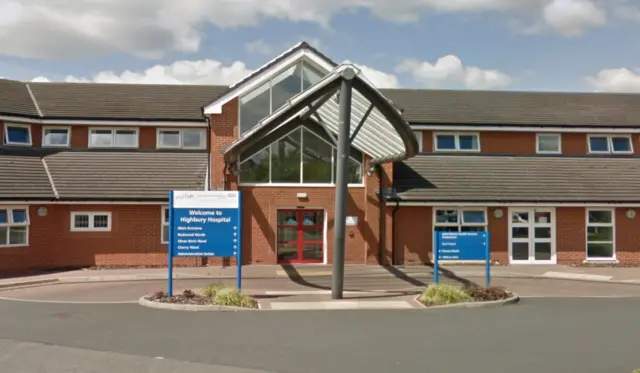
    Thangavelu - the consultant during Calocane's final admission to Highbury Hospital prior to his killings - has told the inquiry Calocane was "largely asymptomatic from day one".

    A previous report from an earlier admission noted Calocane said his mental disorder stopped in 2021 - and so he stopped taking his medication.

    He also said, as noted in the report, that he was continuing with treatment because he had no choice while in hospital at the time but would stop engaging with mental health services once he was discharged.

    Thangavelu said he did not read that report during his management of Calocane during his fourth admission. However, he said it was a concern of his that Calocane could stop taking his medication once he left hospital.

    "But the only difference that we have - I saw - during my admission, was he was not floridly psychotic from day one. Either his symptoms were in remission, partial remission at least.

    "But he was largely asymptomatic from day one," he said.

  7. Calocane 'only engaged at the superficial level'published at 10:46 BST 13 May

    Calocane did not engage properly with the mental health crisis team, Thangavelu said.

    The doctor agreed that Calocane missed appointments and, on one occasion, was seen possibly taking a tablet out of his mouth and putting it in the bin.

    Thangavelu said: "He only engaged at the superficial level. That was clear.

    "He wouldn't sit and have a chat. He would come and just put a tablet in the mouth and leave."

    But the plan for releasing Calocane from his detention was agreed to be trialled "as long as he engages with the crisis team", according to his medical notes.

  8. Doctor 'put himself' in killer's shoespublished at 10:44 BST 13 May

    Thangevelu told the inquiry he was "empathetic" about Calocane's view that there was a low threshold for admitting him to hospital.

    The doctor said: "I was putting myself into his shoes. Rightly or wrongly, that's what we do.

    "I was aware he was in the middle of exams and he might have been under a lot of stress.

    "I know he was also working I think at the time in a warehouse. And he had to agree to come and meet people on a daily basis."

    Highbury HospitalImage source, Google
  9. Calocane had 'reasonable insight' into his illnesspublished at 10:41 BST 13 May

    Thangavelu said Calocane had "reasonable insight" into his symptoms and treatment.

    He also recorded that Calocane felt "aggrieved" and that the Early Intervention in Psychosis (EIP) team had a "low threshold" for admitting him to Highbury Hospital.

    Thangavelu said in notes from a ward review that the killer accepted his first admission was "rational", but the others were not.

    It was put to Thangavelu this was not consistent with having insight. Thangavelu said: "I was not basing it on one discussion.

    "What I was mentioning about the insight, the way we understand it's not an all-or-none phenomena and it's not static.

    "Recognition of symptoms, perhaps linking it to those symptoms, and attributing to a condition - most patients with mental health problems actually fail on the third.

    "It's not something you see clear-cut in patients. They may be holding back their guard, but in other conversations they might say the voices were bothering me and so on."

    Thangavelu said Calocane did not have "good insight", but he "was able to recognise some sort of experience he was going through", although he could not recognise it was psychosis, the inquiry was told.

  10. Doctor questioned about Calocane's incorrect medication dosagepublished at 10:31 BST 13 May

    The inquiry has heard Calocane told his care co-ordinator in 2021 that he was mistakenly taking the wrong dosage of his medication.

    He was prescribed 20mg of aripiprazole at the time but said he thought one tablet - which was 10mg - was the correct dosage.

    Thangavelu has been reluctant to say Calocane was non-concordant with his medication throughout his care, and is being questioned on this point.

    He said upon reading the notes that Calocane had been taking the wrong dosage, he could not decide "one way or the other" why that would be the case.

    He added he "would have liked to see" Calocane say he preferred 10mg over 20mg, if that was the case.

    Carr said: "Is the bottom line this: If VC has been prescribed 20mg, he's been told to take 20mg, he's been reminded by his care co-ordinator of the correct dosage and he is taking 10mg, he would be non-concordant? Do you accept that?"

    "I agree, I agree," Thangavelu said.

  11. Chat with mum showed Calocane was aware he was missing appointmentspublished at 10:13 BST 13 May

    Later that month, notes showed Valdo Calocane had told his mother Celeste he had a university deadline and would rearrange an appointment with his care co-ordinator.

    Thangavelu said there had been confusion over Calocane's address but "I was questioning myself" if this was the reason for his string of missed appointments, as this conversation showed he was aware he was not attending.

    He said: "When there is clear evidence to say there was confusion over the address, it was a realistic prospect that at least some of those appointments could be due to the address issues itself, that can happen to any of us."

  12. Triple killer aware he was not taking his prescribed dose, inquiry toldpublished at 10:12 BST 13 May

    Calocane's records from November 2021 showed he had been taking a half dose of his medicine, but was aware of the amount he should have been taking.

    This showed he was not "confused", and was "aware" of what he should have been taking, inquiry team barrister Craig Carr said.

    Thangavelu said: "There's something going on there about what he might want to take as opposed to what has been prescribed."

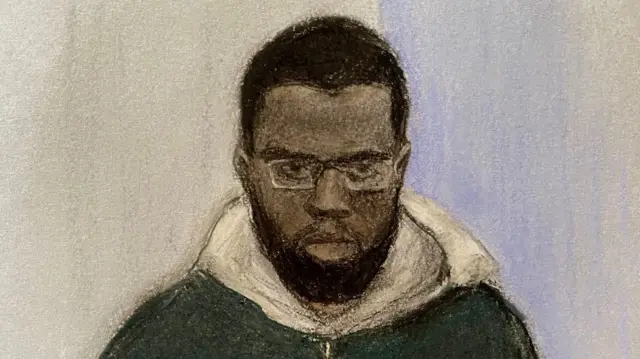
    Calocane court sketchImage source, PA Media
  13. Calocane could have been 'untruthful' about medicationpublished at 10:01 BST 13 May

    Thangavelu is now being questioned about Calocane's non-concordance with his medication throughout his care.

    He said issues with patients not taking medication for various reasons was not unusual.

    The doctor was asked about various occasions throughout his care when Calocane had not taken medication, or had medication left over.

    Thangavelu initially said he would not want to jump to conclusions about Calocane's compliance with his medication.

    He added: "I mean, I'm not dismissing the possibility of non-concordance, but in mental health work this is not an unusual scenario.

    "It's possible that he was untruthful, that's very much a possibility."

    Asked about an occasion in 2021, when a bag of pills were found in Calocane's flat, the consultant said that "pointed" to a pattern of non-concordance.

  14. Killer's relapses could not be blamed on not taking medication - doctorpublished at 09:40 BST 13 May

    The reasons why Valdo Calocane was not placed on to depot treatment - which would have forced him to take his prescribed medicine - were outlined in a statement to the inquiry by Thangavelu.

    In three previous releases from Highbury, it had been noted that Calocane had been compliant with his oral medication, but it was put to Thangavelu that this did not translate to taking his prescriptions once he moved back into the community.

    Thangavelu said: "Certainly there were periods where that did not translate into full compliance in the community. However it hasn't been a consistent picture throughout his history.

    "It certainly felt like there was a speculation that he might have been non-compliant."

    Thangavelu had said in his notes that Calocane had disputed that non-compliance with medicine was the reason for relapsing previously.

    Thangavelu noted he could not conclude relapses were as a direct result of him not taking his medicine.

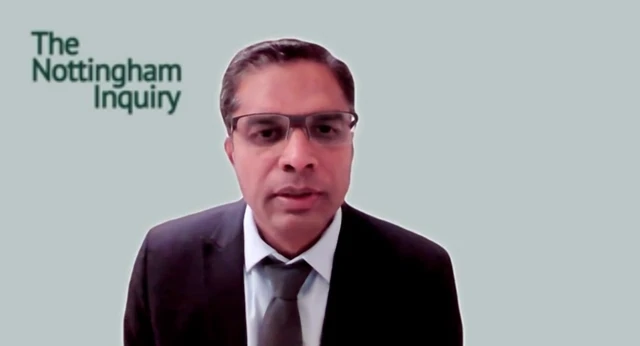
    Dr Thangavelu giving evidenceImage source, The Nottingham Inquiry
  15. What was Dr Thangavelu's involvement?published at 09:39 BST 13 May

    Dr Thangavelu was involved in multi-disciplinary meetings about Calocane's care in January and February 2022, during the killer's fourth admission to Highbury Hospital.

    Calocane was admitted to the Redwood Ward of the hospital under Section 2 of the Mental Health Act on this occasion.

    This was a fourth admission to hospital under the Mental Health Act in the space of under two years. That followed an assessment on 28 January, during which it was believed Calocane was masking his symptoms.

    It was noted "community treatment is no longer viable" during that meeting.

    Thangavelu also undertook two ward reviews in February 2022 and a discharge meeting on 24 February. He made the decision to discharge Calocane - who is being referred to as VC throughout the inquiry - on oral medication.

    The inquiry heard Thangavelu advocated for a depot medication to be used during Calocane's last admission - long-acting, slow-release medication administered via injection. He will be questioned about this today.

  16. Doctor sworn in to give evidencepublished at 09:23 BST 13 May

    Dr Karthik Thangavelu has been sworn in and begins his evidence. He is being questioned by a barrister for the inquiry, Craig Carr.

  17. Calocane's brother to give evidencepublished at 09:19 BST 13 May

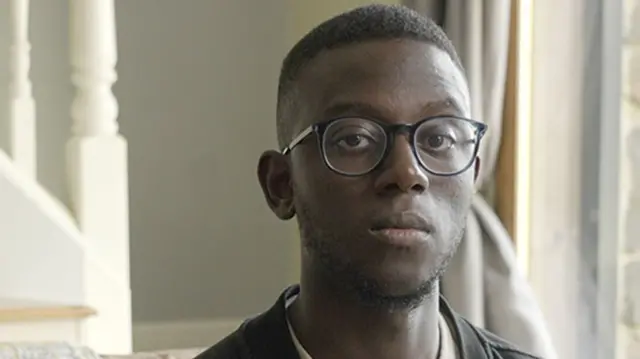
    Elias Calocane

    Today, Calocane's younger brother, Elias Calocane, is due to give evidence to the inquiry in person. He has attended hearings throughout the inquiry.

    First, we will be hearing from Dr Karthik Thangavelu.

    Thangavelu was Calocane's consultant during his final admission to Highbury Hospital in Nottingham in January 2022. The consultant will be giving evidence via video-link.

  18. What happened during the Nottingham attacks?published at 09:18 BST 13 May

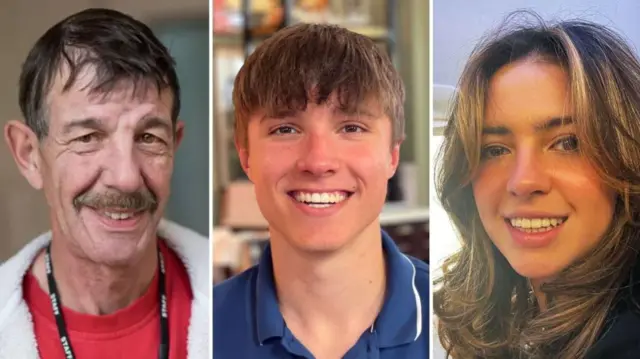
    Barnaby Webber, Grace O'Malley-Kumar and Ian CoatesImage source, Supplied

    On 13 June 2023, Calocane - who had been diagnosed with paranoid schizophrenia in 2020 - stabbed to death 19-year-old students Barnaby Webber and Grace O'Malley-Kumar.

    About an hour later, he fatally stabbed 65-year-old grandfather, Ian Coates, as Ian was on his way to work.

    Calocane then took Ian's van and drove it into the city centre, where he struck Wayne Birkett, Sharon Miller and Marcin Gawronski. They survived Calocane's attacks but were left with life-changing injuries.

    Calocane was sentenced to an indefinite hospital order in January 2024 after pleading guilty to three counts of manslaughter on the grounds of diminished responsibility, and to three counts of attempted murder.

  19. Welcome to our live coveragepublished at 09:15 BST 13 May

    Good morning and welcome to day 43 of evidence from the Nottingham Inquiry.

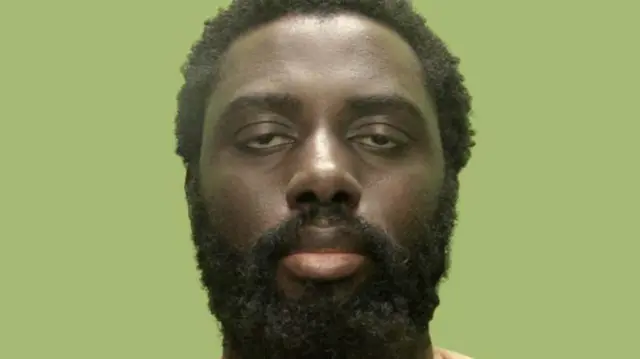
    The public inquiry is examining fatal attacks in Nottingham on 13 June 2023, carried out by Valdo Calocane (pictured below).

    Valdo CalocaneImage source, Nottinghamshire Police