Summary

  1. How storms renewed fears for coastal rail linepublished at 14:57 GMT 19 March
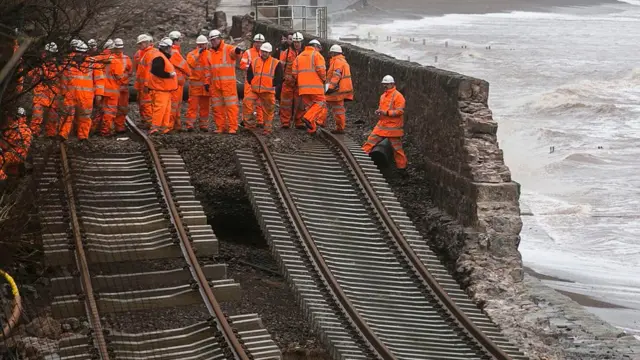
    : Railway workers inspect the main Exeter to Plymouth railway line that was closed due to parts of it being washed away by the sea at Dawlish on February 5, 2014. inImage source, Getty Images

    Train departure boards were littered with cancellations when Storm Ingrid battered the south-west of England in January - and for many, it all felt quite familiar, our political editor Martyn Oates writes.

    It certainly felt familiar to those who use the section of railway around the coastal town of Dawlish in Devon, where the only line connecting Plymouth and Cornwall with the rest of the UK was left hanging "like a Peruvian rope bridge" during ferocious storms in February 2014.

    Read more: The saga of a £165m rail line that keeps causing travel chaos

  2. Your Voice: Your weather questions answeredpublished at 14:45 GMT 19 March

    Windy query

    David Braine
    Weather Forecaster

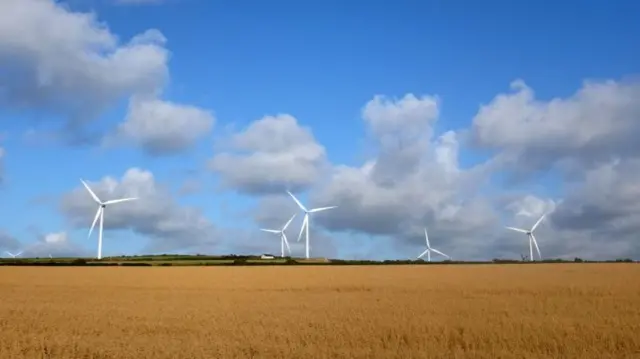
    A wind farm in Cornwall

    Four-year-old Edith, from Cornwall, asks:

    Quote Message

    Where does wind come from?

    Answer:

    Hi Edith, wind is caused by the uneven heating of the Earth’s surface by the sun. This causes differences in air pressure.

    Air moves from areas of high pressure to areas of low pressure (a bit like a ball rolling down from the top of a hill to the bottom) to equalise this difference, but as it does so the rotation of the Earth causes it to rotate to the right (Northern hemisphere) this creates a wind.

    The bigger the pressure difference, the stronger the wind.

  3. Sunny snaps from Guernsey and Alderneypublished at 14:29 GMT 19 March

    George Thorpe
    South West

    The sight of the sun above Guernsey and Alderney on Wednesday certainly got our BBC Weather Watchers excited.

    Guernsey Met's forecast said the max temperature was expected to be 19C (66.2F).

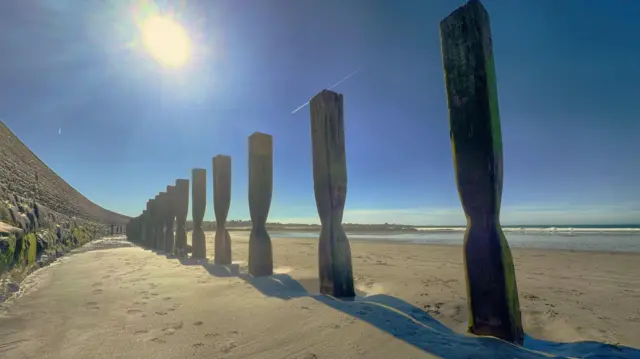
    Albècq in GuernseyImage source, Chris Cumulus/Weather Watchers
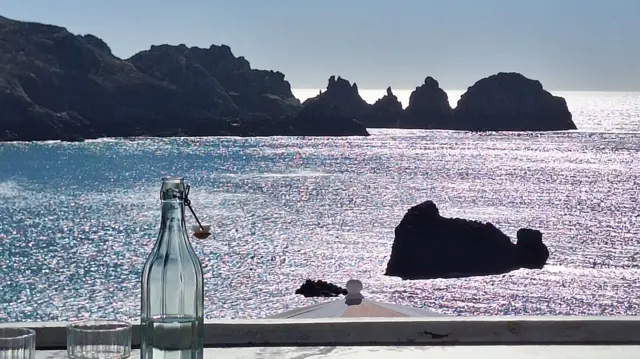
    Hatnez in GuernseyImage source, surfer joe/Weather Watchers
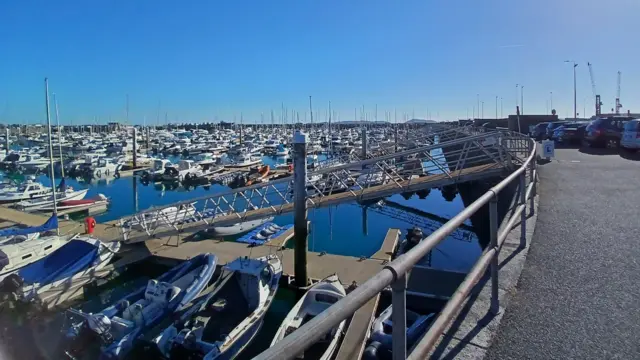
    St Peter Port in GuernseyImage source, Hannah/Weather Watchers
    AlderneyImage source, Ay Couriers/Weather Watchers
  4. WATCH: Looking back at the storms this yearpublished at 14:13 GMT 19 March

    Media caption,

    Look back at how all the storms this year impacted the South West

    Parts of the south-west of England and the Channel Islands were badly hit by a series of named storms in January and February.

  5. 'Brutal' winter for golf coursepublished at 14:00 GMT 19 March

    George Thorpe
    South West

    Ben Gauntlett is the Golf Manager at Dainton Park Golf Course at Ipplepen near Newton AbbotImage source, Dainton Park Golf Course

    Bosses at a Devon golf course say the winter rain has kept it closed for long periods.

    Ben Gauntlett, golf manager at Dainton Park Golf Course in Ipplepen near Newton Abbot, says the prolonged periods of rain have made the ground there waterlogged and the site has effectively been in "hibernation".

    Gauntlett adds the ground staff and greenkeepers took longer to do some jobs as the course was too wet to drive vehicles on.

    “I think between the start of December and end of February, we were probably only open for about two weeks – I've never known anything like it," he says.

    “The club is 33 years old and we’ve got our rainfall records from each winter and it is our worst by a long way.

    “The headline stat is by the middle of February from 1 January, we’ve had 500mm (19.7 inches) of rain, which is about half of what we’d expect for the whole 12 month period.”

    He says the course is better now after a period of dry weather.

    Gauntlett adds: “You wouldn’t be able to tell the winter we’ve had by looking at the golf course, just one week of dry weather is all it ever needs.”

  6. Businessman spends £300,000 to protect clifftop barpublished at 13:29 GMT 19 March

    Miles Davis
    Political reporter, South West

    Rob Braddick

    A north Devon businessman says he is spending hundreds of thousands of pounds of his own money on a seawall to protect a clifftop restaurant and bar.

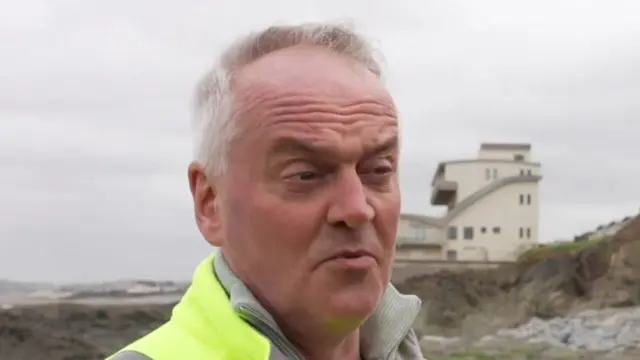
    Rob Braddick, owner of the Pier House in Westward Ho!, says he had to "grasp the nettle" before it was too late as parts of the cliff near his business have already been severely eroded.

    Seawater has previously flooded into an amusement arcade he runs too.

    Braddick says he has been planning the 57m (187ft) flood defence for years and had to get permission from Natural England, the Environment Agency and Torridge District Council before work began at Christmas.

    "It's not the best time in hospitality, to be chucking money over a cliff edge, but it's erosion of the car park which will eventually be the erosion of the restaurant and bar," Braddick says.

    Work on the seawall is due to finish mid-May, and Braddick hopes it will protect the property for "another 100 years".

  7. On BBC Spotlight at 13:35published at 13:13 GMT 19 March

    John Henderson
    BBC Spotlight

    The storms that shook the South West this winter may have gone, but communities are still living with the aftermath.

    Shattered homes, wrecked roads, and the fear that it could happen all over again.

    We’re spending the day focusing on the weather, how it continues to shape our region and the difficult decisions we’re all being forced to make, such as paying to bolster flood defences across the area.

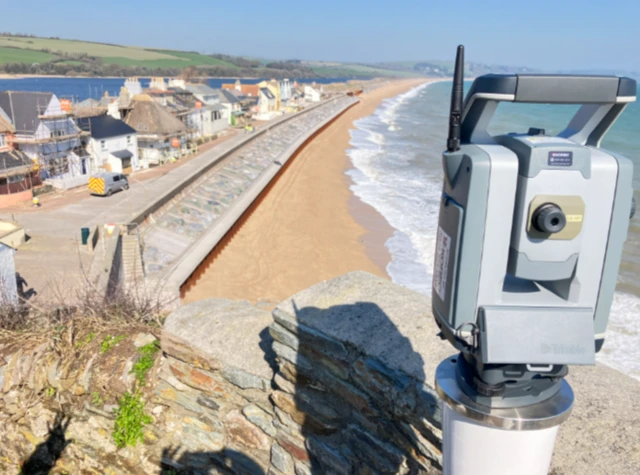
    We’ll be hearing from those affected in Torcross in south Devon, where the road has been destroyed, and asking what happens next.

    We’ll be talking to the Environment Agency, the Met Office and those who’ve borne the brunt of a winter of wild weather.

    A view of Torcross from above. To the left you can see the houses along the front with scaffolding around it.
  8. Pub was 'sad to see us go' says storm-hit couplepublished at 12:58 GMT 19 March

    Cath stands in front of her house. Behind her you can see a large tree trunk on its side , the branches still rest on her roof. The walls are badly damaged too.

    After months of living in a Wetherspoon's pub in Cornwall, Cathy and Harold Mill have now moved into a bungalow after their home in Camborne was destroyed by a "huge" tree during Storm Goretti.

    Talking to BBC Radio Cornwall, the couple are taking the positives from this experience, saying they made "lots of friends" at the temporary accommodation.

    "The staff were fantastic... we had cuddles when we left and they didn't want us to go," she said.

    The couple were both home the evening when a large tree fell on to their house.

    Cath was upstairs and Harold in the kitchen. Cath says she sustained a cut on her head, but if her husband was sat on the settee, where he normally sat, she doesn't think he would still be here.

    Cathy and Harold Mills sat together on a brown sofa.

    Cath says it will take a year to get back to their home, but for the meantime, they are making the bungalow their own.

    Looking back, she says they now take each day as it comes.

    "You must appreciate every day because it could be your last and at the age we are, it was every difficult to cope with.”

  9. Record-breaking wet winter 'stark reminder' of climate change - Met Officepublished at 12:43 GMT 19 March

    Kirk England
    BBC South West environment and tourism correspondent

    Dr Mark McCarthy from the Met Office

    Experts at the Met Office say the "exceptional" wet weather so far in 2026 shows climate change is "happening now".

    Record-breaking levels of rain in the South West led to homes being flooded, rail lines forced to closed and damage to sea defences.

    It also led to part of the A379 between Slapton and Torcross in Devon collapsing.

    Dr Mark McCarthy, science manager for climate attribution at the Met Office, says the winter season showed the impact climate change was having.

    "This winter is a stark reminder climate change is happening now.

    "We need to mitigate to reduce future climate change and adapt to reduce the risks of extreme weather events in the future."

    Read more here.

  10. Your Voice: Your weather questions answeredpublished at 12:16 GMT 19 March

    Aurora Borealis spotting

    David Braine
    Weather Forecaster

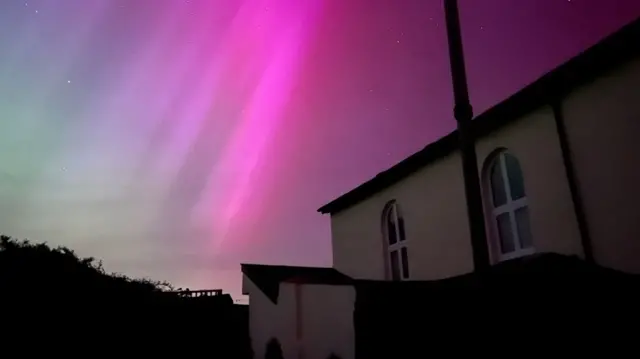
    Aurora Borealis with pink and purple hues above a building.

    Helen Smith, from Devon, asks:

    Quote Message

    With more solar flares and higher possibilities of seeing the Aurora Borealis is there any month that would be better viewing than others in our part of the country?

    Answer:

    Hi Helen, we are currently at a time when the solar activity is at a maximum, the sun has an 11-year cycle which means that it will reach its minimum in about five years' time and a maximum again in 2035/36.

    For us, the best time of year or season is the winter with more darkness and a longer viewing opportunity.

    Higher aurora activity can be found in September and March, coinciding with the autumn and spring equinoxes, when geomagnetic activity is higher due to Earth's orientation to the solar wind.

  11. 'Incredibly busy' time for tree surgeonspublished at 11:59 GMT 19 March

    Joelle Lowe
    Guernsey

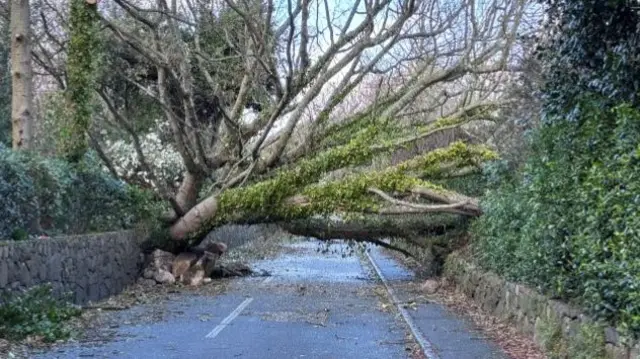
    A large tree which has fallen during Storm Goretti in Saumarez Park in Guernsey

    A tree surgeon in Guernsey says work is still being done to clear fallen trees in the island.

    Simon Marshall tells BBC Radio Guernsey there is still lots to do in order to finish the work off.

    He adds a number of severed branches are still high up in trees and this is dangerous as a strong gust of wind could blow them down to the ground and injure someone.

    “The last couple of months have been incredibly busy," Marshall says.

    “We’ve been working long hours and trying to catch up with the amount of devastation.

    “Guernsey lost just over 2,000 trees, so we’re just trying to get around and keep up with the workload as best as we can.”

  12. 'Conveyer belt of storms' devastating for wildlifepublished at 11:45 GMT 19 March

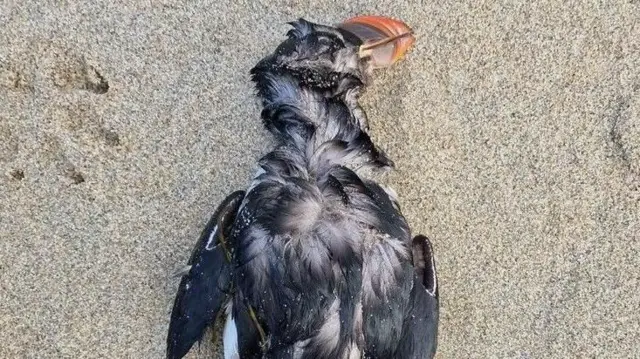
    A lifeless, dead puffin is seen on a sandy beach from above. Its feathers are ruffled so both white feathers underneath the black top coat are seen.Image source, Andy Cowrie, Cornwall Wildlife Trust

    This winter's extreme flooding has destroyed nests, drowned small mammals and there is now the threat of a sharp drop in butterflies and other species this spring.

    While the human impact has been widely felt, nature groups say the toll on local wildlife is only beginning to emerge.

    The "conveyer belt of storms hitting us" led to a busy few weeks with a lot of strandings reported, said Rob Deaville, project manager for the Cetacean Stranding Investigation Programme at the Zoological Society of London.

    Among the wildlife affected were thousands of dead puffins that washed up on the coastline in the South West, Channel Islands and France.

    Read more: How are flooding and storms affecting wildlife?

  13. Ice cream twist for fallen trees recoverypublished at 11:30 GMT 19 March

    George Thorpe
    South West

    On BBC Radio Cornwall's Breakfast Show, James Churchfield checked in with some of the people who suffered damage to their homes and gardens during Storm Goretti.

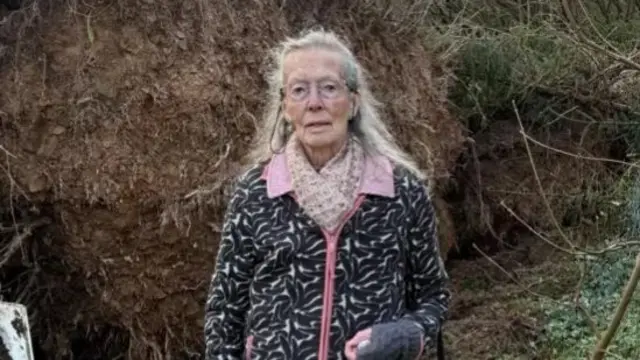
    Jill Harsant, who lives at Callestick near Truro, feared she would have to pay out thousands of pounds after dozens of trees were toppled in her garden.

    But her insurance company have managed to remove a number of the trees.

    Harsant also managed to secure a deal with Sam Parker, the owner of Callestick Farm Ice Cream, who is taking the rest of the trees to use in the biomass unit which runs the creamery making the ice cream.

    “It is absolutely wonderful to get back to normality,” Harsant adds.

    Jill Harsant
  14. Your Voice: Your weather questions answeredpublished at 11:15 GMT 19 March

    Impact of war

    David Braine
    Weather Forecaster

    A soldier on the back of a pick-up truck with a gun.Image source, EPA/Shutterstock

    Tim Odell, from Devon, asks:

    Quote Message

    I am curious if research has been done into the impact of war, specifically bomb explosions and their impact, upon the atmosphere and weather patterns?

    Answer:

    Hi Tim, local effects of explosions and smoke will have an effect in the immediate area of a war zone, the main effect being the increase in particulate matter in the atmosphere and the increase in condensation nuclei (the starting point for a rain drop).

    However these will only be minor effects on a wider scale, since the amount of material ejected into the atmosphere is only a fraction of that from natural events such as dust storms or volcanic eruptions which have a much bigger effect on weather patterns.

    Most explosive material contains sulphate or nitrate-based material and the longer term effects of the increase in greenhouse gases are being studied.

  15. Records broken over winter 'quite exceptional'published at 11:00 GMT 19 March

    Kirk England
    BBC South West environment and tourism correspondent

    Dr Amy Doherty, from the National Climate Information Centre at the Met Office

    Dr Amy Doherty, from the National Climate Information Centre at the Met Office, says the records broken during the winter are "quite exceptional".

    She adds during Storm Chandra, four south-west weather stations had their wettest January day on record, with Whitebarrow in Devon having 115.1mm (4.5 inches) of rain.

    "January is traditionally a stormy month but what's been different this year is the intensity of those storms, coming in one after the other and the rain has just never let up," Doherty says.

    Listen to the full interview here.

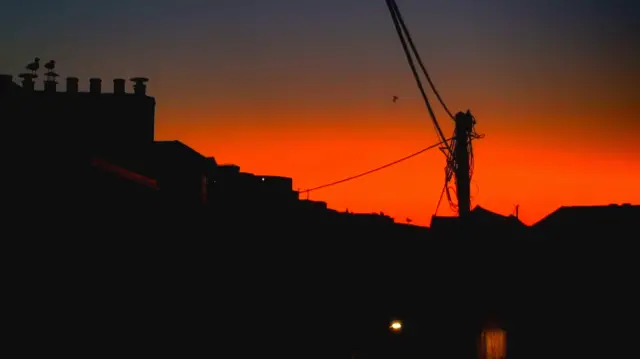
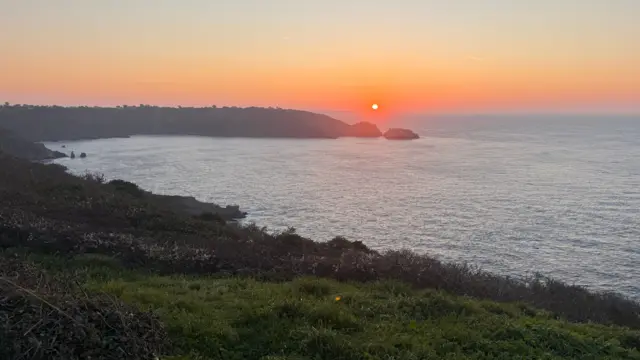
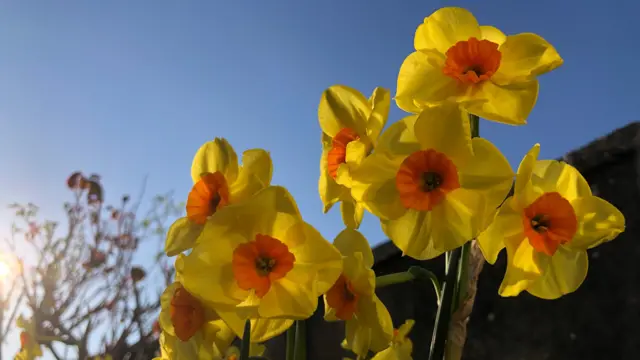
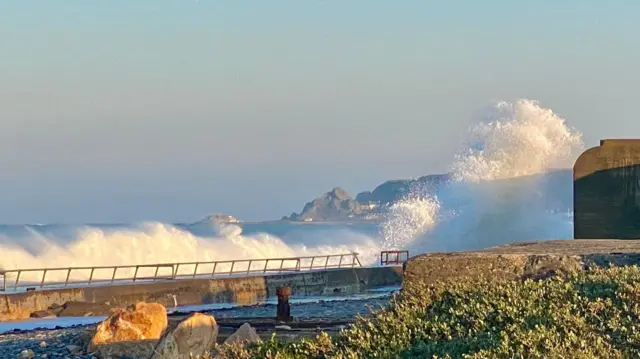
  16. The sun is shining todaypublished at 10:46 GMT 19 March

    While we're looking back at the stormy weather from earlier this year, the sunshine has been dominating the forecast today across the South West and the Channel Islands.

    Here's a selection from across the regions this morning.

    Sunrise over MevagisseyImage source, Lisadorne/Weather Watchers
    Sunrise over Icart Point in GuernseyImage source, Vauds/Weather Watchers
    Daffodils in ExeterImage source, Cath/Weather Watchers
    Waves crash into St Ouen's BayImage source, Lily/Weather Watchers
  17. Drone images show wild start to the yearpublished at 10:31 GMT 19 March

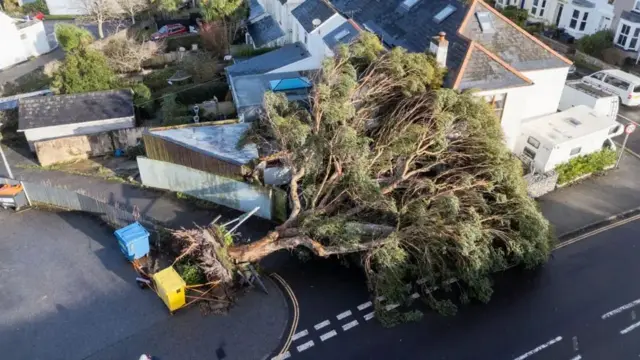
    A fallen tree in Falmouth, Cornwall during Storm Goretti.Image source, PA Media
    Image caption,

    Storm Goretti hit Cornwall on 8 January, with severe winds bringing down hundreds of trees

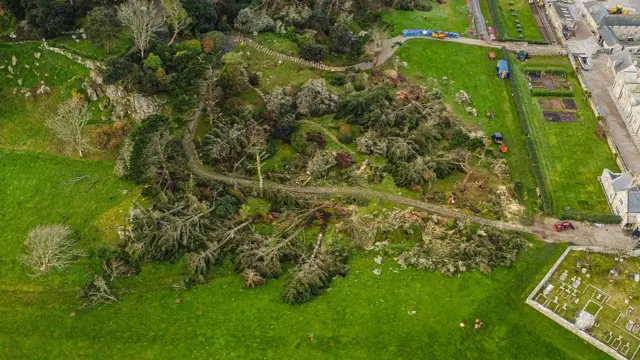
    Fallen trees on 14 January on St Michael's Mount, Cornwall.Image source, Getty Images
    Image caption,

    St Michael's Mount in Cornwall was badly affected by Storm Goretti

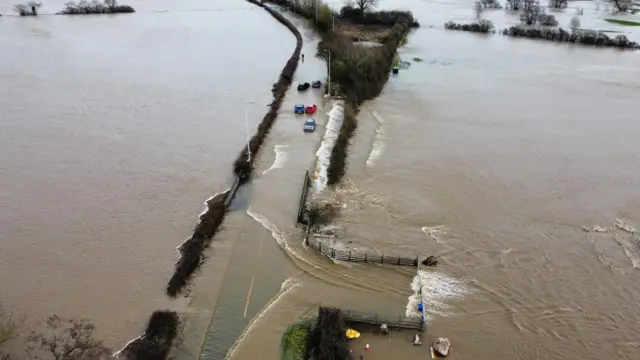
    Drone stills of flooding in Axminster, Devon, caused by Storm ChandraImage source, Jordan Langridge
    Image caption,

    Storm Chandra brought flooding to Axminster, Devon, on 30 February

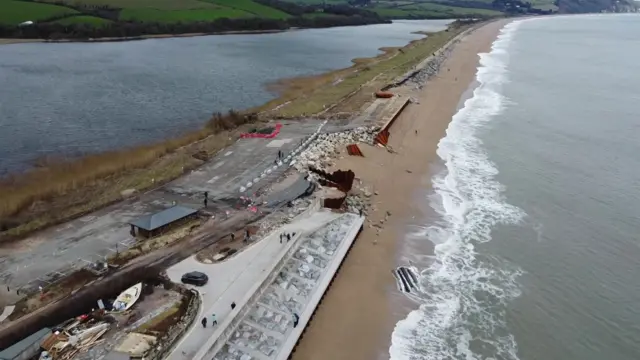
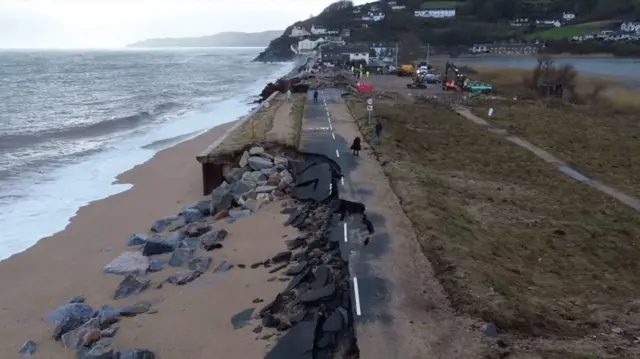
    An aerial image of the A379 Slapton Line in Devon.
    Image caption,

    Parts of the A379 Slapton Line in Devon washed away in the high tide on 3 February

  18. Long waiting list for roof repairspublished at 10:16 GMT 19 March

    Joelle Lowe
    Guernsey

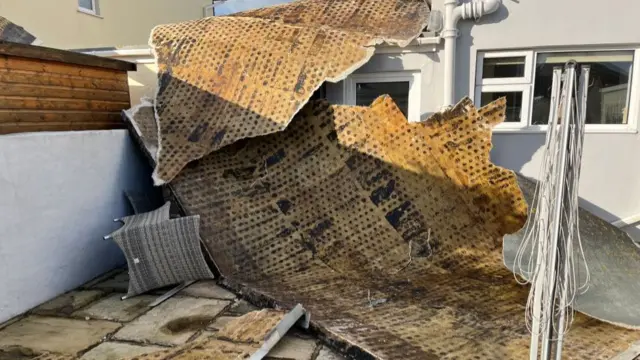
    Damaged roof in Guernsey

    Andy Gavey, managing director of Sarnian Roofing in Guernsey, says the firm has received more than 700 calls for repairs following Storm Goretti.

    He tells BBC Radio Guernsey the company had five people answering the phones all day for about a week to deal with the demand, with the current waiting list for jobs up to a year-and-a-half long.

    “It has impacted our normal operations largely," Gavey says.

    “They’re [staff] working daily but also sometimes weekends as well to get through the workload.”

    Julie Lemée's home had issues during the storm with the roof of her house, garage and greenhouse all being damaged.

    She says the response from contractors, neighbours and friends has been brilliant.

    “All the way through it, we’ve never felt alone," Lemée says.

  19. Jet stream position caused rain to stall, Met Office sayspublished at 10:01 GMT 19 March

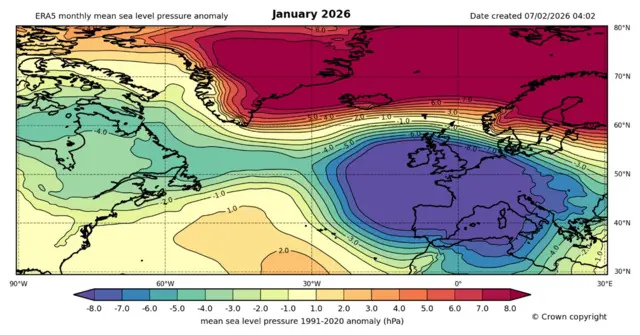
    A weather chart showing monthly mean sea level pressureImage source, Met Office
    Image caption,

    High pressure over Scandinavia, seen in red, caused below average low pressure over the UK

    The position of the jet stream created lower than average pressure over the UK throughout January, the Met Office said.

    A large temperature contrast over the US meant a succession of lower pressure systems were sent towards the UK.

    This combined with high pressure over Scandinavia meant low pressure systems were prevented from moving across the UK.

    They became "stalled and delivered persistent rain" in parts of the UK including the South West, it added.

  20. Impact on Torcross residentspublished at 09:44 GMT 19 March

    The A379 in Torcross which has been washed away during stormy weather

    Presenter John Acres on BBC Radio Devon will be hearing from people in and around Torcross.

    Among them will be Cathy Sanders, who runs the Tradesman's Arms in Stokenham, and Matt Searle, who lives on the seafront at Torcross and says his house shakes during stormy weather.

    He wants more to be done to protect where he lives.

    Listen to John Acres at Breakfast.