Summary

  1. Your Voice: Your weather questions answeredpublished at 18:02 GMT 19 March

    South West snow

    David Braine
    Weather Forecaster

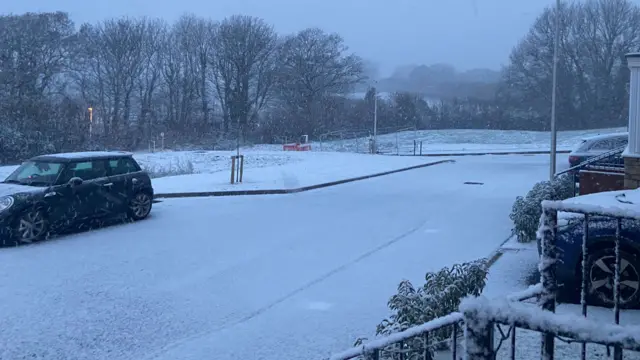
    Snow on the ground of a residential street in Devon.

    Alex White, from Devon, asks:

    Quote Message

    Why does it hardly ever snow in Devon and Cornwall, except on high ground?

    Answer:

    Hi Alex, snowfall has now become very rare across the South West, there are some very specific meteorological ingredients to create snowfall and one of them of course is a temperature at or close to freezing which is happening less frequently due to climate change.

    With elevation (height above sea level) the temperature falls roughly 2C (35.6F) per 300m (1,000ft) so whilst the temperature in Plymouth is 4C (39.2F) over the tops of Dartmoor (600m) the air is cold enough at 0C (32F) to generate snow, this is why only our moors really see significant snow in the winter time.

    We are also surrounded by a relatively warm sea and that keeps our land temperatures significantly higher than other parts of the UK.

  2. Watch the track of Storm Gorettipublished at 17:58 GMT 19 March

    Storm Goretti brought 99mph (159km/h) wind gusts to the UK as a rare red "danger to life" warning was issued.

    Media caption,

    Weather forecast imagery of Storm Goretti as it hit the UK

  3. Setting up for BBC Spotlight's weather specialpublished at 17:57 GMT 19 March

    Victoria Graham
    BBC Spotlight

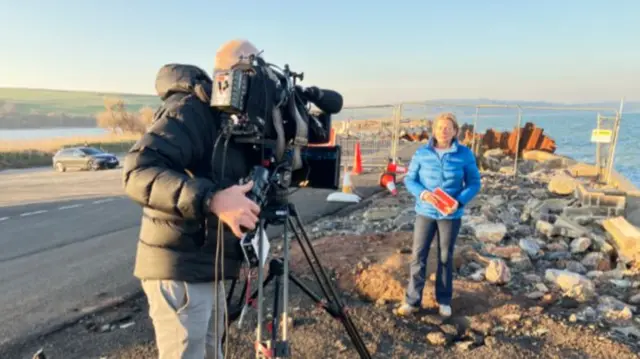
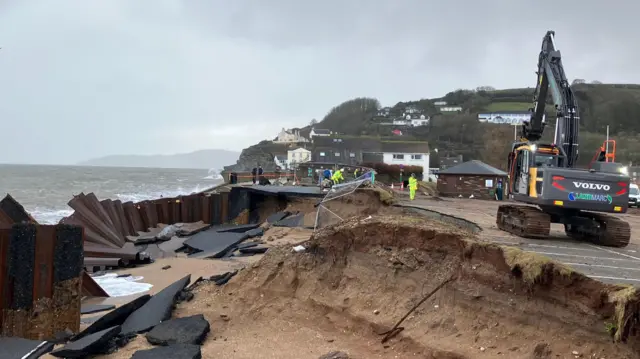
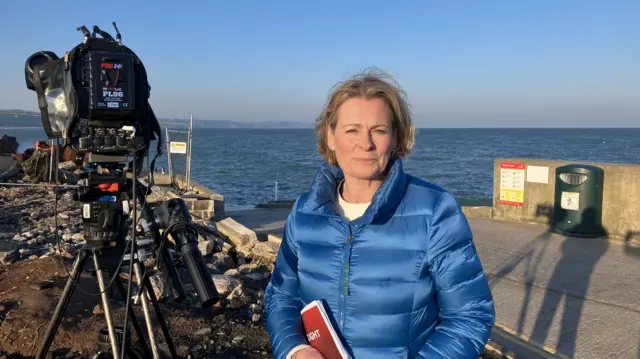
    Victoria Graham stood in front of the crumbling sea wall.

    BBC Spotlight is coming live from Torcross in Devon tonight - the village that was battered by the winter storms and saw the A379 coastal road partly washed away.

    It’s not until you actually stand on the promenade here and see the road cut off you actually believe it.

    The pictures have become iconic but it’s very real and this village is literally at the end of the road.

    On the programme this evening, we’ll be hearing from the Environment Agency and Devon County Council to find out where are we with what’s being done, who will pay for it and how long people will have to wait for real change.

    We’ll also have reports from across the South West as part of our Weather Day outside broadcast.

    From North Devon, Cornwall and from the Met Office, which says the storms we’ve seen in the last few months could be a sign of things to come, as our climate changes.

    Join the team and I on BBC Spotlight from 18:30.

    Victoria Graham stood in front of a camera by the fallen sea wall.
  4. Your Voice: How do you become a weather presenter?published at 17:43 GMT 19 March

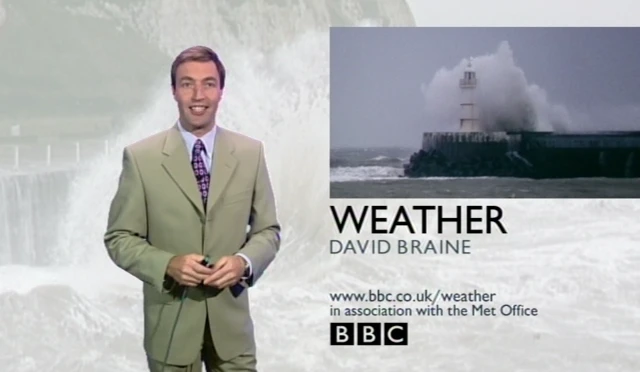
    Weather broadcast by David Braine in 2000

    11-year-old Sam, from Devon, asks:

    Quote Message

    My ambition is to become a meteorologist. I have a special interest in tornadoes. I wonder if you have ever seen one? Also, do all weather presenters become meteorologists first?

    Answer:

    Hi Sam, I have been lucky enough to see a tornado in North America, I was far enough away to be safe but close enough to see the effects of the strong winds and damage afterwards. I was in an area called “Tornado Alley” between Texas and Nebraska.

    There are two routes into weather presenting, one is to take a qualified meteorologist (like myself) and teach them the broadcasting skills, and the other is for a broadcaster to be taught enough weather to allow them to present both accurately and confidently.

  5. Locals feel 'let down' over Torcross road repairspublished at 17:40 GMT 19 March

    Kirk England
    BBC South West environment and tourism correspondent

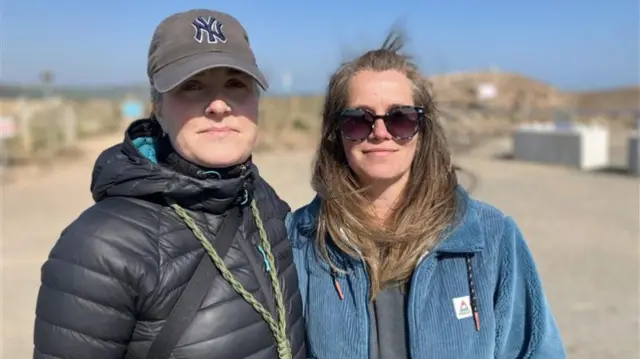
    Friends Yvette Duncan and Laura Seddon stood together at the beach.

    Six weeks after part of the A379 at Torcross was washed away, Stokenham residents Yvette Duncan and Laura Seddon said they felt “let down” over the progress being made on repairing the “crucial” coastal road.

    “It’s still really sad and for people that live here, it is still very much at the forefront of our minds”, Duncan explained.

    I met the friends as they walked along the coast at Slapton, next to the now closed road.

    “We feel let down," Duncan continued.

    "We’ve known for years this could happen but there seems to be no plan in place."

    She said repairs to the road would be “money well spent”.

    “We realise this is going to take time and it is not a sprint it’s a marathon but we all really hope the best possible outcome happens, and that is to restore it and get back to how it was," she added.

    Devon County Council said it could cost £18m to repair the road and has asked the government to help cover the cost.

    The Environment Agency estimates it could cost more than £10m to improve the village sea defences.

    In a statement, the Department for Transport said: “We know the storm damage to the A379 is a big shock to residents in Devon, and we are working with the county council as it determines its next steps.

    “We are providing over £443 million for roads maintenance in the area over the next four years, along with £667 million across the UK into protecting communities from the sea.”

  6. Wednesday was Jersey's hottest day of yearpublished at 17:26 GMT 19 March

    George Thorpe
    South West

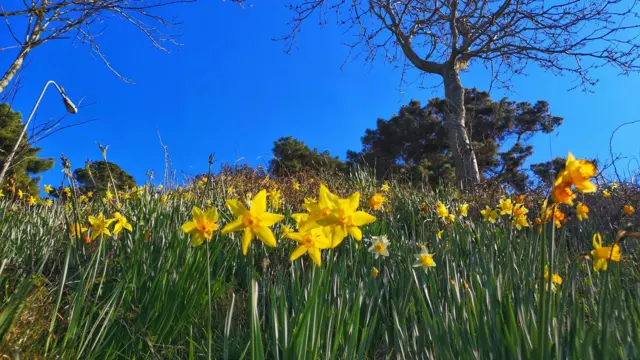
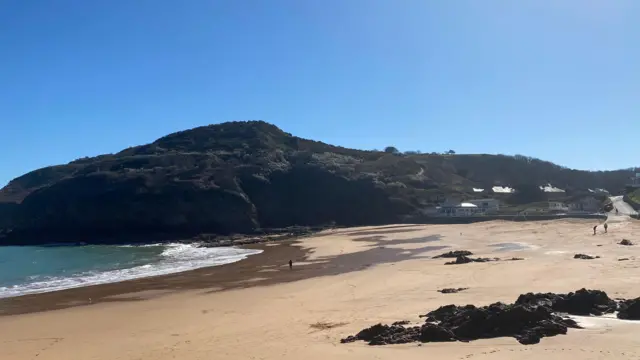
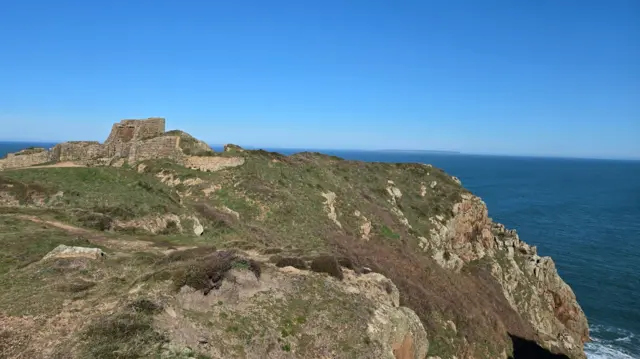
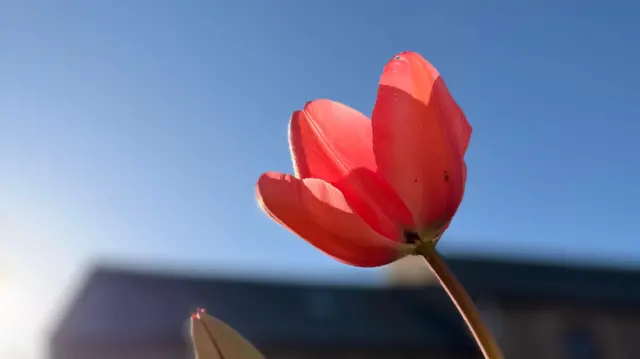
    Jersey Met says Wednesday was the warmest day of the year so far.

    It says the temperature at the Maison St Louis Observatory reached 19.9C (67.82F) during the early afternoon period.

    The nice weather also got our BBC Weather Watchers out and about with their cameras.

    Daffodils in St Helier, JerseyImage source, Sy
    La Grève de Lecq in JerseyImage source, lily/Weather Watchers
    Portinfer in JerseryImage source, The Ranger/Weather Watch
    A flower in St Mary's Village, JerseyImage source, Donna's Paradise/Weather Watchers
  7. River Otter reached highest ever levelpublished at 17:21 GMT 19 March

    A series of warnings for rain were issued by the Met Office after Storm Ingrid and Storm Chandra battered parts of Devon and Cornwall over a few days.

    Schools, businesses and pubs were forced to close, people were rescued from their homes and buildings were damaged and forecasters predicted "exacerbated flooding".

    They said the likely impact of the rainfall was "higher than normal due to saturated ground and ongoing flooding following Storm Chandra".

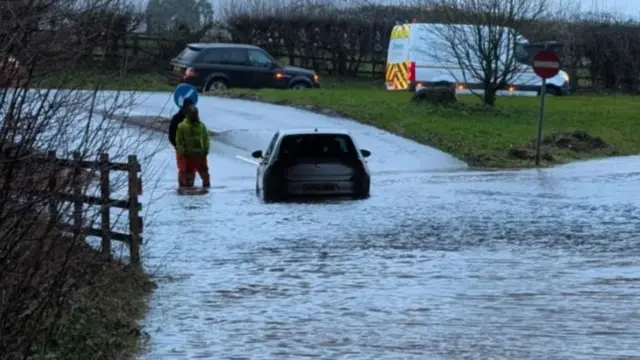
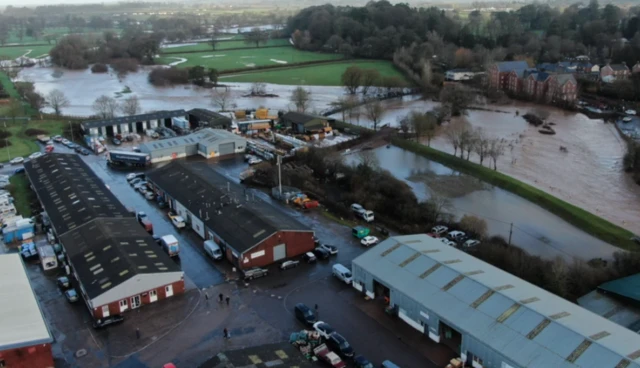
    The River Otter was among those areas affected, reaching its highest ever recorded level at Ottery St Mary in Devon.

    A car stuck in floodwater at Ottery St Mary. Two men are standing to the right of the car and there is a recovery truck in the background.
  8. Monthly average rainfalls doublepublished at 17:20 GMT 19 March

    David Braine
    Weather Forecaster

    The River Otter seen from above, via a drone, overflowing onto neighbouring fields, close to industrial units in the foreground and homes in the distance.

    Many locations in the South West saw their monthly average rainfall for January, with some locations more than double.

    Here are the figures for some of the most badly affected from 1 January to 18 March:

    • Cardinham, Cornwall - 542mm. The average for the combined months of Jan/Feb/March is 368mm

    • Plymouth, Devon - 533mm. The average for the combined months of Jan/Feb/March Jan/Feb/March is 273mm

    • Dartmoor, Devon - 1,209mm. The average for the combined months of Jan/Feb/March is 548mm and its annual average rainfall is 2,000mm
  9. Your Voice: Your weather questions answeredpublished at 17:11 GMT 19 March

    Weather apps

    David Braine
    Weather Forecaster

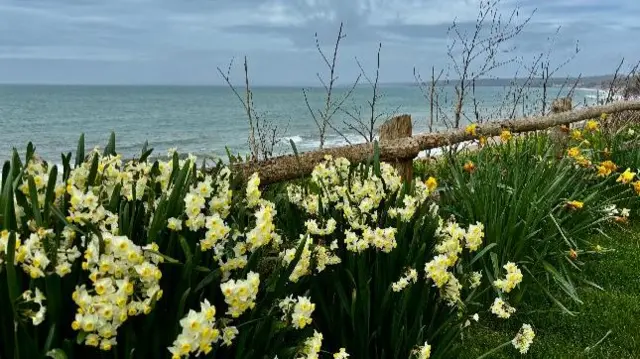
    Yellow daffodils in front of a fence with the seahind. Take in Gunwalloe, CornwallImage source, Gilly Gabben

    Nigel Tigweel, from Devon, asks:

    Quote Message

    Has weather forecasting become more difficult? I use the Met Office weather app which, since it’s update, seems less accurate than the old one and no longer has a long-range forecast. Is this because the weather has become less predictable? Or is it because the new app is more confusing and difficult to read easily? Which weather app would David recommend to quick and easy access to the most accurate local forecast?

    Answer:

    Hi Nigel, whilst advances in weather forecast modelling is now much more detailed (higher resolution) and more accurate for most weather situations, there will be some errors in forecasting because of the more turbulent atmosphere which is a direct result of climate change.

    A warmer atmosphere tends to be more chaotic and more difficult to predict in detail. An example could be a weather front bringing rain at a certain time and place, the timing of arrival and clearance is often quite accurate, what is more difficult is the intensity of the rain, the possibility of embedded thunder, and the local topographic effects.

    Various weather apps use different sources of forecast data. Some single source, others use a blend of models, some models handle certain weather types better than others - and switching between models is not easy.

    The BBC uses a blended model and is regularly updated. As a result I would recommend the BBC weather app.

  10. Project aims to commemorate Cornwall's lost treespublished at 17:09 GMT 19 March

    Charlie standing in front of a tree in a garden. He is wearing a beige jacket.

    An artist has launched a project to showcase the thousands of trees that were lost or damaged when Storm Goretti hit Cornwall.

    Charlie Thacker, a woodworker living in the county, says he wants to commemorate the significance of the trees in the places they had grown and become part of people's lives.

    "I'm collecting lots of stories, either people and their connection to the tree or the significance of what the tree was used for," he explains.

    Read more: The man turning storm-damaged trees into art

  11. 'I will never ever forget 8th January after tree smashed into my home'published at 16:56 GMT 19 March

    Zhara Simpson
    South West

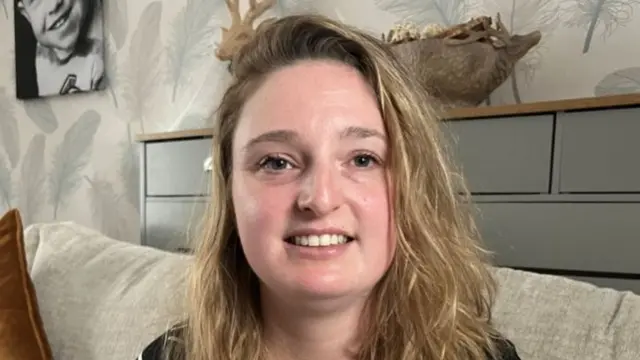
    Emily Hotchkiss smiles at the camera

    A mother says she and her family are still dealing with emotional "trauma" after a tree smashed into their home during Storm Goretti.

    Emily Hotchkiss and her two young children were moved into temporary accommodation by Cornwall Housing following the storm damage in Falmouth on 8 January.

    The family have since found a permanent home, but Hotchkiss says being forced to move several times in a few weeks was stressful for them.

    Hotchkiss says she felt "inches from death" when the tree fell - the council has since cut down all the trees outside the property.

    She says: "I haven't had time to think about what could have happened and at some point it will hit me.

    "I will never ever forget the 8th of January."

  12. Businesses near storm-hit collapsed road come togetherpublished at 16:41 GMT 19 March

    George Thorpe
    South West

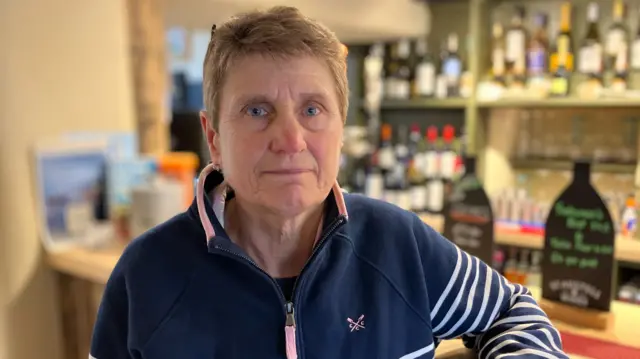
    Cathy Sanders, who runs the Tradesman's Arms in Stokenham, sits on a chair next to the bar

    Business owners based near the partially collapsed A379 between Slapton and Torcross, in Devon, say they have joined forces to help each other out.

    Cathy Sanders, who runs the Tradesman's Arms pub in Stokenham, says about 70 local business have come together and have been putting signs up to let them know where is open.

    “We need people to know we’re open for Easter," she tells John Acres at Breakfast on BBC Radio Devon.

    “But it’s also important for people to know how to get to us because if you look on your sat-nav, it takes you all through these little lanes... they can’t get to anywhere.”

    The partially collapsed A379 between Slapton and Torcross

    She says businesses need to be proactive while the repairs are organised.

    “The road’s going to take some time and if we just sit back and feel sorry for ourselves, nothing is going to happen and we’ll lose businesses," Sanders says.

  13. 'We can't keep defending coastlines... we have to retreat'published at 16:23 GMT 19 March

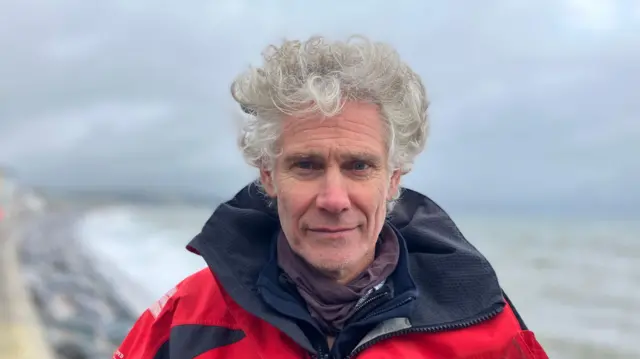
    A man stands on the seafront at Torcross, Devon. There are waves crashing against the sea defences in the background. He is wearing a red waterproof jacket.

    Prof Gerd Masselink, from the University of Plymouth, has been tracking changes along the coastline for decades to help predict what will happen in future.

    He says erosion experienced in Devon following powerful winter storms will "become increasingly common".

    "So, we're going to see increased flooding, we're going to see erosion on beaches that used to be stable. We're going to see increased erosion at beaches that are already eroding," he says.

    "We can't keep defending coastlines for the next 20, 30, 40 years.

    "Unless we start casting the whole coast in concrete, we have to start retreating."

    Read more: How winter storms are rapidly reshaping our coastline

  14. Your Voice: Your weather questions answeredpublished at 16:19 GMT 19 March

    Stormy Cornwall

    David Braine
    Weather Forecaster

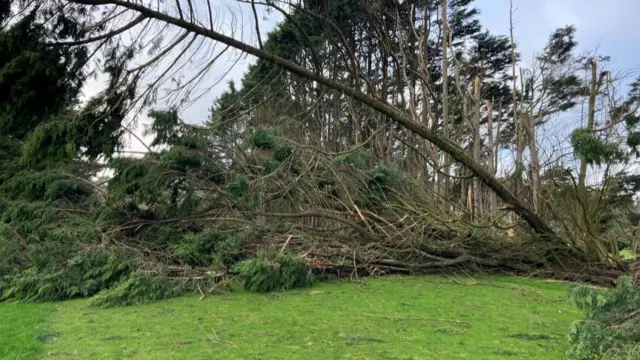
    Trees down at Truro Golf Club

    David, from Cornwall, asks:

    Quote Message

    Why is it that Cornwall seems to get more than its fair share of gales and winter storms?

    Answer:

    Hi David, Cornwall has a unique geographical position, sticking out into the Atlantic and will often face the full force of a gale as it moves in.

    Most of our weather (about 70%) originates in the Atlantic and travels from west to east, storms are often at their most potent in the friction-less environment out at sea. Hitting Cornwall first we can often get some of the strongest winds (and most likely it’s Scilly that has the strongest of all) as the winds travel over the more bumpy land and friction takes effect the winds are moderated often by as much as 20mph (32.2km/h) by the time they reach Somerset.

  15. Funding decision possible in next few weeks for storm-hit communitypublished at 16:02 GMT 19 March

    George Thorpe
    South West

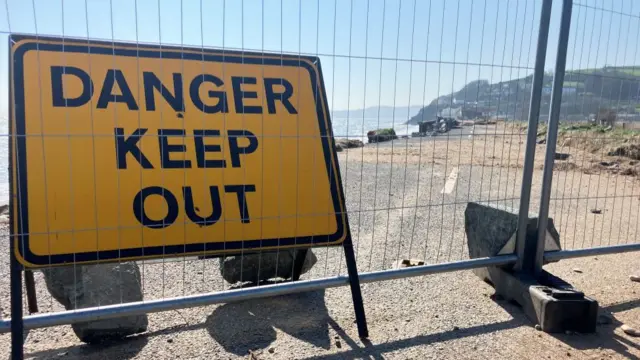
    Metal fencing and a "danger keep out" sign on the A379 in Torcross

    A coastal adviser with the Environment Agency in Devon says the department is looking to secure about £10m of funding for sea defences in Torcross.

    Martin Davies tells Caroline Densley on BBC Radio Devon it is a significant amount of money and the logistics of getting the work done will be "challenging".

    He says it is hoped a decision on the funding will be made in the next few weeks.

    “I’m cautiously optimistic to what we can do this year," Davies says.

    “The obvious solution is when you look down the coast at Beesands, there’s a lot of rock in front of the defences.

    “So what we’re trying to do is build a business case and trying to do as much work as we can this year on the assumption that we do get the money approved, which is what we’re working towards.”

  16. Your Voice: Your weather questions answeredpublished at 15:47 GMT 19 March

    BBC Weather app

    David Braine
    Weather Forecaster

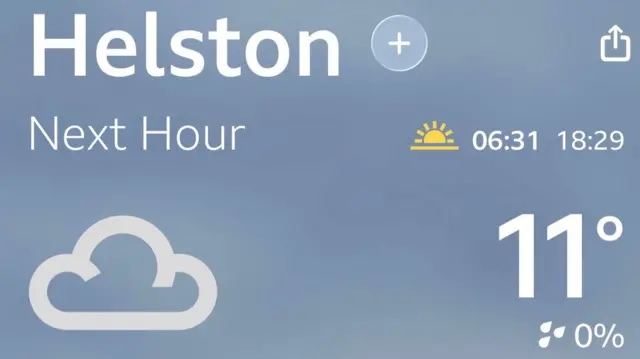
    A screen shot of a BBC Weather app giving the weather for Helston in CornwallImage source, BBC Weather

    James Scrimshaw, from Devon, asks:

    Quote Message

    The BBC weather app gives an hourly percentage figure for rain. Does this reflect the percentage chance of any rain, the percentage of time it will actually be raining, the proportion of different forecast sources that think it will rain, or something else?

    Answer:

    Hi James, this is a probability of precipitation (% chance), and this ranges from 0% (no chance at all) to 100% (it will be wet).

    So, what does a 20% chance of rain actually mean? It means that out of 100 situations with similar weather, it should rain on 20 of those, and not rain on 80. In a nutshell, it means that, while you may get some rain, it's much more likely (but not certain) to stay dry.

    The probabilities are given for the location chosen, and thus are valid for that location only so you may notice the probabilities changing in the short-term (next two to three hours) as the forecast is constantly updated with new information.

    This gives you the chance to spot when, for example, a shower may be approaching your location, as the probabilities will tend to rise.

  17. Trees 'more vulnerable' after series of stormspublished at 15:38 GMT 19 March

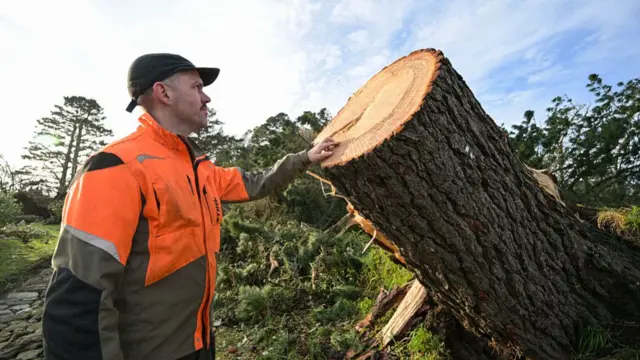
    A man in high-vis clothing inspecting a chopped tree trunkImage source, Getty Images

    Storm Goretti flattened thousands of trees across Cornwall and the Isles of Scilly when it hit south-west England on 8 January.

    Simon Hocking, lead ranger for the National Trust in west Cornwall, says the high winds could have weakened trees in the region.

    "[The trees have] been buffeted by the winds and their root plates moved," he says.

    "Future storms mean those are vulnerable."

    Read more: After Storm Goretti, how will Cornwall restore its woodlands?

  18. 'We're on the front line', Storm-hit Torcross locals saypublished at 15:26 GMT 19 March

    Kirk England
    BBC South West environment and tourism correspondent

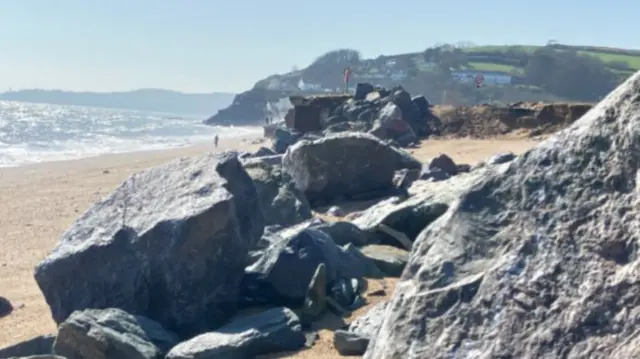
    A view of rocks at Torcross.

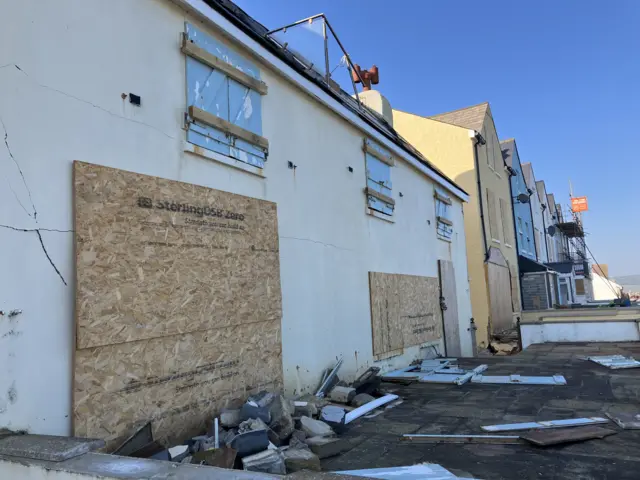
    I am back in Torcross, the Devon coastal village which hit the headlines after part of the "vital" A379 coastal road was washed away during the winter storms.

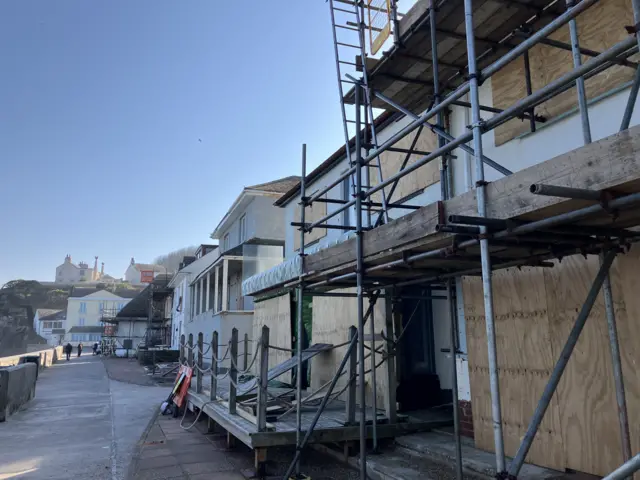
    The huge impact of the devastating weather is still clear to see - from boarded up windows to the huge crater in the road.

    Boarded up buildings in Torcross.

    Locals say they feel like they are on the "front line" and worry about what comes next.

    Will the road be repaired? Will more be done to improve the village's sea defences?

    The cost of repairing the road is estimated to be about £18m. Improving the sea defences, at least £10m.

    Scaffolding on buildings along the seafront in Torcross.

    The authorities say they are considering next steps.

    South Devon MP Caroline Voaden has described Torcross as being the "canary in the coal mine" - a test case for how we deal with vulnerable coastal communities in a changing climate.

  19. Your Voice: Your weather questions answeredpublished at 15:15 GMT 19 March

    Cornish microclimates

    David Braine
    Weather Forecaster

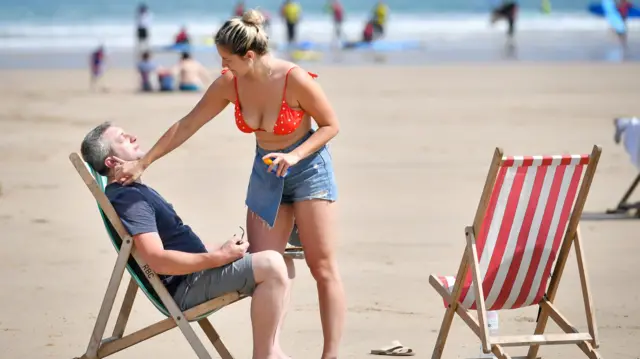
    A woman in a bikini applies sunscreen to a man sat on a deckchair on a Cornish beachImage source, PA Media

    Louise Frost, from Cornwall, asks:

    Quote Message

    As an avid walker of the South West Coast Path, I often find we've been walking in glorious sunshine on the Lizard, for example, to find out back home in Tideford, it's been raining heavily all day. It's the same with differences in the north coast and south coast of Cornwall. In summer we try and 'chase' the Sun in terms of where to walk or go. It's crazy that such a narrow peninsula can have such different weather. Lastly, where in Cornwall is the perfect town/village in terms of being the driest? We heard recently about Cardinham being the wettest. Most of us want to hear about where it's sunniest - I'd move there!

    Answer:

    Hi Louise, the peninsula of Cornwall does have some unique features that can give big variations of weather. In the spring, summer, and autumn for instance the effects of sea breezes converging on the land can create a line of cloud inland (and showers) while the coast remains fine and dry.

    Because Cornwall often has the first bit of high ground as Atlantic air hits the UK, its that high ground that gets the low cloud and the drizzle, while again on the coast it is often drier and sunnier. One of the sunniest places is Bude where the effects of Bodmin Moor give more dry and fine weather than other areas.

  20. Forecasters expecting future rainfall figures to increase annuallypublished at 15:04 GMT 19 March

    Kate Jennings
    Jersey

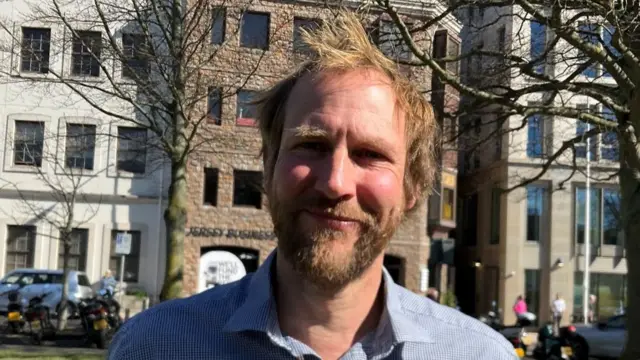
    Matt Winter from Jersey Met

    Jersey Met's senior forecaster says the warming climate will lead to more rain annually.

    Matt Winter tells BBC Radio Jersey the island had its wettest February on record with 180mm (7in) - more than double the normal amount for the month.

    He said Guernsey had its sixth wettest February with 160mm (6.3in).

    Winter says average temperatures are rising too and this will contribute to rainfall figures rising.

    “The weather does tend to balance out to a certain degree, but I think in a warming climate with projected climate change, we are expected to see rainfall totals increase on an annual basis gradually as we progress through the next century," Winter says.