Summary

Media caption,
Why are there huge protests going on in Iran?
  1. What Trump has saidpublished at 11:55 GMT 9 January
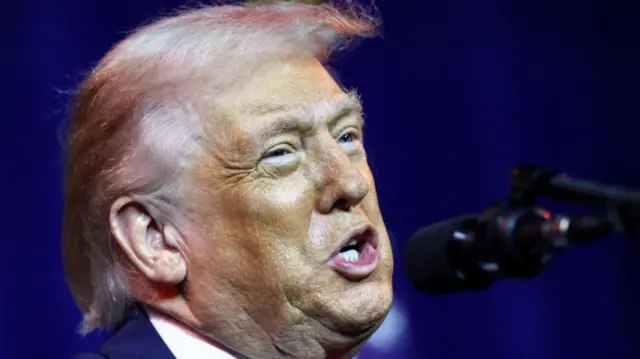
    Close up of US President Donald Trump. He's speaking into a black mic, photo cuts off just below the neck, partially showing a white shirt and blue suit jacketImage source, Reuters

    US President Donald Trump has long voiced his disdain for Iran's leadership.

    In the summer of 2025, during the 12-day Iran-Israel war, Washington got directly involved by conducting air strikes on Iranian nuclear facilities.

    Now, amid widespread anti-government protests in Iran, Trump has vouched to get involved if any civilians are killed.

    Growing unrest in Iran on Thursday led Trump to pledge to "hit them [Iran] very hard" if they "start killing people".

    "I have let them know that if they start killing people, which they tend to do during their riots - they have lots of riots - if they do it, we are going to hit them very hard," Trump said in an interview with conservative radio host Hugh Hewitt on Thursday.

    Trump said his administration is monitoring the situation closely and he has warned Tehran "very strongly, even more strongly than I am speaking to you right now, that if they do that [kill civilians] they are going to have to pay hell".

    The US leader made similar remarks last weekend.
  2. Protesters are 'trying to please US president', says Khameneipublished at 11:48 GMT 9 January

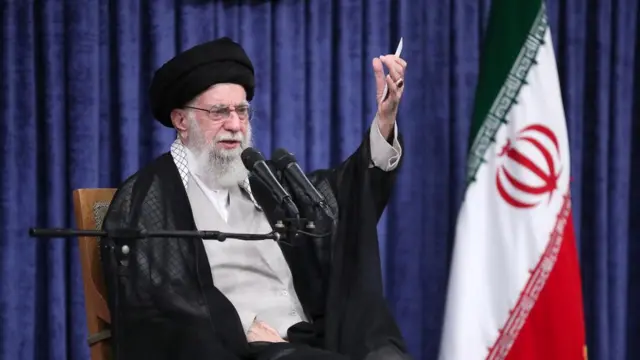
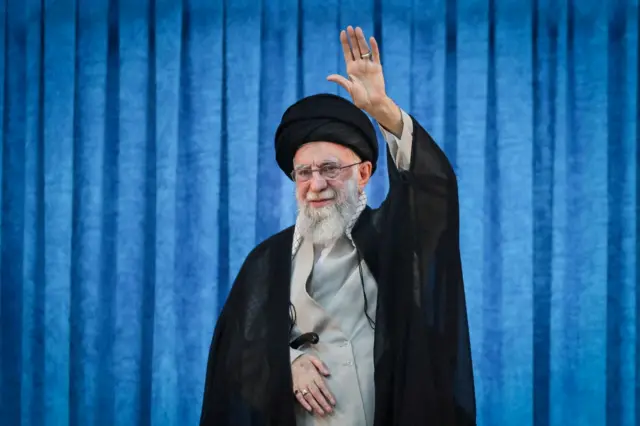
    Ayatollah Ali Khamenei with his left arm raised in the air stands in front of a blue curtain. He's wearing a black robe and beige suitImage source, Reuters

    Speaking to supporters earlier this morning, Khamenei dismissed demonstrators as a "bunch of vandals" seeking to "please" US President Donald Trump.

    In a video address broadcast on national TV, Khamenei said: "A bunch of vandals came out in Tehran and other places and destroyed buildings belonging to their own country just to please the president of the US.

    "That’s because he made the absurd claim that he supports you rioters and people who are harmful to the country. If he’s capable, he should run his own country."

    The Iranian leader, who has been in power since 1989, added that Trump's hands "are stained with blood of more than a thousand Iranian martyred during the 12-day war [with Israel]".

    "A group of inexperienced and careless people believe him and act according to his wishes. They set fire to rubbish bins to please him," he adds.

    "Let everyone know that the Islamic Republic came to power through the blood of several hundred thousand honourable people and it will not back down in the face of those who deny this."

    • As a reminder, Trump has long been a vocal opponent of the Iranian regime and pledged to get the US involved if civilians were to be killed in the protests
  3. Analysis

    Several factors make current unrest very seriouspublished at 11:41 GMT 9 January

    Amir Azimi
    Editor, BBC Persian

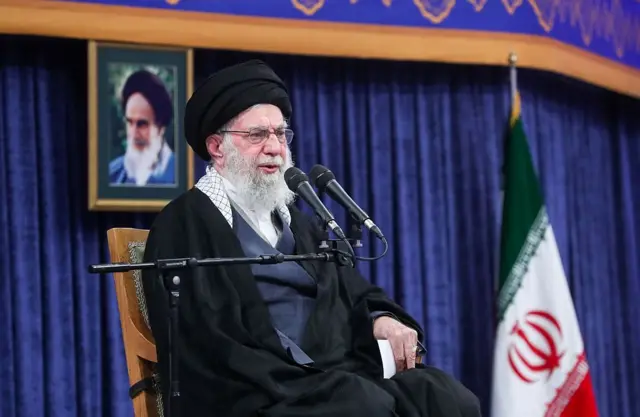
    Ali Khamenei in black vest and grey robes sitting down on a wooden chair. Behind him, a frame with a picture of Supreme Leader Khomeini and an Iranian flag to his leftImage source, Getty Images

    This is not the first time Iran has faced intense protests since the turn of the century, but several factors surrounding the current unrest make it very serious.

    International sanctions led by the United States have played a major role in worsening economic conditions, but they are not the full story.

    High-profile corruption cases in Iranian courts involving senior officials and their families have reinforced public anger and the belief that parts of the ruling elite are exploiting the crisis.

    Many ordinary Iranians believe that certain officials and their relatives benefit directly from sanctions through special arrangements that allow them to control imports and exports, move oil revenues abroad, and profit from money laundering networks.

    Even the government officials believe those who are locally called "Sanctions Profiteers" are to blame more than the sanctions themselves.

    Furthermore, the 12-day war between Iran and Israel in the summer of 2025 severely damaged Tehran's defence capacity, nuclear infrastructure, and several military and industrial sites.

    The fall of Bashar al-Assad in Syria deprived Tehran of a key ally, while sustained Israeli attacks on Hezbollah in Lebanon eliminated much of the group's senior leadership.

    These developments have reshaped the regional and international environment for Tehran. Iran now has fewer allies to rely on in regional conflicts and fewer channels to move oil revenues overseas.

    You can read more from Amir Azimi on the situation in Iran here

  4. BBC Verify

    How we map spread of Iran protestspublished at 11:35 GMT 9 January

    By Christine Jeavans

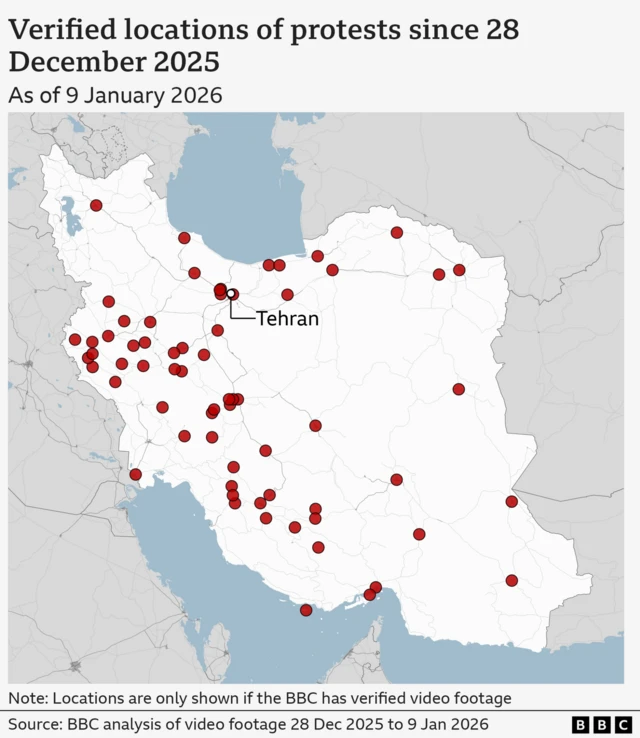
    We’re updating our map of protests in Iran today following the latest spread of protests overnight.

    The BBC is not allowed to report from inside the country, but BBC Verify and BBC Persian have been analysing and checking hundreds of videos both from social media and those which have been sent directly to us.

    Part of the verification process is geo-location - finding the exact spot where an event was filmed - which means we gather latitude and longitude co-ordinates for each video.

    For mapping, we then group video locations that are in the same town or city so that we have one set of co-ordinates for each spot.

    Finally, we plot these points on a map of Iran to see the spread of areas with verified protests. To do this, we use a programming language called R.

    There may be protests which are not yet mapped as we do not have verified video from them.

    A map of Iran marking the locations of protests in red dots - they are spread across much of the country, concentrated most in the west
  5. Khamenei issues warning to protesters following nearly two weeks of protestspublished at 11:27 GMT 9 January

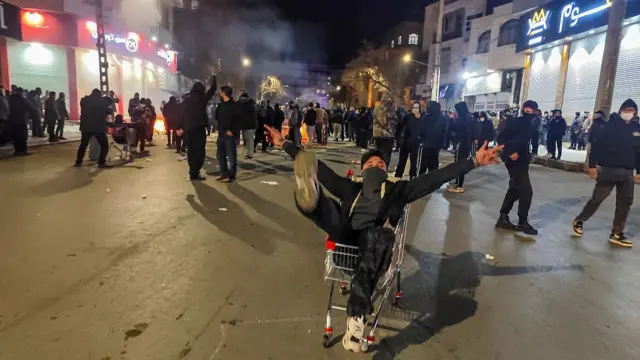
    A protester in black cap and with his face partially covered up sits in a shopping cart with his arms and right leg extended. Behind him, several men stand together scattered across a commercial street, also with their faces coveredImage source, Getty Images

    Iran's Supreme Leader Ayatollah Ali Khamenei warns his regime is committed to cracking down on "trouble-makers". The statement follows nearly two straight weeks of protests against the country's troubled economy.

    Hundreds of demonstrators have taken to the streets, prompting authorities to impose a near-total internet blackout and cut telephone communications.

    At least 34 protesters and four security personnel have been killed since the demonstrations first began on 28 December, according to the US-based Human Rights Activist News Agency (HRANA).

    The BBC has confirmed the deaths and identities of 22 people, while the Iranian authorities have reported the deaths of six security personnel.

    Khamenei has dismissed the protesters as a "bunch of vandals" and accused US President Donald Trump of fuelling unrest with his threat to hit Iranian leaders very hard if they kill protesters.

    We're now resuming our coverage of the demonstrations with the support of our colleagues at BBC Persian and BBC Verify to bring you the latest updates and analysis.

  6. Anti-government protests continue across Iranpublished at 00:37 GMT 9 January

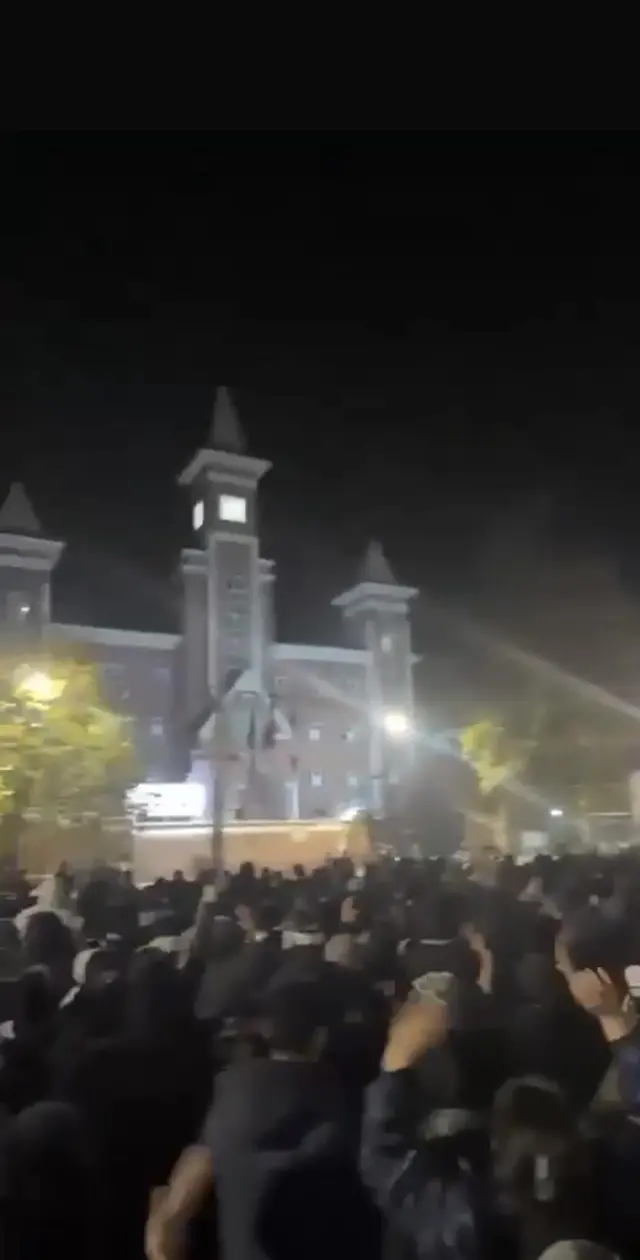
    Huge crowds of protesters have been marching through Tehran and other Iranian cities in anti-government demonstrations that have entered their 12th night:

    • At least 34 protesters and four security personnel have been killed during the unrest, and 2,200 protesters have been arrested, US-based Human Rights Activist News Agency reports
    • Reza Pahlavi, the exiled son of the late Shah of Iran, has called for the protests to continue at 20:00 local time (16:30 GMT) on Friday night
    • In a post on X, he wrote that "millions of Iranians demanded their freedom tonight"
    • US President Donald Trump has repeated his threat to "hit Iran hard" if government forces kill protesters who are demonstrating over the country's economic crisis
    • BBC-verified videos show large crowds in some cities, but Iranian state media is downplaying the protests

    We are ending our live coverage here, but you can read more about the situation in Iran in our news story.

  7. Reza Pahlavi: 'Millions of Iranians demanded their freedom tonight'published at 00:10 GMT 9 January

    Reza Pahlavi, the exiled son of Iran's late former shah, has issued a new statement on X, praising the protesters as his "courageous compatriots".

    This is his statement in full:

    "Millions of Iranians demanded their freedom tonight. In response, the regime in Iran has cut all lines of communication. It has shut down the Internet. It has cut landlines. It may even attempt to jam satellite signals.

    I want to thank the leader of the free world, President Trump, for reiterating his promise to hold the regime to account. It is time for others, including European leaders, to follow his lead, break their silence, and act more decisively in support of the people of Iran.

    I call on them to use all technical, financial, and diplomatic resources available to restore communication to the Iranian people so that their voice and their will can be heard and seen. Do not let the voices of my courageous compatriots be silenced."

  8. What did the protesters say before joining tonight?published at 23:43 GMT 8 January

    Ghoncheh Habibiazad
    Senior reporter, BBC Persian

    Before the protests started tonight, I had a chat with some inside the country who had decided to join the protests for the first time. I’m keeping their details vague to protect their identities.

    A young woman told me that she was “not the biggest fan” of Reza Pahlavi but said that “being and staying united” against the establishment was more important than her political opinions.

    Another young woman said that she and her family all supported Reza Pahlavi and think he is “the only way out”.

    A man who had also decided to join the protests said that “people are becoming bolder” and that it is “not just on social media”. He said he can hear people speaking out against the establishment in “broad daylight”.

  9. More videos show protests in Tehranpublished at 23:13 GMT 8 January

    Our colleagues at BBC Persian have obtained and verified two more videos of protests taking place in Iran's capital, Tehran.

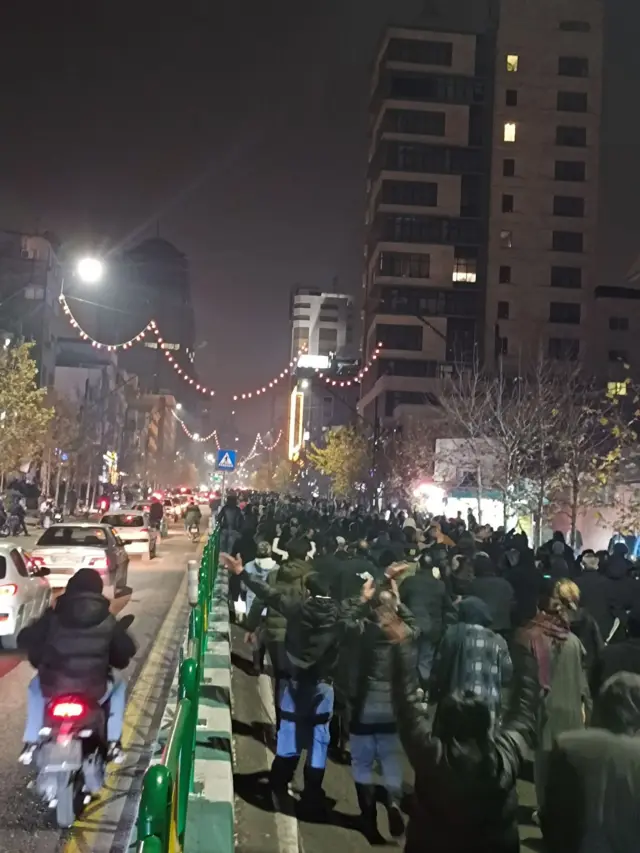
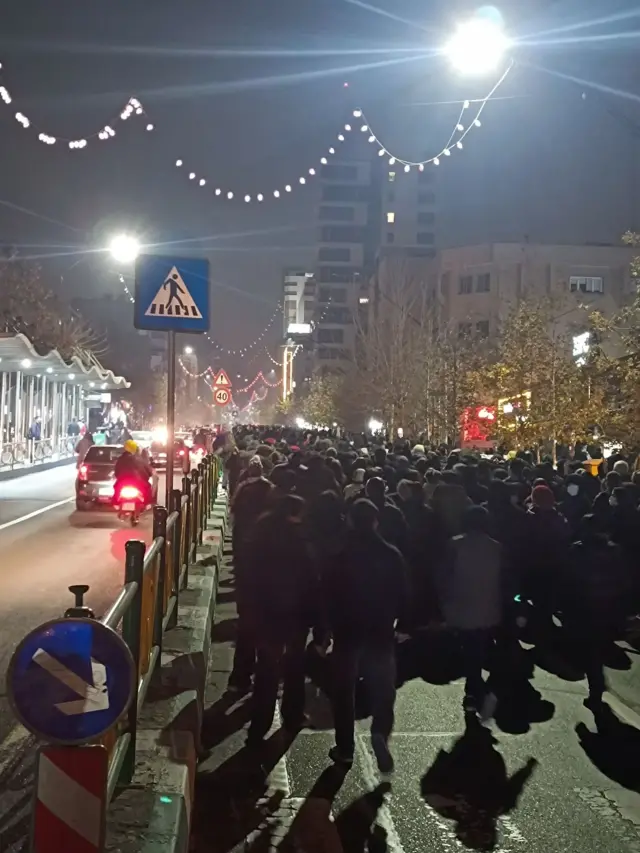
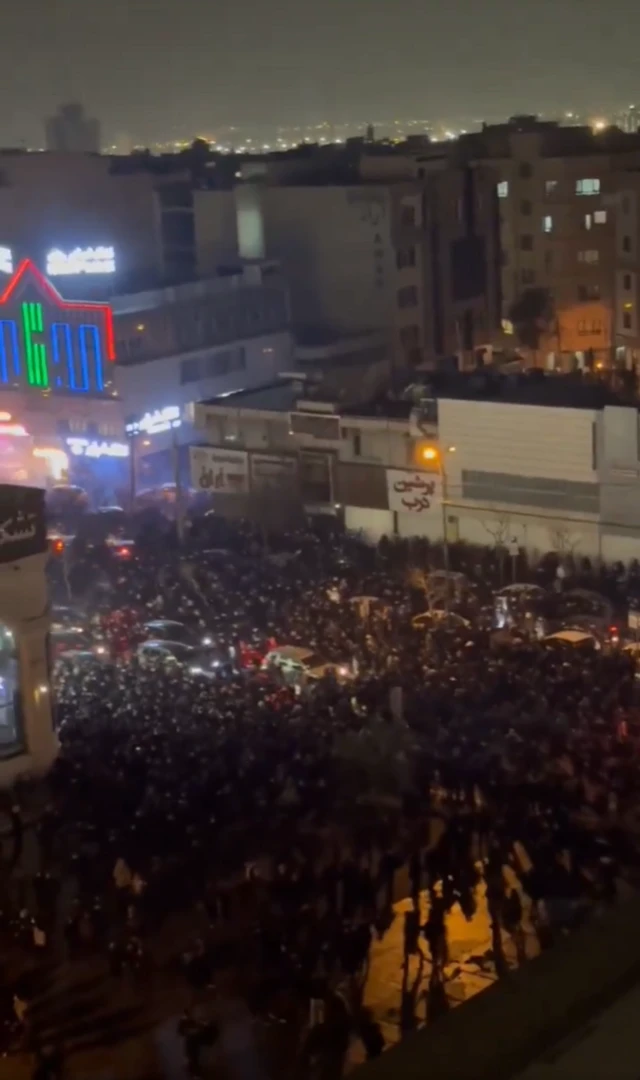
    The images below, taken from the videos, show a large group of people making their way along Valiasr Street, between the Yousef Abad neighbourhood and Vanak Square.

    Crowds of protestors gather on a street in TehranImage source, .
    Crowds of protestors gather on a street in TehranImage source, .
  10. What to know about Reza Pahlavipublished at 22:35 GMT 8 January

    Kia Atri
    BBC Monitoring

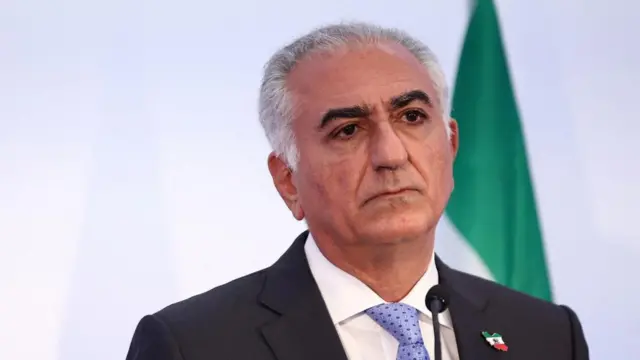
    A file photo of Reza Pahlavi  - he is wearing a suitImage source, Reuters

    Reza Pahlavi, born 31 October 1960, is the eldest son of Iran's last shah, Mohammad Reza Pahlavi, who was ousted in the 1979 Islamic Revolution. He has lived in exile in the US since then.

    For decades, he has been a leading figure among monarchists, seen by supporters as an opposition symbol against the clerical establishment, though critics link him to authoritarian rule and the 1953 ouster of Prime Minister Mohammad Mossadeq.

    Pahlavi says he does not seek automatic restoration of monarchy, calling instead for a referendum on Iran's future system. Amid growing unrest in Iran triggered by economic hardships, he has gained further visibility and recently urged nationwide protests and strikes on 8–9 January.

  11. Iranian media sites unavailable onlinepublished at 22:27 GMT 8 January

    The BBC has tried to access the websites of several Iranian news outlets but has been unable to do so - receiving an error message.

    As we've been reporting, internet tracking agency NetBlocks says it has detected a "nationwide blackout" in Iran.

  12. BBC Verify

    Video shows protester raising pre-1979 flag in public squarepublished at 22:15 GMT 8 January

    By Shayan Sardarizadeh and Ghoncheh Habibiazad

    A video verified by BBC Verify and BBC Persian shows a protester in the city of Khorramabad, in the western Lorestan province, raising the Lion and Sun flag of Iran at a major square in the city to loud cheers from protesters.

    The protesters are heard chanting “Long live the King” in Persian, a nod to the pre-1979 Pahlavi monarchy.

    The flag featuring the Lion and Sun emblem was the official flag of Iran before the 1979 Islamic Revolution, before being replaced by the current flag, which features a number of Islamic references.

    The lion and sun flag remains a powerful symbol among opponents of the Islamic Republic, and popular among many pro-monarchy dissidents.

  13. State media downplays size of protestspublished at 22:03 GMT 8 January

    Sarah Jalali
    BBC Monitoring

    Iranian state media is downplaying the scale of the protests and, in some cases, has been denying that they’re taking place altogether.

    Multiple state-controlled channels have posted videos of empty streets in different parts of the country claiming that the situation is normal.

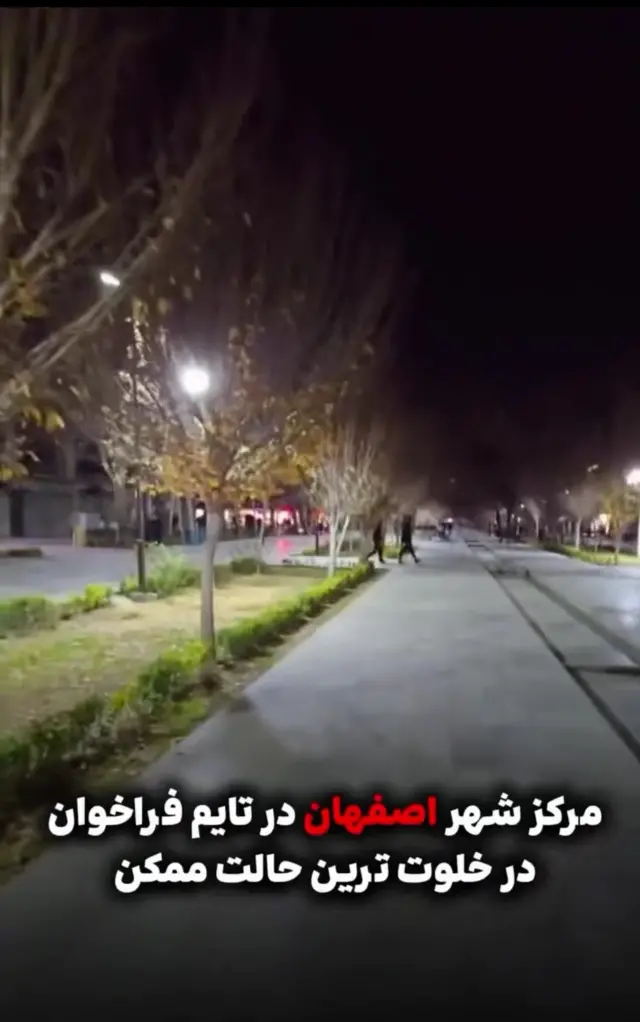
    Videos from state-controlled outlets show major cities, such as Shiraz, Isfahan, Sanandaj and Bushehr with calm streets and no protesters. Meanwhile, clips of Tehran are being posted saying that there are only a small number of “rioters”.

    For context: The BBC has verified videos from social media showing large crowds of protesters in some Iranian cities.

    The Tasnim Telegram channel shared a post reading "Isfahan city centre at the time of the call to protest, quiet as can be"Image source, Tasnim/Telegram
    Image caption,

    The semi-official news agency, Tasnim, shared a post on Telegram saying: "Isfahan city centre at the time of the call to protest, quiet as can be"

  14. BBC Verify

    Video shows fire at building linked to state TV in Isfahanpublished at 21:51 GMT 8 January

    By Joshua Cheetham

    We’ve been investigating reports of a fire in the offices of state broadcaster IRIB in the city of Isfahan.

    A video shared on social media shows several buildings on fire along a stretch of road.

    We matched features in this video with satellite imagery on Google Earth, and have located it to the office of the Young Journalists Club – a subsidiary of IRIB.

    It’s unclear what caused the fire and if anyone has been injured.

  15. Images show protest in Babol, northern Iranpublished at 21:49 GMT 8 January

    We've been bringing you images from videos, verified by the BBC, which shows protests taking place in Iranian cities.

    The image below comes from a protest in Babol, a city in the Mazandaran province, northern Iran.

    The footage shows crowds gathered in Bagh Ferdows Square. Loud chants and clapping can be heard.

    Crowds gather in a public square. Hundreds of people can be seen dressed in black.Image source, X
  16. What's happened so far? A look at how protests grewpublished at 21:31 GMT 8 January

    Ghoncheh Habibiazad
    Senior reporter, BBC Persian

    The protests began in the capital, Tehran, on 28 December over the collapse of Iran’s national currency, but quickly turned into anti-establishment demonstrations.

    This morning, BBC Persian reported that more than 50 towns and cities in Iran’s Kurdish-majority regions joined a strike, with shops closed in solidarity with nationwide protests.

    The US-based Human Rights Activist News Agency (HRANA) has reported that at least 34 protesters and four security personnel have been killed during the unrest, and that 2,200 protesters have been arrested.

    BBC Persian has confirmed the deaths and identities of 22 people. Iranian authorities have reported the deaths of at least five security personnel.

  17. Videos show large crowds of protesters chanting on the streets in Tehranpublished at 21:23 GMT 8 January

    Video verified by the BBC shows thousands of protesters taking to the streets in Iran's capital, Tehran.

    Cars can be heard sounding their horns as they attempt to make their way through the crowds.

    Crowds of people walk through the streets in TehranImage source, X
  18. Analysis

    Protests and US warnings shake Iran at its weakest point in yearspublished at 21:16 GMT 8 January

    Amir Azimi
    Editor, BBC Persian

    A file photo of Ayatollah Ali KhameneiImage source, Reuters

    Iran is no stranger to street protests, but several factors surrounding the current unrest make it very serious.

    Iranian police and security forces have responded violently almost from the outset, and reports by human rights groups claim that more than 20 people have already been killed. Now eyes are on Trump, as the US president directly warns Iran's leaders about the treatment of protesters.

    International sanctions led by the United States have played a major role in worsening economic conditions in Iran, but they are not the full story. Many Iranians believe that certain officials and their relatives benefit directly from sanctions through special arrangements that allow them to profit from trade, oil revenue and money laundering networks.

    Meanwhile, the 12-day war in the summer of 2025 between Iran and Israel marked a turning point. The conflict culminated in direct US involvement, including air strikes on Iranian nuclear facilities.

    For years, Khamenei and his inner circle justified massive spending on regional allies and the nuclear programme as necessary investments in Iran's long-term security and technological advancement.

    Today, that argument appears increasingly hollow. As pressure builds both inside and outside the country, security at home, once presented as the ultimate payoff of those policies, seems more distant than ever.

    You can read more from Amir Azimi on the situation in Iran here.

  19. Hundreds of people gather in Kish Islandpublished at 20:57 GMT 8 January

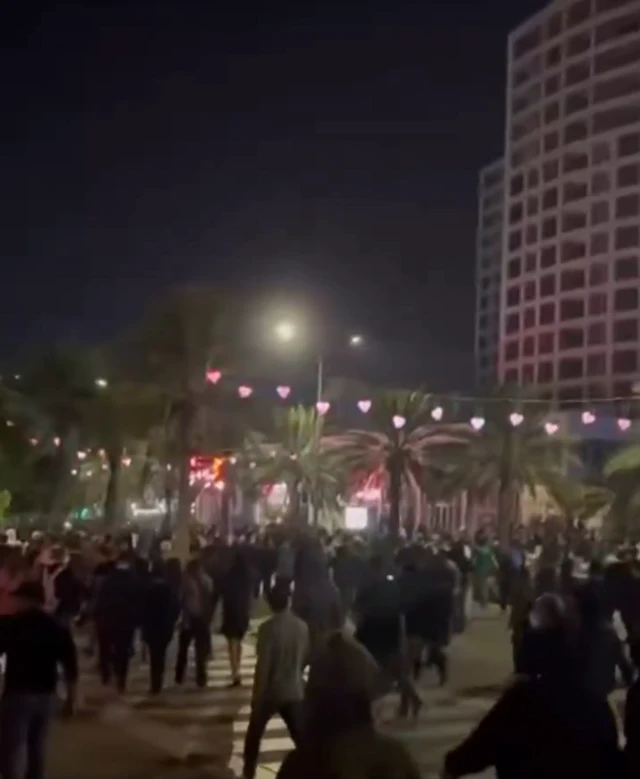
    A video shared on X, which the BBC has verified, shows crowds of protestors gathering in Kish Island.

    Kish Island is a resort island in the Hormozgan Province off the southern coast of Iran.

    Chanting and clapping can be heard in the footage as hundreds of people take to the streets.

    Crowds walk down a street in Kish Island with palm trees and lights seen in the backgroundImage source, X
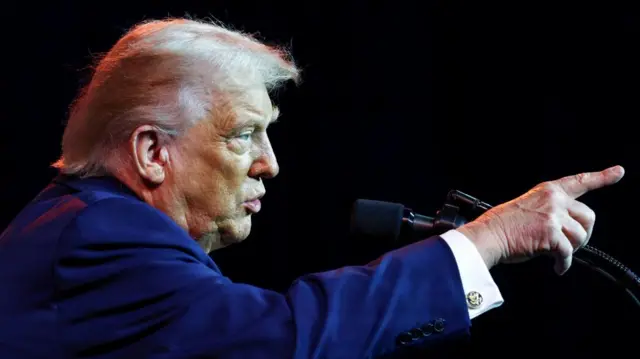
  20. Trump repeats threat to 'hit Iran hard' if protesters killedpublished at 20:43 GMT 8 January

    A file photo of Trump pointingImage source, Reuters

    US President Donald Trump says he has let the Iranian government know "if they start killing people" then "we are going to hit them very hard".

    "I have let them know that if they start killing people, which they tend to do during their riots - they have lots of riots - if they do it, we are going to hit them very hard," Trump said in an interview with conservative radio host Hugh Hewitt earlier today.

    "We're watching it very closely," he says of the situation. "They know, and they have been told very strongly, even more strongly than I am speaking to you right now, that if they do that they are going to have to pay hell."

    Asked what his message is to people of Iran, he says "you should feel strongly about freedom", before going on to criticise what has happened in the country under the current regime.

    It's the latest threat from the US president to intervene, after making similar remarks on Sunday.

    "We're watching it very closely. If they start killing people like they have in the past, I think they're going to get hit very hard by the United States," Trump said at the weekend.