Summary

  1. 'Disarmament means the weapons are out of Gaza,' says Israel's ambassador to the UNpublished at 16:17 BST 31 July

    Lisa Lambert
    Live reporter
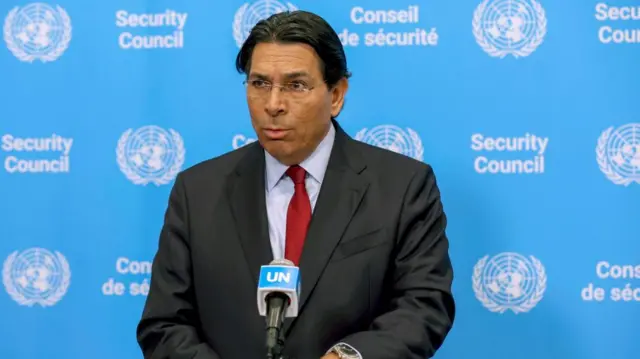
    Permanent Representative of Israel to the United Nations, Danny DanonImage source, EPA

    We've just heard from Israel's ambassador to the UN, Danny Danon, in a CNN interview.

    He says Israel is "looking forward to implementing it", although he also expresses some scepticism, saying of Hamas: "We have to verify what they are doing, not what they are saying."

    Specifically, that means disarmament, he says, going into detail about suspicions that Hamas is "playing games" by moving weapons around and not getting rid of them.

    "Disarmament means the weapons are out of Gaza," he says, adding that it also means Hamas doesn't have control of the weapons.

    He is also asked about the creation of a Palestinian state.

    "After October 7 no one is discussing the option of a Palestinian state today in Israel," he says. "We are concerned about our security. We want to see the Palestinians offer a better life and a moderate regime.

    "The idea of a state - it's not on the table."

    Hamas has said the handover of its heavy weapons is contingent on Israel withdrawing its forces from Gaza, and on a guaranteed right to "self-determination, establishing an independent Palestinian state".

    The group also says the heavy weapons handed over will be stored under the responsibility of the National Committee for the Administration of Gaza (NCAG), rather than handed over to Israel.
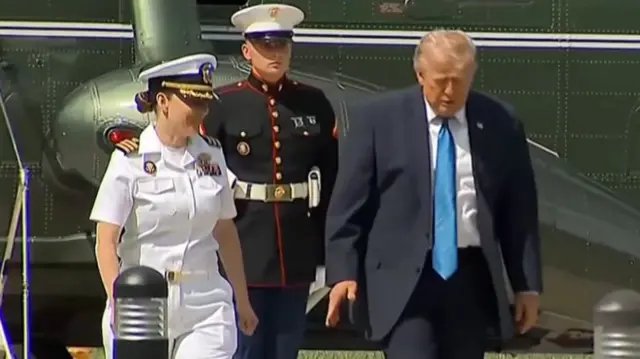
  2. Trump to speak at Camp David cabinet meetingpublished at 16:05 BST 31 July

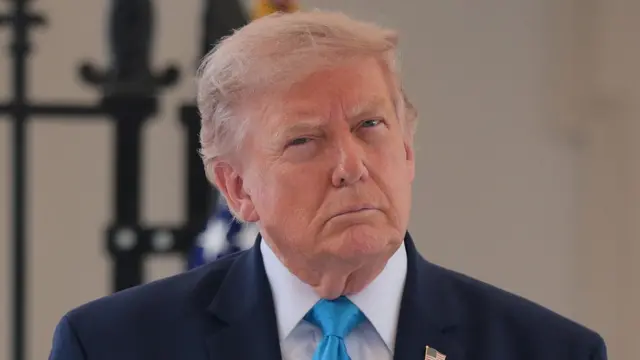
    Donald Trump arrives at Camp David

    US President Donald Trump has arrived at Camp David, where he has convened a cabinet meeting with his administration.

    We expect to hear an update from the president soon on the US response to the latest Hamas disarmament agreement.

    You will be able to watch his remarks live above. Stay with us for the latest.

  3. Board of Peace publishes 'roadmap to peace' for Gazapublished at 15:52 BST 31 July

    The Board of Peace has published its roadmap for peace in Gaza, details of which we reported earlier.

    The first principle of the roadmap, posted on social media, is that "all parties reaffirm their commitment to President Trump’s comprehensive plan to achieve peace in Gaza".

    The other principles remain the same as those we've reported, including the gradual disarmament of Hamas, the withdrawal of Israeli forces and the deployment of an "international stabilisation force".

    As we've mentioned, Hamas has said it will only give up heavy weapons if Israel withdraws, while a senior Israeli official has said it won't withdraw unless Hamas undergoes "genuine disarmament".

  4. IDF won't withdraw unless Hamas undergoes 'genuine disarmament' - senior Israeli officialpublished at 15:43 BST 31 July
    Breaking

    Gidi Kleiman
    BBC News, Jerusalem

    In the first official response to Hamas's agreement to disarm, a senior Israeli official says: "Regarding various publications this morning about diplomatic progress in the Gaza Strip, Israel reiterated that there will be no IDF withdrawal from the current Yellow Line without the genuine disarmament of Hamas."

  5. EU 'ready to support next steps' - but a lot needs to fall into place, says foreign policy chiefpublished at 15:38 BST 31 July

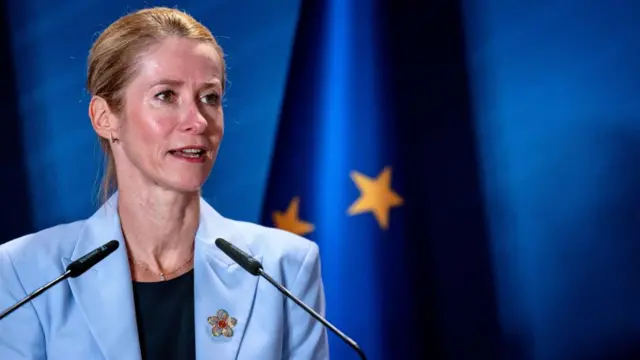
    EU foreign policy chief Kaja Kallas wearing blue jacket with EU flag behind herImage source, EPA

    The EU's foreign policy chief Kaja Kallas has said, "if fully implemented", the plan to disarm Hamas would be a "constructive step towards peace".

    But she adds: "A lot needs to fall in place for this to work. Success depends on the full commitment of all parties."

    Verifying Hamas's compliance with the terms will be a "significant challenge" and Israel "would need to eventually withdraw from Gaza", Kallas writes in a post on X.

    She says the EU stands "ready to support the next steps, including the entry of the National Committee and the International Stabilisation Force".

  6. Analysis

    Trump's plan can't be dismissed, but progress depends on both sides fulfilling their part of dealpublished at 15:23 BST 31 July

    Sebastian Usher
    Global affairs correspondent

    There's been scepticism from both inside Israel and Gaza over how likely it is that President Trump's latest declaration of a "monumental step forward" to achieving peace will bear fruit.

    But it can't be dismissed out of hand.

    The updated document from the so-called Board of Peace is more detailed and substantial than before - and has been arrived at through months of negotiation.

    It also seems to have resulted from a shift in the stance of Hamas, brought on by internal and external pressures, that may make it more open to compromise.

    But as the group has made clear, real progress is still dependent on both sides fulfilling their side of the deal in order to make the phased timetable work.

  7. Trump's agreement 'not acceptable to Israel', says far-right national security ministerpublished at 15:17 BST 31 July

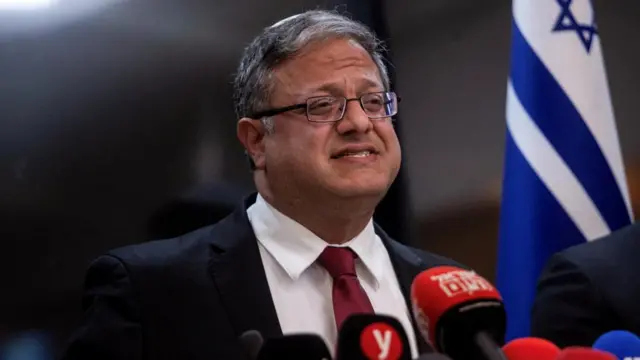
    Israeli National Security Minister Itamar Ben-GvirImage source, Reuters

    We've now heard more from Israel's far-right National Security Minister, Itamar Ben Gvir.

    Writing on Telegram and X, he says the draft agreement published by the Board of Peace is "not acceptable to Israel".

    He says agreeing to stop "eliminations of the terrorist organization's murderers" would effectively allow Hamas "to regroup toward the next massacre".

    He adds that Israel must continue to eliminate targets in Gaza, and repeats earlier comments about "encouraging emigration" from the region.

  8. BBC Verify

    Israel building new land barriers in Gazapublished at 15:12 BST 31 July

    By Emma Pengelly

    Israel is yet to respond to the disarmament plan, which proposes a “phased” withdrawal from Gaza, but experts have told BBC Verify that recent construction indicates Israel is planning for a long occupation.

    One key development is the Israeli military's continued expansion of a network of huge earth barriers it started building shortly after the ceasefire deal in October last year.

    Our analysis shows these embankments now extend more than 42km (26 miles) and cover 85% of Israel's "Yellow Line" - where it had agreed to withdraw in the ceasefire. In the south, one section is more than 1.5km (1 mile) beyond it.

    Media caption,

    Huge earth berm and trench near al-Mawasi, southern Gaza

    Since the ceasefire, Israel has also established fourteen new military positions near the Yellow Line - two of which are under construction - and expanded or paved seven more which were set up before it.

    Dr Andreas Krieg, a security expert from King's College London, says this construction indicates "Israel is turning the Yellow Line from a temporary withdrawal boundary into a de facto internal border".

    We’ve also found Israel is continuing its demolition campaign. In July alone, satellite images reveal scores of buildings had been destroyed beyond the Yellow Line across Gaza.

    This Flourish post cannot be displayed in your browser. Please enable Javascript or try a different browser.

  9. Israel confirms strike on Gazapublished at 14:57 BST 31 July

    The Israel Defense Forces (IDF) has confirmed earlier reports of an Israeli strike on Gaza, in which it was reported that several Palestinians were injured.

    After being contacted by the BBC, the IDF says it carried out a strike "targeting a terrorist from Hamas’ military wing" in the Gaza City area.

    "Following the identification of uninvolved individuals in the area, the munition was diverted in order to mitigate harm to them. The incident is under review," the IDF adds.

  10. Fears weapons could be used again if under Palestinian control - former Israeli lawmakerpublished at 14:48 BST 31 July

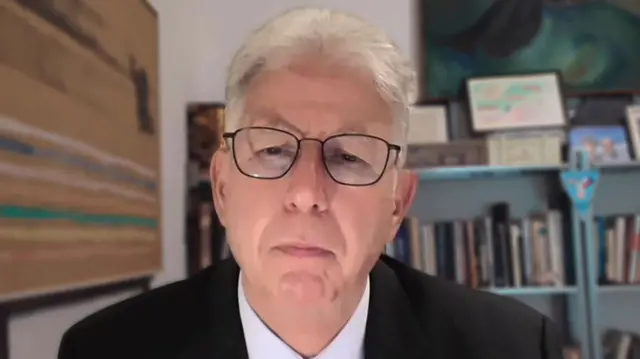
    Dr Doron Avital, Former Knesset member and former Israeli Special Forces commander looks to camera in a home office setting

    It’s not clear in which sequence Hamas disarmament and an Israeli withdrawal from Gaza would happen under Donald Trump’s plan, says a former Knesset (Israel’s parliament) member.

    Speaking to the BBC, Doron Avital, also a former Israeli Special Forces commander, says that although the agreement looks “very optimistic”, it’s not “clear how it would go in the field”.

    Avital also points to the upcoming elections in Israel, saying they create uncertainty about what approach a future government would take.

    Asked how Israelis would react if weapons were stored under Palestinian control, Avital said there would be fears that the arms could be used again in the future.

    “I mean, if they're not taken out of the Strip, if they had been taken to Egypt, for example, it would be a different story.”

  11. Trump to hold cabinet meetingpublished at 14:26 BST 31 July

    Bernd Debusmann Jr
    White House reporter

    U.S. President Donald Trump looks on on the day he makes an announcement on Freedom Haulers, an initiative to open pathways for military veterans to become commercial truck drivers, during an event at the White House in Washington on July 30Image source, Reuters

    I'm currently on a van travelling through rural Maryland to Camp David, where US President Trump will hold a cabinet meeting in a few hours.

    It's rare for the White House press pool to be given access to Camp David, and even rarer for President Trump to hold meetings here.

    In about three years of covering the White House, I've only come here once - to "drop off" President Biden after another event.

    We didn't enter, and the bus that drove the press back to Washington broke down on a rural road.

    It's a sensitive area, and video and photography are tightly restricted - very much unlike the White House.

    Gaza is sure to dominate the question-and-answer session with reporters.

    Many questions remain unanswered, including whether Israel has fully signed off on the agreement and the mechanics of any Israeli withdrawal and Hamas disarmament.

    The president has already hailed it as something of a foreign policy victory, which many in Washington say the administration sorely needs as negotiations with Iran stall and the war in Ukraine continues unabated.

  12. ... and what is Trump's Board of Peace?published at 14:21 BST 31 July

    We said in our last post that the NCAG works under the supervision of the Board of Peace.

    But what is the Board of Peace?

    When Trump first announced the Board of Peace last September, it was thought to be aimed at helping end the two-year war between Israel and Hamas in Gaza and overseeing reconstruction.

    However, Trump later said the board’s remit would extend beyond Gaza to tackle other conflicts worldwide.

    Trump is the board’s inaugural chairman - a position he can hold for life. The Board of Peace website lists 28 countries, including the United States, Israel, Saudi Arabia, Qatar and Pakistan, as founding members of the initiative.

    Some of the US’s traditional allies haven’t agreed to join, and none of the other permanent members of the UN Security Council have committed to participating.

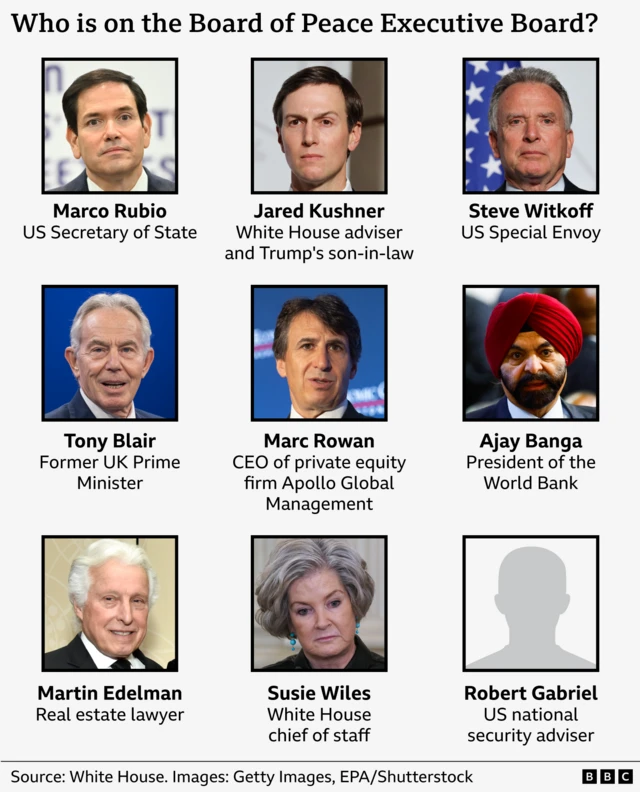
    Who is on the Board of Peace Executive Board?” featuring photos of the members with their names and job titles. The individuals listed are Marco Rubio (US Secretary of State), Jared Kushner (White House adviser and Trump’s son-in-law), Steve Witkoff (US Special Envoy), Tony Blair (former UK Prime Minister), Marc Rowan (CEO of Apollo Global Management), Ajay Banga (President of the World Bank), Martin Edelman (real estate lawyer), Susie Wiles (White House chief of staff), and Robert Gabriel (US national security adviser)
  13. What is the National Committee for the Administration of Gaza?published at 14:05 BST 31 July

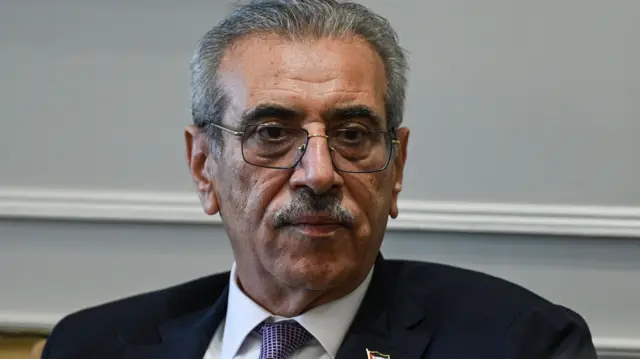
    Head of the National Committee for the Administration of Gaza (NCAG) Ali Shaath meets with Egyptian Foreign Minister at the New Administrative Capital, east of Cairo, Egypt, 19 January 2026Image source, EPA
    Image caption,

    Ali Shaath, a civil engineer and former deputy minister in the Palestinian Authority (PA), is chief commissioner of the Board of Peace’s National Committee for the Administration of Gaza

    Hamas has said heavy weapons handed over will be stored under the responsibility of the National Committee for the Administration of Gaza (NCAG).

    The NCAG works under the supervision of Trump's Board of Peace to manage the day-to-day running of Gaza.

    It describes itself as a "transitional, technocratic, and apolitical" committee composed "exclusively of qualified Palestinians from the Gaza Strip".

    It's structured effectively like a government cabinet, with "commissioners" responsible for 13 areas of governance, including finance, education, social security and justice.

    Its chief commissioner is Ali Shaath, a civil engineer by training who's previously held ministerial positions in the Palestinian Authority.

    The NCAG says it has a mandate to focus on "civilian affairs" and that it won't represent the Palestinian people internationally.

    It adds that it will only fulfil its "transitional role" until the conditions are created for a "credible pathway to Palestinian self-determination and statehood".

  14. Hamas: Giving up heavy weapons contingent on Israel's withdrawalpublished at 13:51 BST 31 July
    Breaking

    Hamas says the handover of its heavy weapons under a deal with Trump's Board of Peace is contingent on Israel ending "all forms of aggression" and withdrawing its forces from Gaza.

    In a statement, the group says it negotiated "responsibly and positively", with "national consensus among the Palestinian factions".

    It says Israel's commitment to ending its attack on Gaza is a "fundamental prerequisite" for moving forward with the deal.

    Hamas also says the agreement requires the deployment of international protection forces and a guaranteed right to "self-determination, establishing an independent Palestinian state".

    It adds that heavy weapons handed over by Hamas will be stored under the responsibility of the Board of Peace's National Committee for the Administration of Gaza (NCAG).

    The statement comes after a senior Hamas official told the BBC the group had agreed to disarmament and that an official statement would follow.

    We’re yet to hear from Israel on whether it agrees to the plan.

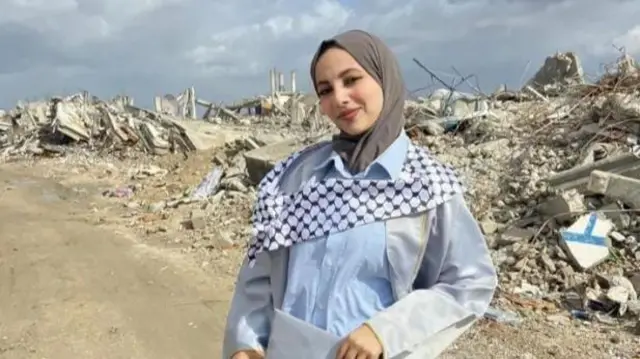
  15. 'When promises are broken it creates more fear,' says Gaza studentpublished at 13:29 BST 31 July

    Jack Gray
    BBC Newsbeat

    Tala stands holding graduation cap in front of debris from warzoneImage source, Tala

    BBC Newsbeat has been speaking to a young woman living in Gaza about what the disarmament agreement might mean for her.

    Tala tells us she’s living in a tent after her house was destroyed in air strikes.

    "Every time people hear about a possible ceasefire, we hope that it will finally end," says the 18-year-old.

    "But when these promises are broken, it creates more fear."

    The university student says daily life remains "very challenging".

    "Every day comes with a new difficulty, and we are constantly thinking about safety and basic needs," she says.

    Tala is hoping to study abroad and seek better opportunities in the future - but is struggling to feel any hope at this stage of the peace talks.

    "What matters most is stopping the fighting, protecting civilians and setting a new chapter of re-building," she adds.

  16. Berlin welcomes 'hopeful news' of Hamas disarmament agreementpublished at 13:17 BST 31 July

    German Foreign Minister Johann David Wadephu arrives for the weekly federal government cabinet meeting on June 10, 2026 in BerlinImage source, Getty Images

    German Foreign Minister Johann Wadephul says he welcomes the "hopeful news" of the agreement reached between Trump's Board of Peace and Hamas.

    "It is now key that real progress is made and Hamas actually disarms," he writes on X, adding that Hamas "must never again pose a threat to Israel".

    He adds that Germany "stands ready to support the people of Gaza with humanitarian aid".

    • As a reminder, the agreement also says Israel has to withdraw from Gaza, and Israel has yet to comment
  17. Analysis

    What if Hamas disarmament plan were to work?published at 12:58 BST 31 July

    James Landale
    Diplomatic correspondent

    There is much scepticism about the prospects of Hamas disarming. Many obstacles lie in the way. But the announcement is the first sign of hope for many months.

    Some parties have an incentive to make progress. Donald Trump wants a foreign policy win ahead of elections in November. Hamas seems to want to move on from a status quo that has seen Gazans suffer a humanitarian crisis and Israel occupy more territory.

    So what if the agreement did work?

    In a statement, the National Committee for the Administration of Gaza, the technocratic body set up to run the strip, said it could "restore essential public services, strengthen the rule of law, facilitate the delivery of humanitarian aid, and lead recovery and reconstruction efforts".

    Nickolay Mladenov, director general of the so-called Board of Peace, posted: "Ahead of us is a Gaza rebuilt, governed by Palestinians and at peace with Israel on a political horizon to a meaningful resolution [of] the Israeli Palestinian conflict."

    Well, maybe.

    This deal – if it stuck – would be unlikely to restore trust. But it could be a key to unlock further movement towards the longer aims of the peace deal agreed last October.

  18. The war in Gaza in numberspublished at 12:40 BST 31 July

    More than two years of conflict in the Gaza Strip has led to "an unprecedented loss of life and a catastrophic humanitarian crisis", the United Nations has said.

    According to a UN report in April, more than 71,000 Palestinians have been killed and over 171,000 injured since the conflict began.

    More than 1.2 million people - almost 60% of the Gaza Strip's population - are understood to have lost their homes.

    The UN estimates that human development has been set back by 77 years in the territory.

    Meanwhile, on the Israeli side, about 1,671 Israeli and foreign nationals are believed to have been killed in the conflict, the majority in the 7 October 2023 attacks.

    The UN also says there has been significant displacement and damage in Israel.

    For context: The conflict began after Hamas led an attack on Israel on 7 October 2023, in which 1,200 people were killed and 251 were taken hostage. Israel responded by launching a large military campaign in Gaza.

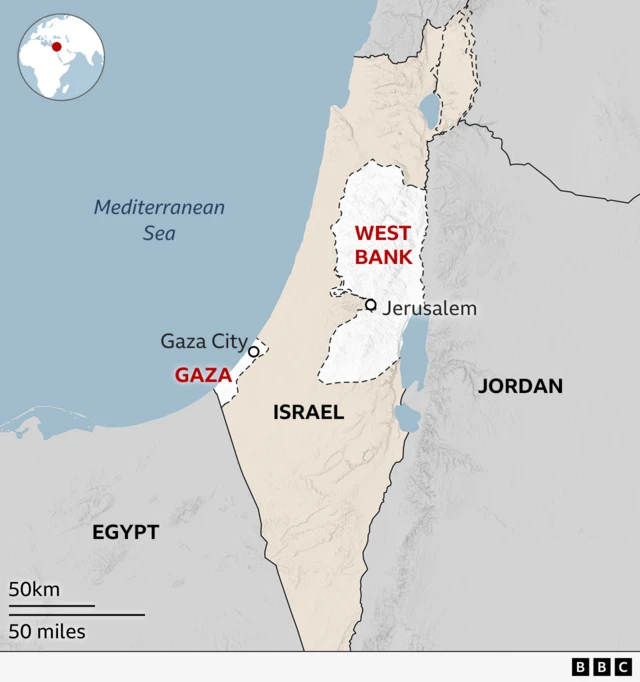
    A BBC graphic highlights the country of Israel next to Egypt and Jordan. The Gaza strip has been highlighted next to the south west coastline of Israel next to the Mediterranean Sea. Gaza City is highlighted in the north of the territory. The West Bank is also sign posted in the east of Israel next to the border with Jordan. Jerusalem is highlighted next to the West Bank
  19. Hamas agrees to disarm, but Israel yet to comment - what has been said?published at 12:22 BST 31 July

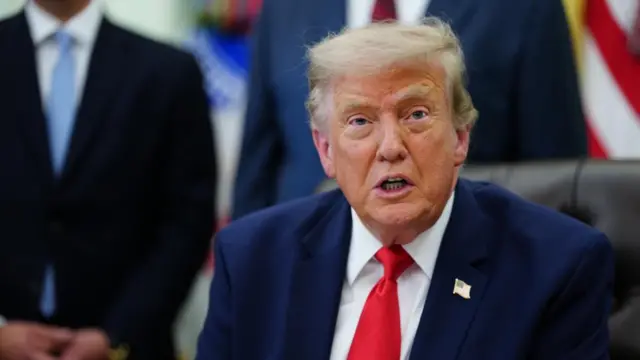
    US President Donald Trump sits at a desk wearing a blue suit with a red tie. He is wearing a small badge with the US flag on itImage source, EPA/Shutterstock

    US President Donald Trump says the Board of Peace has reached an agreement for the "complete disarmament" of Hamas and other armed groups in Gaza.

    As part of the agreement, Israel also needs to withdraw from the Strip.

    Trump says this is "a critical step towards Gaza finally being governed by a new Palestinian government".

    A senior Hamas official and member of its negotiating team tells the BBC the talks were "long and extremely difficult", with Hamas insisting that "inventorying and storing weapons" should be put under Palestinian oversight rather than handed over to Israel.
    Board of Peace official Nickolay Mladenov writes on social media: "What the agreement says matters. What happens next matters even more."

    UK cabinet minister Louise Haigh says any progress in the peace negotiations and the disarmament of Hamas is "extremely welcome".

    We are yet to hear from Israel since the agreement was announced. A US official has briefed reporters that Trump would be "very disappointed" if Israel decided not to withdraw from Gaza as part of the agreement.

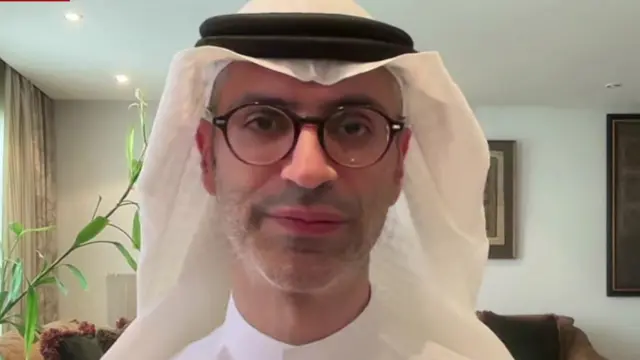
  20. Trump makes big headlines but is low on detail, says Kuwait University professorpublished at 12:05 BST 31 July

    Dr Bader Al Saif, Professor at Kuwait University looking to screen.

    President Trump needs to set out more detail in his plans for Gaza, says an academic specialising in the region's politics.

    Speaking to the BBC, Bader Al Saif, a professor at Kuwait University says "like the many other peace plans that President Trump has put forward in the last 18 months" he creates "big headlines" but is "low on detail".

    Al Saif points to the fact that it's not even known if Israel is on board, he also questions if Palestinian Islamic Jihad has agreed to the deal.

    He asks: "Who is going to disarm first? Is it going to be withdrawal from Gaza per disarmament? Is it going to be sequenced in a certain way? Each side is going to claim that the other needs to go first.

    "We saw this happen in another space in the region on the Strait of Hormuz, for example. And then who's going to pick up the arms? Who's going to come in and man the international workforce?"

    Al Saif adds that the suffering in Gaza is indescribable but any plan should be based on "firm ground" and that isn't yet the case.