Summary

  1. Analysis

    Two issues that raise doubts over Iran’s participation in peace talks in Pakistanpublished at 18:24 BST 10 April

    Jiyar Gol
    World affairs correspondent

    Iran is signalling to its regional allies and proxies that it will not abandon them, insisting Lebanon be included in any ceasefire framework and that Israel halt attacks on Hezbollah.

    This stance was reinforced in a recent tweet by Parliament Speaker Mohammad Bagher Qalibaf, a prominent figure with deep ties to the Islamic Revolutionary Guard Corps (IRGC).

    Qalibaf appears to have been chosen to lead Iran’s negotiation team in Islamabad, a move confirmed by Deputy Chairman Mahmoud Nabavia.

    In his tweet, Qalibaf stressed that two issues must be addressed before talks begin: a ceasefire in Lebanon and the release of Iran’s blocked assets.

    However, the United States is unlikely to release these assets in advance, raising doubts about Iran’s participation in talks in Pakistan.

    By advancing such demands, Tehran may be projecting strength and seeking leverage, potentially aiming to soften its position later in negotiations.
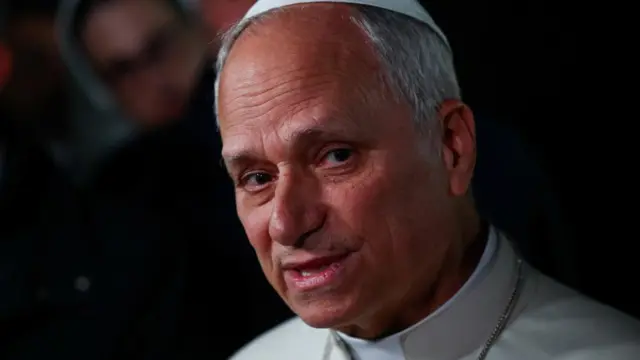

  2. No 'disciple of Christ' on side of those who drop bombs - Pope Leopublished at 18:14 BST 10 April

    Pope Leo XIV in his white garment against a dark background.Image source, Reuters

    Pope Leo XIV has described the spread of the war through the Middle East as "absurd and inhuman violence", adding people's lives in the conflict have been considered "at most collateral damage of self-interest".

    "No gain can be worth the life of the weakest, children, or families," he said in a series of posts on X earlier this afternoon.

    Pope Leo said in the same thread that no "disciple of Christ" is on the side of those who "drop bombs".

    "Military action will not create space for freedom or times of #Peace, external," he wrote.

  3. Lebanon should be included in US-Iran ceasefire, foreign minister Araghchi sayspublished at 18:11 BST 10 April

    BBC Monitoring

    Iranian Foreign Minister Abbas Araghchi has reiterated that Lebanon should be included within the scope of the Iran–US two-week ceasefire agreement, stressing the need for Washington to adhere to its "commitments".

    According to a report published by the ministry's Telegram channel, he made the comments in a phone call with Iran's envoy to Lebanon Mohammad Reze Raouf Sheibani.

    The comments come as an Iranian delegation is scheduled to meet US representatives for talks in Islamabad on Saturday - but Tehran has yet to confirm its attendance as it has pointed to Israel's strikes on Lebanon as a violation of its proposed plan.

    Statements from Tehran and Washington have suggested deep differences.

  4. Only reason Iranians are alive 'is to negotiate,' says Trumppublished at 17:37 BST 10 April
    Breaking

    US President Donald Trump has said the only reason Iranians are alive "is to negotiate".

    In a post on his Truth Social platform, the president says: "The Iranians don’t seem to realize they have no cards, other than a short term extortion of the World by using International Waterways.

    "The only reason they are alive today is to negotiate!"

  5. 'We're loading up the ships,' Trump sayspublished at 17:24 BST 10 April

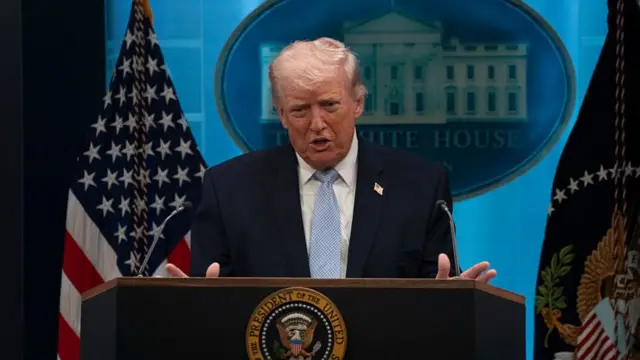
    Trump at a lectern that has the President of the United states seal on the front of it speakingImage source, Getty Images

    The US is loading its warships with the "best weapons" in case the peace talks with Iran fail, US President Donald Trump has suggested.

    Speaking in a phone interview to New York Post on Friday, he says "we're going to find out in about 24 hours," the paper reports.

    "We're loading up the ships with the best weapons ever made, even at a higher level than we use to do a complete decimation.

    "And if we don't have a deal, we will be using them and we will be using them very effectively," he adds.

    Of the Iranians, he says they are people that you "don't know whether or not they tell the truth".

    Talks between the two nations are due to take place on Saturday in Pakistan.

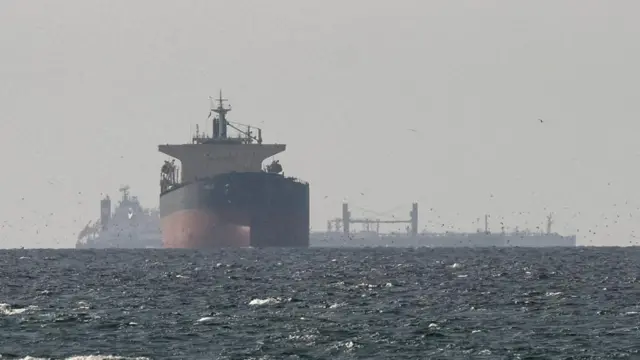
  6. Threat level still ‘critical’ for shipping in Strait of Hormuz, says oil tanker organisationpublished at 17:15 BST 10 April

    Oliver Smith
    Senior business producer, BBC News

    A shipping organisation representing oil tankers tells the BBC the threat level in the Strait of Hormuz remains “critical” and an attack could take place any time.

    Phil Belcher, the marine director of Intertanko (The International Association of Independent Tanker Owners), which represents 190 oil tanker operators, says it’s advising members to avoid the waterway.

    “At the moment the Strait of Hormuz is under the de-facto rule of the Iranian military”, he says, adding that there is still no clear information about how safe passage in the Strait would work.

    Belcher says Intertanko is telling its members to stay away until attacks against ships have halted and there "is some sort of coalition of the willing oversight for ships".

    He also rejects the idea of an Iranian toll charging ships to pass through the Strait.

    Belcher adds: "We are amazed that this appears to be one of the starting points of negotiations in Pakistan tomorrow because it goes against the whole idea of international laws and free passage through international waterways.”

  7. 13 security personnel killed in Israeli strikes in Lebanon, says presidentpublished at 16:41 BST 10 April

    Lebanon's presidency says 13 state security personnel have been killed in Israeli strikes on the city of Nabatieh, southern Lebanon.

    In a post on X, the country's presidential office writes that President Joseph Auon condemns the attacks.

    The Israeli military has not commented.

  8. Lebanon ceasefire and release of Iranian assets needed before talks - Iranian parliament speakerpublished at 16:06 BST 10 April

    Iran's parliament speaker Mohammad-Bagher Ghalibaf says a ceasefire in Lebanon and the release of Iran's blocked assets must happen "before negotiations begin".

    He says that the that two measures were agreed between the parties and "have yet to be implemented".

    It comes as US Vice-President JD Vance heads to Pakistan to lead the US delegation for talks with Iran.

    Since the ceasefire began earlier this week, there has been great contention over whether Lebanon was included.

  9. Key developments on Friday as Vance heads for talks in Pakistanpublished at 15:57 BST 10 April

    Preparations are under way for negotiations between the US and Iran in Pakistan this weekend.

    If you are just joining us, let's bring you up to date with the key developments:

  10. Rescue workers continue searching in Beirutpublished at 15:40 BST 10 April

    Hugo Bachega
    Middle East correspondent in Beirut

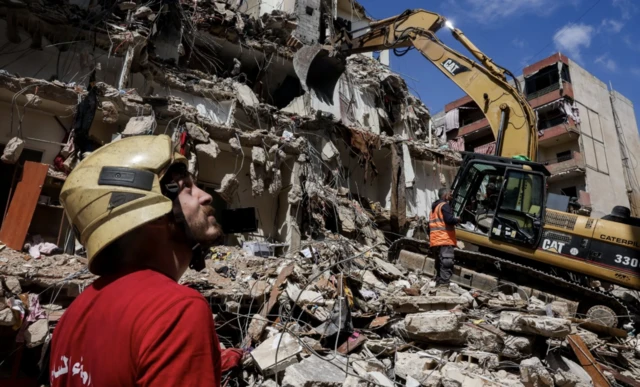
    Rescuers assisted by heavy machinery work at the site of an Israeli strike carried outImage source, Reuters

    At the rubble of a collapsed building in central Beirut, rescue workers are still searching for one or two people who are missing.

    Two days later, there is very little hope of finding them alive.

    Families are visiting their damaged homes, still struggling to understand the scale of Israel’s bombardment.

    This is a part of the city away from the areas where Hezbollah is present, and many thought they would be safe here.

    Israel has been widely criticised for the attacks, that killed more than 300 hundred people, a third of them women, children and the elderly.

    Aid agencies are warning of devastating humanitarian consequences.

    As the conflict between Israel and Hezbollah continues, a senior Lebanese official says there will be no talks with Israel without a ceasefire first.

  11. Search and clean-up operations continue in Lebanonpublished at 15:16 BST 10 April

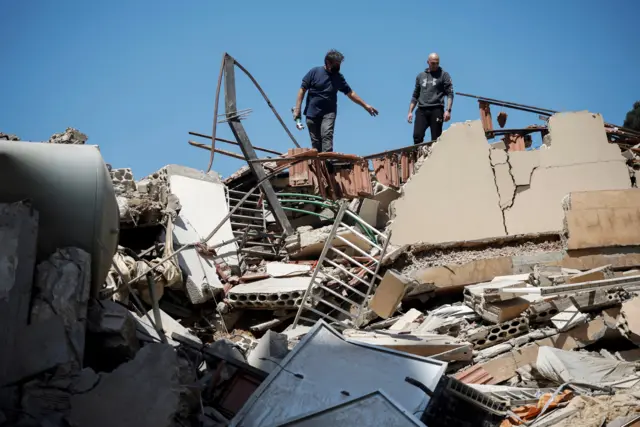
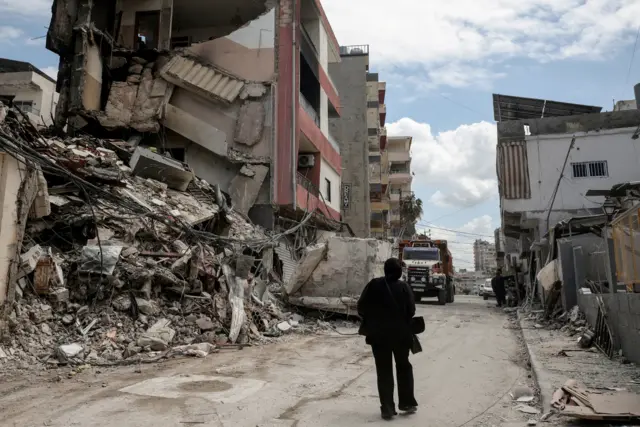
    The news agency Reuters have shared images taken in Tyre, southern Lebanon today.

    More than 300 people have been killed in Lebanon by Israeli airstrikes, according to the country's health ministry, since the announcement of the ceasefire between the US and Iran on Tuesday.

    Today, search and clean-up operations have been taking place in areas around the country hit by missile attacks, along with funerals for those killed.

    Two people stand atop rubble and debris where a building once stood in Tyre on FridayImage source, Louisa Gouliamaki / Reuters
    A silhouetted figure walks past a building damaged by air strikes in Tyre on Friday.Image source, Louisa Gouliamaki / Reuters
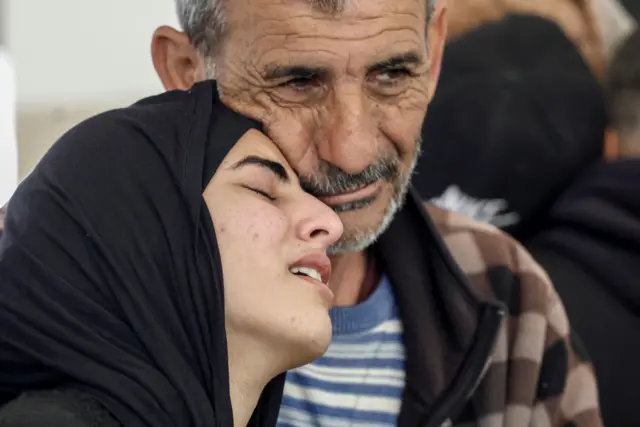
    A man and a woman embrace during a funeral for six women and a man killed in sourthern Lebanon on Thursday, taken in Tyre on Friday.Image source, Louisa Gouliamaki / Reuters
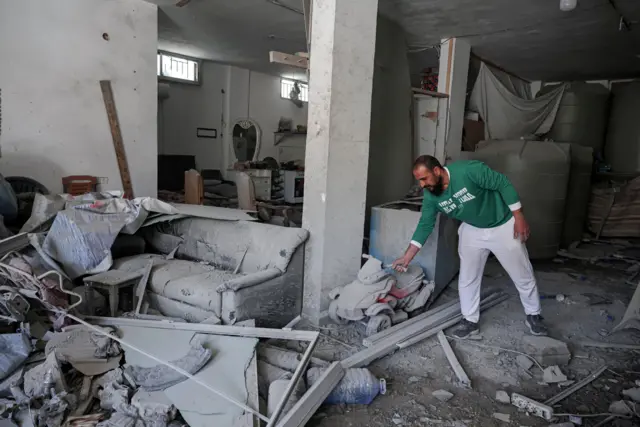
    An indoor shot shows a man moving debris inside a damaged building in Tyre on FridayImage source, Louisa Gouliamaki / Reuters
  12. The ceasefire and proposed talks - explainedpublished at 14:53 BST 10 April

    Cachella Smith
    Live reporter

    In the last few hours, we've been reporting on upcoming peace talks, a ceasefire and a demand for a ceasefire before talks can happen.

    We've taken a moment to spell out the difference between the multiple talks and ceasefires:

    Ceasefires

    On Tuesday, a conditional ceasefire between US and Iran was agreed, and is scheduled for two weeks.

    It was first announced by Trump on social media, and Tehran later confirmed that the two countries had come to an agreement - contingent on the reopening of the Strait of Hormuz and a pause in strikes against Iran.

    However, the full details of what was agreed at the time have not been released and exactly how a long-term ceasefire will be negotiated remains unclear.

    Lebanon has become a sticking point in the ceasefire, as fighting has continued. The US and Israel have indicated Lebanon does not form part of the agreement, while Pakistan - a key mediator in the talks - has said it does.

    Today, a senior official in the Lebanese president's office told the BBC, however, they would only take part in their own negotiations with Israel if a ceasefire is implemented - more detail on that below.

    Talks

    US-Iran: Peace talks are scheduled to take place in Pakistan this weekend between the US and Iranian delegations. Islamabad is preparing for their arrival, with heightened security, as US Vice-President JD Vance has set off for Pakistan in Air Force Two.

    There is no official confirmation that either of the delegations have arrived in the capital, nor a schedule announced by Pakistan, writes our Pakistan correspondent.

    Lebanon-Israel: Lebanon is calling for a separate set of talks, to be hosted next week, with Israel. They will only partake in the discussions if a ceasefire is agreed, the president's office tells the BBC.

  13. Jet fuel shortages could be triggered if Strait not opened in three weekspublished at 14:44 BST 10 April

    Emer Moreau
    BBC News business reporter

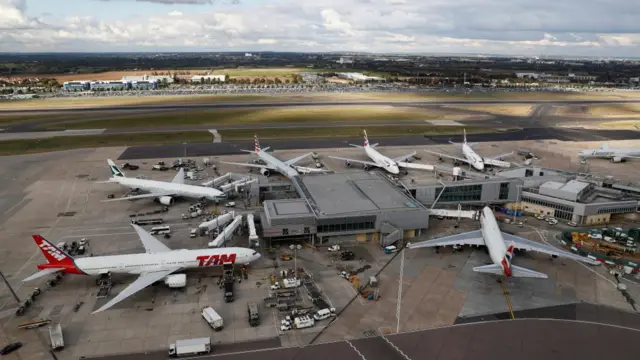
    Planes on the tarmac at Heathrow airport, pictured in March 2025Image source, Reuters

    Europe could see jet fuel shortages if the Strait of Hormuz does not reopen in the next three weeks, according to the trade body for European airports.

    ACI Europe has written to the European Commissioners for energy and tourism, warning of “increasing concerns” among its members about the availability of jet fuel.

    "A supply crunch would severely disrupt airport operations and air connectivity – with the risk of harsh economic impacts for the communities affected, and for Europe,” ACI Europe's director-general wrote.

    "At this stage, we understand that if the passage through the Strait of Hormuz does not resume in any significant and stable way within the next three weeks, systemic jet fuel shortage is set to become a reality for the EU.”

    The Gulf is a major source of aviation fuel, accounting for about 50% of Europe's imports.

    Several airlines have already cut flights and hiked passenger charges due to concerns about fuel shortages.

    Last week, the benchmark European jet fuel price hit an all-time high of $1,838 (£1,387) per tonne, compared with $831 before the war began.

  14. Analysis

    JD Vance sets off for hardest assignment since taking officepublished at 14:37 BST 10 April

    Daniel Bush
    Washington correspondent

    Vice President JD Vance just set off on the hardest assignment he’s had since taking office alongside President Donald Trump.

    Vance will be the centre of attention this weekend as he leads the American delegation at the US-Iran talks in Islamabad. The negotiations come after both sides agreed to a temporary two-week ceasefire.

    Vance faces a difficult balancing act in trying to secure a permanent end to the war that will satisfy Trump, Tehran, Israel and America’s allies.

    The vice president will also face pressure to deliver something that Trump - and Vance’s - anti-interventionist Maga supporters view as a victory.

    It’s unclear what solution, if any, can make every side in the conflict happy. Or if there’s a quick fix to reopen the Strait of Hormuz and bring down oil prices.

    Vance said as he left Washington on Friday morning that Trump gave the US team “some pretty clear guidelines” for the talks. What those are - and the outcome of these discussions - remains to be seen.

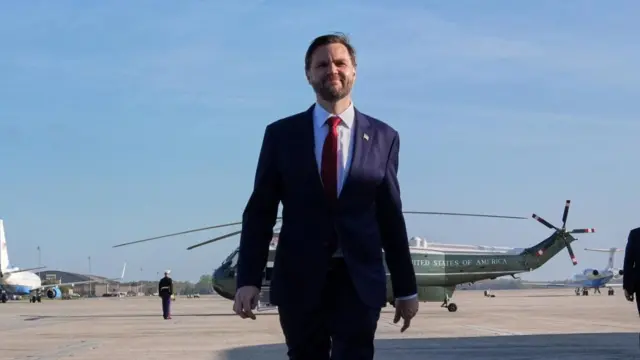
    JD Vance walks away from a green US helicopter as he prepares to fly to PakistanImage source, Reuters
  15. BBC Verify

    What do we know about the ships crossing the Strait of Hormuz?published at 14:19 BST 10 April

    A file photo of ships waiting in the Gulf while the Strait of Hormuz is effectively closedImage source, Reuters

    By Kayleen Devlin

    The announcement of a ceasefire in the US-Israel war with Iran late on Tuesday included conditional agreement to allow free passage for shipping through the Strait of Hormuz.

    But in practice this has not happened, and Iran has threatened to attack any ships passing through the waterway without its permission.

    So what do we know about the very few ships that have made the journey since the ceasefire?

    According to MarineTraffic data, 18 vessels have now crossed the strait since Tuesday's announcement: Four on Wednesday, 10 on Thursday and a further four on Friday (as of 13:00 BST).

    Of those vessels, four - including one oil tanker - are Iranian-flagged. A further three have previously been sanctioned by the US for transporting Iranian oil. Among these is a Russian-flagged tanker sanctioned by the US in July 2025.

    Information on vessel ownership is not always publicly available, but for those we’ve been able to find, two are owned by companies operating out of India, three by companies based in China, and three by firms in Greece.

    One additional vessel, a Panama-flagged bulk carrier whose ownership is unclear, listed its destination with the note: “China owner and crew".

  16. US inflation jumps to highest level in almost two yearspublished at 13:52 BST 10 April

    Natalie Sherman
    New York business reporter

    Turning away briefly from JD Vance's departure to Pakistan ahead of the expected peace talks with Iran, we can bring you an update on the US economy:

    Inflation in the US accelerated last month to its highest rate in nearly two years, as higher oil prices triggered by the US-Israel war in Iran started to spill over into the wider economy.

    Consumer prices climbed 3.3% over the 12 months to March, picking up from 2.4% in February, the Labor Department said.

    That marked one of the the biggest monthly changes since 2022, when the world was dealing with an energy shock brought on by Russia’s invasion of Ukraine.

    Last month's increase was driven by a surge in prices at the pump, as the war’s shutdown of the Strait of Hormuz sent oil prices soaring, according to the report.

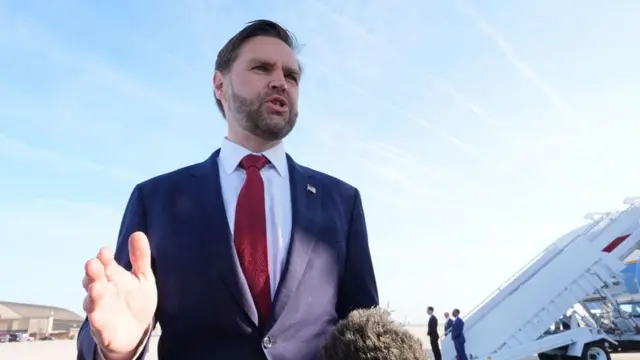
  17. US will extend open hand to Iran if they act in good faith, Vance says as he boards Air Force Twopublished at 13:40 BST 10 April
    Breaking

    Vance speaking holding one hand up in front of a place on tarmac. There's a mic boom that is fluffy in front of himImage source, Getty Images

    US Vice-President JD Vance has just boarded Air Force Two ahead of talks between the US and Iranian delegations in Pakistan.

    "We're looking forward to the negotiations", he said before getting on the plane, adding that the US is willing to "extend the open hand" if the Iranians act "in good faith". However, he added that if they "try to play us", the US won't be receptive.

    US President Trump has given him guidelines for the discussions, he said.

    The talks will take place in Islamabad, Pakistan, and are expected to begin on Saturday, White House press secretary Karoline Leavitt earlier announced.

    Vance will be joined by special envoy Steve Witkoff and Jared Kushner, but Islamabad is still waiting for the Iranian delegation to arrive, our correspondent in Pakistan reports.

  18. Israel says it struck Hezbollah site after rockets launched from Lebanonpublished at 13:22 BST 10 April

    While Pakistan is gearing up to welcome US and Iranian delegations for expected talks, the conflict between Israel and Hezbollah continues.

    A short while ago the Israel Defense Forces (IDF) says it detected rockets launched by Hezbollah from southern Lebanon to Israel.

    The IDF says that it struck the premises used to launch the rockets to "remove the threat".

    In a separate recent update, Israel's emergency service Magen David Adom says that no casualties have been reported following rocket fire towards northern Israel.

  19. Islamabad waiting for US and Iran delegations to arrivepublished at 13:09 BST 10 April

    Carrie Davies
    Reporting from Islamabad, Pakistan

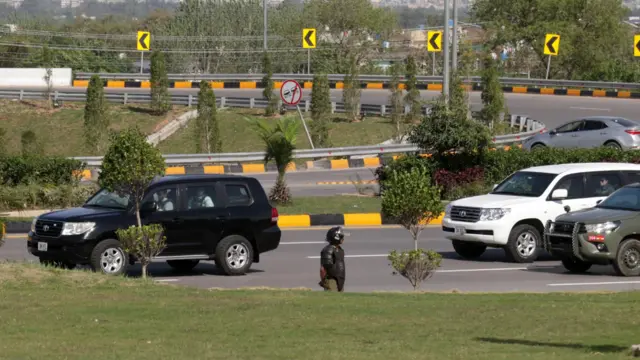
    A Pakistani security official stands guard as vehicles carrying US officials pass following their arrival at Nur Khan Airbase, ahead of talks involving US and Iranian delegations in Islamabad, Pakistan, 10 April 2026Image source, EPA/Shutterstock

    In Islamabad, the security cordon is extending.

    While the BBC was filming in the D-Chowk area of the city, near the President's House, the main crossroads in front of parliament, the police began to move TV crews back.

    A spokesman for the Islamabad police told the team that they expected the delegations to arrive shortly, although they did not confirm who would be arriving or when.

    Around the red zone – the area of the capital with the majority of government buildings and foreign embassies – has been closed off with barbed wire.

    There are an increased number of checkpoints in the city and less traffic on the streets. Police, army and paramilitaries are on the streets to provide security and international journalists are landing in the city.

    As yet there is no official confirmation that either of the delegations have arrived in the capital.

    Yesterday, Iran’s ambassador to Pakistan posted that their delegation would be landing that night, but deleted the post within an hour.

    There’s also been no official schedule announced by Pakistan, but the White House had previously said that the talks would take place on Saturday morning. Islamabad is waiting.

  20. A ceasefire, scheduled talks, continuing strikes: BBC reports across the Middle Eastpublished at 12:39 BST 10 April

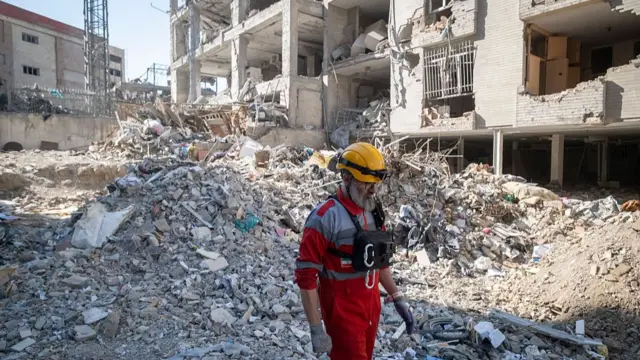
    A rescue team member walks through the rubble of a building in TehranImage source, NurPhoto via Getty Images
    Image caption,

    In Tehran, Iran, buildings have been reduced to rubble during the conflict

    A ceasefire between Iran and the US is in place and peace talks are expected this weekend, but strikes continue between Hezbollah and Israel.

    Throughout the latest developments, the BBC has been speaking to those affected and reporting across the region:

    In Iran, where fighting has been paused for two weeks, 15-year-old Ali - not his real name - tells the BBC's Fergal Keane that due to the war "even the smallest sound causes my brain to react very badly".

    "I should be able to study, to work and become an independent person in the future. [I should] not be constantly worrying about politics, living in stress, thinking about bombs falling…[with] endless fears," he says.

    In Lebanon, war rages on. The guns were supposed to have fallen silent, writes the BBC's Hugo Bachega, but just as the region was breathing a sigh of relief, Israeli jets conducted a 10-minute blitz across Lebanon.

    He's been reporting on the ground in the Lebanese capital Beirut, in the video below you can watch his latest report from the site of an Israeli airstrike:

    Media caption,

    BBC at the site of Israeli air strikes in Beirut

    In Israel, the BBC's Middle East correspondent Lucy Williamson reported from the scene of a strike in Haifa, northern Israel before the conditional ceasefire was agreed. Watch Lucy's report below.

    Analysis: Ceasefire or no ceasefire, the Middle East's reshuffling is not yet done, our international editor Jeremy Bowen writes, and the biggest obstacle to the success of talks between the US and Iran is the total absence of trust.

    Media caption,

    'Daily gamble of Russian roulette': BBC at site of Iran strike on Haifa, Israel