Summary

  1. Israel 'prepared to act forcefully' if attacked by Iran - defence ministerpublished at 15:54 BST 9 April
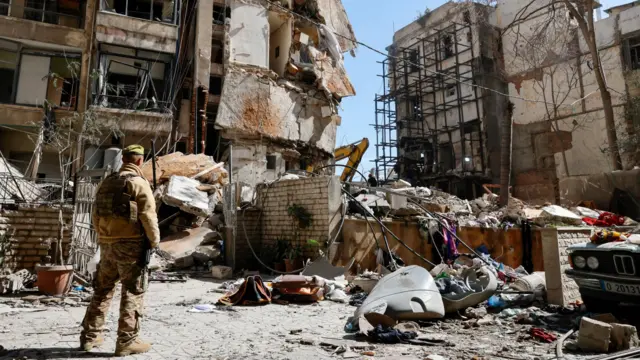
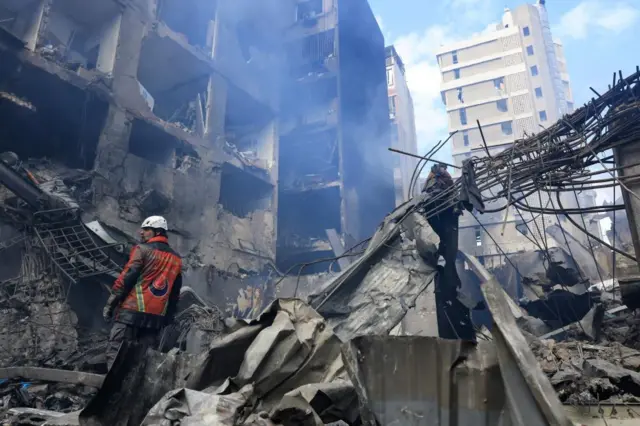
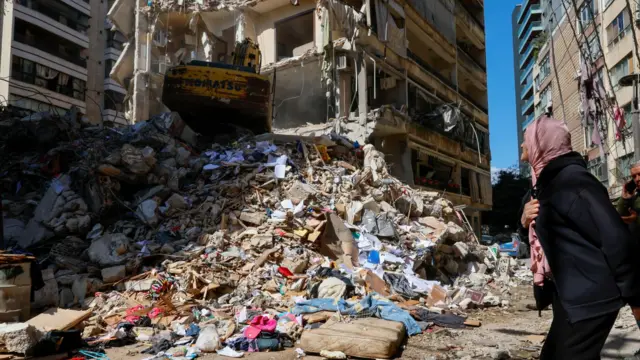
    A Lebanese army soldier stands next to a destroyed residential building the day after an Israeli airstrike in the Ain Mreisseh neighborhood of Beirut, Lebanon, 09 April 2026.Image source, EPA/Shutterstock
    Image caption,

    A Lebanese soldier stands next to a destroyed residential building in Beirut, the day after an Israeli airstrike

    Israel's Defence Minister Israel Katz says his country's operation in Lebanon has dealt a "very strong blow to Hezbollah's face, leaving it stunned and confused by the depth of the penetration and the scope of the blow".

    The defence minister says the Israel Defense Forces is "prepared and ready to act forcefully if Iran fires at Israel".

    As a reminder, Iranian officials have said that the Israeli strikes on Lebanon are a violation of the ceasefire agreement - and the president has warned Iran's hands will "remain on the trigger".

    Katz says that over 200 people, who he describes as terrorists, were killed on Wednesday in Lebanon, bringing the total number of those killed during the operation to over 1,400.

    Earlier, Lebanon's health ministry said 203 people were killed in Israeli strikes on Wednesday - and officials have said more than 1,700 people have been killed since Israel launched its latest campaign in Lebanon last month.

    Our reporter Carine Torbey, who is in Beirut, earlier described the tearful scenes outside a morgue where the relatives of those killed have just identified their loved ones.


  2. Pakistan says Lebanon's PM has requested support in stopping Israeli strikespublished at 15:35 BST 9 April

    Lebanon's Prime Minister Nawaf Salam has asked his Pakistani counterpart, Shehbaz Sharif, for his country's support in putting an end to Israeli strikes against Lebanon, according to a readout of a phone call between the pair released by Pakistan's Prime Minister's Office.

    Pakistan acted as a mediator for the US-Iran ceasefire agreement.

    The readout reports that Sharif told Salam he "strongly condemned Israel’s ongoing aggression".

    It says Salam "sought Pakistan’s support for bringing an immediate end to the attacks targeting Lebanon and its people".

  3. Iran's nuclear stance casts doubt over ceasefire leading to potential peace dealpublished at 15:20 BST 9 April

    Sebastian Usher
    Middle East analyst

    The head of Iran's nuclear agency has ruled out any restrictions on uranium enrichment, a key demand of the United States, adding to concerns that the current ceasefire may not result in a peace deal.

    It's unclear who's making the big decisions in Iran - after its leadership was decimated - but a number of top officials have been making comments that put in question the foundations on which the talks due to take place with the US in Islamabad this weekend are based - at least according to Washington.

    Throughout the war, the US and Israel have insisted that their key aim was to end Iran's ability to build a nuclear weapon for good.

    The US Defence Secretary Pete Hegseth has said that Iran must either hand over its enriched uranium or the US will take it.

    The remarks by the head of Iran's nuclear agency clearly contradict this - a preview of just how difficult negotiations are likely to be.

  4. Analysis

    Why did Israel act in Lebanon as it did yesterday at such a sensitive moment?published at 15:01 BST 9 April

    Daniel De Simone
    Reporting from Jerusalem

    A man in an orange safety jacket and helmet stands on the smoking ruins of a building hit by a strike.Image source, Reuters
    Image caption,

    A rescuer stands at the site of an Israeli strike carried out on Wednesday, in Al-Mazraa, Beirut

    One view is that President Trump could make Israeli Prime Minister Benjamin Netanyahu accept Lebanon’s inclusion in the Iran ceasefire deal, and that Israel was striking before that happens.

    Another view is Netanyahu resents the ceasefire and wants to continue the war with Iran, having failed to achieve key objectives such as regime change, and is therefore seeking to upend the fragile agreement by hitting Lebanon.

    Netanyahu has also set a core objective in Lebanon: removing the threat from Hezbollah, particularly to communities in northern Israel, which are targeted by rockets.

    Israel has sent in ground forces and has said it will stay south of the Litani River to create a "security buffer zone”. The result is an Israeli occupation of southern Lebanon, something that took place between 1982 and 2000.

    Israeli forces are destroying homes and villages in the area, where the Israel Defense Forces says Hezbollah fighters are active. Hundreds of thousands of people have been displaced, and Israel has said they will not be allowed to return until Hezbollah has been removed.

    But despite Israel’s battering of Hezbollah, the group retains the ability to strike Israel.

    There’s a real question about how realistic it is for Israel to meet its stated goal through military means alone, raising the prospect of an open-ended war and all the devastation that will bring.

    What’s clear is that Lebanon’s place in the Iran ceasefire deal will have to be quickly clarified.

  5. Lebanon needs a seat at the negotiating table, minister sayspublished at 14:55 BST 9 April

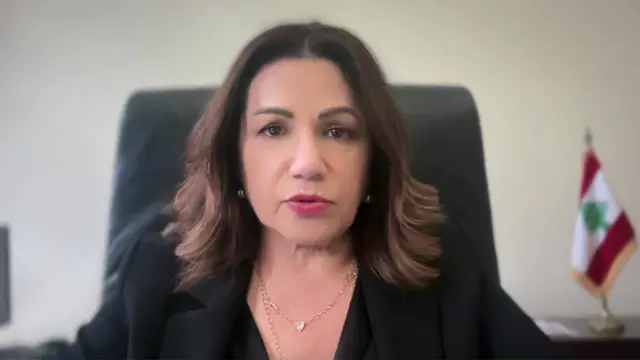
    Haneen Sayed, a woman with long brown hair and wearing a black blouse, speaking to camera

    Lebanon's social affairs minister tells the BBC it's important that Lebanon has "a seat at the table" to be able to negotiate a ceasefire agreement.

    Haneen Sayed says it is the country's understanding that "Lebanon was included in terms of the ceasefire" and that it's important for the government to "negotiate what kind of peace and ceasefire agreement is needed".

    She says that a complaint will be sent to the UN's Security Council about what she calls the "grave violations" of Wednesday's Israeli strikes in Beirut.

  6. Relatives in tears at Beirut morgue as they identify victims of Israeli strikespublished at 14:35 BST 9 April

    Carine Torbey
    BBC Arabic correspondent, in Beirut

    Warning: This post contains distressing details.

    In front of the morgue at the Rafic Hariri Hospital, in Beirut, relatives of people killed in the Israeli strikes are gathering.

    Many of them are in tears. They have just identified the bodies of their loved ones.

    Tens of unidentified bodies, or remains, were brought yesterday to this hospital.

    Tags show the different locations within Beirut that the Israeli military struck yesterday. A lot of them were residential areas, packed with people, struck without notice.

    It will take some time for the DNA results to be out. The wait and grief of the relatives are unimaginable.

  7. Iran warns of ceasefire violations as Israel orders fresh evacuations in Lebanon - a recappublished at 14:22 BST 9 April

    Rescuers work at the site of an Israeli strike in BeirutImage source, Reuters
    Image caption,

    Rescuers work at the site of an Israeli strike in Beirut on Wednesday

    • Iran's President Masoud Pezeshkian says deadly Israeli attacks on Lebanon "blatantly violate" the ceasefire agreement - and warns their hands will "remain on the trigger"
    • His comments come as the Israeli military issues fresh evacuation orders for residents in southern Beirut, a day after it was hit with heavy strikes
    • Lebanon’s health ministry says 203 people have been killed and more than 1,000 wounded in Wednesday's strikes
    • Israeli Prime Minister Benjamin Netanyahu has pledged to keep attacking the Iran-backed group Hezbollah "wherever necessary"
    • European countries - including the UK - have called for Israeli attacks in Lebanon to be halted, saying they should be covered by the ceasefire with Iran
    • Pakistan's high commissioner tells the BBC that he is confident both the US and Iran will be in Islamabad for talks this weekend to try to turn the two-week ceasefire into something more permanent
    • Elsewhere, Prime Minister Keir Starmer is visiting the Middle East, where he tells the UK's Gulf allies that Iran should not "hold the Strait of Hormuz to ransom"
  8. Israel issues evacuation order for parts of Beirutpublished at 14:04 BST 9 April
    Breaking

    Israel has ordered the evacuation of residents of several southern suburbs of the Lebanese capital Beirut, as it says it plans further strikes against Hezbollah "military infrastructure".

    Israel Defense Forces (IDF) spokesman Avichay Adraee tells residents that Israel "does not intend to harm you... therefore, out of concern for your safety, you must evacuate immediately".

    The areas listed under the evacuation order are: Haret Hreik, Ghobeiry, Al-Lilaki, Hadath, Borj el-Barajneh, Tahwitat al-Ghadir, Shiyyah and Al-Janah.

  9. Seeing war become the norm for family in Lebanon is 'unacceptable'published at 13:51 BST 9 April

    Barbara George
    BBC Newsbeat

    Man in white shirt stand on a concrete floorImage source, Elio Naoum

    Watching his home country of Lebanon “suffer” has been “heartbreaking”, Elio Naoum tells BBC Newsbeat.

    The 25-year-old lives in London, but most of his wider family are based in Beirut.

    “It's making me feel useless being so far away from it... watching your people suffer. There's not much you can do from abroad,” he says.

    “You're just expected to carry on with life, going to work and act like nothing's happening and your family back at home is calling you, trying to tell you what's happening. It takes a toll on you,” he says.

    He feels his cousins have become “numb” to the environment of war as they have been raised within it.

    “You're constantly worried about them. It's just become the norm which is unacceptable,” he says.

    Lebanese officials say more than 1,700 people have been killed since Israel launched its latest campaign in Lebanon last month.

    Israel has said its operations are aimed at weakening Hezbollah and achieving what it calls remaining military objectives.

  10. BBC Verify

    At least nine ships have crossed Strait of Hormuz since ceasefire, data showspublished at 13:29 BST 9 April

    By Joshua Cheetham

    There's continuing uncertainty about whether the Iranian government will allow ships to transit the Strait of Hormuz - more on that here.

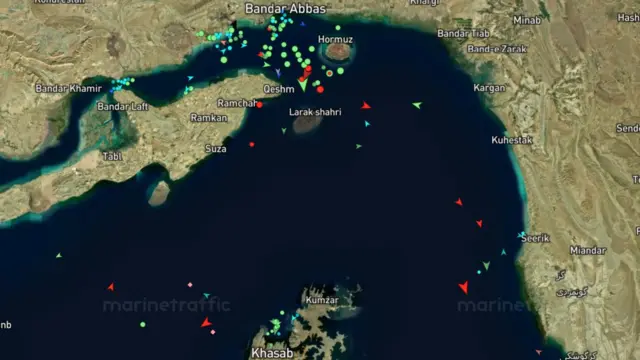
    BBC Verify is monitoring the limited flow of ships through the vital waterway.

    Analysis of vessel-tracking data on MarineTraffic shows at least nine ships - including two oil and chemical tankers - have crossed the strait since the ceasefire was announced on Tuesday night.

    Before the war an average of 138 ships passed through each day, according to figures from the multinational Joint Maritime Information Center.

    But the conflict has brought this to a near-standstill and around 800 ships are stuck in the region, according to Richard Meade, editor-in-chief of maritime news outlet Lloyd’s List.

    A screenshot of the Strait of Hormuz from ship-tracker MarineTraffic, it shows of ships either side of the Strait, which runs between Iran and Oman, and has almost no vessels inside itImage source, MarineTraffic
  11. Pakistan hopes US and Iran will find some common ground if they meetpublished at 13:12 BST 9 April

    Caroline Davies
    Pakistan correspondent

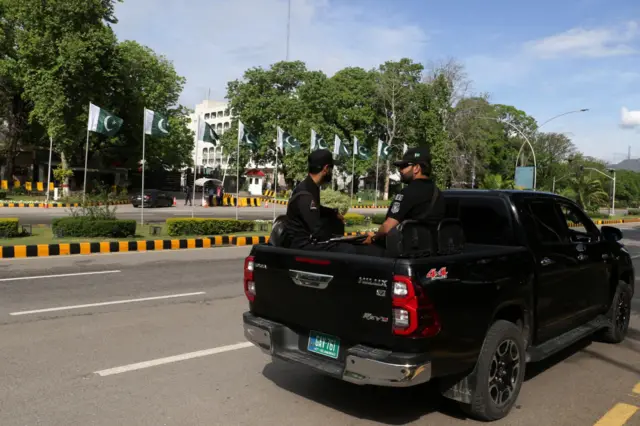
    Pakistani security officials drive through the Red Zone in back of black pickup truckImage source, EPA/Shutterstock
    Image caption,

    Security has been beefed in Islamabad's Red Zone ahead of the planned visit of US and Iranian delegations

    Preparations are well under way for talks in Islamabad - there is a local holiday today and tomorrow meaning schools and offices are closed.

    Roads around the city’s Red Zone - where many government buildings and embassies are based – are also shut.

    The ceasefire Pakistan brokered has been repeatedly described as "fragile"; cracks have already appeared, not least over Israeli strikes on Lebanon.

    In his post announcing the agreement, Pakistan’s prime minister said both sides and their allies had agreed to "an immediate ceasefire everywhere including Lebanon". Israel and the White House have said that it was not included.

    What has happened in Lebanon is clearly a concern for Pakistan - both the foreign minister and prime minister have said as much. Yesterday Pakistan’s prime minister called for restraint to allow for diplomatic efforts.

    Pakistan hopes that despite the wide gap between the US and Iran's public positions, that if they are able to meet in Islamabad they will be able to find some common ground.

  12. Pakistan high commissioner hopeful of talks making progresspublished at 13:01 BST 9 April

    James Landale
    Diplomatic correspondent

    The ceasefire between the US and Iran may be on shaky ground, with substantial disagreements over what it includes.

    But Dr Muhammad Faisal – Pakistan’s high commissioner in London – tells me he is very confident both sides will be in Islamabad this weekend to try to turn the two-week pause in fighting into something more permanent.

    He insists the ceasefire is holding “reasonably well” despite violations and insists it does cover Lebanon, something the US has denied amid continuing Israeli attacks.

    The high commissioner admits there is a “lot of distance” between both sides and could not confirm if the delegations would negotiate face to face on Saturday.

    But he says he is confident and hopeful of the talks making progress because there is a desire on all sides to find a solution.

  13. Iran's president warns their hands 'remain on the trigger' and accuses Israel of ceasefire violationpublished at 12:58 BST 9 April

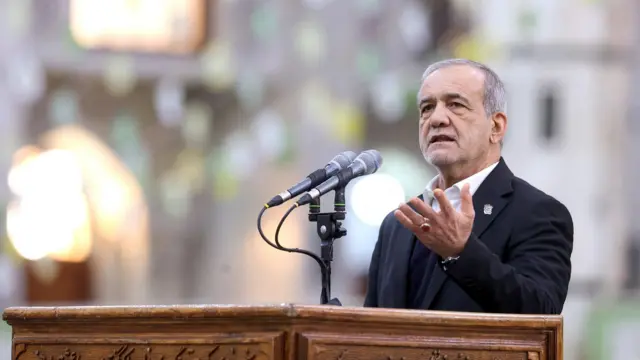
    Iranian President Masoud Pezeshkian speaks into microphoneImage source, Iran's Presidential website/WANA (West Asia News Agency)/Handout via REUTERS

    The Iranian president says Israeli attacks on Lebanon "blatantly violates" the ceasefire agreement.

    "Such actions signal deception and non-compliance, rendering negotiations meaningless," Masoud Pezeshkian says in a post on X.

    He says Iran's hands will "remain on the trigger" and that the country will "never forsake its Lebanese brothers and sisters".

    The comments come a day after the Israeli military said it had hit Lebanon with more than 100 air strikes, on what it describes as Hezbollah targets. Israeli Prime Minister Benjamin Netanyahu says Israel will continue to strike Hezbollah "wherever necessary".

    Meanwhile, the speaker of the Iranian parliament warns that "ceasefire violations carry explicit costs and strong responses".

    Mohammad-Bagher Ghalibaf says Lebanon is an "inseparable part of the ceasefire", and that there is "no room for denial and backtracking".

    "Extinguish the fire immediately," he says.

  14. Over 3,000 people killed in Iran since start of war, local media reportspublished at 12:35 BST 9 April

    Iranian media, citing the country's Forensic Medicine Organisation chief Abbas Masjedi Arani, is reporting that more than 3,000 people have been killed in Iran since the conflict began on 28 February.

    As of 7 April, US-based Human Rights Activists News Agency (HRANA) says 1,701 civilians have died, including at least 254 children.

    HRANA also reports that there have been 1,221 military fatalities and a further 714 unclassified deaths since the conflict began.

    It's difficult for news organisations to get information out of Iran. International news organisations are often refused visas to Iran, which severely limits their ability to gather information there. There's also a long-running internet blackout which has now entered its 41st day, according to the internet monitoring site NetBlocks.

  15. Aftermath of Israeli strikes in Beirut after Lebanon declares day of mourningpublished at 12:11 BST 9 April

    These are the latest images reaching us from Beirut following yesterday's Israeli strikes on the Lebanese capital.

    According to Lebanon's health ministry, 203 people were killed and over 1,000 wounded on Wednesday across the country.

    The Israeli military said more than 100 air strikes were carried out on what it described as Hezbollah targets.

    Lebanese President Joseph Aoun described it as a “massacre”, and the government announced that today would be a public holiday to mourn those who were killed.

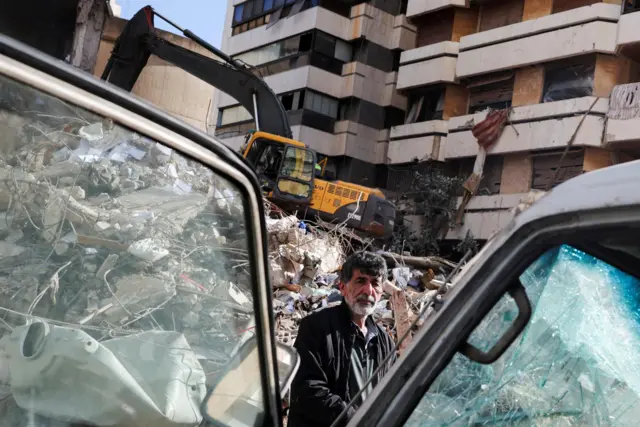
    A woman watches as a bulldozer clears the rubble of a destroyed building the day after an Israeli airstrike in the Ain Mreisseh neighborhood of Beirut, LebanonImage source, EPA/Shutterstock
    Rescuers stand at the site of an Israeli strike carried out on Wednesday, in Al-Mazraa in Beirut, Lebanon, April 9, 2026Image source, Reuters
    A man stands near a damaged vehicle and rubble at the site of an Israeli strike carried out on Wednesday, in Tallet El Khayat in Beirut, LebanonImage source, Reuters
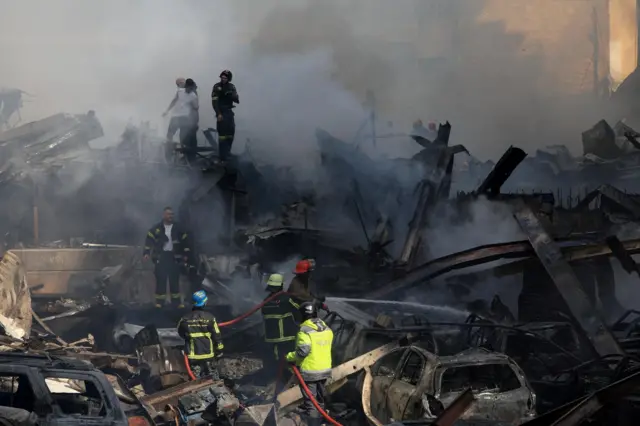
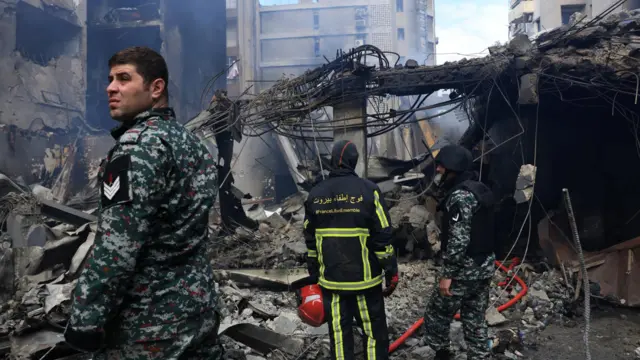
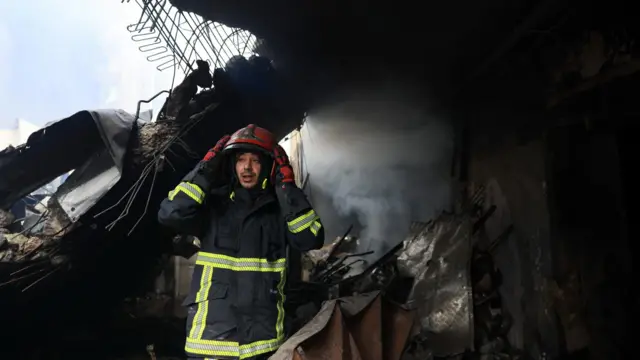
    A firefighter looks on at the site of an Israeli strike carried out on Wednesday, in Al-Mazraa in BeirutImage source, Reuters
  16. A moment is likely to come when Washington asks Israel to refrain from further violence in Lebanonpublished at 11:37 BST 9 April

    Paul Adams
    Diplomatic correspondent

    Israel’s escalation in Lebanon yesterday was not surprising.

    US officials, from the president down, insist that Lebanon was never part of the original ceasefire proposal, contrary to the views of Iran and the man who brokered the deal, Pakistan’s prime minister, Shehbaz Sharif.

    But everyone knows that continued fighting in Lebanon has the potential to wreck negotiations and plunge the region back into war.

    So unless that’s a prospect Donald Trump is happy with, a moment is likely to come when Washington asks Israel, privately or publicly, to refrain from further violence.

    Israel recognises that the clock may be running down on its campaign in Lebanon so decided yesterday to up the tempo of its attacks while it still has US diplomatic cover.

  17. 'Not in Britain's national interest' to deploy all military assets to Middle East - Healeypublished at 11:23 BST 9 April

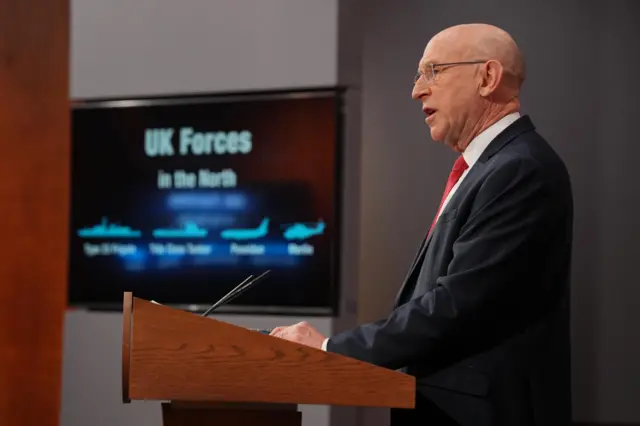
    Defence Secretary John Healey delivers a statement on recent UK operational activity at 9 Downing StreetImage source, PA

    Healey says it is not in "Britain's national interest" to deploy a large amount of UK military assets to the Middle East in response to the US-Israel war with Iran.

    "When a crisis erupts nosily and dangerously, as it has done in the Middle East, I understand people are questioning why all UK military assets and personnel have not been deployed to deal with it," he says.

    "But that is not in Britain's national interest."

    He says the "greatest threats are often unseen and silent", adding that as the demands on defence rise the UK must "deploy our resources to best effect".

  18. UK condemns escalation in Lebanon, Healey tells BBCpublished at 11:18 BST 9 April

    In response to a question from the BBC's defence correspondent Jonathan Beale, about whether Healey thinks the US-Iran ceasefire can hold, Healey says the UK will "do our bit to try and strengthen it".

    "We welcome the ceasefire, we want it to hold," he says.

    "We condemn the escalation in Lebanon. We want the Israel Lebanon conflict to be brought within the terms of the ceasefire."

  19. UK defence secretary gives military update at Downing Streetpublished at 11:04 BST 9 April

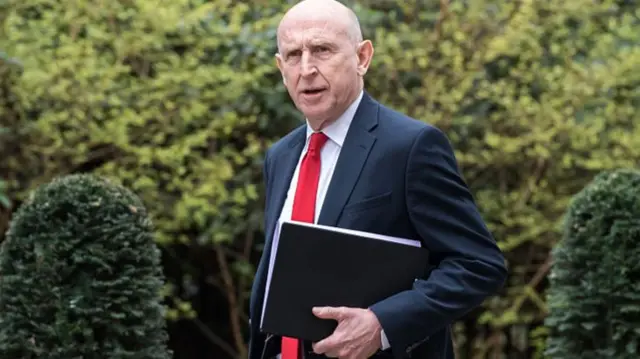
    Secretary of State for Defence John Healey arrives in Downing Street to attend the weekly Cabinet meeting in London, United Kingdom on March 24, 2026.Image source, Getty Images

    UK Defence Secretary John Healey is giving an update on the UK's military operations at Downing Street.

    The news conference is not expected to focus on the conflict in the Middle East, but we're poised to listen across for any developments.

    We'll be following live and providing regular updates on our separate live page here.

  20. Iranian ambassador deletes post about US-Iran talks in Pakistanpublished at 10:56 BST 9 April

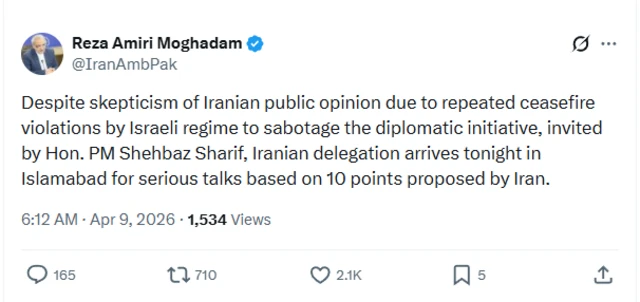
    Iran's ambassador to Pakistan has deleted a post on X in which he said an Iranian delegation was heading to Islamabad today to begin negotiations with the US.

    The talks are scheduled to be held on Saturday with US Vice-President JD Vance.

    In the post, Reza Amiri Moghadam said negotiations would be "based on 10 points proposed by Iran". As we've reported, the US and Iran have conflicting accounts of exactly what those points are.

    The ambassador did not explain why the post had been deleted.

    A screenshot of a post on X by Reza Amiri Moghadam. It reads: "Despite skepticism of Iranian public opinion due to repeated ceasefire violations by Israeli regime to sabotage the diplomatic initiative, invited by Hon. PM Shehbaz Sharif, Iranian delegation arrives tonight in Islamabad for serious talks based on 10 points proposed by Iran."Image source, @IranAmbPak/X