Summary

  1. Analysis

    Trump ramps up rhetoric after striking optimistic tone in previous dayspublished at 22:33 BST 19 April

    Simi Jolaoso
    Washington DC correspondent
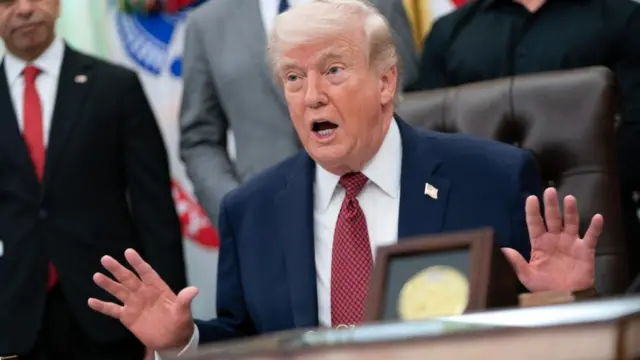
    US President Donald TrumpImage source, EPA

    President Trump has publicly struck an optimistic tone this past week, suggesting a deal with Iran is within reach.

    But today, he has dialled up his rhetoric, again threatening to "knock out" Iran's power plants and bridges.

    It appears his administration's strategy is to continue applying economic pressure on Iran - through the naval blockade and additional sanctions - to get a deal Trump's satisfied with.

    His latest threat raises the stakes and risks creating a more volatile atmosphere, when both the negotiations and ceasefire appear fragile.

    It’s still not confirmed whether Iran will join the talks - the coming days could be critical in deciding if diplomacy can hold.

    The White House has framed this next round of talks as a potential final diplomatic off-ramp, before a return to a full-scale regional war.

  2. 'Trump is threatening massive war crimes,' says former Human Rights Watch chiefpublished at 22:17 BST 19 April

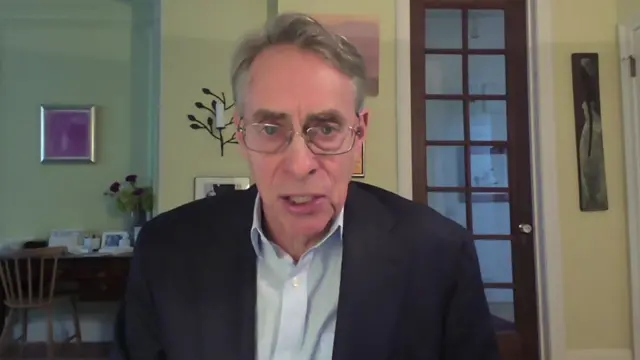
    Kenneth Roth

    As we've reported earlier, US President Donald Trump has again threatened to strike electricity plants and bridges in Iran if a deal is not reached.

    Former Human Rights Watch chief Kenneth Roth says this would amount to a war crime.

    "Trump is threatening massive war crimes, it's as simple as that," Roth tells the BBC News channel.

    "He may say he doesn't follow international humanitarian law, but the US government and the rest of the world does purport to, and humanitarian law prohibits targeting civilian objects like power plants or bridges," Roth says.

    Roth says Trump may argue that bridges and power plants are "so-called dual-use objects" because they are also used by soldiers, but "that's not the end of the story".

    "Humanitarian law also requires that even a military target not be fired upon if the harm to civilians would be disproportionate."

    US ambassador to the UN Mike Waltz has said it is a "false, fake and ridiculous notion" to suggest this could be a war crime, and the infrastructures are "legitimate military targets".

  3. BBC Verify

    What do we know about Iranian-flagged ship Touska?published at 21:55 BST 19 April

    By Shayan Sardarizadeh

    As we reported earlier, President Donald Trump said in a Truth Social post that the US Navy fired at an Iranian-flagged cargo ship named Touska in the Gulf of Oman.

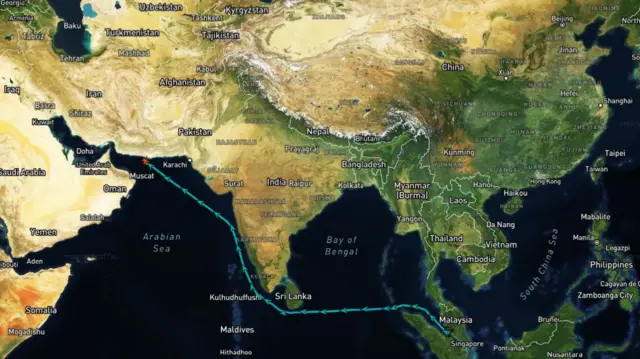
    According to data from MarineTraffic, the Touska left Port Klang in Malaysia on 12 April and headed towards the Gulf of Oman.

    Based on its Automatic Identification System (AIS) data, the Touska was around 40 nautical miles from the port of Chabahar in south-east Iran at around 13:00 GMT today before stopping, turning back, drifting slightly east and then coming to a halt.

    The container ship is just over 290m long and with a draught of 13m. It appears to have been fully or partially loaded with cargo.

    The Touska is on the US Treasury's list of sanctioned ships, external.

    A map showing the movement of Touska since 12 AprilImage source, MarineTraffic
  4. Tehran has 'no plans for now to participate' in next round of talks - state mediapublished at 21:38 BST 19 April

    Ghoncheh Habibiazad
    Senior reporter, BBC Persian

    Iranian officials say Tehran has "no plans for now to participate" in the next round of negotiations with the US, according to Iran's state TV news channel.

    The channel quotes officials as saying that "continuation of the so-called naval blockade, violation of the ceasefire and threatening US rhetoric" have slowed progress in the talks.

    This matches what other Iranian outlets have reported today.

    But so far, no named Iranian official has confirmed or denied whether Iran will join a new round of talks, even though hours have passed since Trump announced a US delegation will be in Pakistan soon.

    This does not necessarily mean Iran will not take part. We'll bring you more updates on this when we have them.

  5. 'You cannot double down on blockade and pretend to pursue diplomacy' - Iranian ambassador to Pakistanpublished at 21:13 BST 19 April

    Reza Amiri Moghadam, Iran's ambassador to Pakistan, has posted on social media, saying: "You cannot keep violating the international law, double down on your blockade, threaten Iran with further war crimes, insist on unreasonable demands, pace out with rhetoric and pretend to be pursuing 'Diplomacy'."

    He adds that as long as the naval blockade remains, "fault lines" remain.

  6. 'We have full custody of the ship' - Trumppublished at 20:41 BST 19 April

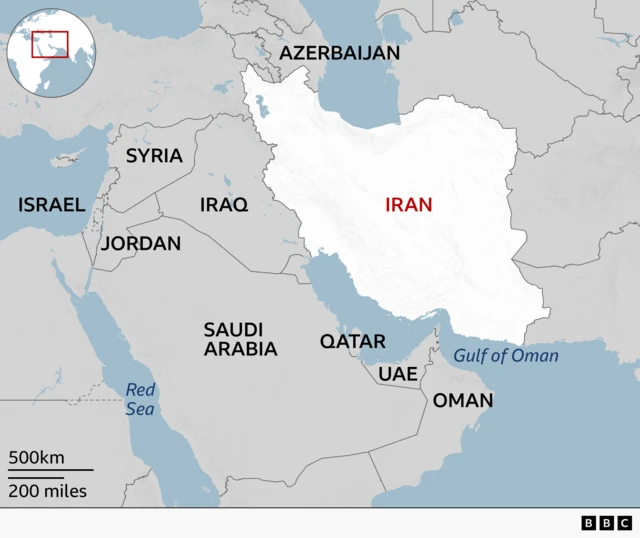
    A map showing the locaiton of the Gulf of Oman

    More from Donald Trump, who has just posted on his Truth Social platform, external about US Marines having "full custody" of a cargo ship he says tried to get through the US blockade of Iranian ports on Sunday.

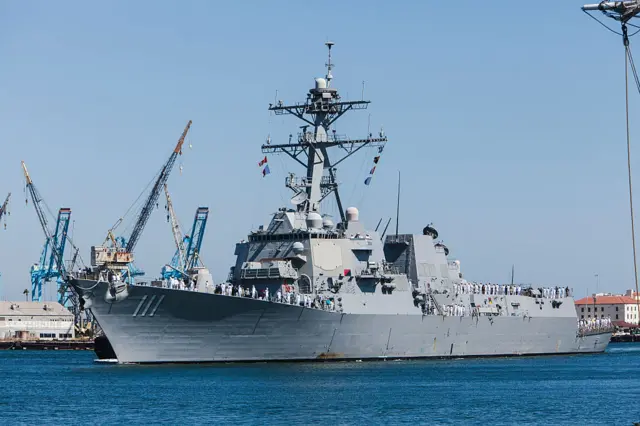
    He writes that the ship, Touska, was intercepted in the Gulf of Oman by the USS Spruance and was given "fair warning to stop".

    "The Iranian crew refused to listen, so our Navy ship stopped them right in their tracks by blowing a hole in the engineroom," Trump says.

    He adds that the ship is under US Treasury sanctions "because of their prior history of illegal activity" and that marines "are seeing what's on board".

    Iran has yet to confirm the incident.

    A file photo of the US Navy ship - it's a large grey warshipImage source, Corbis via Getty Images
    Image caption,

    The USS Spruance, pictured in the Port of Los Angeles in 2014

  7. US intercepts and boards Iranian-flagged cargo ship that tried to get through blockade - Trumppublished at 20:31 BST 19 April
    Breaking

    Trump says US forces intercepted an Iranian-flagged cargo ship, issued a warning, "stopped them right in their tracks by blowing a hole in the engine room", and have taken control of the vessel, after it tried to get through the US blockade.

  8. Iranian MP says new law setting terms for passing the strait will 'soon become law'published at 20:09 BST 19 April

    Ghoncheh Habibiazad
    Senior reporter, BBC Persian

    The head of the Iranian parliament's construction committee, Mohammadreza Rezaei-Kouchi, has said on state TV that Iran's parliament has worked on a proposal for the management of the Strait of Hormuz which, according to him, will "soon become a law".

    When it comes to the Iranian constitution, a proposal must go through several stages before becoming a law, but these can be fast-tracked.

    Rezaei-Kouchi has said that the proposal has 10 clauses, which include:

    • The passage of cargo belonging to or associated with Israel will be "strictly prohibited"
    • Countries "hostile to Iran" will not be allowed transit unless authorised by the Supreme National Security Council, Iran’s top security body
    • "Hostile countries that have caused damage" to Iran during the war will not be permitted passage "until they compensate" Iran

    It's not clear if the proposal will become law, or how long that would take, but earlier this month, a presidential aide also suggested the Strait of Hormuz could reopen only under a new legal framework involving transit fees to compensate for war damage.

  9. Two cruise ships pass through Strait of Hormuz, operator Tui sayspublished at 19:57 BST 19 April

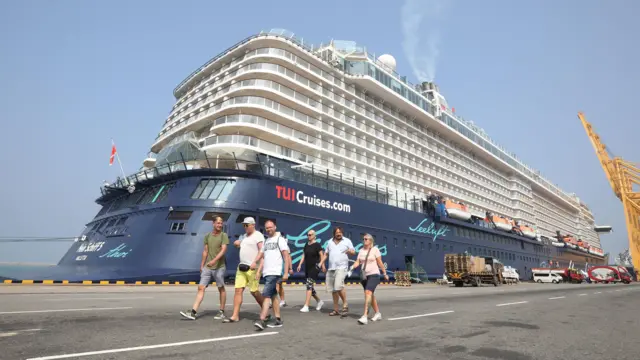
    Tourists walk in front of huge cruise ship which is docked at portImage source, EPA/Shutterstock
    Image caption,

    The Mein Schiff 5 pictured in 2022

    Travel company Tui has confirmed that two of its cruise ships successfully navigated through the Strait of Hormuz.

    In an update on its website, shared on Sunday, Tui says "Mein Schiff 4 and Mein Schiff 5 have successfully passed the Strait of Hormuz", but did not specify when. The ships are now heading towards the Mediterranean, it says.

    "The passage took place based on the relevant coordination and approvals from the authorities, in a controlled manner and with careful consideration of the security situation," it says.

    It's unclear whether passengers were aboard the vessels, and TUI thanks "captains and crews" who "enabled the safe passage with great professionalism and prudence".

    As we've been reporting, Marine Traffic tracker sites - which rely on ships sharing their locations - have shown very little movement through the strait today, with Iran saying the waterway remains closed.

  10. 'It's not over yet,' Netanyahu says when speaking about Iranpublished at 19:48 BST 19 April

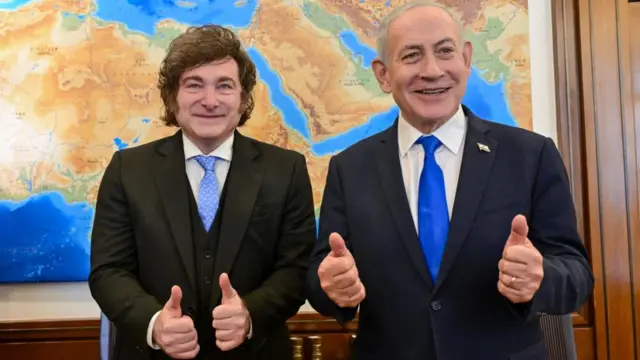
    Israeli Prime Minister Benjamin Netanyahu has been speaking about Iran while addressing the media after a meeting with Argentine President Javier Milei in Jerusalem.

    "We are in a time of great challenge and great consequence. We have been engaged with the United States in a battle against the great tyranny of Iran," he says. "We have achieved enormous things. It's not over yet, and any moment could bring us new developments."

    Israeli Prime Minister Benjamin Netanyahu (R) and Argentine President Javier Milei gesturing during their meeting in JerusalemImage source, ISRAELI GOVERNMENT
    Image caption,

    Javier Milei (L) and Benjamin Netanyahu (R) in Jerusalem today

  11. Pakistan says PM has phone call with Iran's presidentpublished at 19:19 BST 19 April

    Pakistan's Prime Minister Shehbaz Sharif spoke with Iran’s President Masoud Pezeshkian on Sunday evening, according to a statement from Sharif’s office.

    The statement doesn’t mention any further talks between Iran and the US.

    It says the 45-minute phone call included "detailed exchanges on the current regional situation", and Sharif thanked Pezeshkian for sending a delegation to talks in Islamabad earlier this month.

    Sharif says Pakistan will "remain fully committed to its honest and sincere efforts to advance regional peace and security".

    For context: Earlier today, Donald Trump said his representatives will be in Pakistan on Monday for talks about the Iran war. Iran's state media, however, say reports about fresh talks with the US are "not true". We are still waiting for an official response from Iranian authorities.

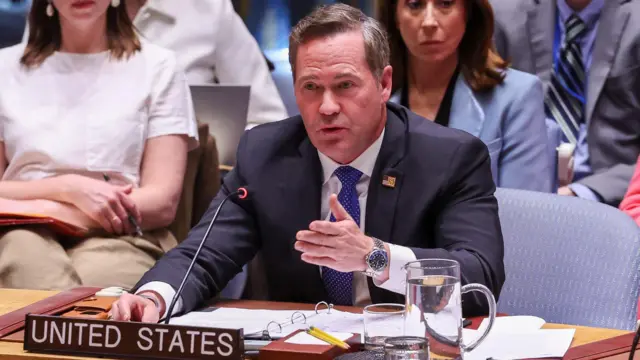
  12. US ambassador to UN denies attacking IRGC-run power plants is a war crimepublished at 19:05 BST 19 April

    Mike Waltz at a table in a dark suit with a 'United States' board in front of himImage source, EPA/Shutterstock

    Earlier today, US President Donald Trump repeated his threats to strike Iranian power plants and bridges if a deal with Iran is not reached.

    US Ambassador to the UN Mike Waltz tells BBC's US partner CBS that it is a "false, fake and ridiculous notion" that attacking this infrastructure is "some type of war crime", arguing that bridges and power plants run by the Islamic Revolutionary Guard Corps (IRGC) are "legitimate military targets".

    In the CBS interview, Waltz also said he is confident Iran will "finally give up their obsession with having a nuclear weapon".

    Iran has consistently said its nuclear development is peaceful and that it has never sought to develop a nuclear weapon. Experts have previously warned that Iran has enriched uranium to levels far beyond those needed for energy generation.

    Our correspondent has more on whether attacks on energy plants and bridges would constitute a war crime.

  13. Iranian MP warns of 'renewed military operation' against Iranpublished at 18:41 BST 19 April

    Ghoncheh Habibiazad
    Senior reporter, BBC Persian

    Mahmoud Nabavian, an Iranian MP who was part of the delegation for recent talks between Washington and Tehran in Islamabad, has warned of a "renewed military operation" against Iran.

    He said on social media: "The arrival of enemy equipment in the region, alongside claims of a naval blockade of Iran, similar to the negotiation process and assertions that the war has ended are nothing but a deception. It suggests the enemy may be preparing to resume military operations."

    In another post, he shared a screenshot of Trump’s post on Truth Social, saying Trump has "threatened Iranian people" and warned that if an attack happens, Iran "will destroy all economic interests and infrastructure belonging to America, the regional energy [infrastructure]" and Israel.

    Iran remains under a near-total internet blackout, but some officials, pro-establishment users, journalists and academics have been granted access and are active on X.

  14. Reports about fresh talks in Pakistan 'not true' - Iranian state mediapublished at 18:11 BST 19 April

    Iran's state news agency IRNA says reports about a second round of talks with the US in Pakistan are "not true".

    It accuses the US of making "excessive" demands, contradicting itself and frequently changing positions. IRNA says this, along with the US blockade of Iranian ports and "threatening rhetoric", has "so far hindered the progress of the negotiations".

    "In these circumstances, there is no bright prospect for fruitful negotiations," it says in a post on Telegram, but does not cite any official or institution.

    This comes after messages from two Iranian outlets linked to the Islamic Revolutionary Guard Corps, which have also cast doubt on Iran's participation.

    It's not yet been confirmed whether Iranian officials will take part in the talks, and no named official has clarified Iran's position.

  15. Trump says 'no more Mr Nice Guy' as US delegation set to return to Islamabad - recappublished at 18:02 BST 19 April

    Here's the latest:

    US President Donald Trump says a delegation is being sent to Pakistan for talks with Iran. The team includes JD Vance, Steve Witkoff and Jared Kushner.

    Iran has not yet confirmed whether it will take part in a new round of talks, although Pakistan is already preparing to host the event.

    Trump has also renewed his threats to destroy Iranian infrastructure if talks are not successful, saying there will be "no more Mr Nice Guy".

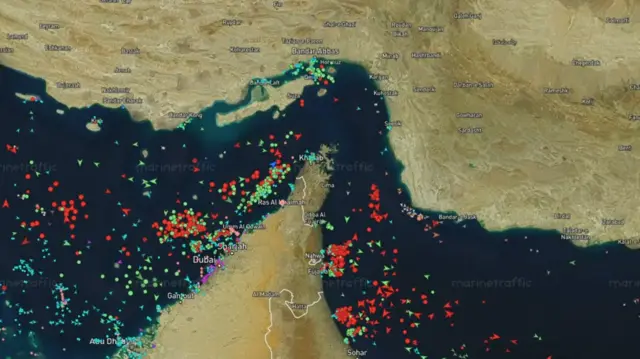
    The Strait of Hormuz remains at a standstill after some ships came under fire from Iran yesterday.

    A maritime map of the area around the Strait of HormuzImage source, MarineTraffic
    Image caption,

    Area around Strait of Hormuz - screenshot taken at about 16:30 GMT

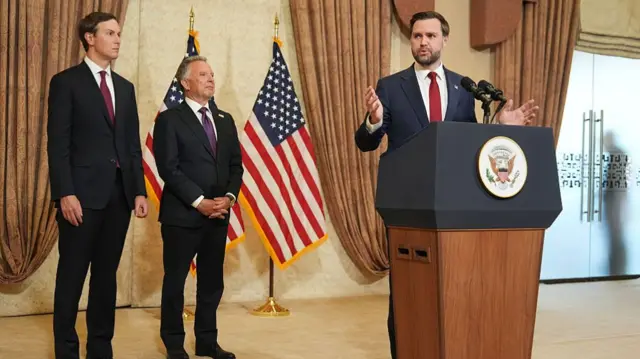
  16. Who are the US representatives to travel to Pakistan?published at 17:33 BST 19 April

    Jared Kushner, Steve Witkoff and JD Vance stand next to a podium in PakistanImage source, Getty Images
    Image caption,

    Jared Kushner (L), Steve Witkoff (C) and JD Vance (R) left Islamabad peace talks empty-handed last time

    The US team heading to Pakistan are no strangers to negotiation.

    Vice-President JD Vance

    After joining the previous round of talks with Iran in Pakistan a week ago, Vance said the US team left with a "very simple proposal".

    "We'll see if the Iranians accept it."

    Special Envoy Steve Witkoff

    A real estate magnate and Donald Trump's golf partner, Witkoff has helped with negotiations between Hamas and Israel in Gaza.

    He has also played a key role in US talks with Russia over the war in Ukraine.

    Special Envoy Jared Kushner

    Kushner, Trump's son-in-law, is known for his international business and property development.

    Like Witkoff, Kushner has also acted as a mediator in Ukraine peace talks.

  17. Iran yet to confirm participation in fresh talks in Pakistanpublished at 17:04 BST 19 April

    Ghoncheh Habibiazad
    Senior reporter, BBC Persian

    It’s been more than three hours since Donald Trump announced that US representatives are heading to Pakistan for negotiations.

    But so far, no named Iranian official has confirmed or denied whether Iran will take part in a new round of talks.

    Meanwhile, two Iranian outlets affiliated with the Islamic Revolutionary Guard Corps (IRGC) have cast doubts about Iran’s participation.

    Tasnim News Agency said that the Iranian team has emphasised that, as long as there is a US blockade, it will not join the talks.

    Fars News Agency, quoting Tasnim and an unnamed source, said Iran has yet to decide whether it will join the next round. However, Fars described the overall situation as “not positive”.

    This does not necessarily mean Iran will not take part. We’re still waiting for a named official to clarify their position.

  18. The strait closed, Trump's threats and US-Iran negotiations - a timelinepublished at 16:31 BST 19 April

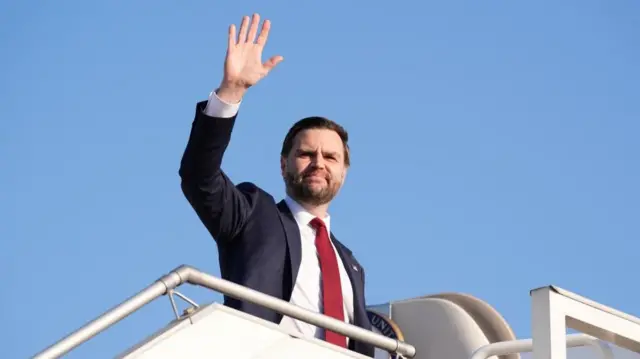
    Vance waves from atop a staircase leading to a planeImage source, Reuters
    Image caption,

    US Vice-President JD Vance leaving Pakistan after talks with top Iranian officials end without a deal

    28 February: The US and Israel launch strikes on Iran, as diplomatic talks collapse. The first reports of commercial ships coming under attack circulate the next day.

    2 March: An Iranian official says Iran will "set fire to anyone who tries to pass through" the Strait of Hormuz - effectively closing one of the world's major waterways.

    6 March: Trump says there will be no deal "except unconditional surrender" of Iran.

    21 March: Trump sets a deadline, threatening to target Iran’s energy infrastructure unless it agrees to open the strait.

    23 March: Trump postpones his deadline, citing "productive conversations" - this is followed by further postponements and more threats.

    7 April: Trump warns "a whole civilisation will die" if the strait is not opened before another deadline. Overnight, Pakistan, acting as mediator, announces a two-week ceasefire between the US and Iran for further talks.

    11 April: Top officials from both sides, including US Vice-President JD Vance and Iranian Foreign Minister Abbas Araghchi, meet in Pakistan.

    12 April: After 21 hours the talks in Pakistan end without resolving key issues. Trump announces a blockade of Iranian ports.

    17 April: Iran’s foreign minister says the strait will remain open for the rest of the ceasefire. Trump says the US blockade will continue.

    18 April: Iran’s Islamic Revolutionary Guard Corps blocks the strait again - two merchant ships report attacks. Trump says "very good conversations" are happening but the US will not be "blackmailed" over the waterway.

    Today: Trump announces his representatives, headed by Vance, will return to Pakistan on Monday for talks. He renews his threat to destroy every power plant and bridge in Iran if it does not agree a deal. The Iranian leadership is yet to confirm if it will send representatives to Islamabad.

  19. JD Vance to head US negotiating team in Pakistan, White House official tells BBCpublished at 16:06 BST 19 April
    Breaking

    A White House official tells the BBC that US Vice-President JD Vance will travel to Islamabad with Donald Trump's advisers Steve Witkoff and Jared Kushner for talks.

    It still isn't clear if Iran will be participating in the talks, or who will make up that negotiating team if it does travel to Pakistan. When we hear more, we'll share it right here.

  20. Analysis

    Is Trump threatening to commit a war crime?published at 15:52 BST 19 April

    Tom Bateman
    US State Department correspondent

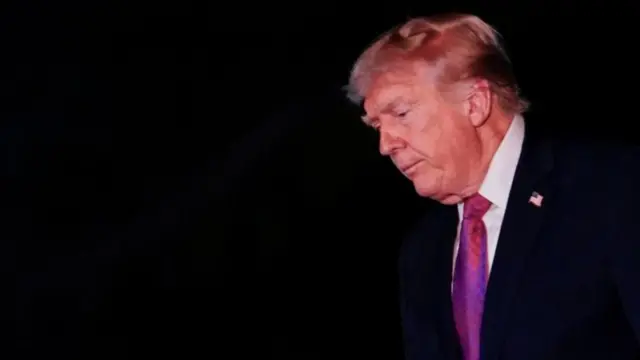
    Donald Trump looks down against a black background, wearing a suit with a bright purple tieImage source, Reuters

    In a Truth Social post earlier, the US president again threatened to hit civilian infrastructure in Iran if a deal is not reached. It's not the first time he's suggested hitting bridges and power plants - here's what to know.

    Donald Trump's threat to blow up electricity plants and bridges in Iran would amount to a threat to commit potential war crimes, according to international treaties and conventions on the laws of war.

    The deliberate destruction of energy infrastructure could have a devastating effect on civilian life - even if the plants are also argued to have a military or government purpose.

    Luis Moreno Ocampo, founding chief prosecutor of the International Criminal Court (ICC) - to which neither the US nor Iran are party - told me earlier this month when Trump made similar threats that bombing of Iranian power plants, as well as attacks by both Iran and Israel on energy infrastructure, would not amount to legitimate targets.

    Under the Rome Statute, which established the ICC, "intentionally directing attacks at civilian objects... which are not military objectives" is a war crime, Moreno Ocampo said.

    White House Press Secretary Karoline Leavitt was asked about this issue of potential war crimes and rejected the notion.

    "Of course, this administration and the United States armed forces will always act within the confines of the law.

    "But with respect to achieving the full objectives of Operation Epic Fury, President Trump is going to move forward unabated. And he expects the Iranian regime to make a deal with the administration."

    Trump himself said in a newspaper interview earlier this year he didn’t “need” international law and that he was limited only by his own morality. “My own mind,” he said, was “the only thing that can stop me”.