Summary

  1. Israel strikes operatives in Lebanon it accuses of breaching ceasefirepublished at 18:16 BST 20 April

    Israel's air force says it has killed "terrorists" it says violated the ceasefire in southern Lebanon.

    The air force says the two incidents occurred in the Bent Jbeil area, with the third taking place in the Litani area.

    It says the targeted operatives were "within the forward defense line area, and approached the forces in a manner constituting an immediate threat".

    Israeli forces have set up what they call a “buffer zone” extending about 10 kilometres into Lebanese territory, despite Lebanon demanding a full withdrawal.

  2. Will Iran attend talks in Islamabad?published at 17:32 BST 20 April

    Lyse Doucet
    Chief international correspondent, in Iran

    "So far.” That's the important caveat in the statement from Iran’s foreign ministry spokesman.

    “So far….we have no plans for the next round of negotiations...”

    That leaves the door open for a last-minute decision to travel to neighbouring Pakistan – it’s just a short flight away.

    But Tehran has been put in a tight spot. Even before this incident in the Strait of Hormuz, Iranian media had reported that no decision was made to go to Islamabad as long as the US naval blockade of its ports was in force.

    Now one of its vessels has been boarded and seized by the US Navy, for the first time during this crisis – what Iran calls an act of piracy and a ceasefire violation.

    Sources say Iran is also concerned that not enough progress has been made on the agenda for the next high-level, high-stakes negotiations.

    President Trump likes quick deals and likes making demands; Iran has always played a long game of give and take.

    Whether they can find a middle ground, with both sides ready to make the tough compromises, still isn’t certain.

  3. Lebanon's state-run news agency reports fresh strikes in southern regionspublished at 17:17 BST 20 April

    Lebanon's state-run National News Agency has reported a "violent explosion" between the towns of Al-Qussair and Al-Qantara in southern Lebanon.

    It says its correspondent in the region reported that "the enemy carried out a violent bombing operation".

    It comes ahead of further peace talks between Israel and Lebanon scheduled for Thursday in the US.

    Israel has made no announcement of further strikes against Lebanon since it says it struck a "loaded and ready-to-fire" rocket launcher overnight.

  4. Iran will not submit to force, says Iranian President Pezeshkianpublished at 17:04 BST 20 April

    Iranian President Masoud Pezeshkian delivers a speech during an inspection visit to the Ministry of Sports and Youth in Tehran, Iran on April 19, 2026Image source, Getty Images

    Iran's President Masoud Pezeshkian says that "Iranians do not submit to force" ahead of possible - yet still unconfirmed - further talks between the US and Iran.

    He says that Iran has a "deep historical mistrust" of the US government, which still remains, adding that "honouring commitments" must be the "basis of meaningful dialogue".

    "Unconstructive & contradictory signals from American officials carry a bitter message; they seek Iran's surrender," he writes on X.

  5. US to host second round of Israel-Lebanon talkspublished at 16:59 BST 20 April

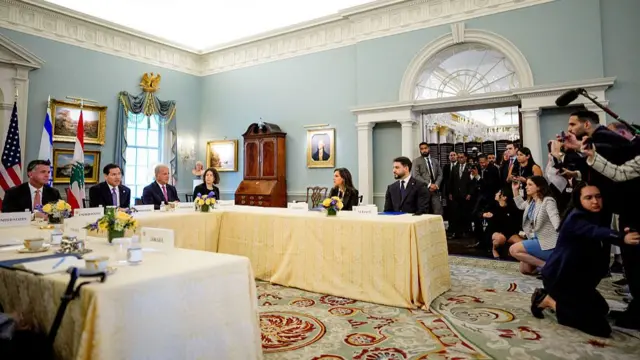
    Several people sit around a U shaped table as several media representatives look on.Image source, Getty Images
    Image caption,

    The first round of talks took place last week at the US State Department

    A second round of ambassador-level talks between Israel and Lebanon will take place this Thursday, according to a US State Department official.

    "The United States welcomes the productive engagement" which began on 14 April, the official says.

    "We will continue to facilitate direct, good-faith discussions between the two governments."

    Israel has been at war with the Iran-backed Hezbollah group in southern Lebanon. There is currently a 10-day ceasefire after six weeks of conflict.

    Last week, Israel and Lebanon held their first diplomatic talks since 1993. US Secretary of State Marco Rubio, who mediated, said it was a "historic opportunity" to end Hezbollah's influence.

    Prior to those first talks, Israel said it wanted to disarm all non-state terror groups - a reference to Hezbollah.

    Lebanon called for a ceasefire and measures to address its humanitarian crisis.

    The two countries do not have diplomatic relations.

  6. Could diplomacy give way to more conflict?published at 16:47 BST 20 April

    Azadeh Moshiri
    South Asia correspondent, reporting from Islamabad

    Here in Islamabad, we're once again unsure whether both the United States and Iran will actually turn up for talks, which is the bare minimum for negotiations.

    US President Donald Trump has indicated he will send a delegation led by Vice President JD Vance, but Iran's foreign ministry says Tehran has "no plans" as yet for the next round of negotiations.

    What is said publicly doesn’t always reflect how everything is playing out behind the scenes. Iran and the US both have their domestic audiences in mind, and will also want to apply public pressure on each other.

    What is different this time is the backdrop in the Strait of Hormuz. Iran and the US are accusing each other of ceasefire violations and exchanging various threats.

    Trump has accused Iran of attacking commercial ships over the weekend. The US Navy is circulating images of its attack and seizure of an Iranian-flagged cargo ship, and Iran has vowed to retaliate.

    Will the two countries allow the ceasefire to expire on Wednesday, and could diplomacy give way to more conflict?

    The events in this vital shipping lane are a reminder that the strait is one of the sharpest thorns in the talks.

    The United States is trying to counter Iran’s effective blockade with one of its own. But the strait has been Iran's main piece of leverage in the war, and now at the negotiating table, if it ever materialises.

  7. US delegation to leave 'soon' - source familiarpublished at 16:21 BST 20 April

    Bernd Debusmann Jr
    White House reporter

    It's been a confusing morning, with conflicting reports on the state of talks and whether - or not - the US delegation has left yet.

    They have not.

    A source familiar just told the BBC that the delegation is expected to leave "soon". No further information was provided, nor was an estimated arrival time.

    Earlier today, President Trump told the New York Post that the delegation, including Vice President JD Vance, was already on its way.

    He also told Maria Baritomo of Fox News that a deal would be "signed tonight".

    That, however, seems unlikely given the vast distance to Islamabad and the need for a refuelling stop.

  8. US says it intercepted 27 vessels since start of blockadepublished at 16:11 BST 20 April

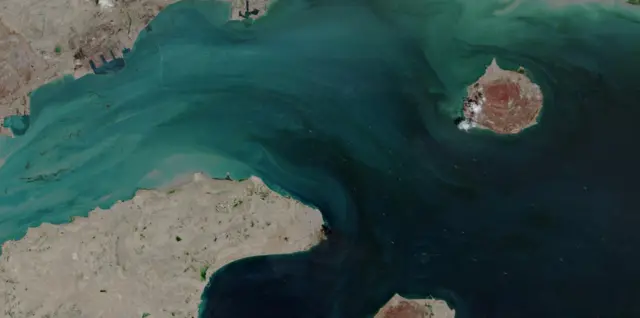
    A satellite image shows the ship movement at the Strait of Hormuz on April 2, 2026, in Space. EUROPEAN UNION/COPERNICUS SENTINEL-2/Handout viaImage source, EUROPEAN UNION/COPERNICUS SENTINEL-2/Handout via Reuters

    The US military says it has directed 27 vessels to turn around or return to an Iranian port since the beginning of its blockade around the Strait of Hormuz.

    In a post on X, US Central Command posted a video of US forces informing a large vessel that it was entering an area of US military blockade.

    Earlier this month, US forces announced they would intercept or turn back vessels travelling to or from Iran's coast - an attempt to put pressure on Iran by stopping it from profiting from oil exports.

  9. Iran has not changed its decision to abstain from talks with US - Iranian mediapublished at 15:59 BST 20 April

    Ghoncheh Habibiazad
    Senior reporter, BBC Persian

    Despite US President Trump telling the New York Post that the US delegation is en route to Pakistan, Iran has not "altered its decision to abstain" from the talks, according to Iran’s hard-line Tasnim news agency which is affiliated with Iran’s Islamic Revolutionary Guard Corps (IRGC).

    According to Tasnim’s report, the US naval blockade remains an "obstacle", but, beyond this, US messages to Iran "contain further excessive demands that cloud the prospects for the upcoming talks".

    Iran "remains fully prepared for military confrontation and to once again punish the US," it says.

    Tasnim has not named any officials as their source in its report, and we're yet to see if Iran will attend the talks or not.

  10. Analysis

    Conflicting reports over US-Iranian peace talkspublished at 15:42 BST 20 April

    Daniel Bush
    Washington correspondent

    The US and Iran were expected to hold a second round of peace talks this week, as early as Monday. But now the timing of the potential negotiations has been thrown into question, with conflicting reports about when they might take place.

    Vice President JD Vance is slated to lead the US delegation to Pakistan, as he did for the first round of talks earlier this month. President Donald Trump told the New York Post earlier Monday that Vance would arrive in Islamabad tonight.

    But Iran has sent conflicting signals about the negotiations, fuelling speculation that Tehran might pull out of the talks at the last minute over disagreements around control of the Strait of Hormuz.

    The US has put a blockade in place in the waterway and seized an Iranian cargo ship on Sunday. Iran has demanded the US end its blockade.

    Shuttle diplomacy of this kind is often messy and involves last-minute changes.

    Still, this level of uncertainty is somewhat unusual and underscores the immense obstacles that remain for both sides to make progress in these talks, let alone reach a durable long-term peace deal.

  11. Trump says Israel 'never' talked him into Iran warpublished at 15:31 BST 20 April

    Bernd Debusmann Jr
    White House reporter

    We've just had a new Truth Social Post from Donald Trump, in which he lashes out against the media and says that "Israel never talked me into the war with Iran".

    He says that the Hamas attacks on Israel on 7 October 2023 added to his "lifelong" opinion that Iran can never have a nuclear weapon.

    Without saying so, Trump is addressing a talking point that has gained steam domestically - that Israel somehow hoodwinked him into a war in Iran with no easy resolution.

    The New York Times, for example, reported that Trump's closest advisers, including Chairman of the Joint Chiefs Gen Dan Caine, were uneasy with an Israeli forecast presented by Prime Minister Benjamin Netanyahu before the operation began.

    Additionally, the former head of the National Counterterrorism Center, Joe Kent, explicitly said in his resignation - and multiple times since - that he believes Israel used backchannels to convince the administration to launch the strikes to help achieve their own objectives.

    Trump and the White House have repeatedly denied this.

    In the same post, Trump lashes out at the media for "lies and made up stories", saying that "the results in Iran will be amazing".

  12. Israel-Lebanon ceasefire fragile at best ahead of further talkspublished at 15:19 BST 20 April

    Jon Donnison
    Reporting from Jerusalem

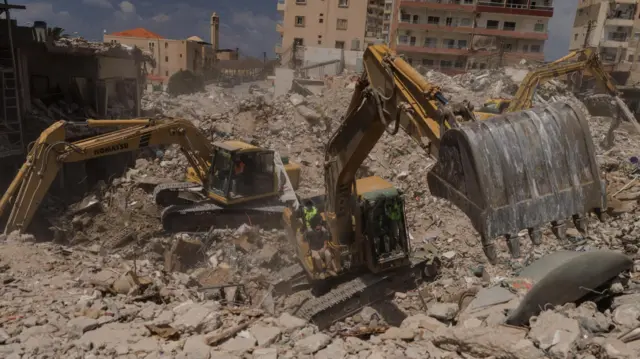
    Civil defence members search for bodies under the rubble of buildings hit by an Israeli strike just before the ceasefire, amid a 10-day ceasefire between Lebanon and Israel, in Tyre, southern Lebanon, April 20, 202Image source, Reuters
    Image caption,

    Lebanese authorities have been searching through the rubble of collapsed building during the 10-day ceasefire

    The Israel-Lebanon ceasefire, which began last Friday and which is due to last 10 days, is fragile at best.

    For one, the fighting hasn’t entirely stopped.

    Overnight, Israel’s military again carried out strikes in southern Lebanon, targeting what it said was a Hezbollah rocket launcher which was ready and loaded to fire - with further reports of strikes this morning.

    Thousands of Israeli troops remain in southern Lebanon and residents who were forced to flee the fighting have been warned by Israel not to return home.

    Israel has published a map of what it calls a “buffer zone” extending about 10 kilometres into Lebanese territory, which is says is needed to reduce the threat from Hezbollah.

    It means about 5% of Lebanon is now under Israeli military occupation.

    This is likely to be the key sticking point when US-brokered talks between Israel and Lebanon resume later this week.

    Lebanon's President Joseph Aoun has demanded the full withdrawal of Israel forces to the “internationally recognised borders”.

    Israel’s Prime Minister Benjamin Netanyahu has given no indication he is ready to agree to that.

  13. Chaos reigns in Washington ahead of Pakistan trippublished at 14:52 BST 20 April

    Bernd Debusmann Jr
    White House reporter

    It's been a chaotic and confusing morning in Washington, with little clarity on the timing of any of the highly anticipated talks in Islamabad between US and Iranian negotiators.

    Shortly after 09:00e/14:00b, President Trump told the New York Post in a brief telephone interview that Vice President JD Vance, special envoy Steve Witkoff and adviser Jared Kushner are "headed over now".

    We still, however, have not received any official confirmation from the Vice President's office or the White House. It would also be extremely uncharacteristic - nearly unheard of - for the trip to begin without receiving a report from the travelling press pool.

    The last official word we received from the White House was yesterday, when a senior official confirmed that those three men would be on the negotiating team. There was, however, no word on timing.

    We have reached out to various officials and offices in Washington for clarification.

  14. With talks up in the air, this is what Iran's officials are sayingpublished at 14:49 BST 20 April

    Ghoncheh Habibiazad
    Senior reporter, BBC Persian

    While there is much uncertainty about the next round of talks between Iran and the US in Islamabad, we can take a look at what Iranian officials have been saying.

    Most of them have talked about their scepticism of the US, but this is nothing new.

    While Iranian Foreign Minister Abbas Araghchi told his Pakistani counterpart yesterday that US actions, statements and "excessive demands" signal Washington’s "lack of seriousness for diplomacy," it wasn’t him who said today that Iran has "no plans for the next round" - that was the foreign ministry’s spokesperson.

    After Trump announced the next round of talks, we’re yet to hear from Iran’s parliamentary speaker Mohammad Bagher Ghalibaf, who was leading the delegation during the talks in Islamabad, on whether the talks are going ahead or not.

    Meanwhile, Iranian President Masoud Pezeshkian said today that diplomacy "should be used to reduce tensions," but there's a question over how much power he actually comparatively holds.

    There are voices inside the establishment who oppose the talks, including hardline clerics. But it is yet to be seen if these voices can stop the talks altogether or not.

  15. 'Every diplomatic route should be used to reduce tensions' - Iranian presidentpublished at 14:28 BST 20 April

    Iran President Masoud Pezeshkian says "war benefits no one, and while standing firm against threats, every rational and diplomatic route should be used to reduce tensions".

    In remarks today during a visit to the Ministry of Justice, Pezeshkian says Iranians "must be kept informed of the country’s realities" and "providing inaccurate information or unrealistic promises not only fails to help resolve issues, but also undermines public trust".

    "Both achievements and challenges should be shared honestly with the public," Pezeshkian says.

    Earlier Iran's foreign ministry spokesman said Tehran had "no plans" to attend the next round of talks.

  16. Pakistan's interior minister says 'foolproof security' in place for next round of talkspublished at 13:51 BST 20 April

    Usman Zahid
    BBC News, in Lahore

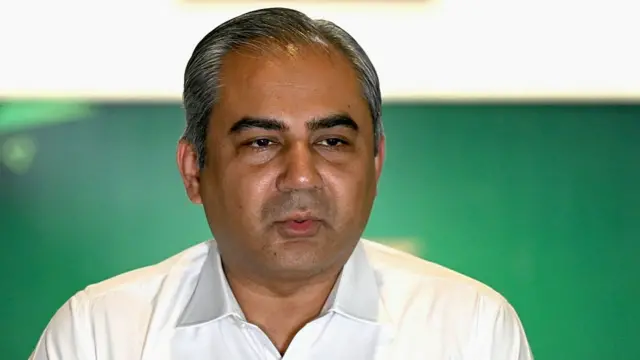
    Mohsin Naqvi looks past the camera while wearing a white shirt. There is a green background behind himImage source, Getty Images
    Image caption,

    Mohsin Naqvi says arrangements have been finalised for new talks

    Pakistan's federal interior minister Mohsin Naqvi has met Iran’s ambassador Reza Amiri Moghadam to review preparations for the second phase of the Islamabad talks, the Ministry of Interior says.

    While Iran has not yet confirmed its participation in new talks, Naqvi says arrangements have been finalised, with “foolproof security” in place for visiting delegations. He also briefed the ambassador on his recent visit to Iran.

    The minister says a negotiated settlement between the US and Iran is essential for lasting regional stability.

    According to the ministry, Moghadam has welcomed Pakistan’s “positive and constructive role” in efforts to ease tensions.

    Senior Islamabad officials, including the chief commissioner, inspector general of police, and deputy commissioner, attended the meeting.

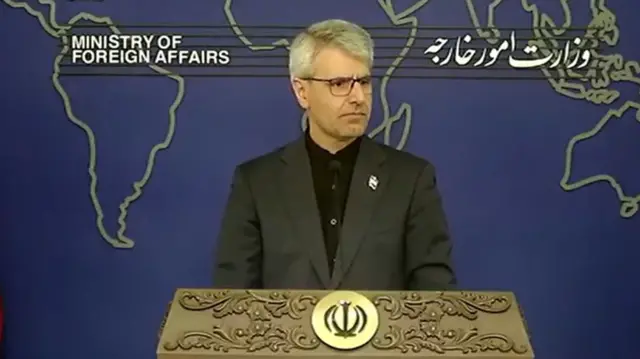
  17. Iran 'not optimistic' over dealings with US - foreign ministry spokesmanpublished at 13:41 BST 20 April

    Esmaeil Baqaei, spokesman for the Iranian foreign ministry, at a press conference in IranImage source, Iranian Foreign Ministry

    Iran is "certainty not optimistic" over its dealings with the United States, but it is "realistic", the spokesman for the Iranian foreign ministry says.

    "To the extent that one could say there is a certain degree of pessimism... and this is entirely reasonable," Esmaeil Baghaei tells a press conference in Iran.

    "Being pessimistic about the enemy is the same as being wise."

    His remarks come as the US sends a delegation to Pakistan for fresh talks, but Iran is yet to confirm it is participating.

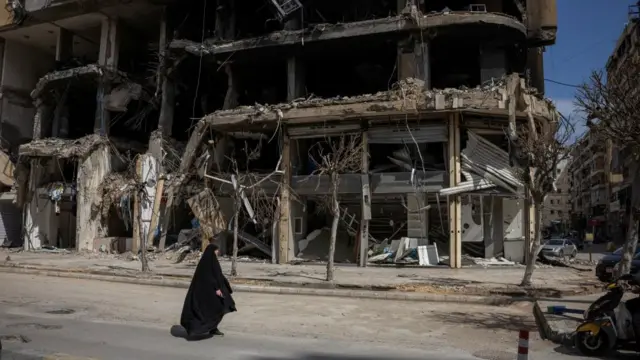
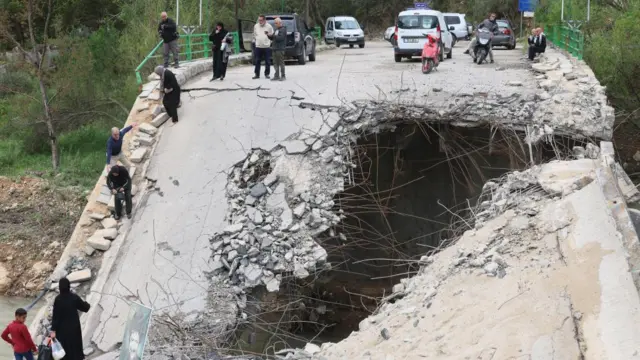
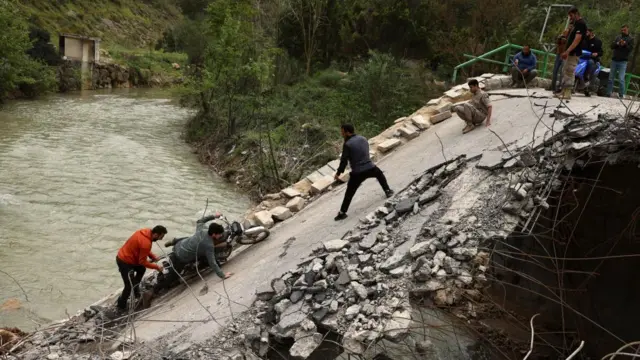
  18. People in Lebanon navigate destruction during 10-day ceasefirepublished at 13:27 BST 20 April

    Following the declaration of Lebanon's ten-day ceasefire with Israel, "huge numbers of people" returned to their homes in southern Lebanon over the weekend, UN Humanitarian Chief Tom Fletcher told the Today programme earlier.

    The latest pictures show people navigating the destruction caused by Israeli strikes.

    A woman walks past damaged buildings in the southern suburbs of Beirut during the ceasefireImage source, Reuters
    Image caption,

    A woman walks past damaged buildings in the southern suburbs of Beirut during the ceasefire

    A large gap is seen in a damaged bridge with cars parked at the top of it. Several individuals are stationed along the structure.Image source, EPA/Shutterstock
    Image caption,

    Displaced people walk along a destroyed bridge in Tayr Felsay, southern Lebanon, on Sunday

    Individuals wheel up a motorcycle on a damaged bridge, with several men standing at the top and four individuals positioned on the sloped, damaged portion.Image source, Reuters
    Image caption,

    A motorcycle is wheeled up a damaged bridge in Zrarieh, Lebanon, on Sunday

  19. US-Iran and Israel-Lebanon: Ceasefires on two frontspublished at 12:53 BST 20 April

    There are currently two ceasefires in place in the Middle East - one agreed between the leaders of Lebanon and Israel, and another between the US and Iran.

    Iran and US

    This two-week ceasefire between Iran and the US is due to end on Wednesday.

    Iran's military headquarters accused the US of a "violation of the ceasefire" after the US Navy fired at and took control of an Iranian-flagged cargo ship in the Gulf of Oman.

    It is unclear whether a second round of negotiations slated to take place in Pakistan today will go ahead.

    The US delegation is led by Vice President JD Vance, and an Iranian spokesperson says they have "no plans" to attend the negotiations.

    Lebanon and Israel

    This ceasefire, which came into effect on Friday, 16 April and will last ten days, was agreed by Lebanese President Joseph Aoun and Israeli Prime Minister Benjamin Netanyahu.

    The two countries requested that the US continues to facilitate further direct talks.

    According to details from the US State Department, Lebanon must take "meaningful steps" to prevent Hezbollah and all other "rogue non-state armed groups" from carrying out attacks against Israeli targets.

    Hezbollah has also signalled a willingness to participate but said it must include "no freedom of movement for Israeli forces".

  20. Lebanese president says negotiations with Israel 'separate' from US-Iran talkspublished at 12:45 BST 20 April

    Lebanese President Joseph Aoun speaks during a press conference on February 16, 2026Image source, Getty Images

    Lebanese President Joseph Aoun says upcoming negotiations with Israel are "separate" from US-Iran peace talks, or "any other negotiations".

    In a statement on X, Aoun says Lebanon will be represented in upcoming talks by a delegation led by Simon Karam, the former Lebanese ambassador the US, and that "no one from Lebanon will participate in this mission or replace him".

    He says the objectives of the talks are to "halt hostile actions", end Israel's "occupation of the southern areas" of Lebanon and to deploy Lebanon's army up to the "internationally recognized southern borders".

    US President Donald Trump has "expressed full understanding" of Lebanon's demands, says Aoun, and has assisted in setting up the upcoming negotiations.

    "I am full of hope that we will be able to save Lebanon," he adds.

    Despite the announcement of a ceasefire between the two countries, Israel's Benjamin Netanyahu has said Israeli troops would remain stationed 10km-deep (6.2 miles) into southern Lebanon.