Summary

  1. Griffin questioned why it took so long for him to arrive at workpublished at 10:43 GMT 23 March

    Griffin did not arrive at the force headquarters until 06:30 on the day of the attacks, after receiving an initial call at 05:01, the inquiry heard.

    Asked why it took so long, Griffin said upon the initial call, he was "up and out of bed".

    "I'd recognised already the magnitude of what had happened on Ilkeston Road and it had been my plan to go into work early that morning," he said.

    He said he lived about a half an hour drive away, and said it would have been "impossible" to get there quicker.
  2. 'I was not informed about search activity'published at 10:39 GMT 23 March

    Griffin said Ch Insp Mather had not asked for advice about any searches for triple killer Valdo Calocane on the day of the attacks.

    "He didn't ask for any advice about the search but almost an hour on, I would have expected any search that had taken place to be reaching its conclusion an hour on from the incident," he said.

    Counsel to the inquiry Julian Blake KC said: "If the conclusion is that the force incident manager himself was not properly co-ordinating the attacks, as the person who has that strategic leadership role, should that criticism extend to you as well?"

    Griffin said he could not have had strategic responsibility for the searches because he did not know about them.

    "I would say to that, during the search activity, I'd not been informed or briefed and didn't have any knowledge at all of the search activity that was taking place," he said.

  3. What happened during the Nottingham attacks?published at 10:34 GMT 23 March

    Valdo Calocane - who had been diagnosed with paranoid schizophrenia in 2020 - carried out a spate of deadly attacks across the city on 13 June 2023.

    Armed with a bag of weapons, he first stabbed 19-year-old University of Nottingham students Barnaby Webber and Grace O'Malley-Kumar, in Ilkeston Road in the city, in the early hours.

    He then walked nearly two miles away to Magdala Road, killing grandfather 65-year-old Ian Coates, who was four months away from retirement.

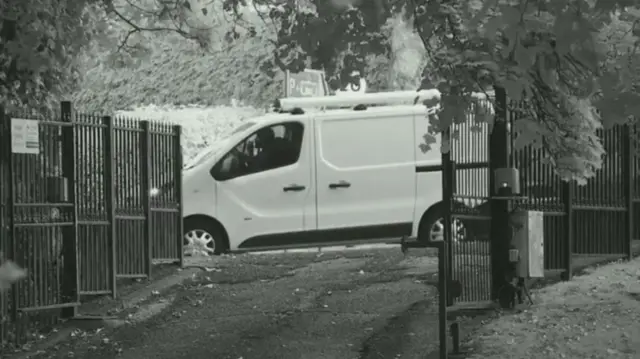
    Calocane driving Ian Coates's van through NottinghamImage source, The Nottingham Inquiry

    After taking Ian's van, Calocane drove into the city centre where he struck Wayne Birkett before running over Sharon Miller and Marcin Gawronksi. All three survived but were left with serious and life-changing injuries.

    Calocane pleaded guilty to three counts of manslaughter on the grounds of diminished responsibility, and three counts of attempted murder.

    He is currently serving an indefinite hospital order. The victims' families have never been happy with that outcome.

  4. Inquiry told of belief attacks 'connected to robbery'published at 10:28 GMT 23 March

    Following the first call to police, the inquiry heard that Ch Insp David Mather believed the attacks were connected to a robbery.

    Griffin said: "Mather described the events and told me that he believed at that point that it may be connected to a robbery.

    "But that one person had lost their life and the second person was seriously injured. So I obviously recognised the seriousness of it immediately.

    "But the actual nature of the mechanics of the attacks weren't described to me at the time."

    Asked if believing it was a robbery was right, Griffin said after the first call, based on the information received, it was right to believe the incident was a robbery.

    But he said after seeing the footage, it "instantly tells me, in my opinion at least, that it was not a robbery".

  5. ACC told of attacks an hour after two killedpublished at 10:18 GMT 23 March

    The inquiry has heard the then Assistant Chief Constable Rob Griffin was first informed of the attacks at 05:01 BST on 13 June.

    We know Calocane's first attacks on Barnaby and Grace were at about 04:00, and the first call to police was made shortly after.

    Asked by counsel to the inquiry Julian Blake KC if he should have been contacted earlier, Griffin said: "I don't believe so sir, no."

    He added it was not the role of the "gold commander or the chief officer" to co-ordinate activities at that stage in the policing response.

  6. Victim's mother tells BBC inquiry evidence has been 'torture'published at 10:10 GMT 23 March

    Emma Webber, the mother of Barnaby Webber, has been speaking to BBC Breakfast this morning about the first month of evidence we have heard in London.

    She said it had so far shown a "disastrous response" to the attacks by Nottinghamshire Police.

    "You can just see all of those missed opportunities, lack of professional curiosity, lack of professionalism, lack of duty and it's resulted in where we are now, and it's so heartbreaking," she said.

    "What we've had to sit through, it is torture, there's no other words but it's necessary because this is in the public domain now and it's everything we've been uncovering for the past two and a half years, and now it's out there."

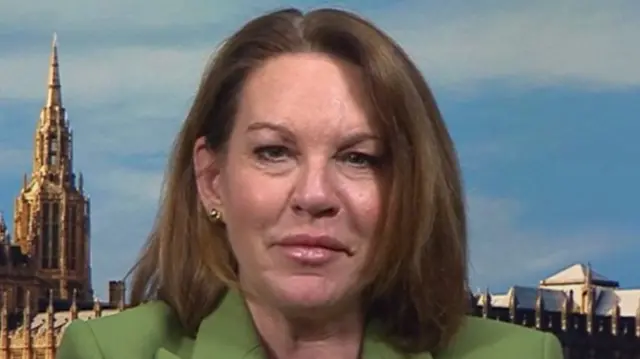
    Emma Webber

    Earlier in the inquiry, we heard from former Chief Constable Kate Meynell and senior investigating officer of the attacks, retired Det Supt Leigh Sanders.

    "Look at the gravity of what happened. I was so disappointed with now retired Chief Constable Kate Meynell, as well as now retired senior investigating officer Leigh Sanders that there was so much 'don't remember', 'don't recall', 'that wasn't me that made that decision but I don't remember who did make that decision', and admittance to mistakes but not really admittance of the gross failures that they actually were," Webber added.

  7. Listen: What happened on Friday?published at 10:05 GMT 23 March

    BBC reporter Asha Patel explains the latest evidence, including an apology from former Nottinghamshire Police Chief Constable Kate Meynell to the victims' families.

    You can listen to updates with the BBC Sounds app, by searching for Need To Know Nottingham.

  8. Proceedings get under waypublished at 10:03 GMT 23 March

    Temporary Deputy Chief Constable Rob Griffin has started his evidence.

    As mentioned, he was the assistant chief constable at the time of the attacks, and the on-call chief officer of Nottinghamshire Police and the on-call strategic firearms commander.

  9. Who is giving evidence today?published at 10:02 GMT 23 March

    Nottinghamshire Police Temporary Deputy Chief Constable Rob Griffin is the only witness listed to give evidence today.

    Griffin was the assistant chief constable at the time of the attacks, and will give testimony about his involvement in the policing response.

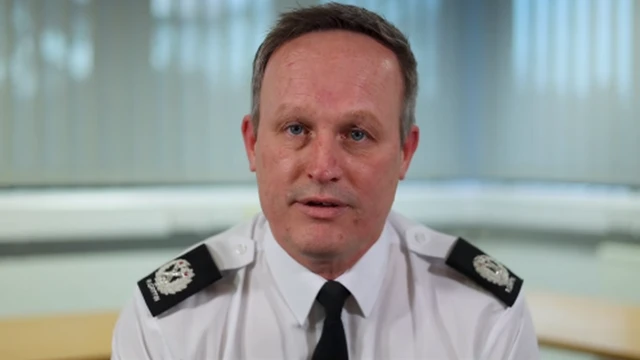
    Rob Griffin, of Nottinghamshire PoliceImage source, Nottinghamshire Police

    We heard earlier in the inquiry that Griffin assumed the role of gold commander on the day, the senior officer with overall strategic command.

    His evidence follows that of former Nottinghamshire Police Chief Constable Kate Meynell, who gave evidence on Friday.

    With a key role in the force and the response to the attacks, Griffin's evidence will be important, particularly to the families affected.

  10. Nottingham Inquiry continues hearing evidence into killingspublished at 10:00 GMT 23 March

    Welcome to our live updates from day 19 of hearings as part of a public inquiry into the Nottingham attacks.

    On 13 June 2023, Valdo Calocane stabbed to death Ian Coates, Barnaby Webber and Grace O'Malley-Kumar and seriously injured Wayne Birkett, Sharon Miller and Marcin Gawronski in a spate of attacks.

    The inquiry is examining the events that led up to the attacks and the response that followed.