Summary

  1. Police 'still discussing' telling families of misconduct three months onpublished at 15:08 GMT 26 March

    The inquiry heard that, three months after Gould had wanted to tell the families about the police misconduct investigations, the force was still discussing it.

    A police officer was dismissed at an accelerated misconduct hearing on 11 December 2023.

    Despite having discussed the investigations previously, Sanders said in an email on 12 December 2023 he was not aware of them.

    Asked what went wrong, Gould said: "I believe it's just not been gripped.

    "I believe the families should have been told three months sooner, and I don't know where this has got lost, but it certainly shouldn't have been December and we're still discussing updating the families."

    Julian Blake, counsel to the inquiry, asked: "And who do you think has dropped the ball there then?"

    In response, Gould said: "I don't know.

    "The last conversation I had with Sanders was that he was going to discuss with the PSD [professional standards department] and [Assistant Chief Constable Rob Griffin], and get back to me - and he never did.

    "And for that, I would suggest Sanders."
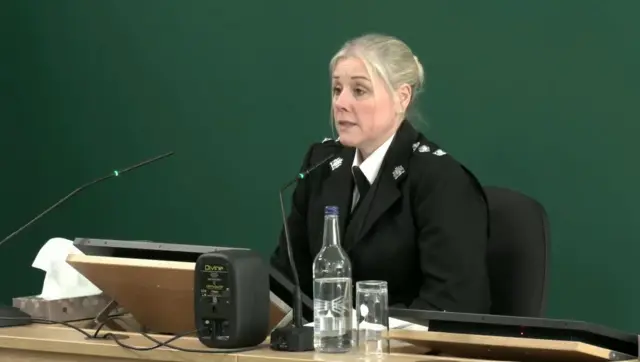
  2. 'Families had a right to be told about police misconduct'published at 14:58 GMT 26 March

    The inquiry heard there was a meeting on 13 October 2023 in which Gould and Sanders, the now retired senior investigating officer, were present.

    Gould told the hearing she had made it "clear" her intention to tell the families about the misconduct investigations into members of staff for viewing bodyworn camera footage.

    However, the inquiry heard Sanders told her not to tell the families as "due diligence" had not yet been completed.

    According to Gould, Sanders said he would come back and say what could be shared with families and when it could be shared.

    Gould said she believed families should have been told, as it was "the right thing to do" and they had a right to know.

  3. 'Frustration' over delays in telling families about police misconductpublished at 14:47 GMT 26 March

    Gould has spoken of her "frustration" over delays in telling the families about investigations into officers in relation to a potential data breach.

    The inquiry heard three officers had viewed sensitive information about the attacks with no policing purpose.

    Another officer, PC Matthew Gell, had sent "offensive" WhatsApp messages about the attacks to his colleagues.

    Gould told the inquiry she wanted to tell the families on 20 September 2023 but was awaiting "wording" from the professional standards department (PSD).

    However, two days later, James Coates, one of Ian Coates's sons, was informed about an investigation into one officer during a telephone call with an officer.

    Gould said she believed the officer had called James "in good faith" but that he had spoken too soon.

    She said she wanted to ensure all the information was shared with all the families affected, but by 9 October 2023 this had still not happened.

    Asked if there was a hold-up in getting information from PSD, she said: "It did take longer than I would have expected, but I don't know why."

  4. Information about killer shared with families 'not sufficient'published at 14:34 GMT 26 March

    Gould has accepted information given to the family liaison officers to share with the families about Calocane's previous interactions with police was "not sufficient".

    "I believe that it should have been made entirely clear that this related to an outstanding warrant and that had not been actioned, and that VC had not been arrested," she said.

    She added her instruction to the officers "should have been clearer".

    A meeting summary with the families by the senior investigating officer Leigh Sanders, who has since retired, showed that in September 2023 the families were told Calocane had "previous dealings with mental health teams but had moved around the UK" and had not engaged with them of late.

    Asked for her view of that level of information, Gould said she believed the summary did share a detailed account, although she was not present at the meeting.

  5. Information on warrant 'not as clear as it should have been'published at 14:26 GMT 26 March

    Gould told the inquiry it was her view that it was "always the intention" of the police to inform the families of the outstanding arrest warrant for Calocane at the time of the attacks.

    The hearing was told the families should have received that information before Calocane was charged with three counts of attempted murder and three counts of murder on 16 June 2023, three days after the attacks.

    "In hindsight, that information was not as clear as it should have been," Gould said.

    Claire GouldImage source, The Nottingham Inquiry
  6. 'Families and survivors should have been told about diminished responsibility earlier'published at 14:22 GMT 26 March

    Gould told the inquiry she believes the families and survivors "would have benefitted" from being told earlier about the possibility of a "diminished responsibility defence".

    Calocane eventually pleaded guilty to three counts of manslaughter on the grounds of diminished responsibility, and to three counts of attempted murder.

    The inquiry heard the Crown Prosecution Service instructed forensic psychiatrist Prof Nigel Blackwood to assess Calocane as early as 14 June 2023, the day after the attacks.

    Calocane's defence had served its expert mental health assessment report of the killer by 2 October 2023.

    Gould said that report was shared with the FLOs, but not all the families were told at the same time, and that there was a "delay" in everyone being informed.

  7. What happened at the inquiry yesterday?published at 14:09 GMT 26 March

    Yesterday, the inquiry heard evidence from the parents of Barnaby Webber, Emma and David Webber, as well as from the parents of Grace O'Malley-Kumar - Dr Sanjoy Kumar and Dr Sinead O'Malley-Kumar.

    Here were some of the key takeaways:

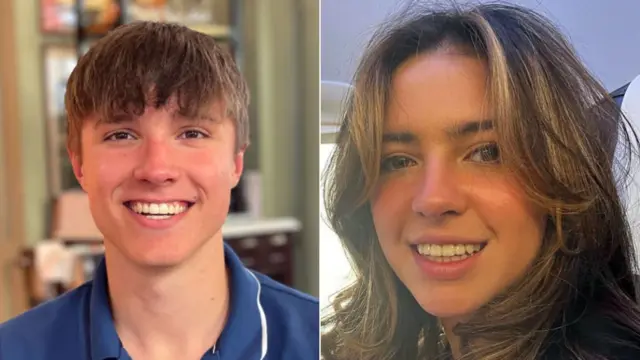
    Barnaby Webber and Grace O'Malley-KumarImage source, Supplied
  8. What happened on the day of the Nottingham attacks?published at 13:53 GMT 26 March

    On 13 June 2023, Valdo Calocane - who was diagnosed with paranoid schizophrenia in 2020 - carried out a spate of deadly attacks across Nottingham.

    He first stabbed 19-year-old students Barnaby Webber and Grace O'Malley-Kumar, in Ilkeston Road in the city, at about 04:00 BST.

    Calocane - who was armed with a bag of weapons at the time - then walked nearly two miles away to Magdala Road, and killed 65-year-old grandfather Ian Coates.

    After taking Ian's van, Calocane drove into the city centre where he struck Wayne Birkett, Sharon Miller and Marcin Gawronksi.

    All three survived but were left with serious and life-changing injuries.

    Calocane pleaded guilty to three counts of manslaughter on the grounds of diminished responsibility, and three counts of attempted murder.

    In January 2024, he was sentenced to an indefinite hospital order. The families affected have never been happy with that outcome.

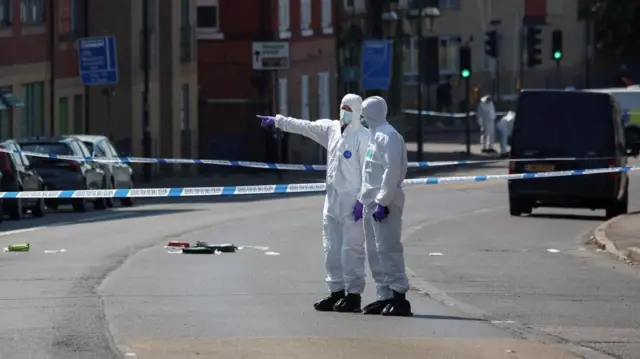
    A police cordon in Nottingham after the attacksImage source, Reuters
  9. Officer 'wholeheartedly sorry' for delay in informing sons of father's deathpublished at 13:33 GMT 26 March

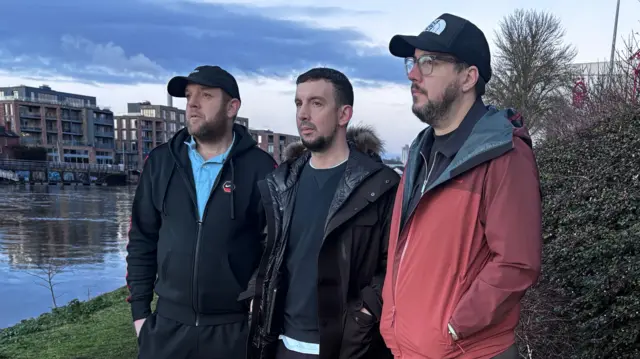
    When asked by Julian Blake, counsel to the inquiry, whether Gould had considered that Ian Coates's sons (pictured below) were "sufficiently informed" of their father's death at the initial stage, Gould said: "No sir, I do not."

    The inquiry has been told police made contact with Ian's sons "10 minutes before [then chief constable] Kate Meynell went on TV to do her press conference, to let the city of Nottingham know what had happened" - and that the family had pieced together what had happened after getting a message from a family friend on Instagram.

    "They should have been told sooner, I take full responsibility for that," Gould said.

    "Listening to the brothers give their evidence, that made it clear. However, I have always been aware of the impact that delay had on them.

    "And for that, I am wholeheartedly sorry for the delay and the impact it has had on you and your family."

    Darren, Lee and James Coates
  10. 'Terrible error' to give wrong cause of victim's deathpublished at 13:19 GMT 26 March

    Gould told the inquiry PC India Proud, who was working a night shift on 13 June, had been made aware by a person - "I don't know who" - of the death of Ian Coates (pictured below).

    The hearing was told she had been tasked to deliver the message of Ian's death to his partner Elaine Newton.

    The inquiry heard the family had been wrongly told that Ian had died in a road traffic accident, and it was only later the family were told it was a stabbing.

    In an email, PC Proud said informing Elaine of the wrong cause of Ian's death "had been living in my head a lot", as she felt she did her a "disservice" at such an "upsetting moment in her life, when I was trying to do the opposite".

    "Quite clearly, there has been a terrible error and the family should not have been given the wrong information as to Ian Coates's cause of death," she said.

    "To me, it's not entirely clear where that miscommunication has happened, but to be clear that should never have happened."

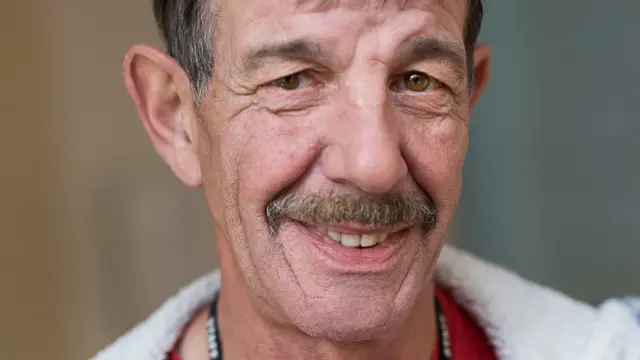
    Ian Coates
  11. Bereaved families should have been informed 'much sooner', officer sayspublished at 13:03 GMT 26 March

    Gould told the hearing family members of the bereaved should have been informed "much sooner" about the deaths of their loved ones.

    The inquiry previously heard that at 04:22 on the day of the attacks, police had information relating to the family of Barnaby Webber and Grace O'Malley Kumar - and at 07:48 they had information relating to the contact details of Ian Coates.

  12. Inquiry heard there was 'one option' to inform familypublished at 13:01 GMT 26 March

    The inquiry heard Claire Gould had been made aware at 10:18 that morning that David Webber - the father of Barnaby Webber - had contacted the police at 09:55 as he was concerned about his son.

    The hearing was also told David informed police that Barnaby's phone had been in the Ilkeston Road area, and it had then moved to Radford Road Police Station, and that David had been unable to contact his son.

    Gould told the hearing she considered the "best way" to tell the family and was left with "one option".

    The inquiry heard they could not deliver the notification of Barnaby's death "face to face" given the family's location and "could not delay any further", so an officer informed the family via a phone call.

    Yesterday we heard Barnaby's parents were driving from Cornwall to Taunton, where their son Charlie was on a school trip, at the time.

  13. Officer describes 'frenetic' day with other crime scenespublished at 12:42 GMT 26 March

    The inquiry heard that at 04:22 BST on the day of the attacks, police had information relating to the family of Barnaby Webber and Grace O'Malley Kumar - and at 07:48 they had information relating to the contact details of Ian Coates.

    The hearing was told Gould was made aware of this at 09:30 during a police briefing.

    She told the hearing it was "clear to me" that the families needed to be notified without delay, but added it was "frenetic" with 11 active crime scenes at the time.

  14. 'There should have been more liaison officers'published at 12:28 GMT 26 March

    Gould told the inquiry she initially envisaged the bereaved and the survivors of the attacks would require 12 family liaison officers in total, however the force was unable to provide this number.

    She said when she made inquiries, she found out there were not enough liaison officers that could be deployed for "various reasons".

    When asked by Julian Blake, counsel to the inquiry, whether "on reflection" she believed there should have been more family liaison officers, she said: "I do, yes."

  15. Advisor details to inquiry how police support is givenpublished at 12:11 GMT 26 March

    The inquiry was told that the survivors and bereaved families of the Nottingham attacks would come under "enhanced assistance entitlement" for the support they would receive.

    Gould explained this category recognised the "most serious crimes" and the "trauma" families could be subjected to.

    She added this would enable the families to receive "quicker and more detailed updates".

  16. Liaison advisor appointed on day of attacks, inquiry hearspublished at 12:08 GMT 26 March

    The inquiry has heard Gould joined Nottinghamshire Police in 2004 when she was appointed as a constable.

    She told the hearing she was appointed as the family liaison advisor on the day of the attacks by Det Insp Clare Gibson, who she had worked with before.

  17. Family liaison advisor begins giving evidencepublished at 11:56 GMT 26 March

    Det Ch Insp Claire Gould, who is a family liaison advisor from Nottinghamshire Police, has now been sworn in and has begun giving evidence to the inquiry.

  18. Survivor and partner felt 'sidelined' and 'in the dark'published at 11:52 GMT 26 March

    In statements, Sharon and Martin said they were "kept in the dark" about the criminal process.

    They said they had no contact with the prosecution counsel, or the Crown Prosecution Service (CPS) before Valdo Calocane's sentencing in 2024.

    "I didn't get to speak to anybody in person, apart from that FLO [family liaison officer]," Sharon said.

    She added she felt like she was "let down".

    Rachel Langdale KC, counsel to the inquiry, said: "Did you feel you were sidelined?"

    "A hundred per cent yes," Sharon said.

    The inquiry heard Sharon was described by police as "walking wounded".

    Martin said it made him feel like Sharon was "less important" and "didn't matter".

    The inquiry was also told nobody had explained the court proceedings to Sharon or Martin, and they were not given the option to watch the hearing remotely.

    "There was no communication with anyone," Martin said.

  19. Survivor has 'lost all faith' in the policepublished at 11:46 GMT 26 March

    Sharon and Martin have spoken to the Nottingham Inquiry about finding out there was an outstanding arrest warrant for Valdo Calocane at the time of the attacks.

    The warrant was issued for his arrest in September 2022, nine months before his killings, in relation to an attack on PC Barnaby Pritchard, who was helping to detain Calocane under the Mental Health Act in 2021.

    Sharon told the hearing she had "lost all faith" in the police, and Martin added "no-one takes responsibility" - and that the force had failed.

    "They are clearly not capable of doing their jobs," he added.

  20. 'She wanted to erase it from her memory'published at 11:43 GMT 26 March

    Martin told the inquiry he took on the role of dealing with all the information Sharon received from the agencies involved in the attacks.

    "She couldn't cope with anything - she couldn't do it," he said.

    "I should have been the one who should have been contacted all the time, because she wasn't even capable of listening.

    "She wants to erase it all from her memory. She didn't want any new information going to herself. It would have been detrimental to her health."