Summary

  1. No public acknowledgement yet in Dubai for strike at airportpublished at 16:25 GMT 7 March

    Nick Beake
    Europe correspondent reporting from Dubai

    Here in Dubai, it’s more than 10 hours since a drone strike was filmed very near the international airport.

    But the authorities have chosen to practically ignore an attack that was captured on video and later verified by the BBC.

    All that officials have said today has come in a post on X this morning, following the explosion, which announced a temporarily suspension of operations “for the safety of passengers”.

    There has still been no public acknowledgement of the strike, nor any explanation given as to what was behind the decision to stop flights at the world’s busiest airport for international passenger traffic.

    There has not been any detail provided either on why it was deemed safe for the airport to restart operations a short time later.

    The sight of a strike so near to a terminal, with planes parked on the tarmac nearby, has shaken people here and the video of the drone plummeting to the ground has been shared around the world.

    The decision to reopen so quickly may have puzzled, particularly as it was it later announced the United Arab Emirates had successfully intercepted 15 ballistic missiles and 119 drones.

    Media caption,

    Watch: Moment of drone strike close to Dubai Airport

  2. Flight tickets home cost thousands of pounds, travellers stuck in Dubai saypublished at 16:19 GMT 7 March

    Freya Scott-Turner
    Live reporter

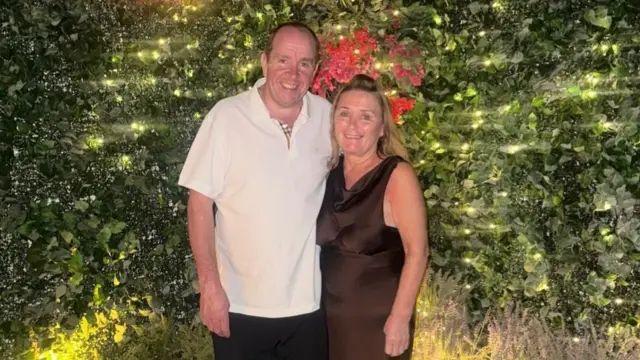
    A couple stand in a gardenImage source, Barry Wagner
    Image caption,

    Barry and Jackie have been trying to secure a flight home from the UAE

    Flight cancellations have stranded travellers across the Middle East, including in the United Arab Emirates' most populous city Dubai - which earlier saw its principle airport hit in an apparent drone attack.

    Among those stranded are Barry and Jackie, who were due to fly home back to Staines in England on 1 March. Their flight, and two subsequent reschedules, were cancelled and they say they've not been offered any more since.

    "Lots of companies are inflating their prices massively," says Barry.

    The only seats he can see available to book are first-class and going for around £16,000, he says: "That sort of money is out of my budget."

    "There were a couple of days when we didn’t hear any interceptions. That made us feel very hopeful," he adds.

    But Iran and Israel continue to strike each other. "Every time you hear an interception or a bang, it sort of disarms you. It's the uncertainty that's very, very worrying," Barry tells the BBC.

    Barry says the process of securing a flight feels "really random" and they've been passed around several airlines.

    "Please get us on a flight home soon; that’s all I want from anyone," he says.

  3. BBC Verify

    Satellite images show damage to several Iranian military sitespublished at 16:11 GMT 7 March

    Image shows aerial shot of a building that then appears destroyed

    By Paul Brown

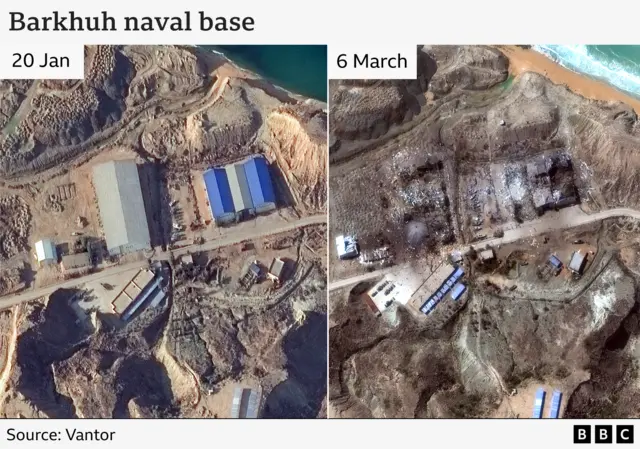
    BBC Verify has received a new batch of satellite imagery captured by the intelligence firm Vantor showing damage to a number of military sites across Iran.

    Among them are images of damage to multiple buildings at the Parchin military complex about 30km (19 miles) east of Tehran.

    Similarly, there is widespread damage at the Barukh naval base in the southwestern province of Bushehr, including to what Vantor identifies as a drone facility.

    President Trump has declared the depletion of Iran's naval capability as a key priority in the military operation.

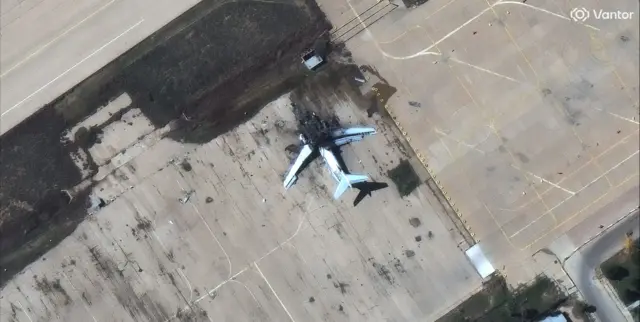
    The Vantor images also show at least five burned out aircraft at Shiraz airbase, which Vantor identifies as one Ilyushin Il-76, two C-130 transport planes and two Su-22 fighter bombers.

    Image shows a burned out plane on a runwayImage source, Vantor
    Image caption,

    One of the burned out aircraft seen at Shiraz airbase

  4. Qatar's military intercepts 'missile attack' - Ministry of Defencepublished at 16:07 GMT 7 March

    Qatar's Ministry of Defence says it has intercepted a "missile attack" targeting the state of Qatar.

    It does not say who fired the missiles, but follows a statement from Iran's President Masoud Pezeshkian who earlier said that Iran will not attack neighbouring countries "unless attacked first".

  5. Iranian ambassador warns Britain against involvement in attacks on Iranpublished at 15:59 GMT 7 March

    Media caption,

    Iran ambassador warns Britain against further involvement in the war

    The Iranian Ambassador Seyed Ali Mousavi has warned the UK about becoming involved in attacks on Iran.

    In an interview with Sunday with Laura Kuenssberg due to be broadcast tomorrow - some of which we brought you earlier - Mousavi is asked if British jets would be considered legitimate targets if they shoot down Iranian missiles or drones.

    He says “there is no doubt we will defend ourselves” and "we expect other people, including the British government, to be very delicate… very careful for their own activities”.

    The ambassador says it was “good” that Britain was not “involved with this aggression” and that he believes the British government has learnt from the Iraqi invasion, and “they know the illegality of this aggression”.

  6. Israel says it destroyed 16 Iranian aircraft at Tehran airportpublished at 15:42 GMT 7 March

    Smoke and fire rise from the site of airstrikes at Mehrabad International Airport in Tehran on March 7, 2026.Image source, Getty Images

    Israel says it has destroyed 16 planes belonging to the Quds Force of the Islamic Revolution Guard Corps (IRGC) at Tehran's Mehrabad Airport.

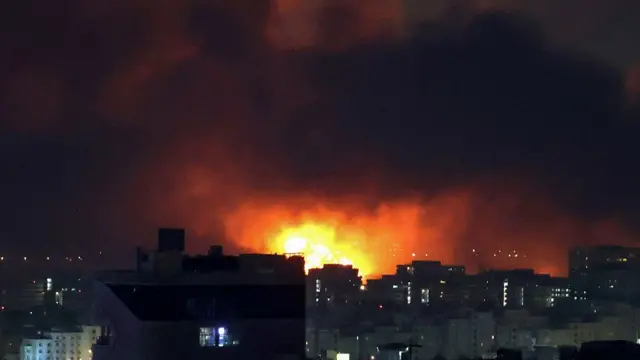
    Overnight, explosions and large plumes of smoke were seen at the site, which is Iran's busiest airport and main domestic hub.

    The Israel Defense Forces (IDF) says aircraft "loaded with weapons and cash" had been taking off from Mehrabad to supply Iran's proxy groups, including Hezbollah.

    It claims that the 16 destroyed aircraft in the strike were transferring weapons to Hezbollah, adding that "several Iranian fighter jets" were also targeted.

  7. UAE says it is intercepting missiles and drones fired from Iranpublished at 15:29 GMT 7 March

    The United Arab Emirates says it is responding to an incoming "missile and drone" attack from Iran.

    The nation's Ministry of Defence tells residents that air defence systems have been launched to intercept the incoming attack.

    It comes after Iran's President Masoud Pezeshkian said earlier today that Iran will not attack neighbours "unless attacked first".

  8. Turkey considering possible F-16 deployment to northern Cyprus - local media reportspublished at 15:22 GMT 7 March

    Nikos Papanikolaou
    BBC News

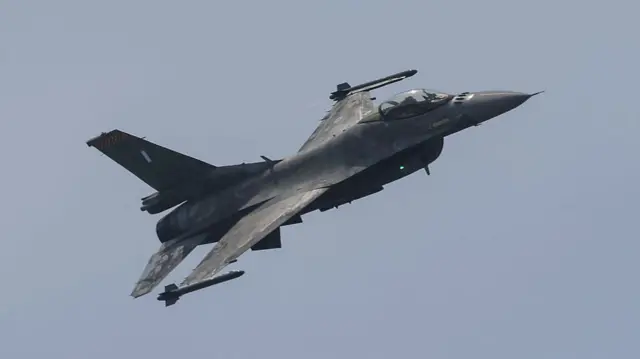
    A file photo of an American-made F-16 fighter jetImage source, Getty Images
    Image caption,

    A file photo of an American-made F-16 fighter jet

    Turkey is examining the possibility of deploying F-16 Fighting Falcon jets to the island of Cyprus as part of security planning linked to the self-declared Turkish Republic of Northern Cyprus, according to reports in Turkish Cypriot media.

    Citing sources from the Turkish defence ministry, the reports say that, in light of recent developments in the region, plans are gradually being drawn up to strengthen the territory’s security, with the possible deployment of F-16 aircraft among the options under consideration.

    The same sources say the planning is being assessed within the broader context of regional developments and what Ankara describes as evolving security needs.

  9. Locals in tears and shocked after strikes in eastern Lebanonpublished at 15:14 GMT 7 March

    Alice Cuddy
    Reporting from eastern Lebanon

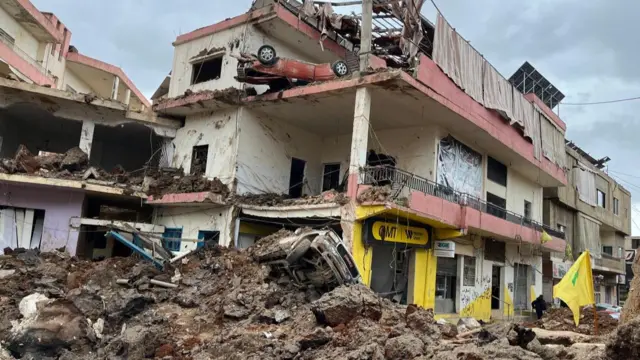
    Damage from strikes in the village of Nabi Chit in the Bekaa Valley in eastern Lebanon. A partially-destroyed building and destroyed cars are visible alongside rubble.

    I've been in the village of Nabi Chit in the Bekaa Valley in eastern Lebanon, where officials say dozens of people were killed in an Israeli military operation overnight involving air strikes and special forces on the ground.

    The Lebanese health ministry says 41 people were killed in Nabi Chit and the surrounding villages, with 40 injured.

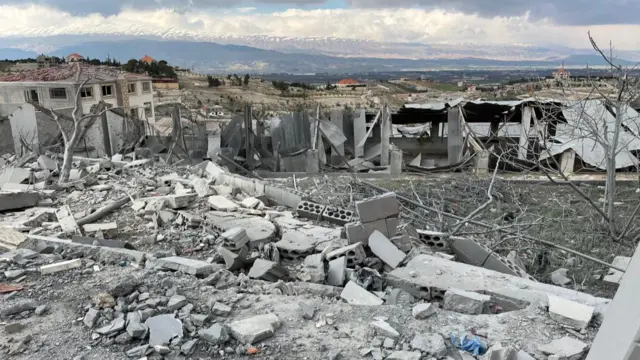
    Damage from the strikes is visible around the area, with piles of rubble and craters in the ground. Locals cried and looked on in shock.

    The Lebanese army says Israeli aircraft arrived at the same time as "heavy and large-scale aerial bombardment". Special forces entered the village, and bullet holes could be seen today on cars and buildings along the streets.

    In the cemetery, a grave appeared to have been dug up.

    The Israeli military said it had been searching in the village for the remains of navigator Ron Arad, missing in Lebanon since the 1980s, but found nothing. It said no IDF personnel were killed.

    In a separate statement, the Israeli military said it had targeted Hezbollah infrastructure in areas in Lebanon, including the Bekaa Valley, overnight.

    Damage from strikes in the village of Nabi Chit in the Bekaa Valley in eastern Lebanon. Rubble from destroyed buildings is visible.
  10. Protesters against war in Iran march on London's US embassypublished at 15:06 GMT 7 March

    Simon Jones
    BBC South East Today reporter

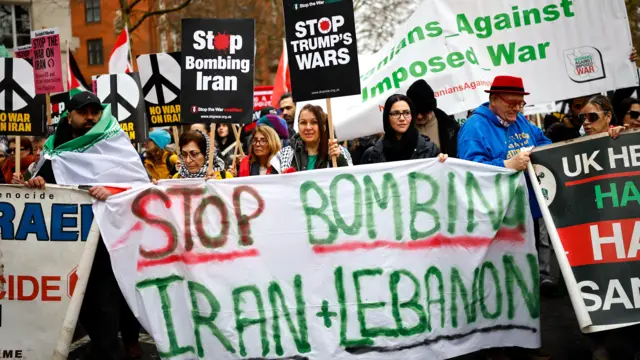
    Protesters hold a banner that reads: 'stop bombing Iran and LebanonImage source, EPA/Shutterstock

    Thousands of protesters against the US and Israeli attacks on Iran have been making their way towards the US embassy in London.

    Many are chanting messages and holding slogans criticising President Donald Trump. The organisers say this is not a protest in support of the Iranian regime, but a call to end what they call "illegal, unprovoked and unjustified" action.

    They say the United Kingdom should not blindly follow the lead of the US - and that there is no basis for an attack to bring about regime change.

  11. US attacking freshwater desalination plant has 'grave consequences' - says Iranian FMpublished at 15:05 GMT 7 March

    As President Trump speaks to the media in Miami, meanwhile Iranian Foreign Minister Abbas Araghchi accuses the United States of attacking a "freshwater desalination plant" on Qeshm Island, in the Strait of Hormuz.

    He says the "blatant and desperate crime" has impacted the water supply of 30 villages.

    It's not clear which strike Araghchi is referring to, but satellite image analysis by the New York Times appears to show damage following a strike on an Iranian naval base on Qeshm Island earlier this week.

    "Attacking Iran's infrastructure is a dangerous move with grave consequences," writes Araghchi on X.

    "The US set this precedent, not Iran," he adds.

  12. Trump says US is doing 'very well' in Iranpublished at 14:52 GMT 7 March

    Bernd Debusmann Jr
    Reporting from Miami

    I'm currently at the Trump National Doral hotel and golf course in Miami, where President Trump has just taken the stage in front of a row of Latin American leaders.

    Trump began his remarks by addressing the situation in Iran - repeating his previous remarks that the US is doing "very well" in the operation in Iran, and what he believes is significant success in degrading Iran's military capabilities.

    He also notes that he will head to Dover, in Delaware, for the return of America's fallen soldiers immediately after the event.

    Also present are Secretary of State Marco Rubio and Secretary of War Pete Hegseth, as well as other administration officials including recently ousted Homeland Security Secretary Kristi Noem.

    Trump has, however, largely stayed on topic, addressing his Latin American allies and their shared interests, particularly in combating drug trafficking in the hemisphere.

  13. US has knocked out 42 Iranian navy ships, Trump sayspublished at 14:45 GMT 7 March

    Media caption,

    Watch: US has knocked out 42 Iranian navy ships, says Trump

    President Trump says the US is doing "very well" in Iran. "It's been amazing," he says, adding that the US has knocked out "42 navy ships" in three days, as well as the Iranian air force and telecommunications.

    Trump says he'll be heading straight from this speech to greet the families of the US service personnel that have already died in the conflict.

    He says they are all "great heroes in our country", who are "coming home from Iran in a different manner than they thought they'd be coming home".

    He adds that the US will be keeping the deaths of US soldiers "to a minimum".

  14. Trump speaks to media in Floridapublished at 14:40 GMT 7 March
    Breaking

    We're now hearing from US President Trump as he speaks to the "Shield of the Americas" summit in Miami, Florida.

    We'll bring you the latest updates and you can also watch live at the top of this page.

  15. MoD issues update on military operations in the Middle Eastpublished at 14:33 GMT 7 March

    The UK's Ministry of Defence has just issued a further update, confirming that the United States has begun to use British bases "for specific defensive operations to prevent Iran firing missiles into the region", which it says is "putting British lives at risk".

    While Prime Minister Sir Keir Starmer has repeatedly refused to become involved in offensive operations in Iran, the MoD says RAF Typhoon and F-35 jets are continuing operations over Jordan, Qatar, and Cyprus and the wider region "in defence of British interests and allies".

    And, the Ministry of Defence says a Merlin helicopter is also on its way to the region, where it will be "providing additional airborne surveillance and further reinforcing our defensive capabilities".

    This follows the news that the HMS Prince of Wales, one of Britain's two aircraft carriers, has been placed on advanced readiness to sail from Portsmouth.

  16. UK aircraft carrier HMS Prince of Wales placed on advanced readinesspublished at 14:18 GMT 7 March

    James Landale
    Diplomatic correspondent

    HMS Prince of WalesImage source, Reuters
    Image caption,

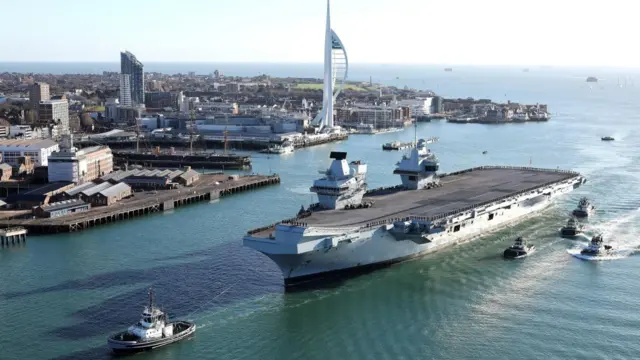
    The HMS Prince of Wales pictured returning home to Portsmouth in November last year

    The BBC has learned that HMS Prince of Wales, one of Britain’s two aircraft carriers, has been placed on advanced readiness to sail from Portsmouth.

    Defence sources say the ship’s crew has been told they must be ready to leave in five days. Before this, the ship’s so-called “notice to sail” was 14 days.

    This may raise speculation that the carrier could be deployed to the Mediterranean to help defend British interests threatened during the conflict in the Middle East.

    The government has been accused of not acting fast enough to protect Cyprus from enemy drones and missiles. The Type 45 destroyer, HMS Dragon, has been deployed to the region but will be ready to leave port until next week.

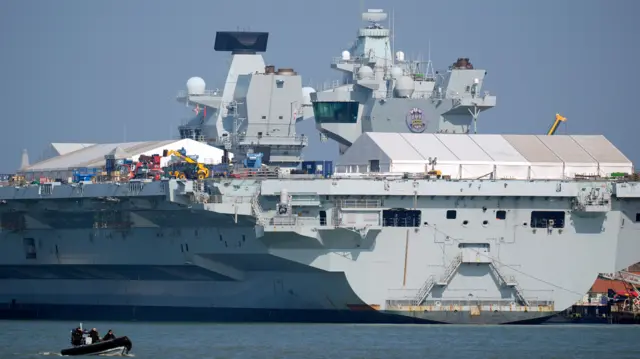
    HMS Prince of Wales is in Portsmouth receiving routine maintenance ahead of a planned deployment to the North Atlantic and Arctic later this year.

    The Royal Navy aircraft carrier HMS Prince of Wales in dock at Portsmouth harbour, Hampshire. Picture date: Wednesday March 4, 2026. PA Photo. The UK will send helicopters with counter-drone capabilities and HMS Dragon, one of the Royal Navy's six Type 45 air defence destroyers, after RAF Akrotiri on Cyprus was hit by a drone.Image source, Andrew Matthews/PA
    Image caption,

    HMS Prince of Wales pictured on Wednesday at Portsmouth harbour

    The carrier strike group was due to take part in Operation Firecrest alongside US, Canadian and European allies to deter Russian aggression in the High North.

    A defence source tells the BBC the Prince of Wales has had “her readiness increased to five days' notice to sail”.

    The Ministry of Defence has confirmed the change in status for the carrier.

    A Ministry of Defence spokesperson says:

    “We have been bolstering our UK military presence in the Middle East since January, and we have already deployed capabilities to protect British people and our allies in the region, including Typhoons, F-35 jets, air defence systems and an extra 400 personnel into Cyprus.

    “Since the strikes began, we’ve had British jets in the sky shooting down drowns and have sent additional assets to the region to further reinforce our air defences, including more Typhoons and Wildcat helicopters with drone busting missiles.

    “HMS Prince of Wales has always been on very high readiness and we are increasing the preparedness of the carrier, reducing the time it would take to set sail for any deployment.”

  17. Political debate replaced with ‘basic survival’, Tehran resident tells the BBCpublished at 13:59 GMT 7 March

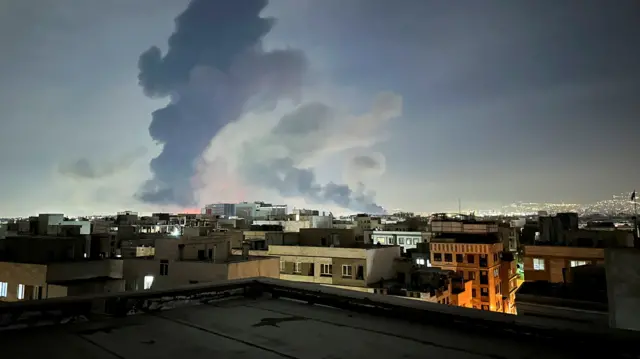
    Description Smoke rises following an explosion, amid the U.S.-Israeli conflict with Iran, in Tehran, Iran, March 7, 2026Image source, Reuters

    A Tehran resident who had been in touch with the BBC via a relative has described how the reality of war has shifted the mood from political debate to “basic survival”.

    “Everyday life becomes about safety, food, communication and protecting family,” he tells BBC Your Voice.

    “Political debates that existed before the war fade in importance when people are under attack.”

    While some believed that war could see the current regime removed, he says that once “missiles start hitting their streets and homes are destroyed” the “reality is very different”.

    "War forces people to confront the human cost," he adds.

    The man continues by saying "uncertainty is one of the hardest parts of this wartime life. When people don’t know what tomorrow will bring, even the most basic daily tasks become extremely difficult.”

  18. Difficult to imagine a normal future with city 'under fire', says man in Tehranpublished at 13:51 GMT 7 March

    Ghoncheh Habibiazad
    Senior reporter, BBC Persian

    It’s still very difficult to contact those inside Iran amid the internet outage, but some manage to connect momentarily. I received a voice message today from a twenty-something man in Tehran.

    He describes the uncertainty of the future in Iran.

    Driving past restaurants and cafes, he imagines "how nice" it would be to visit with family and friends.

    "But we’re in a situation now where I honestly don’t know if a day will come when that restaurant is open again, we’re still alive, my family are still around, Tehran is still intact, and I can actually come back," he says.

    He says he "absolutely hate[s]" the Islamic Republic. "But when I look and see the city I love like this, under fire, smoke rising from different parts of it, it just makes me feel awful," he says.

  19. Analysis

    An apology but no surrender from Iran's presidentpublished at 13:44 GMT 7 March

    Amir Azimi
    Editor, BBC Persian

    Iranian president in a blue shirt sits on a chairImage source, IRNA

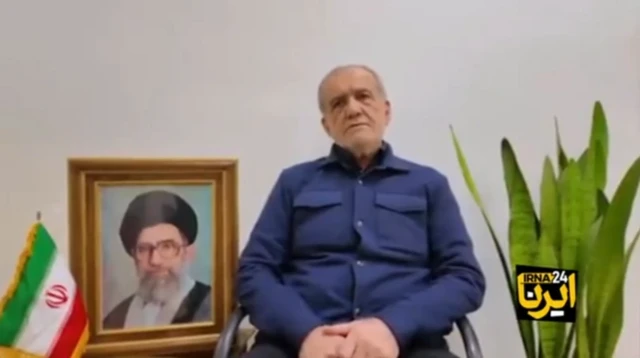
    Iran's President Masoud Pezeshkian appeared earlier in a stark, seemingly unscripted address, seated on a simple chair before a plain white wall. Beside him was a portrait of the now-deceased Supreme Leader Ayatollah Ali Khamenei - killed in the first wave of US and Israeli strikes - as well as a small Iranian desk flag and a plant.

    The setting suggested urgency and pressure on Iran’s interim leadership.

    As a member of Iran’s interim leadership council, Pezeshkian delivered two key messages. He rejected unconditional surrender, saying Iran would “fight to the end”.

    At the same time, he apologised to neighbouring countries targeted in recent days, explaining that some strikes followed “fire at will” orders issued after the attacks began last Saturday.

    He said the council had ordered the armed forces to stop targeting neighbouring states unless attacks on Iran originate from their territory.

    The message has not been universally welcomed inside Iran. Some hardliners have criticised the tone as weak, reflecting a new political moment in which many senior hardline figures are gone while those in lower ranks remain uneasy about the country’s direction.

    US President Donald Trump has interpreted the speech differently, saying Iran has apologised and surrendered to its neighbours.

    The gap raises a question: whether this is a genuine signal of restraint, or simply an attempt by an interim leadership to buy time without being taken seriously.

  20. Iran warns it will 'severely' respond to images shared of destroyed sitespublished at 13:22 GMT 7 March

    BBC Monitoring

    Iran's Intelligence Ministry is warning that it will "deal severely" with anyone sharing images or footage of locations hit in US and Israeli strikes.

    It has released a statement saying people photographing affected areas and sending the images to "terrorist satellite networks, virtual pages and enemy human-media outlets" were "mercenaries" acting for Israel.

    The ministry says it will monitor the actions of such "soldiers of Israel" and prosecute them. It has also urged the public to report any such activity.