Summary

  1. Iran says Natanz nuclear facility has been targeted againpublished at 09:43 GMT 21 March

    Ghoncheh Habibiazad
    Senior reporter, BBC Persian
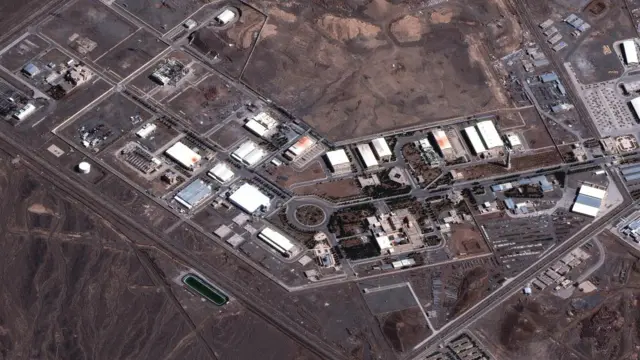
    Overhead view of the Natanz fuel enrichment complexImage source, Reuters
    Image caption,

    The Natanz fuel enrichment complex pictured on 7 March 2026

    Iran’s Atomic Energy Organisation (AEOI) says that the Natanz nuclear facility in central Iran has been targeted again by strikes this morning.

    In a statement published by Iranian outlets, the organisation says that “technical and specialist assessments” regarding radioactive contamination had been carried out and, based on the results, “no leakage of radioactive materials has been reported at this facility, and there is no danger to residents of the surrounding areas.”

    The organisation condemns the attack, saying that it is in “violation of the NPT (Treaty on the Non-Proliferation of Nuclear Weapons) and other regulations related to nuclear safety and security.”

    The AEOI has previously acknowledged an attack on Natanz and said on 3 March that no release of radioactive material had been recorded following strikes on the facility two days previously.

    Back in June, the US dropped bombs on three nuclear sites - Natanz, Fordo and Isfahan - with President Trump claiming afterwards that the attacks "totally obliterated" the Iranian nuclear programme.

  2. Iraq intelligence HQ in Baghdad targeted by drone - security officialpublished at 09:23 GMT 21 March

    The headquarters of Iraq's National Intelligence Service was "targeted by a drone" in Baghdad early on Saturday, the head of the Iraqi Security Media Cell says in a brief statement.

    The site in the Mansour area of the capital was targeted at 10:15 local time (07:15 GMT), Gen. Saad Maan says in the statement, adding that more details would follow.

  3. Gulf left on the cusp after three weeks of war - a recappublished at 09:04 GMT 21 March

    Jacob Phillips
    Live reporter

    Strikes are continuing across the Middle East as the conflict approaches its fourth week, with a large blaze seen at a US diplomatic facility in Baghdad.

    The Gulf is on the cusp and the conflict could still go either way, explains our security correspondent Frank Gardner.

    Here is the latest update from the region:

    Media caption,

    Watch: Huge fire erupts at a US diplomatic facility in Baghdad

  4. 'It does not appear the US is prepared to halt its aggression' - Iranian foreign ministerpublished at 08:41 GMT 21 March

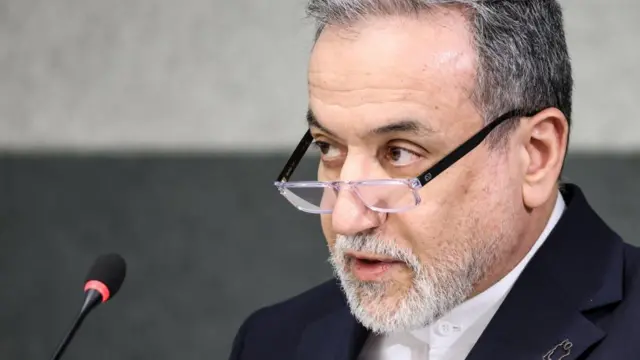
    Abbas Araghchi looks to his right as he speaks next to a microphoneImage source, Reuters

    Iran's foreign minister has welcomed "any initiative that can bring this war to a complete end," adding that this conflict has “been imposed” on the country.

    Abbas Araghchi tells Japanese media outlet Kyodo that Iran is "ready to listen and to consider such proposals."

    But he adds that although some countries are seeking a solution to the conflict in the Middle East, "it does not appear that the United States is prepared to halt its aggression".

    Araghchi says Iran is not seeking a ceasefire, but it is seeking "a complete, comprehensive, and lasting end to the war".

    He also shared the interview on his Telegram account, and a transcript of the interview was also published by the Mehrs News Agency which is linked to the Islamic Propagation Organisation.

  5. Israeli forces clash with Hezbollah in southern Lebanon, killing fourpublished at 08:22 GMT 21 March

    The Israel Defense Forces (IDF) says it has clashed with Hezbollah in southern Lebanon, killing four people.

    The IDF spokesperson for Arab media, Avichai Adraee, says forces spotted several Hezbollah operatives, killing one person on Friday night.

    He adds that an Israeli Air Force aircraft then targeted other members of Hezbollah who had opened fire on its forces.

    Three more people were killed with tank fire, Adraee explains, saying there were no Israeli casualties.

    The Air Force also carried out strikes against Hezbollah headquarters in Lebanon’s capital, Beirut, he continues.

    In a separate update on Telegram, the IDF says rescue forces are on their way to "impact sites" in central Israel after announcing missiles had been launched from Iran.

  6. Reports say Iran fired two ballistic missiles at Diego Garcia basepublished at 07:50 GMT 21 March

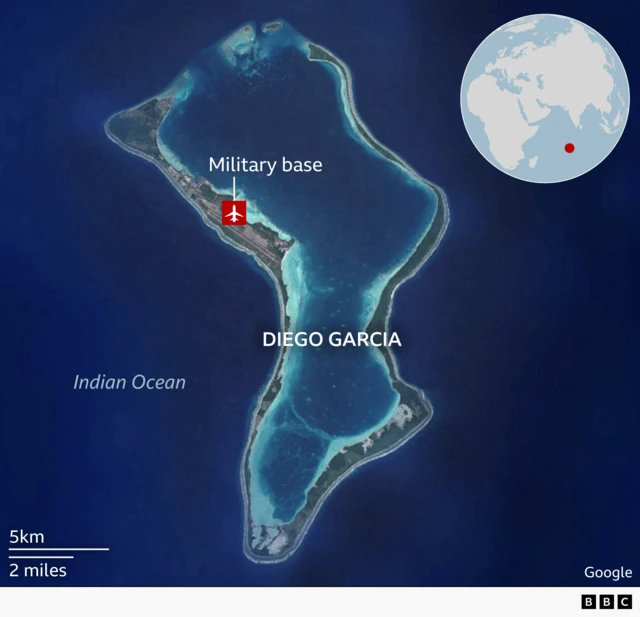
    Iran fired two intermediate-range ballistic missiles at Diego Garcia, a joint US-UK military base, according to reports in US media.

    The Wall Street Journal, citing multiple sources, reports that neither missile hit the base, which is located in the Indian Ocean.

    CNN, citing a US official, reports the missiles were launched on Friday morning local time.

    The distance from Iran to Diego Garcia is about 3,800km (2,361 miles). Iran's former supreme leader had ordered the maximum range of Iranian missiles should not exceed 2,000km (1,243 miles).

    The BBC has contacted the Pentagon and the UK's Ministry of Defence. The Pentagon says it has "nothing to provide at the moment".

    Satellite-style map of Diego Garcia, an island in the Indian Ocean. The island is shown in shades of blue and green, with a label marking a ‘Military base’ near the northwest side, indicated by an airplane icon. A small inset map in the upper-right corner shows Diego Garcia’s location as a red dot in the central Indian Ocean
  7. US to allow sale of Iranian crude as Trump hits out at Nato alliespublished at 07:39 GMT 21 March

    Simi Jolaoso
    North America correspondent

    Trump responds to a question from the news media as he walks to board Marine One on the South Lawn of the White House.Image source, EPA

    Allowing the sale of Iranian crude oil already at sea is the latest conflict-related concession from the Trump administration, which is struggling with Iran’s tight grip on the Strait of Hormuz.

    Critics warn the revenue could fund Tehran’s war effort, but the White House insists Iran will struggle to access the money.

    It came as Donald Trump said the US was close to meeting its objectives and may begin winding down its military campaign - claiming Iran’s military capabilities had been severely degraded. He had earlier said he did not want a ceasefire.

    Trump went on to say the Strait of Hormuz would have to be guarded by other nations which use it - again criticising his allies for not joining the effort, calling Nato members “cowards,” and the UK, too slow.

  8. Israel says it has struck Hezbollah targets in Beirutpublished at 07:03 GMT 21 March

    Hugo Bachega
    Middle East correspondent, in Beirut

    The Israeli military says it has struck Hezbollah targets in the Lebanese capital, Beirut.

    Lebanese media says Israeli military aircraft carried out two air raids. There are no reports of casualties.

    The attacks happened after the IDF issued evacuation orders late at night for seven neighbourhoods in the southern suburbs of Beirut known as the Dahieh, where Hezbollah is based.

    There were also Israeli attacks in the south of the country.

    Reports say a house in the town of Ghandouriyeh was hit, and at least one person was killed.

    Across Lebanon, more than a thousand people have been killed since the start of this conflict, and over a million have been displaced.

    Meanwhile, Hezbollah says it fired rockets at Israel's Filon base, near the northern city of Rosh Pinna.

  9. South Korea joins signatories of joint statement on Strait of Hormuzpublished at 06:50 GMT 21 March

    South Korea says it will contribute to international efforts to ensure safe and free navigation of the Strait of Hormuz, the Reuters news agency reports.

    It is the most recent signatory to a statement that was issued on Thursday and expresses a "readiness to contribute" to "appropriate" measures to secure the strait.

    Originally signed by the leaders of the UK, France, Germany, Italy, the Netherlands and Japan, the statement has since been joined by Canada, Australia, New Zealand, Denmark, Latvia, Slovenia, Estonia, Norway, Sweden, Finland, Czechia, Romania, Bahrain and Lithuania.

    It remains unclear what the efforts to secure the waterway would entail.

    You can read more about why the Strait of Hormuz is so important here.

  10. Missiles pictured over the occupied West Bankpublished at 06:12 GMT 21 March

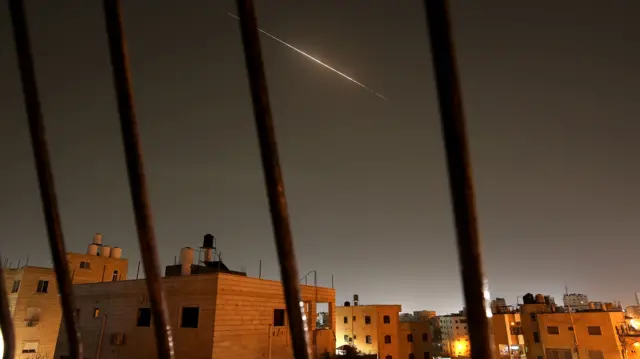
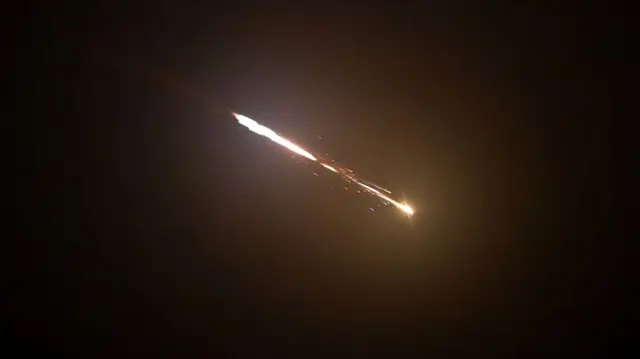
    Missiles launched from Iran towards Israel were photographed in the sky over Hebron in the occupied West Bank, early on Saturday morning.

    Israel responded to several attacks overnight, which the IDF has said were launched from Iran.

    A streak of bright light is seen in a dark sky above the city of Hebron in the West Bank.Image source, Anadolu via Getty Images
    Missiles are seen fragmenting into smaller submunitions mid-air, after the Israeli air defense system was activated to intercept and neutralise the incoming projectiles.Image source, Anadolu via Getty Images
  11. Israel and Gulf nations respond to attackspublished at 05:41 GMT 21 March

    Israel has responded to several attacks over the past few hours, which the Israeli military says are Iranian.

    The IDF confirmed that alerts were sent to the public as a precautionary measure, as defensive systems operated to "intercept the threat".

    Saudi Arabia says they have intercepted dozens of drones overnight, while neighbouring Kuwait confirmed that their air defence system had been activated in response to "hostile missile and drone threats".

    As we reported earlier, Iran has also made threats to strike the UAE city of Ras Al Khaimah with "decisive force" as part of a dispute over two islands occupied by Iran but long claimed by the Emirates.

  12. Analysis

    Trump's shift in tone suggests recognition Strait of Hormuz can't be resolved by US alonepublished at 05:23 GMT 21 March

    Simi Jolaoso
    North America correspondent

    President Trump is grappling with the strategic quagmire that is the Strait of Hormuz.

    It may be the obstacle standing between him and a declaration of victory in this conflict.

    Trump is now framing the chokehold as a problem for the rest of the world and not for the United States, despite previously insisting the US would secure it “one way of the other” and dismissing the need for support from NATO allies and key partners like Japan and South Korea.

    Now, he is again calling on those countries to step in, labelling some “cowards” for their reluctance.

    The reality is, a spike in Hormuz affects a fuel station in Washington just as much as one in Tokyo.

    President Trump’s shift in tone suggests a frustrated recognition that this is a problem he must face and not one he may be able to resolve alone.

  13. Watch: Huge fire erupts at US diplomatic facility in Baghdadpublished at 05:09 GMT 21 March

    This is video of a blaze at a US diplomatic facility in Baghdad, which we reported on a couple of hours ago.

    Sources in the Iraqi capital told AFP that there were at least three attacks on the diplomatic and logistics hub, which they report houses US military personnel, and a fire broke out following the third strike.

  14. US looking at ways to seize Iran's nuclear materials, CBS reportspublished at 04:32 GMT 21 March

    The Trump administration has been strategising ways to secure or extract Iran's nuclear materials, multiple sources have told CBS News, the BBC's US partner.

    Two sources told the publication that planning has centred on the possible deployment of forces from the secretive Joint Special Operations Command, an elite military unit that is often tasked with highly sensitive operations.

    Another source said that US President Donald Trump has not yet made a decision on any such operation.

    A White House spokeswoman told CBS that it is the Pentagon's job to make preparations.

    For context: The US and Israel have repeatedly targeted key sites linked to Iran's nuclear programme - which Iran insists is entirely peaceful - with air strikes since the beginning of the war on 28 February.

    The two countries have led Western opposition to Iran's nuclear programme, claiming Iran is seeking to develop a nuclear bomb - something Iran has vehemently denied.

  15. Statement attributed to IRGC overseas operations arm appears on Iranian mediapublished at 03:58 GMT 21 March

    Ghoncheh Habibiazad
    Senior reporter, BBC Persian

    One thing that I spotted today was that, for the first time since the war started on 28 February, a statement attributed to Esmail Qaani has emerged on Iranian outlets.

    Qaani is the chief commander of the Islamic Revolutionary Guard Quds Force Corps (IRGC-QF), which is in charge of the IRGC’s overseas operations.

    Iranian outlets have published the statement, addressed to commanders and leaders of the "Axis of Resistance" - Iran’s coalition of allies and proxies.

    In the statement, Qaani argues that the absence of senior figures does not weaken the movement.

    He states that although the "leader of the martyrs of resistance" is no longer present, the ideological path of the Islamic Republic under its founder Ruhollah Khomeini and the late Ali Khamenei will continue with "firmness and authority" under the new Supreme Leader, Mojtaba Khamenei.

    The trend of Iranian outlets publishing written messages attributed to Iranian officials and commanders seems to be growing in Iran. Today, a written message attributed to Mojtaba Khamenei was read aloud by the state TV’s presenter.

    This represented a stark difference compared to Nowruz messages given by his father Ali Khamenei, who would traditionally deliver the message in front of camera.

    Mojtaba Khamenei, who was chosen as the successor to his father earlier this month, has yet to be seen in person - nor filmed or photographed - since being chosen. So far, several written messages by him have been published by Iranian media.

  16. Iran ready to help Japanese ships pass Strait of Hormuz, Iranian FM tells Japanese mediapublished at 03:35 GMT 21 March

    Iranian Foreign Minister Abbas Araghchi has told Japan's Kyodo News that Iran is prepared to allow the passage of Japanese-linked vessels through the Strait of Hormuz.

    Araghchi stated that discussions with the Japanese side had already begun, with a view to a temporary lifting of the blockade, the publication reported.

    A Japanese government official told Kyodo that "direct negotiations with the Iranian side are the most effective way to lift the blockade", in response to Araghchi's remarks.

    They added that the utmost care must be taken not to provoke the US, noting that even if Japanese vessels were allowed to pass through the waterway, it would not solve the ongoing energy crisis.

    Another official from Japan's Ministry of Foreign Affairs told Kyodo that the "true intent" behind Araghachi's statement should be "carefully assessed".

  17. Gulf is on the cusp as Eid begins, says BBC's Frank Gardnerpublished at 02:53 GMT 21 March

    The BBC's security correspondent Frank Gardner takes a look at the where things stand in the Middle East, as the war between the US, Israel and Iran approaches a fourth week.

  18. Israel launches new strikes on Tehran, IDF sayspublished at 02:19 GMT 21 March

    The Israel Defence Forces (IDF) says they are striking "Iranian terror regime targets" in Tehran, Iran's capital.

    It comes following Israeli strikes on Lebanon, which the IDF said were targeting Beirut. It had issued an evacuation warning for seven areas in the south of the city shortly before announcing the start of the attack.

  19. Threat level for Middle East remains critical, says maritime bodypublished at 01:56 GMT 21 March

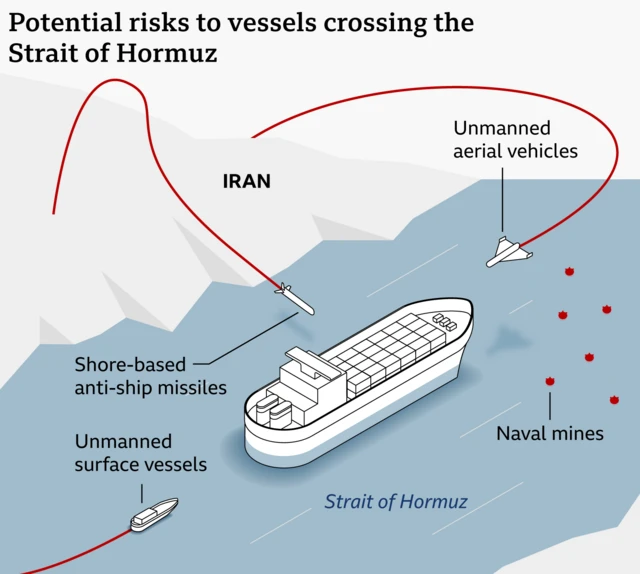
    The United Kingdom Maritime Trade Operations (UKMTO) says that the maritime threat level across the Arabian Gulf, Strait of Hormuz and Gulf of Oman remains critical.

    Though there have been no reported maritime incidents in the past 24 hours, there have been 21 confirmed attacks on commercial vessels and offshore infrastructure since the 1 March.

    The UKMTO noted the incidents have had no consistent pattern of Western ownership linkage, which it warned was indication the current strike pattern reflects a campaign of broad maritime disruption.

    A map showing the potential risks to ships crossing the strait. It shows a ship and four threats: unmanned aerial vehicles, shore-bases anti-ship missiles, unmanned surface vessels, and naval mines.
  20. Islamic Resistance in Iraq says it attacked 'enemy' basespublished at 01:24 GMT 21 March

    The Islamic Resistance in Iraq says it has carried out 27 operations in the past 24 hours, employing dozens of drones and missiles "against enemy bases in Iraq and the region".

    It comes as we receive reports of renewed drone strikes on a US diplomatic facility near Baghdad International Airport.

    Sources told AFP that there were at least three attacks on the diplomatic and logistics hub, which they report houses US military personnel. A fire broke out near the facility following the third strike, one official confirmed to the news outlet.

    For context: Iran supports militias under the umbrella of the Islamic Resistance in Iraq (IRI) which are part of the Popular Mobilisation Forces (PMF).

    The PMF were formed over the last decade to fight the Islamic State group.