Summary

  1. US special envoy: Iranian effort to terrorise Middle East having opposite effectpublished at 17:56 GMT 10 March
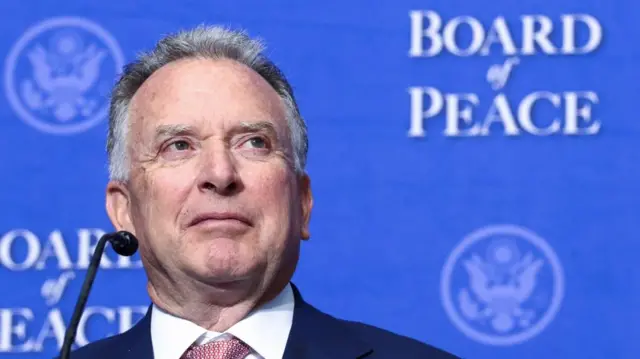
    US Special Envoy Steve Witkoff listens as US President Donald Trump (not pictured) speaks at the inaugural Board of Peace meetingImage source, Reuters

    Steve Witkoff says Donald Trump is open to communication with Iran, but there is no indication of a diplomatic solution.

    Speaking to CNBC, the US special envoy says the "Iranian effort to terrorise the area is having the opposite effect", and is instead "bringing people together" in the region.

    He adds that multiple countries have reached out to the US "who want to be a part of the Abraham Peace Accords".

    Witkoff also spoke about Trump's call with Russian President Vladimir Putin on Monday. He says Putin told Trump Russia had not been sharing intelligence with the Iranians about US assets.


  2. Analysis

    Oil price drops sharply to $82 a barrelpublished at 17:49 GMT 10 March

    Mark Broad
    Business news editor

    The cost of a barrel of Brent crude oil has dropped sharply in the last hour after US Energy Secretary Chris Wright posted on X that the US had successfully escorted an oil tanker through the Straights of Hormuz.

    Oil fell from a high of $94 a barrel earlier on Tuesday, to then hit $82 a barrel at 17:30 GMT.

    Wright's post on X has since disappeared.

    It had said: "President Trump is maintaining stability of global energy during the military operations against Iran.

    "The U.S. Navy successfully escorted an oil tanker through the Strait of Hormuz to ensure oil remains flowing to global markets."

  3. Iranians living abroad met with legal proceedings from country's judiciarypublished at 17:43 GMT 10 March

    Ghoncheh Habibiazad
    Senior reporter, BBC Persian

    The Iranian judiciary says it has initiated legal proceedings against members of the Iranian diaspora who have allegedly "acted on the enemy’s front", according to a report by judiciary-affiliated Mizan News Agency.

    It's unclear at this point how many have been targeted.

    The judiciary had recently announced plans to target Iranians living abroad by confiscating their property on the grounds that they're "aligned with the enemy".

    In the days since the war started, Iranians in the diaspora have held rallies in several cities, including London and Toronto, against the current Iranian establishment.

  4. Explosions heard in Tehranpublished at 17:37 GMT 10 March
    Breaking

    More explosions have just been heard in Tehran.

    Our BBC Persian colleagues say the Iranian capital is currently being targeted.

    And journalists from the Agence France-Presse news agency say they heard three explosions in the city.

  5. We answer your questions on economic impact of war - watch livepublished at 17:30 GMT 10 March

    In the next few minutes, a panel of experts will answer your questions on the economic impact of the conflict in the Middle East - particularly what it means for your money.

    The panel will include financial commentator Susannah Streeter, consumer finance journalist Lindsay Cook, The Independent's travel correspondent Simon Calder and president of the National Farmer's Union, Tom Bradshaw.

    You can follow along on the BBC News Channel and by tapping watch live at the top of this page.

    A red banner with white writing that reads your voice
  6. 'The blast was so powerful, it threw me back': Iranians describe life during warpublished at 17:27 GMT 10 March

    People crossing the border from Iran into Van, eastern Turkey have been speaking to the BBC's Emily Wither about how everyday life's been affected by US-Israeli strikes.

    "When I opened the balcony door, the blast was so powerful it threw me back", one woman says, describing missile strikes.

    In the early days of the war, she says the "strikes were few, now they come in waves".

    Iranians who are crossing the border in Van, Eastern Turkey have spoken to BBC's Emily Wither

    Another woman recalls how her house shook after a nearby strike. "Sometimes we felt like we were dying," she says.

    Meanwhile, a 19-year-old man says he was injured in an explosion in Tehran. He says he was standing on a street in the capital when a police station 50 metres away was attacked.

    "Just as we were leaving the street two flying bombs were exploding and something hit my head. A lot of people died there," he says.

  7. Iranian Red Crescent Society tells of damage to civilian infrastructure, including schools and medical centrespublished at 17:21 GMT 10 March

    In Iran, more than 19,000 civilian "units" have been damaged since the start of the war, the head of the Iranian Red Crescent Society tells multiple media outlets, including US-based Human Rights Activists News Agency.

    More than 16,000 of those "units" are residential and more than 3,000 are commercial, the agency says.

    Among the damaged facilities are 77 pharmaceutical and medical centres, as well as 69 schools, it adds.

    Earlier, Defense Secretary Pete Hegseth said the US would investigate allegations of civilian casualties in Iran. "No nation takes more precautions to ensure there's never targeting of civilians than the United States of America," he added.

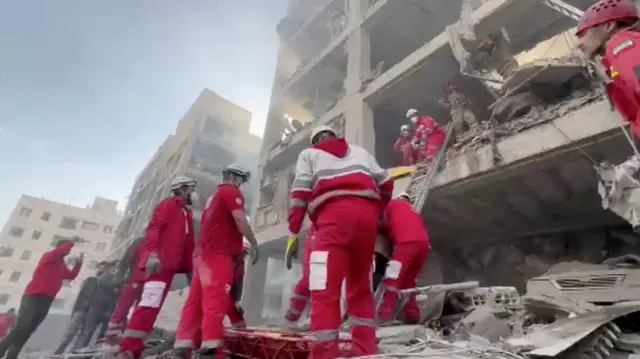
    Lots of emergency workers stood at the bottom of a building among rubble. The building is very damaged with no wallsImage source, Reuters
    Image caption,

    Iranian rescuers were pictured earlier in the rubble of residential buildings in Tehran, following strikes

  8. Three US bombers take off from RAF Fairfordpublished at 17:04 GMT 10 March

    Ellie Price
    Reporting from RAF Fairford, south-west of England

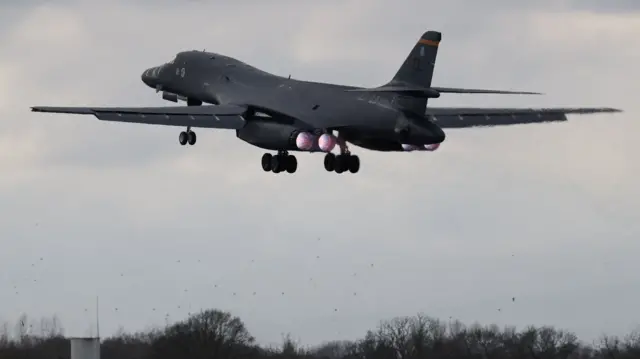
    A USAF B-1 bomber takes off from RAF FairfordImage source, Reuters

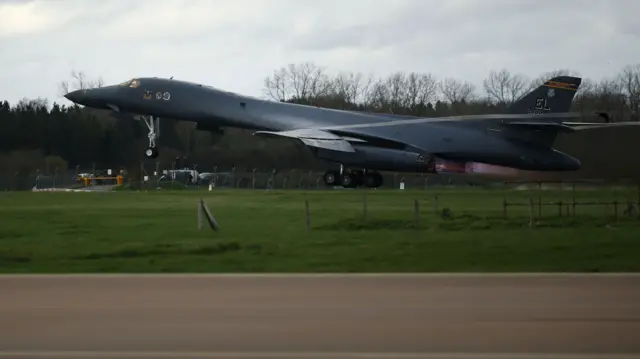
    A little earlier, three B-1 bombers took off from RAF Fairford.

    The arrival of US B-1 and B-52 bombers at RAF Fairford, in the south-west of England, has attracted a number of plane-spotters and amateur photographers.

    Several of them told me they've counted 12 B-1 bombers here, after four more landed earlier.

    We've seen lots of activity. Some of the planes have their engines running, while others have personnel who appear to be checking them.

    Neither the MoD in the UK nor the Pentagon in the US have confirmed whether any of these aircraft have been involved in any bombing missions to Iran yet.

    A US Air Force USAF B-1 Lancer bomber takes off at RAF Fairford in the Cotswolds, Britain, 10 March 2026Image source, EPA/Shutterstock
  9. UK government: We're working to mitigate threats to our shippingpublished at 16:57 GMT 10 March

    Also in the UK, Downing Street says the government is continuing to work closely with allies in the Middle East "to mitigate threats to UK shipping, wherever possible".

    A spokesman for Prime Minister Keir Starmer says the government is working on a range of options to support shipping through the Strait of Hormuz. Energy Secretary Ed Miliband had said he'd spoken to firms including BP and Shell, to reassure them of the government's concern for the safety of the vessels and employees in the region.

    The PM's spokesman says the Department for Transport is also involved, and "providing advice and guidance where necessary".

    Asked about the UK's military movements, and whether they'd deploy to the shipping channel, the spokesman says the government's "priority remains de-escalation and a return to diplomacy".

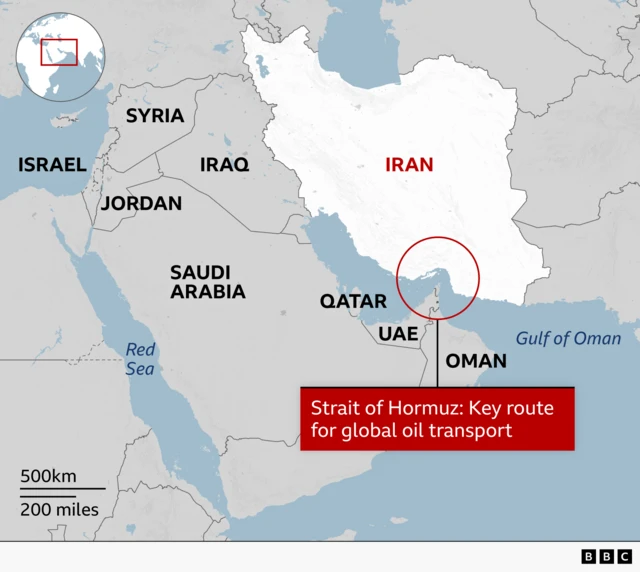
    Map showing where the Strait of Hormuz is in the Gulf of Oman, a key route for global oil transport. The strait lies between Iran and the peninsula of the United Arab Emirates and Oman. The map also shows countries in the wider Middle East region including Saudi Arabia, Iraq, Jordan and Israel
  10. HMS Dragon: Capable of launching eight missiles in under 10 secondspublished at 16:41 GMT 10 March

    We've just received a bit of information about HMS Dragon, from the Ministry of Defence.

    It's one of the Royal Navy's six Type 45 Destroyers, which make up the fleet's first line of defence against aerial threats such as aircraft, missiles and drones.

    Normally based in Portsmouth, with a crew of around 200 sailors, it's capable of protecting an area up to five times the size of Cyprus. It can also track hundreds of targets simultaneously, the MoD says.

    Its Sea Viper missile system can launch eight missiles in under 10 seconds, and can direct up to 16 missiles onto their targets simultaneously, firing at four times the speed of sound.

    Last year, HMS Dragon became the first British warship to destroy a missile travelling at supersonic speed during an international exercise off Scotland.

  11. HMS Dragon leaves Portsmouth and heads to Cypruspublished at 16:14 GMT 10 March
    Breaking

    British warship HMS Dragon has left Portsmouth and is heading to Cyprus.

    UK PM Keir Starmer confirmed a week ago that the Type 45 Destroyer would be deployed to the Mediterranean region, after a drone struck the runway at the RAF Akrotiri base in Cyprus, causing what the Ministry of Defence (MoD) described as "minimal damage".

    The Royal Navy has no major warship in the Mediterranean region.

    You can watch the HMS Dragon's departure at the top of the page, and follow more in our dedicated live coverage here.

    Media caption,

    HMS Dragon sets sail from Portsmouth on its way to Cyprus

  12. 'The idea of no future is looming large over us', Iranian resident tells BBC Persianpublished at 16:00 GMT 10 March

    Adel had been visiting relatives in Iran when he spoke to BBC Persian in the city of Van, on the Turkey-Iran border.

    "I just wish that the people of Iran can finally be free from war," says Adel, who was born in Tehran and has lived in Thailand for the past 20 years.

    He asked his sister if she can take his parents out of Tehran, where "the air has become very polluted".

    Adel, an Iranian who has been living in Thailand for the past 20 years, speaks to BBC Persian from the  city of Van on the Turkey-Iran border.Image source, BBC Persian
    Image caption,

    Adel is an Iranian who has been living in Thailand for the past 20 years.

    Amir, whose name has been changed to protect his identity, spoke to BBC Persian on Monday from Tehran, where he said the sound of the bombing "is so loud that it would be heard across the city".

    Amir said "this is my city" and he does "not want to leave Tehran under any circumstances".

    "We feel overwhelmed, we feel anxious and exhausted and the idea of no future is looming large over us," he added.

    BBC Persian is the Persian language service of BBC News, used by 24 million people around the world - the majority in Iran - despite being blocked and routinely jammed by Iranian authorities.

  13. Gas and oil prices drop, but are still elevatedpublished at 15:46 GMT 10 March

    Nick Edser
    Business reporter

    A quick reminder of some of the main moves on the financial markets today.

    The price of oil has fallen sharply after Donald Trump’s comments on Monday, that the war in Iran was "very complete, pretty much", raised hopes that a drawn-out conflict could be avoided.

    Brent crude is currently trading at about $88-a-barrel, well below the level of about $119 it reached on Monday.

    Despite the falls over the past 24 hours, oil prices are still significantly higher than they were before the war, when prices were around $72 a barrel.

    The price of gas has also dropped, with UK prices for month-ahead delivery falling sharply to 126p a therm, compared with yesterday's peak of 171p.

    Falling energy prices have boosted shares. London’s FTSE 100 is up 1.8%, and after a subdued start US indexes perked up and the S&P 500 is now 0.4% higher.

    However, many risks remain. Energy prices had originally spiked on worries that the conflict would cause lengthy disruption to energy supplies through the Strait of Hormuz, the key shipping lane that normally sees about a fifth of the world's oil supplies passing through it.

    Traffic through the strait has all but halted since the war started more than a week ago. And on Tuesday the boss of Saudi Arabia's Aramco, the world's ‌biggest oil exporter, warned of "catastrophic consequences" if the route remained blocked.

  14. Smoke rises over Tehran and Beirutpublished at 15:37 GMT 10 March

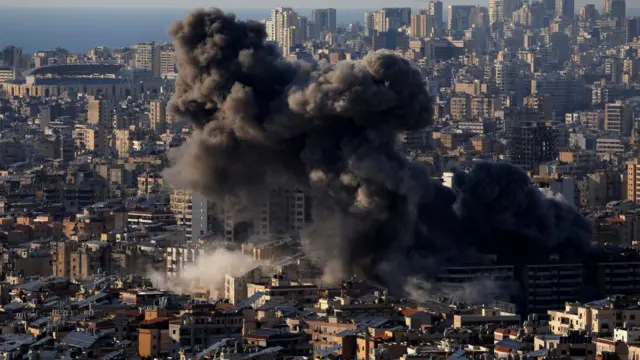
    A thick black cloud of smoke rises over tower blocks in the south of BeirutImage source, Reuters
    Image caption,

    Thick smoke rises after an Israeli strike on Beirut's southern suburbs on Tuesday

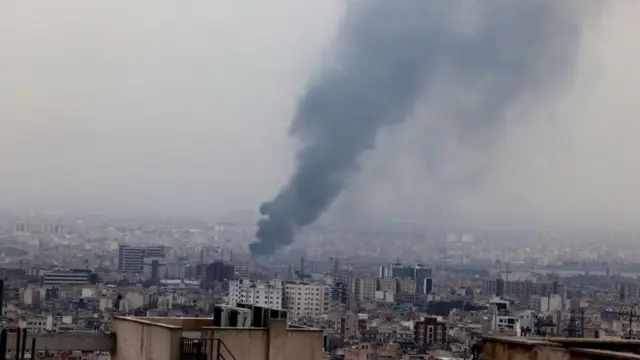
    Smoke rises in between tower blocks in Tehran. A number of tower blocks can be seen in the front of the photoImage source, EPA/Shutterstock
    Image caption,

    Smoke caused by an airstrike in central Tehran on Tuesday

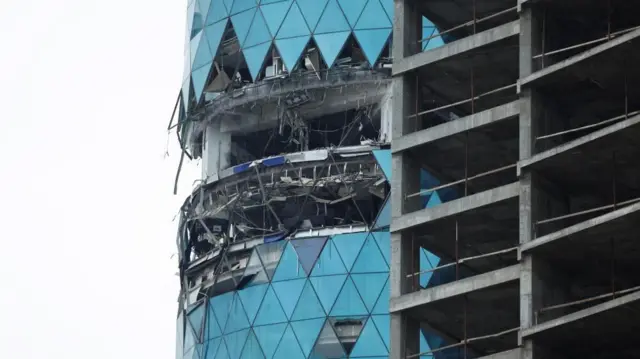
    Several floors of a bright blue glass building are smashed and shattered following a strikeImage source, Reuters
    Image caption,

    A building damaged by a reported Iranian drone strike in Manama, the capital of Bahrain

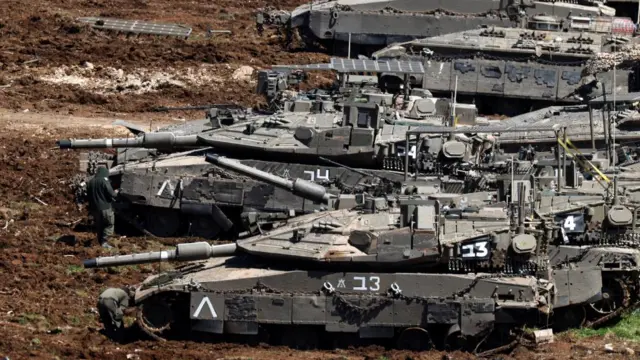
    Soldiers are seen checking tanks in a muddy field near the Lebanon borderImage source, Reuters
    Image caption,

    Israeli tanks positioned on the Israeli side of its border with Lebanon

  15. Natural gas prices are still inflatedpublished at 15:26 GMT 10 March

    In addition to oil prices, natural gas prices have surged since the outset of the conflict in the Middle East.

    UK prices have decreased since they peaked on Monday, but are still hovering just above 120p per thermal unit. Prices were 70-90p before the conflict started.

    This Flourish post cannot be displayed in your browser. Please enable Javascript or try a different browser.

  16. Iran war offers a boon to Russia's war economypublished at 15:17 GMT 10 March

    Vitaliy Shevchenko
    Chief analyst, BBC Monitoring

    The ongoing crisis in the Middle East is allowing Russia to make more money out of oil and gas exports, analysts say.

    Russia is benefiting from the disruption of the global oil supply and the resulting higher energy prices, as well as from the easing of sanctions on Russian oil.

    According to the Centre for Research on Energy and Clean Air think tank (CREA), a week after Israeli-US airstrikes on Iran started on 28 February, Russia’s average daily fossil fuel export earnings have totalled an estimated €510m (£441m) per day, 14% more than February’s daily average.

    CREA's Vaibhav Raghunandan says the figure is only likely to rise, undoing the recent damage to Vladimir Putin's war economy caused by sanctions imposed over his invasion of Ukraine.

    "There's a huge amount of sudden gains over the past week, and they'll only increase as time goes by. The longer this crisis continues, the better it is for Russia," Raghunandan told the BBC.

    "It's a bit of a gut punch for, I would say, Ukrainian support, simply because this is a huge huge oxygen boost for Russia," he said.

    Currently, oil and gas account for about a quarter of Russia's state revenue, according to CREA.

  17. How the war could impact your money: Send us your questionspublished at 15:06 GMT 10 March

    What does the conflict in the Middle East mean for your money? How could it affect your energy bills, petrol prices and your rent or mortgage?

    These are some of the questions our experts will be answering on this page and on the BBC News channel at 17:30 GMT today.

    You can send your specific queries to the team in the following ways:

    Please read ourterms & conditions andprivacy policy

    In some cases a selection of your comments and questions will be published, displaying your name and location as you provide it unless you state otherwise. Your contact details will never be published.

    BBC Your Voice branding
  18. UAE air defences deal with nine ballistic missiles and 35 drones today - MODpublished at 14:59 GMT 10 March

    United Arab Emirates air defences have detected nine ballistic missiles today, destroying eight while one fell in the sea, the nation's Ministry of Defence has said.

    An additional 35 drones were detected, 26 of which were intercepted while nine fell in UAE territory.

    According to the MOD's post on X, this brings the total of Iranian weaponry directed at the UAE to 262 ballistic missiles (241 of these destroyed) and 1,475 drones (1,385 of these intercepted).

    The attacks have resulted in six deaths, of Emirati, Pakistani, Nepalese and Bangladeshi nationalities.

    "The Ministry of Defense affirms that it is on high alert and readiness to deal with any threats and to firmly counter all that targets the destabilization of the state's security, ensuring the preservation of its sovereignty, security, and stability, and protecting its interests and national capabilities," the MOD said.

  19. British Airways cancels more Middle East flightspublished at 14:43 GMT 10 March

    Simon Browning
    Transport correspondent

    British Airways has cancelled more flights to the Middle East.

    BA said flights to Amman, Bahrain, Doha, Dubai, Tel Aviv have been cancelled up to and including 28 March.

    Abu Dhabi will not restart until October, as this is only a winter route for BA.

    The airline said the update was to give more certainty to passengers.

    BA still has two more repatriation flights from Oman to the UK this week, with tickets still on sale. The airline continues to operate a reduced service to Larnaca, Cyprus.

  20. Wall Street opens flatpublished at 14:39 GMT 10 March

    Natalie Sherman
    New York business reporter

    The US stock market is flat this morning, as concerns about the situation in Iran persist.

    The Dow Jones Industrial Average and S&P 500 were down about 0.3% in early trade, while the Nasdaq was flat.

    As a major producer of oil and gas, the US is less exposed to economic risks from the jump in oil prices sparked by the US-Israeli war.

    Its shares have been less impacted than those in regions that rely more heavily on energy imports.