Summary

Media caption,
Mothers told they "were not important" and to "pull themselves together"
  1. Maternity reviewer says search for answers 'very much a jigsaw'published at 10:33 BST 24 June
    Rob Sissons
    East Midlands health correspondent

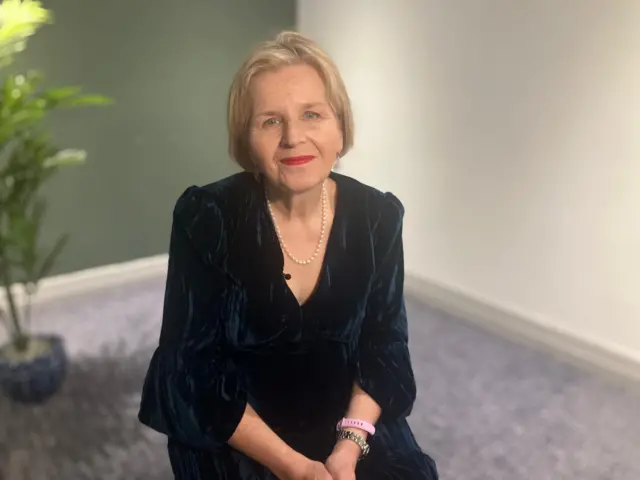
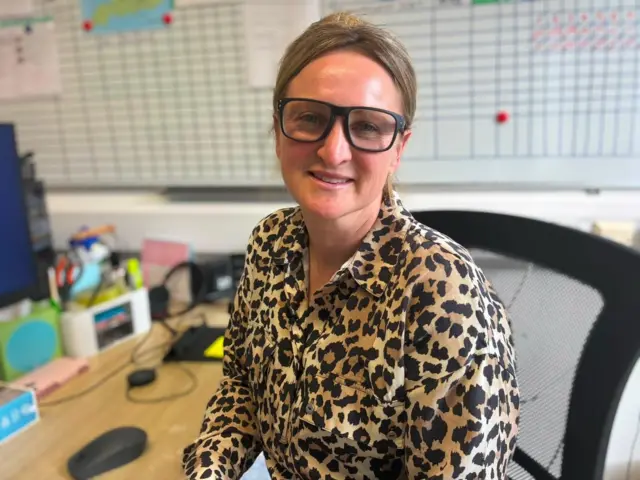
    Amy Pollard (pictured below) is one of more than 200 reviewers in Donna Ockenden's team, tasked with finding answers for families.

    Pollard has more than 20 years' experience as a midwife, and has worked at five NHS trusts.

    Review work involves looking through patient notes, and looking at feedback and interviews with families.

    Pollard said: "We are very much in tune with what the families are asking of us.

    "As reviewers, we are looking at the transcript of where families have met Donna or one of the team and the questions they have."

    Working out what happened, she said, "is very much a jigsaw". Pollard added it was a multi-disciplinary team effort, with team members based across the country away from Nottingham.

    "We look at every case individually - we review their entire notes. Every single page of medical notes," she added.
    Amy Pollard

    Ockenden added each case was scrutinised by "at an absolute minimum, a midwife and an obstetrician". If more input is required, the notes can be looked at by people with more specialist expertise, such as anaesthetists or neonatologists.

    At the height of the review, Ockenden said it had more than 200 doctors, midwives and nurses working on the team.

    "It is a big job - all done for the right reasons," she said. "We are never going to say to a family, 'we are so sorry, your case is far too difficult and we couldn't do it'.

    "We will keep on going and people like Amy working with such specialist reviewers has been central to what we do."
  2. Room being prepared for Nottingham report unveilingpublished at 10:25 BST 24 June

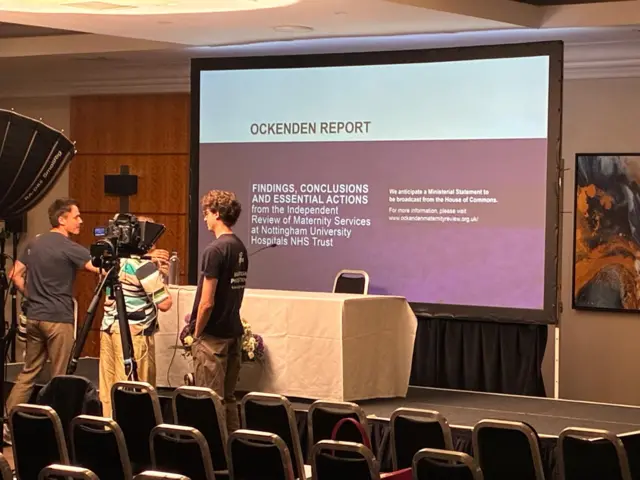
    A room at the Crowne Plaza hotel in Nottingham is being set up, ready for Donna Ockenden to report her findings later this morning.

    A camera is set up in front of a table on a raised stage. A presentation screen reading "Ockenden report" is behind.
  3. Mum recalls 'horrific' treatment received in run-up to daughter's stillbirthpublished at 10:22 BST 24 June

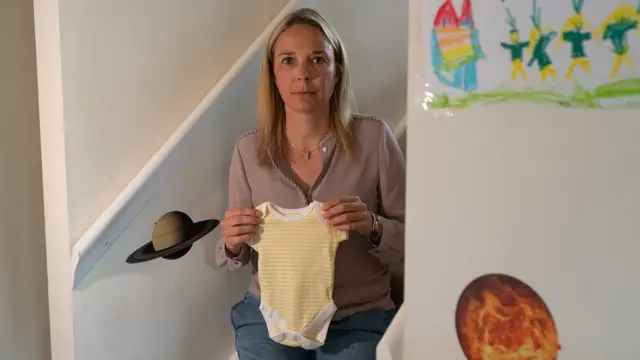
    Sarah Hawkins holds up daughter Harriet's baby grow while sitting on steps of her home

    Sarah Hawkins worked at the trust as a senior physiotherapist when her daughter Harriet was stillborn at Nottingham City Hospital in 2016.

    She told BBC Radio 4's Today programme she repeatedly contacted the hospital for help after she began contracting the day after her due date. Despite experiencing days of contractions, she was advised she was "not in labour".

    "The last phone call I made just before I went in, I remember lying on the sofa thinking 'I'm just going to have to do this on my own, I'm going to have to deliver on my own because no-one will let me come into the hospital'," she said.

    Sarah says she finally went to hospital after she began "delivering something at home", describing the treatment she received as "horrific".

    After being moved to her room and told the baby was about to arrive, there was an unsuccessful attempt to monitor Harriet's heartbeat and a doctor was called in.

    "They called the doctor, the doctor scanned and said 'I'm sorry, your baby's dead,' and then he left the room," she said.

  4. Some senior leaders 'refused to take part in maternity review'published at 10:16 BST 24 June

    Rob Sissons
    East Midlands health correspondent

    The Nottingham review, led by Ockenden, formally began in September 2022 - and has grown into the largest in the NHS, now examining more than 2,500 cases.

    From the outset Ockenden pledged "no voice would be left unheard", and that maternity services would be left in a better place than when she began. She has recently stressed that improvements have been made, but there is still "significant work to do".

    Since then, she has worked to reach out into Nottingham's diverse communities, encouraging families and staff to come forward.

    More than 800 staff, past and present, with a connection to Nottingham's maternity units have done so, sharing their experiences of care and the culture within the trust. But the review has also faced resistance with some former senior leaders declining to take part.

    That lack of co-operation has angered families, who say only a full statutory public inquiry can compel those individuals to give evidence, to explore wider problems in England's maternity services.

    Donna Ockenden

    Ultimately, what many families I have spoken to want after the final report is accountability. The legal status of Ockenden's investigation is a non-statutory public inquiry - meaning she cannot force people to give evidence.

    Ockenden herself accepts families should never have had to fight this hard for answers. She says what they have been through to get scrutiny is "not acceptable" - a pattern she's seen before in Shrewsbury and Telford, and more recently in other parts of the country including Leeds and Sussex, where she is preparing to carry out similar reviews.

    Those earlier findings from Shrewsbury and Telford came with a set of so‑called "essential actions" but progress, she said, had been inconsistent.

    "There was early activity," she said. "But then disappointing progress and we are still not on the front foot with sufficient speed and vigour."

    Her Nottingham findings, she warned, "can't be another lost opportunity".

  5. 'Systematic change' needed in maternity care, government lead adviser sayspublished at 10:10 BST 24 June

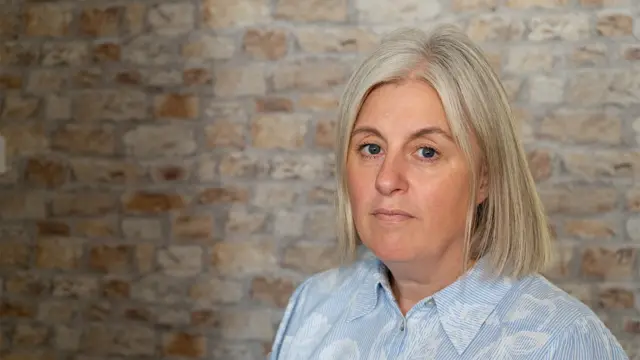
    Michelle Welsh poses for photo in front of a brick wall

    The government's first national maternity adviser, Michelle Welsh, says "systematic change" is needed to address the crisis faced by maternity care in the country.

    Welsh, who is also chair of the all-party parliamentary group for maternity and Labour MP for Sherwood Forest, has previously shared her experience of giving birth to her son William in 2020, saying their lives were "put at risk by a failing maternity service" at NUH.

    Speaking ahead of the release of the Ockenden review into maternity care in Nottingham, Welsh told BBC Radio 4's Today programme there is now "a momentum" to deliver necessary change.

    "I haven't got in within those doors to sit there quiet and just nod my head," she says. "I'm absolutely out there, at the forefront, being very, very loud and clear about the fact that we do need the funding.

    "But funding alone is not going to solve this crisis. There needs to be huge systematic change."

    She adds: "The government has to be bold in the policies that it makes, because tinkering around the edges will not solve this crisis."

  6. What is expected to happen, and when?published at 09:56 BST 24 June

    Accredited media are expected to arrive at the Crowne Plaza hotel in Nottingham from 09:30 BST, ahead of Ockenden revealing her findings following the four-year investigation carried out by her and her team.

    Teams including the press will be briefed upon arrival before the affected families arrive.

    Ockenden is due to begin detailing the findings of her report from 11:45, and will speak for approximately one hour.

    From there, the independent report and its findings will be made available to the public.

    Nottingham University Hospitals (NUH) NHS Trust, which is at the centre of the maternity scandal, will issue a statement to coincide with the release of the report.

    In Westminster at 12:00, MPs may address the findings during the weekly session of Prime Minister's Questions. A ministerial statement is also expected later in the afternoon.

    Affected families are then expected to host a press conference for the gathered media in the afternoon.

  7. Analysis of the biggest ever NHS maternity investigationpublished at 09:47 BST 24 June

    Rob Sissons
    East Midlands health correspondent

    Over recent years, I have had the privilege of interviewing those at the centre of the maternity scandal - the families, the NHS trust on its mission to improve and received regular updates from Donna Ockenden on the progress of her review.

    Some of what she has uncovered we know already, as she provided updates and fed learning points back to the hospitals to improve.

    The Nottingham maternity review is the biggest investigation ever carried out into an NHS maternity service, and the final report's findings are expected to expose years of failings, and warnings about maternity care from staff and families.

    The report is expected to put a figure on the scale of avoidable harm. It is widely expected it will be bigger than Shrewsbury and Telford, where Ockenden carried out her last maternity review.

    Nottingham City Hospital

    At the centre of the review are the harmed families, who say they had to fight, relentlessly, to be heard - turning private grief into public campaigning.

    In 2022, they say they were finally listened to, when the then health secretary Sajid Javid ordered an independent review, appointing the maternity expert Ockenden to examine concerns about baby deaths and injuries at Nottingham's Queen's Medical Centre and Nottingham City Hospital (pictured above).

    Her appointment replaced a so‑called "thematic review", which campaigning families had branded a "whitewash", and "flawed".

    For many, this was a turning point. The families believed, at last, their voices would be heard - with the thematic review discredited and a new, more comprehensive, one in its place led by a former senior midwife they trusted and respected. They knew the review would take time, but said they were prepared to wait to finally get answers.

  8. Nottingham baby deaths: How did we get here?published at 09:39 BST 24 June

    Reporters Anna Whittaker and Verity Cowley discuss the Nottingham maternity scandal, and how we got to today.

    You can listen by clicking play below, or heading to the Need to Know page on BBC Sounds.

  9. What is the Nottingham maternity scandal?published at 09:32 BST 24 June

    Laura Hammond
    BBC News

    The Nottingham maternity scandal came to light as a result of significant concerns raised about the quality and safety of maternity services at Nottingham University Hospitals (NUH) NHS Trust, and concerns of local families.

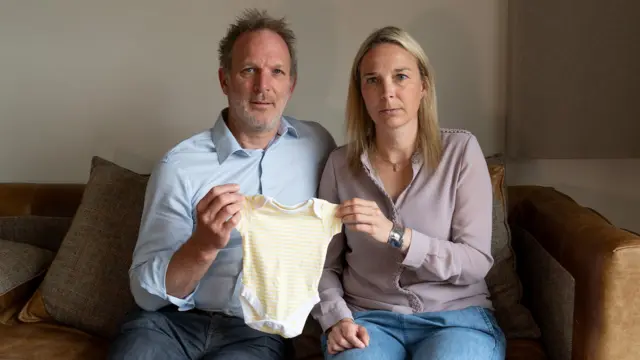
    One of the first families to raise the alarm was Jack and Sarah Hawkins, whose daughter Harriet died in the womb at City Hospital in April 2016.

    The BBC recently revealed that 18 days before Harriet's death, serious concerns had been raised around culture at the hospital where she died.

    Jack and Sarah (pictured below), who both worked for the trust, did not accept a hospital review that found "no obvious fault", and stated their child had died of an infection. The couple pushed for an external review, which found 13 failings and concluded the death had been "almost certainly preventable".

    Jack and Sarah HawkinsImage source, BBC/Chris Waring

    In the same year, midwives at the trust drafted a letter that would later form part of an inquest into the death of another baby, Wynter Andrews.

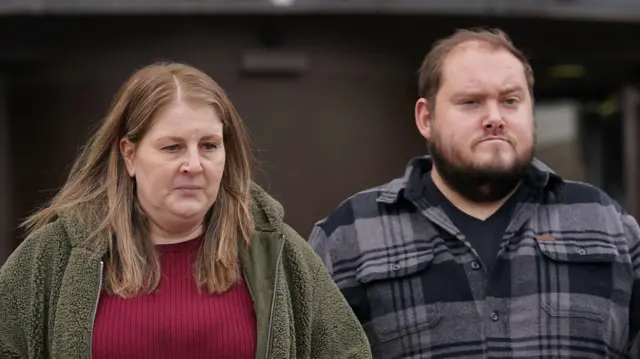
    At the inquest, assistant coroner Laurinda Bower told Wynter's parents, Sarah and Gary (below), that her death - after living for only 23 minutes - had been "a clear and obvious case of neglect".

    Calls from families for a public inquiry increased when, in July 2021, Channel 4 News and the Independent reported that 46 babies suffered brain damage and 19 were stillborn at the trust between 2010 and 2020.

    Sarah and Gary AndrewsImage source, PA Media

    Plans for a review, led by the local clinical commissioning group (CCG) and NHS England, were announced that month and with the intention of reporting back by November 2022.

    But by March 2022, and after contacting nearly 400 families, campaigners were critical of the review, which they felt lacked independence and moved "with the viscosity of treacle".

    At that point calls for Donna Ockenden to take charge intensified, with the senior midwife having just overseen the inquiry into what was, at the time, the UK's biggest maternity scandal, at Shrewsbury and Telford NHS Trust.

    The then health secretary Sajid Javid agreed to the Ockenden review, with work formally commencing on 1 September 2022.

    By July 2023, the review had become the largest in NHS history - and scrutinised more than 2,500 cases - the bulk of which occurred from 1 April 2012 to 31 May 2025.

    In May 2024, the scope of the review was expanded from examining stillbirths, neonatal deaths, injured babies and mothers and maternal deaths, to antenatal care - all contact mothers have with maternity services until their children are born.

    You can read more about the Nottingham maternity scandal here.

  10. Largest maternity review in NHS history to be publishedpublished at 09:30 BST 24 June

    Alex Smith
    BBC News Online

    Good morning and welcome to our live coverage ahead of the publication of the report into what has been the largest maternity review in NHS history.

    Senior midwife Donna Ockenden will publish her report into maternity services at Nottingham University Hospitals (NUH) NHS Trust later this morning.

    It follows a four-year review into NUH maternity services, with contributions from affected families, staff and medical experts. It began in September 2022 and has explored more than 2,500 cases following reports of baby deaths and injuries at the trust.