Summary

Media caption,
Mothers told they "were not important" and to "pull themselves together"
  1. Families 'knocking on a closed door and faced a brick wall'published at 12:02 BST 24 June

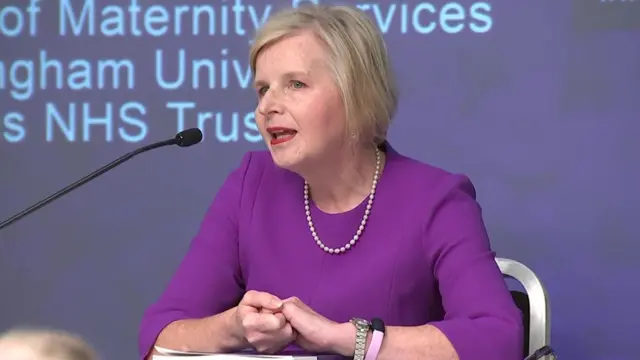
    On NHS regulators, the senior midwife has said there was an "erosion of trust of midwives and doctors for the families".

    She added: "Families said they were knocking on a closed door and faced a brick wall - they spent years trying to be heard while poor practice continued."
  2. 'It cost lives, futures and families, everything'published at 12:00 BST 24 June

    Continuing to address the room, Ockenden said: "This report is about what happens when leadership fails, when government fails... bullying tolerated and concerns are repressed, incidents downgraded and the voice of women, particularly the most vulnerable, are systemically dismissed.

    "This is a report about how a system failed and what it costs when it fails. It cost lives, futures and families, everything."

    Media caption,

    Report shows women's voices 'systematically dismissed'

  3. Ockenden pays tribute to the families involvedpublished at 11:59 BST 24 June

    Ockenden tells the room that "failure to investigate and failure to learn are hauntingly consistent".

    Echoing lines in her report, she said: "This review owes it very existence to a group of families who refused to be silenced - they came together in harm and in grief - united in their determination to what had happened to them should not happen to anyone else.

    "Without these families, Nottingham may still be experiencing these tragedies."

    Media caption,

    Nottingham review chair Donna Ockenden pays tribute to families

  4. NHS trust knew of issues since 'at least 2010'published at 11:57 BST 24 June

    Many of the problems detailed in the report have been known about at the trust since "at least 2010", Ockenden said.

    These include insufficient staffing, and the inability of staff to carry out basic and often mandatory training. She also highlighted a "persistent failure to listen to and believe mothers and fathers" - as well as a failure to investigate, and therefore learn from, mistakes.

    Ockenden also highlights a "startling statistic", that says clinical negligence is costing the NHS almost the same in legal compensation - as it spends on the delivery of maternity care itself.

    Donna Ockenden
  5. 'Families deserve at the very least the truth'published at 11:56 BST 24 June

    Donna Ockenden is now addressing a room filled with families and press.

    She said: "We did not want to have to write this report, this is something the families of Nottingham should never have needed.

    "This report had to be written - what happened here cannot be allowed to remain in the shadows.

    "The families deserve at the very least the truth."

  6. 'Substantial and unprecedented body of evidence'published at 11:55 BST 24 June

    Outlining the scale of her review, Ockenden says it has been informed by a "substantial and unprecedented body of evidence".

    This has included accounts from almost 2,500 families, detailed examination of clinical and governance records, and "significant contributions" from healthcare professionals and experts.

    Ockenden states: "While this work builds on learning from previous national maternity reviews, the scale and depth of evidence gathered in this review has provided further insight into patterns of harm, organisational culture, inequalities in maternity provision, and the care provided to families following the death of babies or mothers."

  7. Families' voices must be 'catalyst for lasting national change'published at 11:53 BST 24 June

    Drawing her address to the health secretary in her report to a close, Ockenden once again pays tributes to the families involved.

    She states:

    "As I conclude this review, I do so with both profound sadness for the families whose lives have been forever changed by the pain they have endured and with hope for the future; hope that, through listening to the experiences of women, families and front line staff at NUH, and by acting decisively on the findings of this review, we can begin to rebuild trust in maternity and neonatal services."

    Later, Ockenden writes:

    "The families of Nottingham have shown extraordinary courage, dignity and determination in the face of the devastating consequences that continue to mark their lives, and their voices must now become the catalyst for lasting national change."

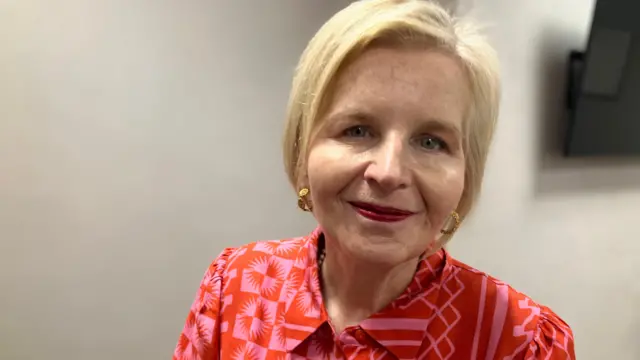
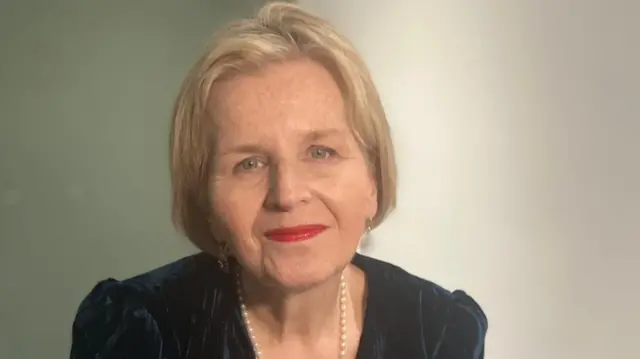
    Donna Ockenden, with short blonde hair, looks straight ahead at the camera
  8. Review 'owes its origins to a courageous group of Nottingham families'published at 11:52 BST 24 June

    In her address to Health Secretary James Murray, Ockenden pays tribute to a group of families who came together, determined to improve maternity care.

    She states:

    "This review owes its origins to a courageous group of Nottingham families who have endured needless grief and pain following death and injury during childbirth, including: Harriet Hawkins, and her parents Jack and Sarah; Wynter Andrews, and her parents Gary and Sarah; Baby Ladybird, and her parents Carly Wesson and Carl Everson; Quinn Lias Parker, and his parents Emmie Studencki and Ryan Parker; Kouper Needham, and his parents Dave and Natalie; Teddy, and his parents Kimberley Errington and Jason; Caitlin Gwinnett-Stringer, and her parents Emily and Darryl; and Felicity Benyon."

  9. Those who refuse to take part in reviews could face jail terms, government announcepublished at 11:51 BST 24 June
    Breaking

    James MurrayImage source, Peter Byrne/PA Wire

    The Department of Health and Social Care said anyone responsible for failures would be compelled to give evidence to investigations into poor maternity care.

    This, ministers say, will help ensure compliance in future reviews after it was revealed some senior leaders refused to take part in the Nottingham review.

    Those who refuse to do so, or deliberately withhold information about failures, could face up to two years in prison.

    The government added incidents in mortuaries across the country would be more tightly reviewed, after "deeply concerning findings" about the lack of respect given to deceased babies, and the disregard to their dignity.

    The Human Tissue Authority will require all mortuaries to review internal records dating from 2015 to 2026, to ensure all incidents have been logged and reported in a bid to boost accountability.

    Health Secretary James Murray said: "Last week I met the families in Nottingham and heard first-hand about the devastating loss they have suffered, often caused by horrendous care they received on the NHS.

    "Donna Ockenden's review lays bare a culture where too many voices went unheard, too many opportunities to prevent harm were missed and too many lives were lost. That's why we have to take action, and quickly.

    "I want to thank Donna for her work over the last four years. These clear recommendations will form part of our national plan to deliver real improvements in maternal and neonatal care, in Nottingham and beyond."

    Media caption,

    Report must be "turning point" for maternity care, health secretary says

  10. Martha's rule will be rolled out to all maternity services following Nottingham reviewpublished at 11:50 BST 24 June
    Breaking

    Martha's rule, a way for families to seek an urgent second opinion if they are concerned about the care their loved ones receive, will be rolled out across all maternity settings in England, following a string of serious and sustained failures at maternity wards in Nottingham.

    The telephone helpline, the result of a campaign by the parents of 13-year-old Martha Mills who died after serious failings in her care, has been piloted in 15 maternity and neonatal settings.

    Every parent on a maternity ward will be able to request a rapid review from an independent medical team if a baby or mother's condition is deteriorating, and they are concerned this is not being responded to, the government announced on Wednesday.

  11. Different care may have changed outcome for 260 babies who died or were harmedpublished at 11:47 BST 24 June
    Breaking

    Different care may have altered the outcome for 260 babies who died or were harmed, the review team has told the BBC.

    Of that number, 155 babies died while 105 suffered serious injury due to substandard care.

  12. Hundreds of mothers and babies suffered harm or died due to failurespublished at 11:46 BST 24 June
    Breaking

    Hundreds of mothers and babies suffered potentially avoidable harm or died due to "longstanding and deeply embedded systemic failures" at Nottingham University Hospitals (NUH) NHS Trust, the Donna Ockenden review has found.

    The inquiry found leaders at the trust knew there were serious issues in its maternity department, going back to "at least 2010", but failed to take action to prevent more deaths.

    About 2,500 families and more than 800 members of staff have contributed to the largest maternity inquiry in the history of the NHS, with NUH having already paid out millions of pounds in compensation and fines after being prosecuted for poor care.

    Overall, experts on the review concluded there were "potentially avoidable" outcomes relating to 444 maternity cases examined up to May 2025, alongside 76 neonatal cases.

    All these cases were graded as two or three for harm, with grade three representing "significant concerns" and grade three "major concerns" over care.

    Grade two represents sub-optimal care, in which different management might have made a difference to the outcome, and grade three is where different management would reasonably be expected to have made a difference.

  13. New figures reveal £117m in compensation has been paidpublished at 11:39 BST 24 June

    Verity Cowley
    Presenter, BBC Radio Nottingham

    New figures obtained by the BBC have revealed that £117m has been paid out in compensation by Nottingham University Hospitals (NUH) NHS Trust.

    Since the trust was formed in 2006, NUH has recorded 379 maternity claims, including 77 in 2023-24 alone.

    Most of the £117m relates to damages, while just under £19m has been spent on legal fees.

    The £117m total takes into account the two most recent financial years - and is an updated figure from the £101m - paid in claims against NUH between 2006 and 2023 - previously reported by the BBC.

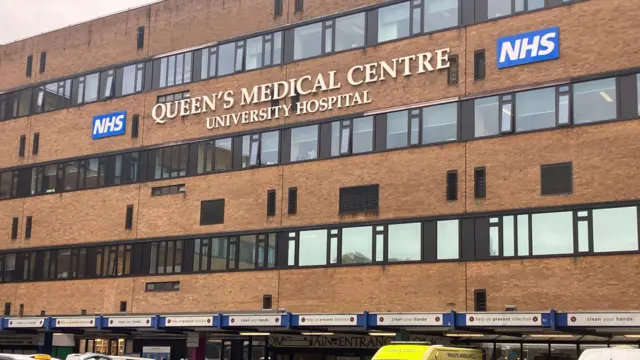
    QMC
  14. Ockenden tells BBC lessons from past reviews have been learnedpublished at 11:36 BST 24 June

    Joanne Writtle
    BBC Midlands

    Donna Ockenden previously reviewed failings at Shrewsbury and Telford Hospital NHS Trust and is leading ones into Nottingham, Leeds and Sussex.

    Four years on from her devastating report into the failings in Shropshire, Ockenden still works with some of the families in the county along with its hospital bosses.

    She is hopeful things are finally moving "in the right direction" at the Shrewsbury and Telford Hospital (SaTH) NHS Trust, ahead of the publishing of her Nottingham review.

    Her report in 2022 into the failings in Shropshire found that more than 200 babies and nine mothers could have survived with better care.

    Ockenden has been returning to Shropshire as well as working on the Nottingham maternity review.

    Donna Ockenden

    She said she would also remain in Nottingham post-review, as a result of what she learned in Shropshire, "to oversee the progress that the trust is making" in improving.

    "I think that's really positive. It shows learning from what didn't happen in Shrewsbury and Telford and I think it gives families confidence," she said.

  15. Families speak ahead of report publicationpublished at 11:34 BST 24 June

    Verity Cowley
    Presenter, BBC Radio Nottingham

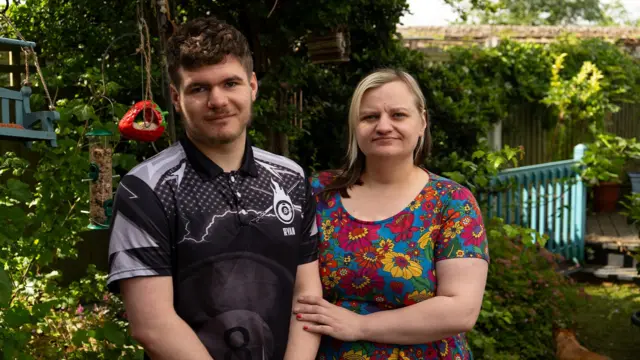
    Ryan and SarahImage source, BBC/Chris Waring

    Ryan (left) suffered a brain injury at birth at Nottingham City Hospital. He has just turned 18.

    His mum Sarah describes him as funny, determined and a "little bit of a miracle".

    Despite his progress, he still requires constant support and remains highly vulnerable. Sarah's focus remains simple.

    "Success is Ryan being happy... I cannot change Ryan for the world, but I'll change Ryan's world for Ryan as much as possible," she added.

    Carly Williams

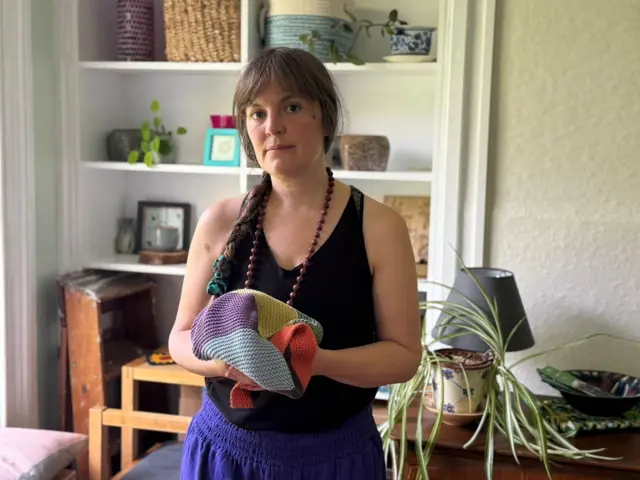
    Carly Williams, from St Ann's in Nottingham, founded the charity Zephyrs after her son Zephyr was stillborn at Nottingham City Hospital in December 2013.

    Williams - pictured above holding the blanket she knitted while pregnant with Zephyr - said she was facing the possibility of new truths about what happened, reopening grief she had carried for more than a decade.

    "I want them to tell us everything was done as it should have been, because I worry that it being different to how we thought... feels like new grief and new loss all over again. It feels like Zephyr just died yesterday."

  16. What are the categories of cases investigated?published at 11:30 BST 24 June

    Rob Sissons
    East Midlands health correspondent

    The bulk of cases being reviewed are from 1 April 2012 to 31 May 2025.

    The cases in the review fall into the following five categories:

    • Stillbirths from 24 weeks' gestation
    • Neonatal deaths, from 24 weeks' gestation that occur up to 28 days of life, the review team will also consider neonatal serious incident reports and neonatal "never events"
    • Babies diagnosed with hypoxic ischaemic encephalopathy, and other significant hypoxic injury
    • Maternal deaths, up to 42 days post-partum
    • Severe maternal harm
  17. Nottingham baby deaths: How will families' cases be graded?published at 11:19 BST 24 June

    Rob Sissons
    East Midlands health correspondent

    The latest figures from the Ockenden review show that 2,430 families are involved, relating to 2,505 cases being individually reviewed.

    Each case is assessed by Donna Ockenden's team of reviewers, and families will eventually receive individual written feedback.

    Importantly, they will be told whether the review team believes the outcome of their case could have been different with better care, or whether the care provided was appropriate.

    Each case is given a grading from 0 to 3.

    The letters, which will be sent in the coming weeks and months, will be tailored to each individual case.

    "Each family will get an individual report, written by my team, specifically for them," Ockenden said.

    "There's no cut and paste - no-one's report is going to read the same as anyone else's."

    Each case is graded using the CESDI (Confidential Enquiry into Stillbirths and Deaths in Infancy) system - a widely used framework when investigating patient deaths.

    Grade 2 cases are labelled under significant concerns, detailing "sub-optimal care in which different management might have made a difference to the outcome".

    Grade 3 cases outline major concerns, which detail "sub-optimal care in which different management would reasonably be expected to have made a difference to the outcome".

    The grade 2 and 3 cases will be added together to give the total number of cases in which the outcome may have been different with better care.

  18. Families arrive to hear Nottingham maternity review findingspublished at 11:17 BST 24 June

    Anna Whittaker
    Political reporter

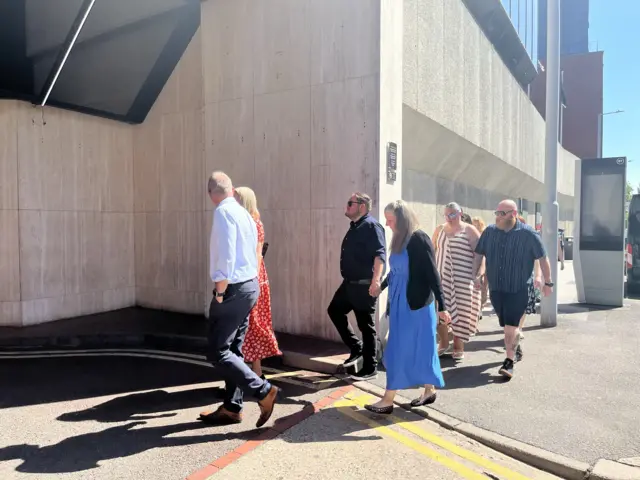
    Families have arrived at the Nottingham city centre hotel in the blazing sunshine this morning, walking hand in hand.

    Dr Jack and Sarah Hawkins led the way, with Gary and Sarah Andrews just behind them.

    They headed straight upstairs when they arrived, as they wait to hear Donna Ockenden's findings shortly.

    Families arrive
  19. What has Nottingham University Hospitals NHS Trust said?published at 11:09 BST 24 June

    Ahead of the publication of the Independent Maternity Report (IMR), Nottingham University Hospitals (NUH) NHS Trust CEO Anthony May said: "I want to pay tribute to the bravery of the many families who have worked tirelessly to get answers and to make maternity services safer for others.

    "They have campaigned tirelessly and deserve a great deal of credit for what they have done to improve maternity safety. I have met some of the affected families, and they have shared their painful and life-changing experiences with me, for which I am very grateful. I am very sorry for the pain and suffering these families have endured.

    "It is from my conversations with affected families that I understand how important and significant this period is for them, as they await the outcome of Donna Ockenden's review. I hope they receive the answers they have been waiting so long for.

    "I want to extend thanks to Donna Ockenden, who has offered us vital feedback throughout the review, helping us to make ongoing improvements to our maternity services. Our staff have shown their commitment to change, and we are building the right culture and environment to enable them to offer the care that they aspire to, and that local women and families deserve.

    "Upon receiving the findings of the review, we will consider carefully what we need to do next to ensure that we learn from what happened in the past and to continue to improve maternity services."

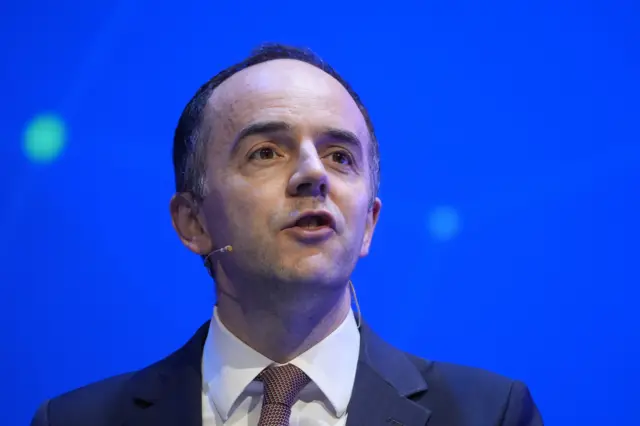
    Anthony May
  20. 'Looking back, I just wish I had done something different'published at 10:52 BST 24 June

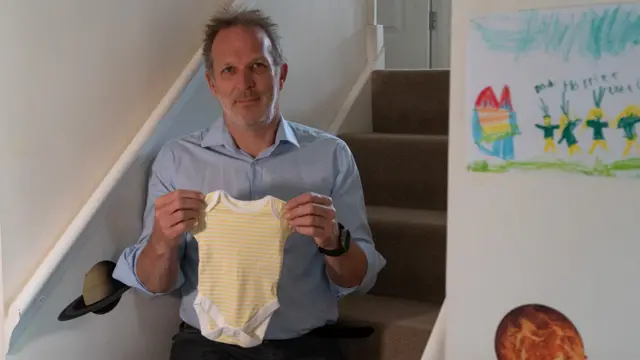
    Jack Hawkins holds up a striped yellow baby grow while sitting on the steps of his home

    Working for the trust "worked against us", Jack Hawkins - husband to Sarah and dad to Harriet - has told BBC Radio 4's Today programme.

    "We worked with people who took care and safety seriously, so we just assumed that it was the same in the maternity department and this was normal," the former consultant doctor said.

    "Looking back, I just wish I had done something different."

    The couple then had to push to secure an external review into their daughter's death, with Jack saying it put the hospital "in a position where they could no longer wriggle out of what was plain, which was that they were liable".

    The external review, which was published in January 2019, found a host of failings and concluded Harriet's death was "almost certainly preventable". But despite the findings, Jack said there was a lack of action from the trust.

    "Despite knowing they were liable for Harriet's death, they didn't seem to be doing the things they needed to do," he added.

    The pair previously told of how Harriet's body had been allowed to decompose so badly by NUH, it had to be triple-bagged for her funeral.

    The couple had their legal case against the trust settled out of court for £2.8m, believed to be the largest payout for a stillbirth clinical negligence case.