Summary

  1. A timeline of how we got herepublished at 22:21 GMT 20 February

    Kwasi Gyamfi Asiedu
    US reporter

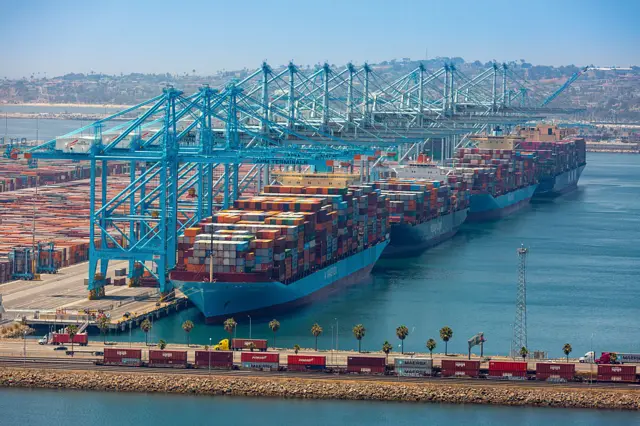
    Container ships at the Port of Los Angeles in Los Angeles, CaliforniaImage source, Bloomberg via Getty Images

    The US Supreme Court struck down President Donald Trump's authority to impose tariffs using emergency powers.

    Here is how we got to today's decision:

    • 20 January 2025: Trump is inaugurated for his second term
    • 3 March 2025: Trump imposes 25% tariff on imports from Canada and Mexico
    • 2 April 2025: Trump announces "Liberation Day" tariffs imposing a baseline 10% tariff on nearly every country, with some countries given higher rates
    • 9 April 2025: Trump announces 90-day pause in Liberation Day tariffs
    • 14 April 2025: Wine importer V.O.S. Selections, Inc and others sue the Trump administration in US Court of International Trade
    • 22 April 2025: Two businesses - Learning Resources. and hand2mind - sue in federal court, challenging legality of the Liberation Day tariffs
    • 28 May 2025: The US trade court rules Trump's tariffs are illegal
    • 29 May 2025: The Federal court grants an injunction temporarily blocking the tariffs but the decision is stayed on appeal
    • 9 September 2025: Supreme Court consolidates the two lawsuits
    • 5 November 2025: Supreme Court hears oral arguments on Trump's tariffs
    • 20 February 2026: Supreme Court strikes down Trump's authority to impose tariffs without Congress in a 6-3 decision
  2. It could all get very complicated for the UKpublished at 22:15 GMT 20 February

    Emma Simpson
    Business correspondent

    Crucially for the UK, this ruling doesn’t impact the deals the UK government has secured for the steel, aluminium, pharmaceuticals, autos, and aerospace sectors - which represent most of our trade with the US. Nothing changes here.

    There is a potential impact on the additional 10% blanket tariffs on other goods that Trump said he had planned.

    But the world has more questions than answers right now, and for the UK it depends on what President Trump does next. For example, he could find a workaround to re-enact the tariffs he had imposed using his emergency powers via other legal means. There is also a question of potential refunds. But it's US importers who pay the cost of the tariffs to US customs, although many UK firms will have had to absorb some or all the extra costs.

    It could all get very complicated.As we wait to see what comes next, we should note that the government says it expects its privileged trading position with the US to continue.

  3. Treasury Secretary Bessent says refund issue could drag on for 'months, years'published at 21:58 GMT 20 February

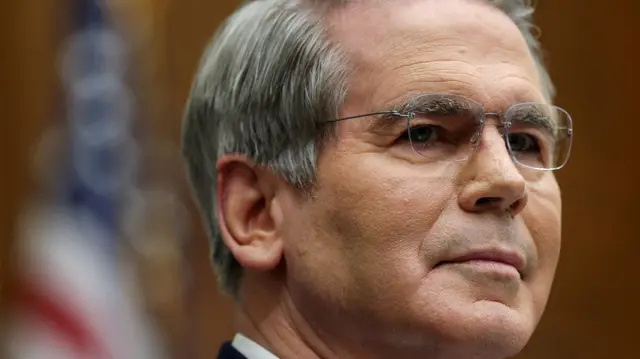
    US Treasury Secretary Scott Bessent wearing no-rim glasses and looking to the right of the frameImage source, reuters

    US Treasury Secretary Scott Bessent has commented on the Supreme Court's ruling, saying the issues of refunds could drag on for "years".

    He and other officials have said the administration will use other parts of US law to continue to impose the levies, such as a statutory provision that permits tariffs on imported goods that threaten national security and another allowing retaliatory actions like tariffs against trading partners that the US believes have used unfair trade practices.

    Speaking at an event in Dallas after the ruling, Bessent said revenues already collected from the tariffs that the court struck down were "in dispute" since the Supreme Court did not provide any instructions on refunds. He said the issue would be decided by the international trade court, and Trump said earlier he expected it to be tied up in litigation.

    "My sense is that could be dragged out for weeks, months, years," he said, and later added that "I've got a feeling the American people won't see it."

    Bessent also said that by using new Section 122 tariffs coupled with enhanced Section 232 and Section 301 tariffs, the Treasury estimates that this "will result in virtually unchanged tariff revenue in 2026", despite the loss of the emergency powers tariffs.

  4. Toy company Learning Resources won the tariffs court case, and its CEO says that's a 'major victory'published at 21:48 GMT 20 February

    Michelle Fleury
    New York business correspondent

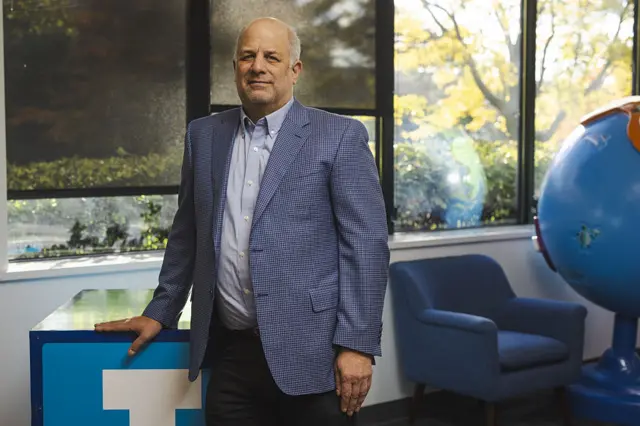
    Rick Woldenberg, wearing a box-checkered suit over a light blue shirt, is standing as he poses in an office.Image source, Bloomberg via Getty Images
    Image caption,

    Rick Woldenberg, CEO of Learning Resources

    “We’re witness to history,” said Rick Woldenberg, after the Supreme Court ruled in favour of his educational toy company’s challenge to Trump’s tariff policy.

    Woldenberg told me he was unimpressed at the President’s alternatives to tariffs, saying that “if the government is bound and determined to try to harm us through excessive taxes, I'm sure they'll find a way".

    He added: "I don't think it's a hollow victory when the Supreme Court stands with you to respect the rule of law. I think that that's a major victory.”

    Learning Resources, a family-owned educational toy maker with around 500 employees, estimates it paid roughly $10 million in import duties last year - money Woldenberg says he hopes to recover following the court’s decision.

  5. Hear Americast unpack the tariffs decisionpublished at 21:46 GMT 20 February

    Media caption,

    A breaking episode of Americast as POTUS takes on SCOTUS

    The BBC's North America Editor Sarah Smith and North America Correspondent Anthony Zurcher joined BBC Radio 4 Presenter Justin Webb to unpack the day's drama: starting with the US Supreme Court decision to block global tariffs and ending with the President’s withering attack on some of the justices for their decision.

    You can listen in above or at the link here.

  6. Wall Street closes on a high despite Trump's new tariffs planpublished at 21:33 GMT 20 February

    Michelle Fleury
    New York business correspondent

    Markets rallied after President Donald Trump reacted to the Supreme Court’s major ruling on tariffs.

    The Dow ended the day up 0.47%.

    The S&P 500 gained 0.69%.

    And the Nasdaq Composite was higher by 0.90% percent.

    President Trump blasted the decision, calling it “a disgrace to our nation” in a White House news conference. But he quickly moved to reassure supporters, saying he plans to pursue a new 10% global tariff using alternative legal authority.

    Despite that threat of fresh tariffs, investors are clearly breathing a sigh of relief.

    The slight market rise on Friday suggests that Wall Street believes the president’s aggressive tariff strategy had been weighing on businesses — and that his future trade measures may not reach the same sweeping levels, especially with congressional elections nine months away.

    That said, today’s ruling opens a new chapter of uncertainty.

    Questions remain about what tariffs might come next, whether companies can seek refunds on duties already paid, and what all this means for consumer prices. But for now, traders appear to believe that, on balance, the overall risk from tariffs has been reduced.

  7. Canada says decision shows levies were unjustifiedpublished at 21:29 GMT 20 February

    Canada's International Trade Minister Dominic LeBlanc says the Supreme Court's decision shows the levies were "unjustified".

    LeBlanc adds that the tariffs causing the most pain in Canada are still in force, and the government would work with Washington to "create growth and opportunities on both sides of the border".

    Steel and aluminium imports from Canada to the US were subject to 25% tariffs, which President Trump threatened to double but then went back on.

    A 25% tariff on Canadian cars and car parts was also imposed last year. This was a shock to the country's car production industry, where roughly 90% of vehicles are exported to the US. Earlier this month, Canadian Prime Minister Mark Carney announced new plans to bolster the industry through financial incentives for carmakers to invest in Canada and the reintroduction of rebates for EVs.

    For context: The Supreme Court decision applies to the tariffs that Trump imposed using the president's emergency powers and import taxes that he put in place through other means are still in place.

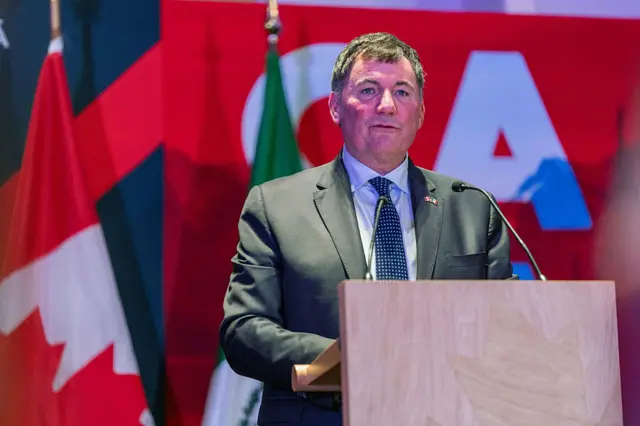
    LeBlanc in green suit and blue dotted tie at an electern with a microphone before a red background and Canadian flagImage source, Getty Images
    Image caption,

    Canada's International Trade Minister Dominic Le Blanc earlier this week

  8. Democrats demand refunds for Americanspublished at 21:14 GMT 20 February

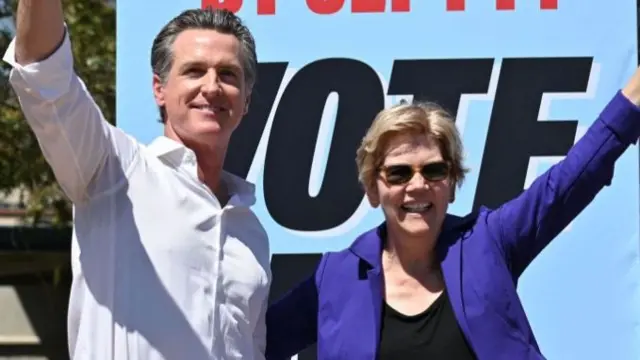
    Newsom and Warren with an arm around each other, raising their hands and smilingImage source, AFP via Getty Images

    California Governor Gavin Newsom, a Democrat who frequently mocks Trump on social media, is praising the Supreme Court's decision, and not missing the opportunity to slam Trump.

    "Even Donald Trump’s Supreme Court agrees: His tax on the American people is illegal. A huge win for families and small businesses across the country who have been suffering under this man’s ego," Newsom writes on X.

    Newsom added in a follow-up post: "Issue an immediate refund to all Americans for your illegal tax. Now."

    Democratic Senator Elizabeth Warren echoed Newsom's demand for tariff refunds to Americans, saying in a post that it requires more than just the Supreme Court's decision to "undo the massive damage that Trump's chaotic tariffs have caused".

    During his briefing at the White House earlier, Trump, though, suggested that he was not preparing to issue refunds and instead any potential payments would be probably be tied up in litigation for years. Earlier, we broke down how businesses are preparing for a refunds battle.

  9. 'A 1,000-pound weight has been lifted off my chest'published at 20:53 GMT 20 February

    Ahmed Adan
    BBC World Service

    Beth Benike, the owner of Busy Baby products in Minnesota, who has been speaking to the BBC World Business Express, has said that “Oh my gosh, I feel that like a thousand-pound weight has been lifted off my chest."

    “It's been devastating, to be honest. My products are all manufactured in China. I make a line of products that stop babies from dropping and throwing their things on the floor. And they're made out of silicone, which we don't have in the US,” she says.

    Beth Benike adds that “I had two containers worth of product ready to ship two days after the Liberation Day tariffs were announced. So, I was forced to abandon my products in China for eight weeks, which led to an out-of-stock situation with loss of revenue.”

    She says that she had let some of her employees go in the last year, and “I had to cash in my retirement. I have not been able to plan anything for my business.”

    “If I had to add up the potential revenue lost and the revenue lost while we were out of stock because of the tariffs, it's probably close to a million dollars in revenue,” she told the BBC World Business Express.

  10. Trump's former VP says families and businesses 'can breathe a sigh of relief'published at 20:30 GMT 20 February

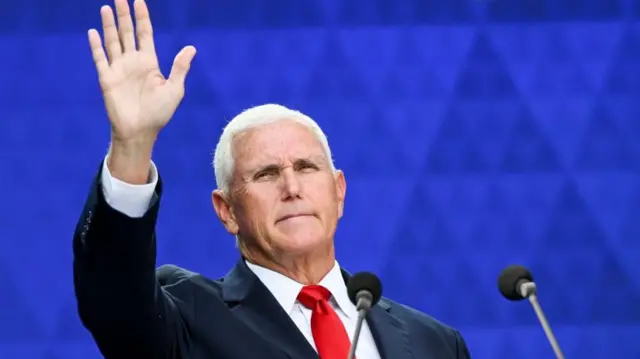
    Former vice president Mike Pence at a lectern raising his handImage source, EPA

    Mike Pence, Trump's former Vice-President from his first term, says the Supreme Court's ruling is proof "the Constitution grants Congress - not the president - the power to tax".

    Pence is the founder of Advancing American Freedom, an organisation that has lobbied against Trump's tariffs.

    He writes that he is "proud of the work" the organisation did to "advance economic freedom and defend the constitution".

    "American families and American businesses pay American tariffs - not foreign countries. With this decision, American families and businesses can breathe a sigh of relief," he adds.

  11. What did we learn from Trump's news conference?published at 20:22 GMT 20 February

    We just heard Trump speak in the wake of the Supreme Court's decision to strike down his sweeping tariffs plan.

    Here's a recap of what he told reporters at the White House:

    • Some of the first words we heard from Trump after he came to the podium were that the decision was "deeply disappointing" and that he was ashamed of "certain members of the court for not having the courage to do what's right for our country"
    • He thanked the justices who dissented - justices Thomas, Alito and Kavanaugh - for their "strength and wisdom" and criticised those who went against his tariff plan
    • The president accused the Supreme Court of being "swayed by foreign interests", without providing any evidence
    • Trump said he's signing an executive order to impose a 10% global tariff using Section 122, which was created by the 1974 Trade Act
    • The president also said he would use Section 301 as a means to impose tariffs
    • He offered a glimpse into how he was reading the ruling saying it struck down a specific use of the International Emergency Economic Powers Act, which according to the Supreme Court did not grant him the power to impose tariffs in the way he had claimed

  12. Analysis

    Businesses preparing for refunds battlepublished at 20:07 GMT 20 February

    Natalie Sherman
    New York business reporter

    Many businesses were already bracing themselves for a fight over refunds.

    And Trump just signalled that they will have one, warning that he expected the issue to be tied up in court for years.

    Trade attorneys have said the government could simply set up a process for firms to claim back their money – some $130bn so far, according to the most recent government data. Electronic payments and receipts mean the procedure would not necessarily have to be complicated.

    But Trump’s comments suggest the White House does not intend to give up the money quickly.

    Since the majority’s decision was silent on the question of refunds, this matter is expected to go to the Court of International Trade. While courts have authorised refunds before, those were much smaller in scale.

    The costs involved with litigating the issue mean many smaller firms could get left out.

  13. Vice-President JD Vance calls Supreme Court's decision 'lawlessness'published at 19:57 GMT 20 February

    JD Vance sits at television station desk, wearing navy suit, white shirt and blue tie with his hands crossedImage source, Jamie McCarthy/Getty Images

    We're hearing from Vice-President JD Vance who has called the ruling "lawlessness from the court, plain and simple".

    "Today, the Supreme Court decided that Congress, despite giving the president the ability to 'regulate imports', didn't actually mean it," he wrote on social media.

    "[The rulling's] only effect will be to make it harder for the president to protect American industries and supply chain resiliency," Vance said.

  14. How Trump's tariffs caused US customs duties to surgepublished at 19:47 GMT 20 February

    Tommy Lumby
    Business data journalist

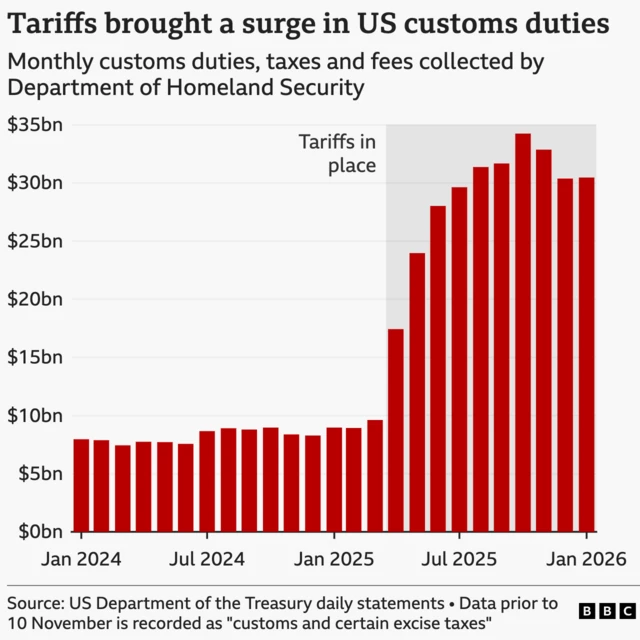
    Trump’s tariffs have already brought in a fair bit of extra revenue since they came in last April, as the chart below shows.

    Customs duties surged from under $10bn (£7.4bn) in March to a peak of more than $34bn in October.

    That dropped slightly to just over $30bn by January 2026 - the latest month for which there is complete data.

    Many firms that paid those duties now want a refund, though that may not be as straightforward as they hope.

    Bar chart titled "Tariffs brought a surge in US customs duties", showing monthly US customs and taxes collected by the US Department of Homeland Security from January 2024 to January 2026. Since the new tariffs have been in place, April 2025, there has been a surge in customs duties, rising from just under $10bn in March to a peak of more than $34bn in October. The source is the US Department of the Treasury daily statements.
  15. Small businesses welcome the ruling but remain on edgepublished at 19:40 GMT 20 February

    Danielle Kaye
    New York business reporter

    Jenelle Peterson stnads in front of a sign that has a mountain printed on it, she is wearing a white shirt, with her hand on her hip and is smilingImage source, Danielle Kaye

    Some small business owners, who have seen their profits fall as a result of Trump's tariffs, are greeting the Supreme Court's ruling with cautious optimism.

    Jenelle Peterson, co-founder of Wild Life Outdoor Adventures, said her Canadian toy firm, which makes its toys in China before shipping them to the US for distribution, took a roughly 25% hit to its profits last year.

    Peterson held prices steady for six months after Trump returned to the White House. But she said she couldn't hold out forever. A knot-tying game now costs $19.99, up from $14.99.

    "It's hard to keep the lights on," Peterson said.

    That's why she welcomed the court's blow to Trump's authority.

    "It sends a really good message that we can't have these insane fluctuations in tariff rates and economic policy, because it's so damaging to small businesses," she said.

    As she processes the implications of the ruling, Peterson is already making plans to import more products to the US. She hopes to eventually claw back enough money to invest in designing new toys.

    Still, she said lingering uncertainty - about refunds and other tariff authorities that the Trump administration might leverage - is keeping her on edge.

    "I have a bit of reservation in too much celebration," Peterson said. "But for us, every percentage point matters."

  16. Analysis

    Silver lining for firms, despite tariffs stickingpublished at 19:29 GMT 20 February

    Natalie Sherman
    New York business reporter

    Businesses don’t like paying tariffs. But for many firms, an equally unnerving aspect of Trump’s tariff announcements last year were their unpredictability.

    That’s why even though Trump has made clear that tariffs will remain in place, the Supreme Court decision will remain important.

    He has said he will impose a 10% tariff using a different law, which gives him the power to put tariffs in place for 150 days, at which point Congress must step in.

    But many of the other tariff tools at Trump's disposal have more established processes – requiring investigations, notice and comment periods before going into effect.

    That gives firms time to plan - a silver lining that should stand.

  17. Trump attacks Supreme Court justices he nominated in first termpublished at 19:28 GMT 20 February

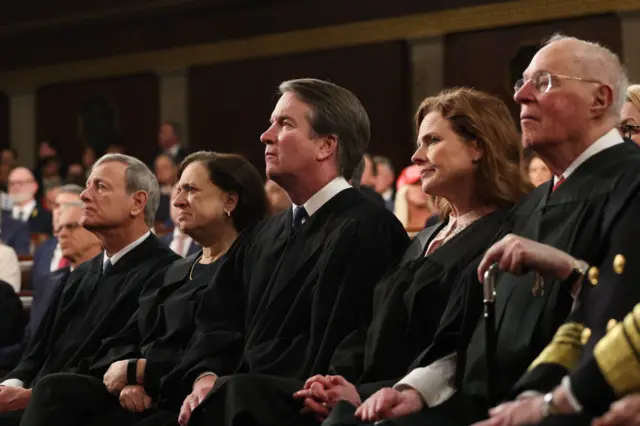
    Supreme court justices sit next to one another in their block robes, looking up with their hands crossedImage source, Win McNamee/Getty Images

    Shortly before ending the news conference, President Trump renewed his earlier attacks on the Supreme Court judges who ruled against him.

    He is asked if he was surprised Justices Amy Coney Barrett and Neil Gorsuch, who he nominated in his first term, ruled against his tariff powers and if he regrets nominating them.

    "I am," he says referring to being surprised by their ruling.

    "I don't want to say whether I regret. I think their decision was terrible. I think it is an embarrassment to their families, you want to know the truth, the two of them."

  18. New tariffs can be imposed for up to 150 dayspublished at 19:12 GMT 20 February

    Michelle Fleury
    New York business correspondent

    President Trump said the US will generate more money from his new 10% global tariff.

    The White House plans to replace tariffs imposed under the International Emergency Economic Powers Act (IEEPA) - which the Supreme Court struck down - with new duties.

    Section 122 of the 1974 Trade Act allows the President to impose levies up to 15% for up to 150 days on imports from all countries before needing approval from Congress.

    In anticipation of today, Erica York, Vice President of Federal Tax Policy at the Tax Foundation has crunched the numbers. By her calculations, the 10% tariffs on the same goods that faced the now illegal IEEPA tariffs would replace 56% of the revenue raised over 150 days.

    Although she points out that if it is applied across the board with no exceptions, the new tariffs would raise more than IEEPA.

  19. Trump surprised by tariff rulingpublished at 19:08 GMT 20 February

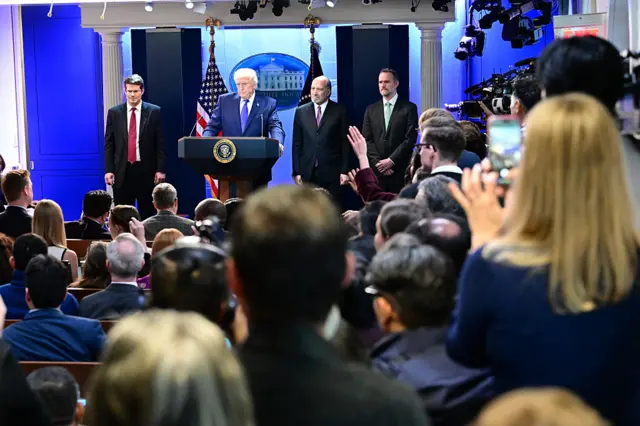
    Long shot of the White House press briefing room showing the backs of reporters' heads and Trump standing at the podium with other officialsImage source, Kyle Mazza/Anadolu via Getty Images

    Trump is asked whether he was surprised by the Supreme Court ruling.

    He says he was, and that he believed he could not lose, adding that he read the case law – "everything there is to read" – prior to the decision.

    He calls the justices who made the decision "political" and wanting to be "politically correct". He also accuses them of "catering to a group of people in DC, maybe".

    And with that, the US president wraps up his briefing. We'll bring you a recap of the key lines shortly.

  20. Trump 'couldn't care less' if justices attend State of the Union speechpublished at 19:06 GMT 20 February

    Trump is asked whether the Supreme Court judges who ruled against him are still invited to his State of the Union address next week, where he is expected to lay out his plans for the year to come.

    He says the three justices who voted in favour of his tariffs are "happily invited" and the rest are "barely invited".

    "Honestly, I couldn't care less if they come," he adds.