


The census as a source
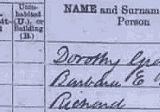
To the government of the day they provide vital evidence of trends that can help in the planning of the economy. To the historian they provide vital evidence about the past.
If you were tracing your family history this would be a very important source to find out details of your ancestors. You can immediately be able to identify the names, ages, occupations and birthplaces of the people listed, but the local historian would then ask himself or herself a series of questions about the evidence that the census entries give.
Some historians call this 'interrogating the source' - it means that instead of simply looking at the information, we try to think about what it means, what message it is giving? We can use this evidence to support ideas we might have about what life was like for these people and, equally important, we can compare the two families here. What were the differences between them, what contrasts emerge?
And, in turn, this evidence - now reinforced by a more 'in-depth' appraisal of what the census tells us - can be related to what we might learn from the work of other historians, in published books, about more general themes such as the nature of family life in the mid-19th century, the character of mining communities, migration patterns, the employment of children and women, and other key topics in the local history of Victorian England.
Published: 2005-03-02
