


Questions answered
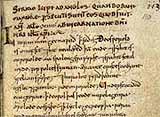
No, certainly not to begin with and many local historians never need to know any Latin. It is true that many older documents will be in Latin, but when you begin you are not likely to use them, and there are almost always people locally who may be able to help if you do. Many Latin documents will be in print anyway, usually (not always!) with translations.
For example, the records of medieval monasteries are rarely in anything but Latin, because that was the everyday language of the medieval Church, but you will almost always find that there are published translations of the main documents. There are quite a few useful introductory books to reading and using Latin.
Do I need to learn how to read old documents?
Reading old documents is known as palaeography and it is a skill that many local historians only acquire over the years. Patience and practice are the keys to clear understanding. For research covering the last three centuries, palaeography is rather less important, as the handwriting becomes progressively more like that in use today.
'... you can begin to understand the feel and character of parchment and paper in a totally new way.'
In most areas of the country there are courses and classes in palaeography, and several books are in print and readily available to assist beginners (see Go further). Palaeography is challenging but it is also fascinating, because as you master its skills a whole world of historical sources opens up.
You will be able to read documents which perhaps nobody has read for a couple of hundred years, you see the words of people in the past revealed and, if you are using original documents (as opposed to photocopies or microfilm) you can begin to understand the feel and character of parchment and paper in a totally new way.
Do I need to find out the background history?
The more that you read and find out about the background to your subject, the better. All historians are constantly doing this - nobody, however great a historian, can ever know enough, and reading the work of other people, and getting the context of your own subject clear in your mind, is crucial. So, you must be prepared to do a lot of reading when you are doing local history - but history is of course fascinating, and it is not at all like it was when you were at school!
These are not boring textbooks, but fresh and stimulating insights into the past of all of us. History today is not all about kings, queens, generals and politicians, although they play their part. Many of the most fascinating books are instead about ordinary people and ordinary places, revealed and explained by historians for whom the 'common man' is perhaps the most important aspect of history.
Published: 2005-03-02
