Summary

  • The first of six Newsnight specials exploring the biggest questions about Europe

  • Evan Davis was joined by Peter Mandelson, Chris Grayling and a panel of experts

  • Watch the Sovereignty special again in the Live Coverage tab

  • Find out what the panel of undecided voters thought of the issue of sovereignty

  • Coming soon: specials on Security, Economy, Migration, Brussels and what Out might look like

  1. Re-cyclingpublished at 23:04 BST 11 April 2016

    A note on Chris Grayling's claim

    Chris Grayling cited – as an example of the EU blocking rule-changes that Britain would be able to implement if it had sovereignty - Boris Johnson in the Telegraph on cycle safety, external:

    “I discovered, in 2013, that there was nothing we could do to bring in better-designed cab windows for trucks, to stop cyclists being crushed. It had to be done at a European level, and the French were opposed.”

    In fact, the UK government itself opposed the introduction of new cab windows for trucks, external. The Mayor himself lobbied Transport Minister Stephen Hammond in protest at the government’s position on the proposed change.
  2. Siobhan Benita on EU lawspublished at 23:02 BST 11 April 2016

    Quote Message

    Laws don't get imposed upon us. We are there negotiating around the table, negotiating on each of those laws as they come in. It's a misunderstanding to say somehow these things are done to us.... In my time in the civil service the EU played a very small part in the policies coming across my desk

    Siobhan Benita, Warwick University

  3. Wheelers all roundpublished at 23:00 BST 11 April 2016

    There’s an unwritten rule on Newsnight that momentous occasions in European history cannot be covered without a Wheeler being involved. Tonight, as Britain’s membership of the EU hangs in the balance, we have Marina Wheeler in the studio. But 26 years ago, on the night of German reunification, it was her father Charles who presided over proceedings, alongside a visibly-amused Jeremy Paxman. You can see that famous episode here...

    This YouTube post cannot be displayed in your browser. Please enable Javascript or try a different browser.View original content on YouTube
    The BBC is not responsible for the content of external sites. YouTube content may contain adverts.
    Skip youtube video

    Allow YouTube content?

    This article contains content provided by Google YouTube. We ask for your permission before anything is loaded, as they may be using cookies and other technologies. You may want to read Google’s cookie policy, external and privacy policy, external before accepting. To view this content choose ‘accept and continue’.

    The BBC is not responsible for the content of external sites. YouTube content may contain adverts.
    End of youtube video
  4. Mandelson on the benefits of EU membershipspublished at 22:57 BST 11 April 2016

    Quote Message

    It's not simply Britain standing aside in splendid isolation by itself, that's the easiest thing in the world... Who do you think got rid of roaming charges for mobile telephones? The European Union.

    Peter Mandelson, European Commissioner for Trade, 2004-2008

  5. Chris Grayling on EU lawspublished at 22:55 BST 11 April 2016

    Quote Message

    When you look across government activity that is not wholly or partly shaped by the EU, you are looking at quite a small number of areas

    Chris Grayling MP, Leader of the House of Commons

  6. Angela says sovereignty is vitalpublished at 22:55 BST 11 April 2016

    She's one of our undecided voters

    Quote Message

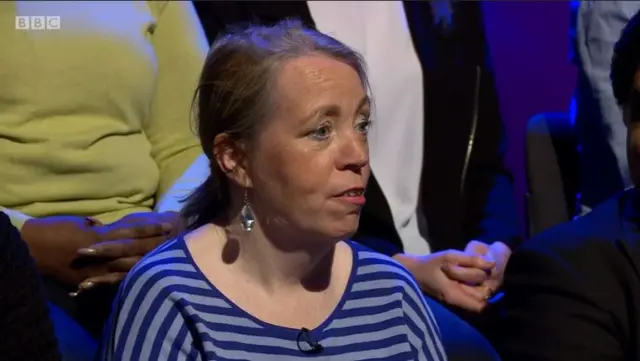
    I think it's vital. It's how we make our laws, how we raise our taxes, who governs our waters. It's the number one key issue

    Angela, Full time PA

    Angela
  7. What does sovereignty mean to you?published at 22:52 BST 11 April 2016

    Thanks for getting in touch to let us know your thoughts on sovereignty using #newsnight. Here's a selection...

  8. Tonight's panel of expertspublished at 22:51 BST 11 April 2016

    • Marina Wheeler is a human rights lawyer. Her article for The Spectator, external expressing concerns about David Cameron’s EU renegotiation was described by the Daily Telegraph as one of the most “erudite contributions to the often stale arguments around the forthcoming EU referendum.” Some say her arguments have helped persuade husband Boris Johnson MP to back Brexit. We look forward to hearing from her.
    • Sir Francis Jacobs served as Advocate General of the European Court of Justice from 1988 to 2006. Now a professor at King’s College London, he will be providing the expertise on the UK’s relationship with the European courts.
    • Siobhan Benita joins us as a former senior civil servant with over 15 years’ experience at the heart of government, working in departments from Transport to Local Government  and holding senior roles in the Cabinet Office and Treasury. She’s now an academic at Warwick University.
    • For our historical analysis and context, we welcome author and professor Robert Tombs of Cambridge University - a world-renowned expert on modern European history.
    • Vernon Bogdanor is one of Britain's foremost constitutional experts who has written extensively on political and constitutional issues. He has been an adviser to a number of governments, including those of the Czech Republic, Hungary, Kosovo, Israel and Slovakia. One of Bogdanor's former students is the Prime Minister David Cameron.  "David was one of the nicest and ablest students I ever taught," Bogdanor says, external. "But I'm not responsible for his views."

  9. Tonight's political guestspublished at 22:50 BST 11 April 2016

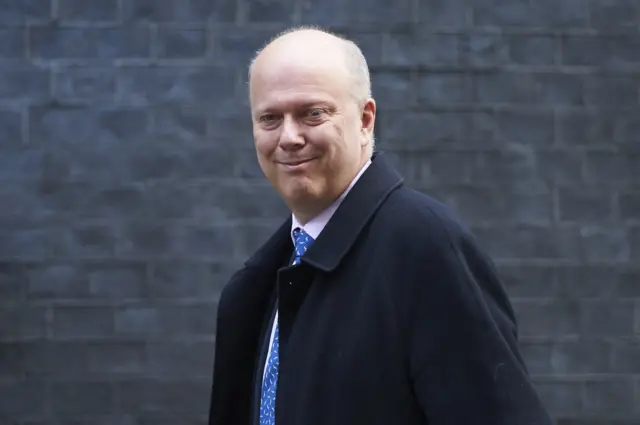
    Chris Grayling MPImage source, Getty Images

    Tonight’s political heavyweights, each arguing from a different side of the EU referendum divide, include a serving Conservative cabinet minister and one of the biggest figures in Tony Blair’s Labour party.

    Chris Grayling MP served as Lord Chancellor and Secretary of State for Justice between 2012 and 2015.

    He is now Leader of the House of Commons, and one of the seven ministers in David Cameron’s 30-strong cabinet who are choosing to directly oppose the Prime Minister in campaigning for Brexit.

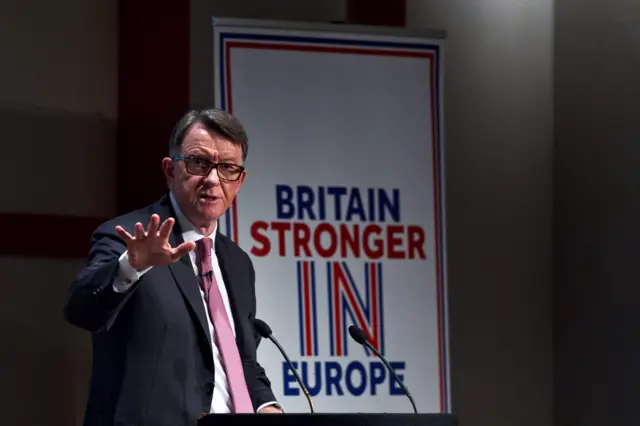
    Up against him is Baron Peter Mandelson, who under New Labour held some of the highest offices in government and later served as a European Commissioner.

    His reputation on Fleet Street as one of Labour’s most ruthless and media savvy figures earned him the nickname “The Prince of Darkness.”

    There’s no darkness or mystery surrounding his views on the EU though – Mandelson will passionately be arguing that Britain must stay in.

    Let battle commence.

    Peter MandelsonImage source, Getty Images
  10. DIY nationspublished at 22:46 BST 11 April 2016

    From Pimlico to 'Petoria'

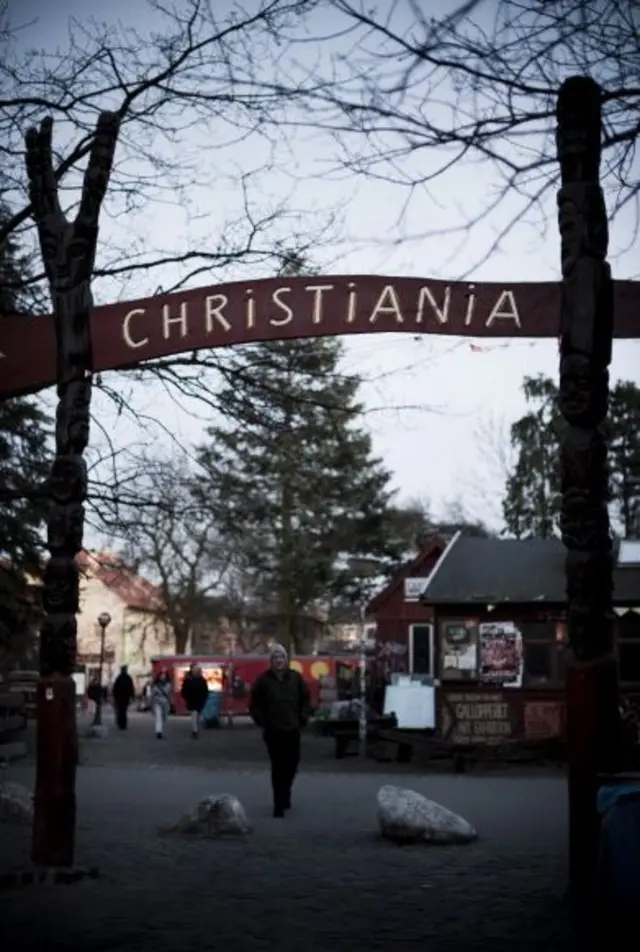
    Christiania in CopenhagenImage source, Getty Images
    Image caption,

    Christiania in Copenhagen

    One fairly extreme option for those who really don’t like living by somebody else’s rules may be to declare independence. 

    And Sealand isn’t the first place to declare sovereignty over unclaimed territory. In fact, there’s so many of them they have a name: Micronations.

    They’re defined as small communities which make persistent and formal claims to be independent.

    The hippy commune of Christiania in Copenhagen, for example, has enjoyed various rights to self-governance. For a time Danish governments tolerated its open trade in cannabis.

    Tourists visiting the Italian Riviera may chance upon the Principality of Seborga. The village was declared independent in the 1960s by Giorgio Carbone, a flower-seller, who discovered documents purporting to show it had never been part of Italy.

    Carbone took the humble title of His Tremendousness and claimed a lifetime of free cheese and ham from the village shop. Extraordinarily about 20 states are said to have recognised Seborga. Sadly for His Tremendousness, Italy was not among them.

    The concept has long fascinated film and TV producers too. The 1949 Ealing Comedy ‘Passport to Pimlico’ saw Londoners annexe part of the capital after discovering an old treaty.

    A six-part BBC series, ‘How To Start Your Own Country’, saw comedian Danny Wallace present then Prime Minister Tony Blair with a proposal for sovereignty over his flat in Bow, London.

    And younger readers may also recall the Family Guy episode in which Peter Griffin establishes ‘Petoria’; a micronation in the family home which welcomed allies including Muammar Gaddafi and Osama Bin Laden at a pool party.

  11. "It makes commercial and economic sense"published at 22:43 BST 11 April 2016

    Excerpts from our Sealand film

    “It’s our small slice of freedom in a highly-regulated world,” says Liam Bates, Prince of Sealand.

    It may not be a surprise to learn that Sealand is not part of the European Union. Its self-declared monarchs aren’t all that keen on joining, either.

    “We’re all about independence, freedom, carving your own path in life. EU isn’t really for us,” adds Prince Liam.

    For a nation which exists entirely without international recognition on an offshore war rig, this lack of will for cooperation in governance may not be an enormous surprise.

    But what about established nations? Is there a benefit to ceding some control of a nation’s decision-making in exchange for being part of something bigger? That’s at the heart of the sovereignty debate.

    For Vicky Price, former head of the government economic service, it’s a price worth paying.

    “If you're looking at it from an economic perspective and a business perspective, what you want is to have a level playing field,” she tells us.

    “So you give up some of your sovereignty because you choose to do so. Because it makes a lot of commercial and economic sense.”

    John Redwood, a Conservative MP strongly in favour of Brexit, is not convinced.

    “We’ve lost the right to govern ourselves,” he tells us.

    “Once you’re in the European Union , you have to ask the permission of the others…you are no longer in control.”

    And Labour’s Gisela Stuart MP, who backs Brexit, argues the issue of sovereignty is something more personal.

    “Where is the essence of… when I close my eyes and say “we”?” she says.

    For her, that inward view of home is not Europe but the United Kingdom. And that’s the most important part of all.

    Watch the whole piece in the live coverage tab at the top of this page.

  12. Sealand in 10 factspublished at 22:39 BST 11 April 2016

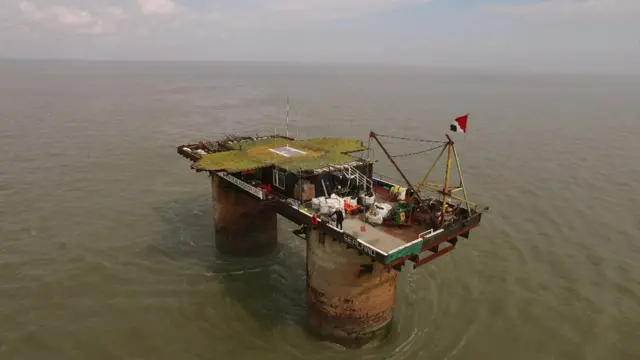
    The offshore platform known as Sealand
    Image caption,

    The Principality of Sealand

    • A self-declared principality, its ruling monarch is Prince Michael Bates. He took over from his father Roy, who died in 2012
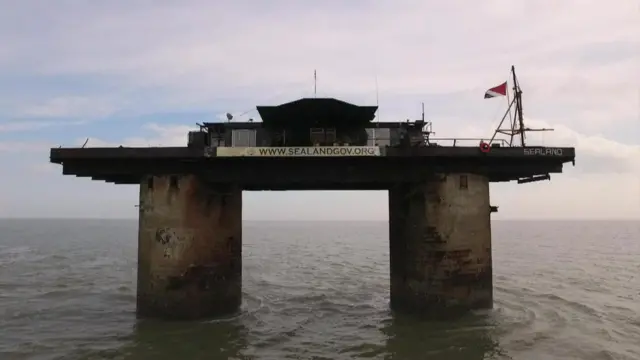
    • Roy Bates, a former army major, proclaimed the territory in 1967 on HM Fort Roughs – one of several offshore platforms built to defend UK during the Second World War
    • Mr Bates occupied the abandoned platform after his pirate radio station was shut down. He intended to broadcast from the fort, which was considered to be in international waters, but instead declared it a sovereign nation
    • It has its own flag, national anthem and coat of arms
    • Since its formation, Sealand has issued its own coins and stamps and continues to sell official titles such as “Lord” and “Count” in order to fund the upkeep of the fort
    • It was invaded in 1978 by a German businessman, resulting in a man being imprisoned on the fort and a visit from a German diplomat  
    • Much of the structure was damaged in a major fire caused by an electrical fault in 2006
    • Sealand has formed its own international football team which has played several friendly matches. Home fixtures are played in Surrey because there isn’t enough space on the fort for a pitch
    • The UK government has never recognised it as independent land, but a UK court once declared it beyond its jurisdiction
    • The family take turns and employs staff to make sure someone is always on the fort

    Sealand and its flag
    Image caption,

    Sealand and its flag

  13. The Principality of Sealand: a profilepublished at 22:37 BST 11 April 2016

    Founded: September 2, 1967

    Area: Approx 10,000 sq ft  

    Demonym: Sealandic, Sealanders 

    Political status: Monarchy 

    Head of State: Prince Michael Bates

    Language: English 

    Currency: Sealand Dollar (pegged to the United States dollar) 

    Motto: “E Mare Libertas” (Latin) “From the Sea, Freedom” (English translation)

    Population: Between one and four

  14. The voter panelpublished at 22:35 BST 11 April 2016

    There is a powerful group of people spread across the country that will have a big influence on whether the UK stays in the EU or leaves it. It’s not an official campaign group. They are the “undecided”. They make up as much as a third of the voting population according to recent polls, and tonight's panel of will be taking part in Newsnight’s special referendum coverage.

    How was the panel selected? Well, very carefully. Ipsos MORI’s Paul Carroll explains:

    “Ipsos MORI’s Social Research Institute, an independent research organisation, has chosen eight undecided voters for Newsnight, taking in factors including race, gender, age and past voting behaviour to ensure they make up a wide cross-section of the population.

    "The eight ‘undecideds’  have been invited to attend six episodes of Newsnight over the next seven weeks; in each they will talk about different topics relating to the referendum and how it might affect their decision on how to vote.

    "The selection process was conducted in accordance with the Market Research Society (MRS) code of conduct and ethical guidance from Government Social Research guidelines.

    "Panels like this are exploratory – they aren’t meant to be statistically representative like a survey. But the eight voters will provide insight into what people think and do.”

  15. The undecided voterspublished at 22:34 BST 11 April 2016

    What they are hoping for tonight?

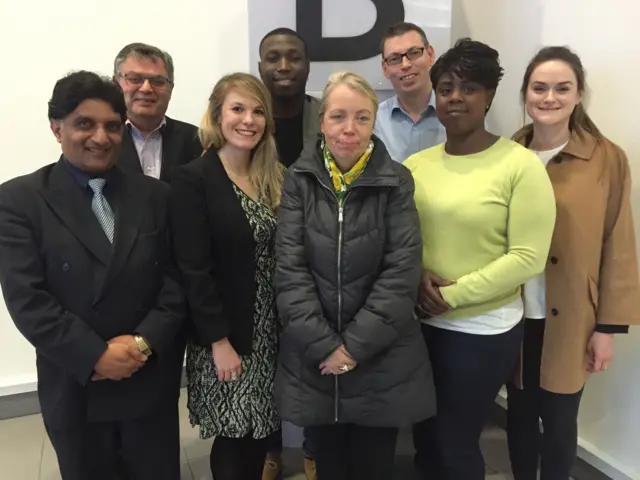
    Our selection of undecided voters arrived earlier this evening, excited to have their questions answered. Here are the eight voter who will return for each of our EU referendum specials.

    Eight undecided voters
    Image caption,

    The undecided voters

    Ahead of the programme tonight, Shan, 60, told us: “I don’t feel we are getting honesty from either side of the debate and there has been a lot of scaremongering. Although I do think we should be sovereign, there have been benefits [to EU membership] like there not being any wars."

    Shan
    Image caption,

    Shan is 60 and the managing director of a medical company

    Janey, a psychotherapist and writer, said “The only argument that I can see that I can agree with is this idea of we want to be able to make our own decisions, and I like the idea that if we vote politicians in, then they should get to choose what happens, whereas in the wider world of Europe we haven’t chosen those people. The flip side of it is that I don’t know what would change if we came out.”

    Janey
    Image caption,

    Janey is from West Yorkshire but has recently moved to London

    And Lewis, 23, told us that “as a young person I’m worried about the future of the economy, especially problems with housing. Having laws made by the EU has had benefits, like gender equality, but sometimes I don’t feel they’ve had a positive impact”

    Lewis
    Image caption,

    Lewis is 23 and lives with his parents and two younger brothers

    Bipin, 49, says: “In terms of sovereignty, I think that we should have a degree of autonomy to govern ourselves to make our own decisions, however, there are some times that perhaps the United Kingdom may not have a monopoly on best ideas in the world and perhaps we can capitalise elsewhere.”

    Bipin
    Image caption,

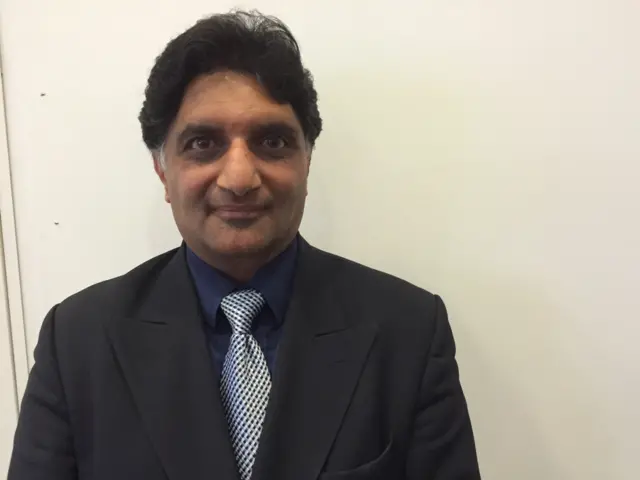
    Bipin is 49 and works in a senior role in an IT company.

  16. Britain, the EU and where the power liespublished at 22:27 BST 11 April 2016

    Where does power lie in the European Union and what say does Britain have? BBC's deputy political editor James Landale explains...  

  17. The price of powerpublished at 22:23 BST 11 April 2016

    Evan Davis
    Newsnight Presenter

    Here’s what I’ve noticed about the EU debate: my friends who want Britain to stay in primarily cite the economic arguments for doing so. My friends who want us to leave usually talk about sovereignty.

    So it's only right that Newsnight gives due time to both. In a couple of weeks, we’ll have a special programme on the economic arguments; tonight we’re looking at sovereignty.

    It’s an abstract concept – and one doesn’t want to get too theoretical about it – but in the last ten days people on both sides of the debate have reminded me not to confuse sovereignty and power. You can be a powerful country with little sovereignty, and a sovereign country with little power.

    Now, being someone with an economic background, I instinctively find myself trying to turn any discussion on a controversial issue into a cost benefit analysis and so, in my mind, the distinction between sovereignty and power is helpful. The benefit of leaving the EU is we get more control over own affairs (sovereignty) but the potential cost is we lose influence over the affairs of everybody else in the EU (power). The goal when we come to vote on Brexit is then to weigh up how much we value the extra control we’d get back, and how much we value the loss of the influence we have elsewhere.

    This though is too simplistic: some on the Leave side think we’d gain power as well as sovereignty by leaving. And there are other sovereignty arguments for or against leaving that don’t fit this simple structure.

    Hopefully, we’ll make a good stab at getting into some of them this evening.

  18. MPs on Twitterpublished at 22:19 BST 11 April 2016

    Who tweets the most about Europe?

    Here's some data from the very handy site MPs on Twitter, external.

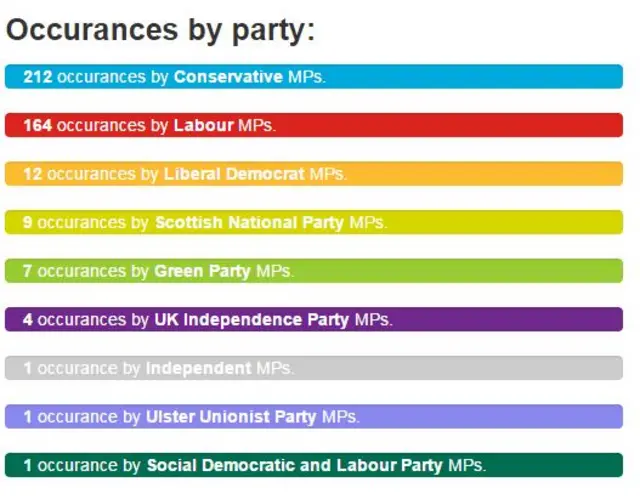
    This breakdown shows which party has had the most MPs tweeting with a reference to the "EU" in the past week.

    The order of most tweets: Conservatives (212), Labour (164), Liberal Democrats (12), SNP (9), Green (7), UKIP (4), Indepents (1),Ulster Unionists (1), SDLP (1)Image source, MPsonTwitter.co.uk
    Image caption,

    MPs tweeting about the EU by party

    And here are the two most retweeted tweets from MPs mentioning sovereignty this year:

  19. From the opinion analysts...published at 22:15 BST 11 April 2016

    "Sovereignty" may sometimes sound like an abstract concept, but to many voters it seems absolutely vital. 

  20. How much does sovereignty matter to you?published at 22:13 BST 11 April 2016

    Tonight, it's the hot topic. But how important is the issue of sovereignty in deciding how you will vote in the , externalEU referendum?

    Have you decided how you'll vote? What questions would you like to see answered by our experts tonight?

    Tweet us your questions and thoughts using #newsnight or post on our Facebook page.

    We'll publish a selection on this page.