Bout Six - Tokihayate vs Mitakeumipublished at 20:37 BST 15 October 2025
Winner - Mitakeumi
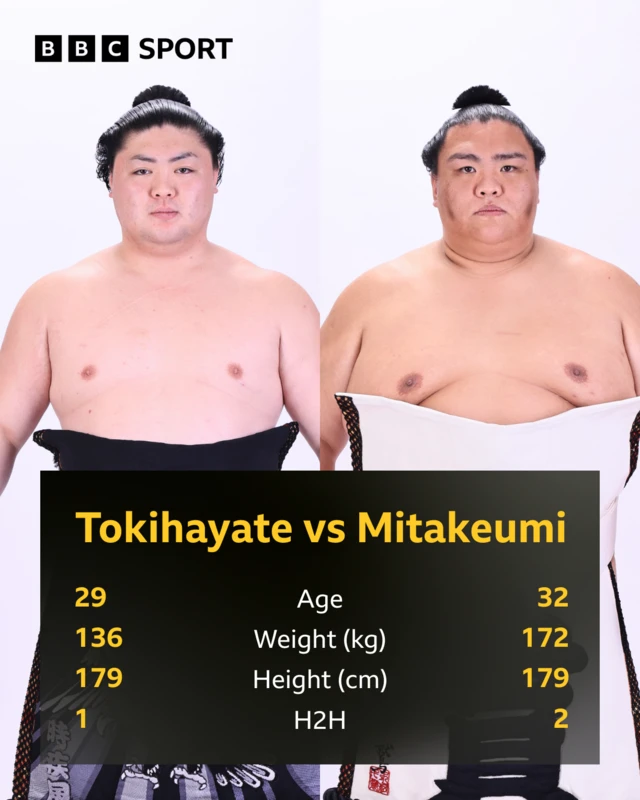 Image source, Japan Sumo Association
Click the 'Watch live' icon for BBC coverage
Join us again on Thursday at 19:30 BST for Day Two
For the first time 34 years, the Grand Sumo Tournament will be hosted at the Royal Albert Hall in London
The event spans from 15-19 October with live coverage everyday!
Have a question? The team at Ask Me Anything are here to answer, click here to find out more
Get Involved - tell us your thoughts via WhatsApp on 03301231826 or text 81111 (UK only, standard message rates apply)
Winner - Mitakeumi
Image source, Japan Sumo AssociationTell us your thoughts via WhatsApp on 03301231826 or text 81111 (UK only, standard message rates apply)
Absolutely fascinated in this! We are hooked!!! Fabulous coverage.
Cat, Ed & Darcy, Ruthin North Wales
Winner - Sadanoumi
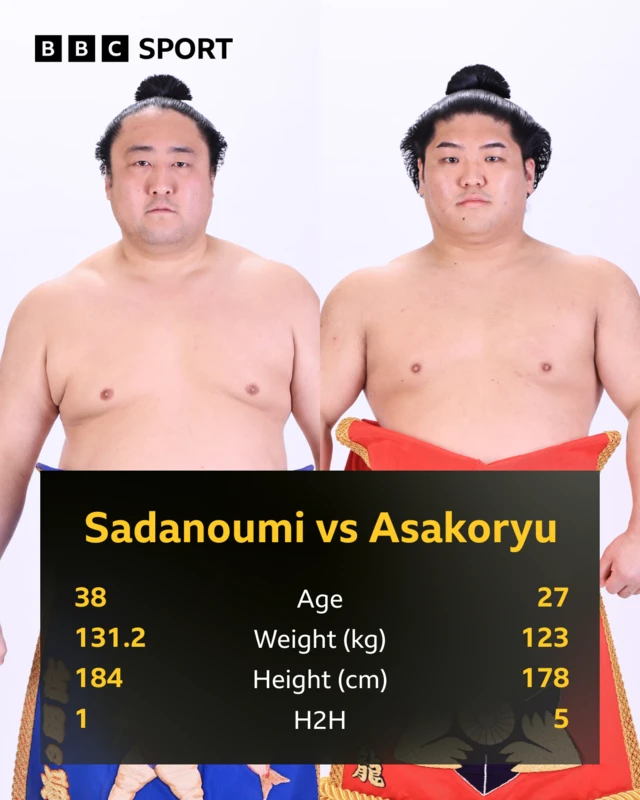 Image source, Japan Sumo Association
Tell us your thoughts via WhatsApp on 03301231826 or text 81111 (UK only, standard message rates apply)
Coverage is absolutely brilliant. Would dearly have loved to have at Royal Albert Hall for this superb occasion. Here’s looking forward yo a great five days.
David Orr, Ballymena
Winner - Tobizaru
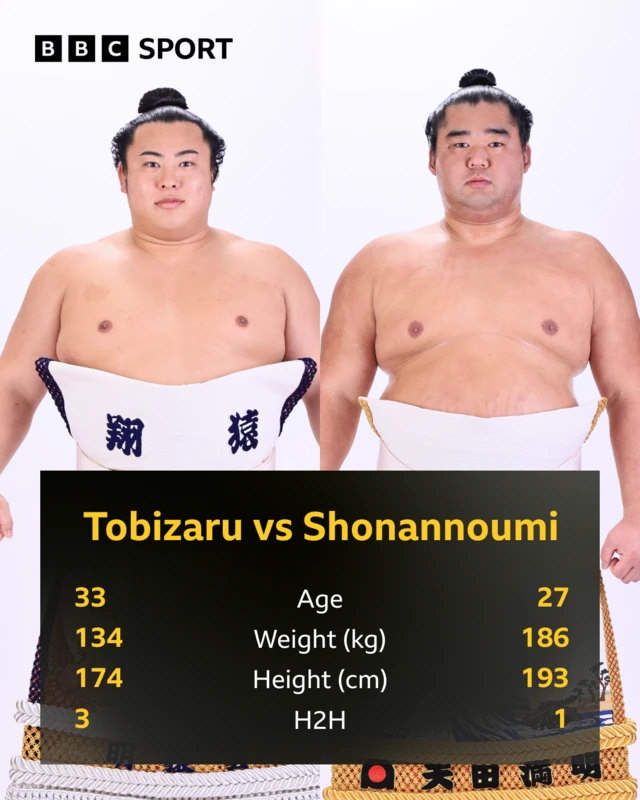 Image source, Japan Sumo Association
Winner - Ryuden
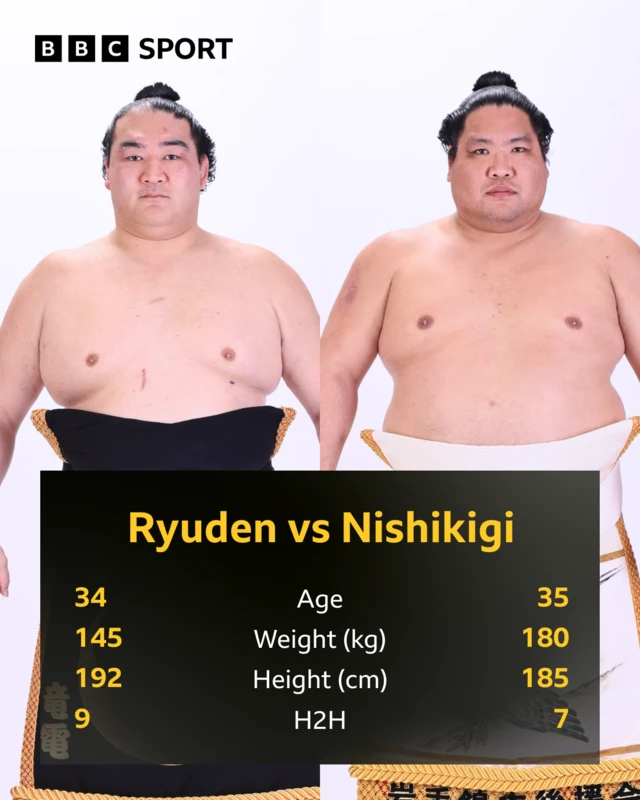 Image source, Japan Sumo Association
Winner - Shishi
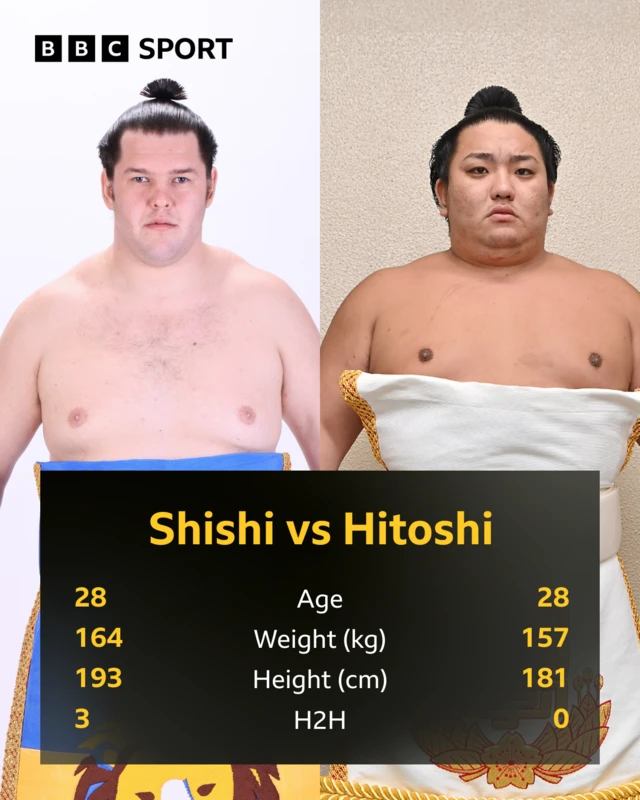 Image source, Japan Sumo Association
Winner - Kotoeiho
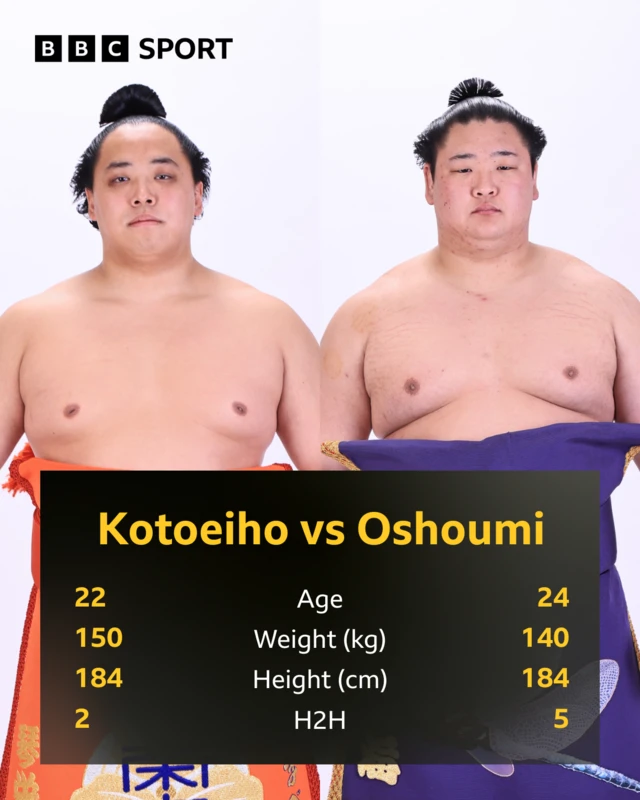 Image source, Japan Sumo Association
Grand Sumo Tournament: Why is Japansese national sport in London?
Tell us your thoughts via WhatsApp on 03301231826 or text 81111 (UK only, standard message rates apply)
I’m from Torquay down in Devon and watching the Sumo on iPlayer on my mobile. Awesome!
Anon [please remember to put your name]
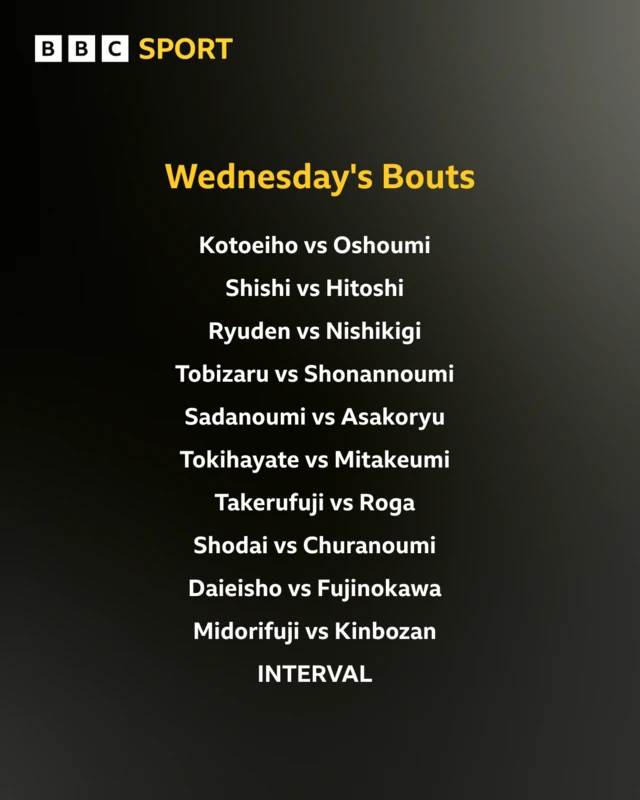 Image source, BBC Sport
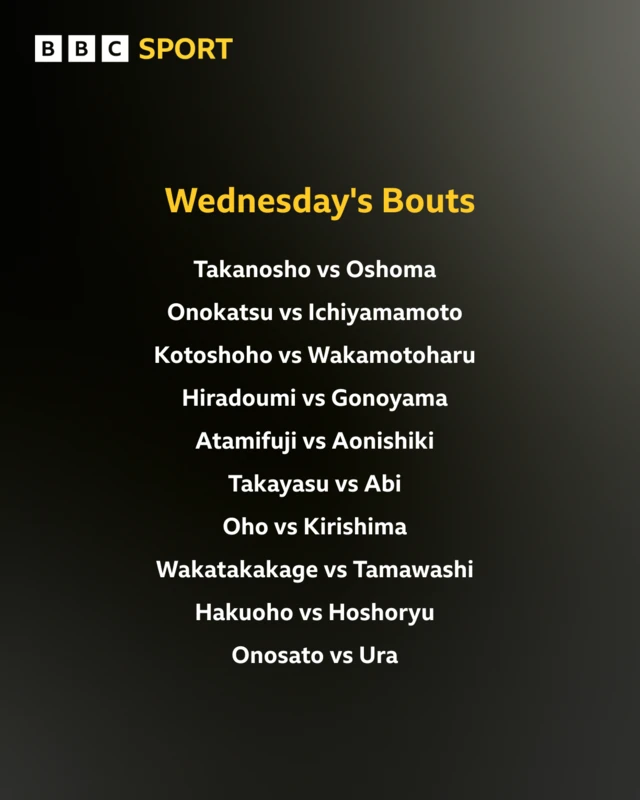 Image source, BBC Sport
Tell us your thoughts via WhatsApp on 03301231826 or text 81111 (UK only, standard message rates apply)
That's a very strong roster of rikishi that have come over. Atamifuji v Aonishiki and Hakuoho v Hoshoryu look particularly good matchups tonight. Let's go!
Davie, Glasgow
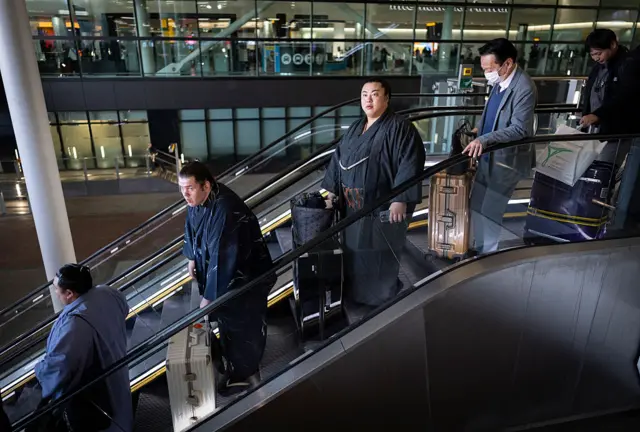 Image source, Getty Images
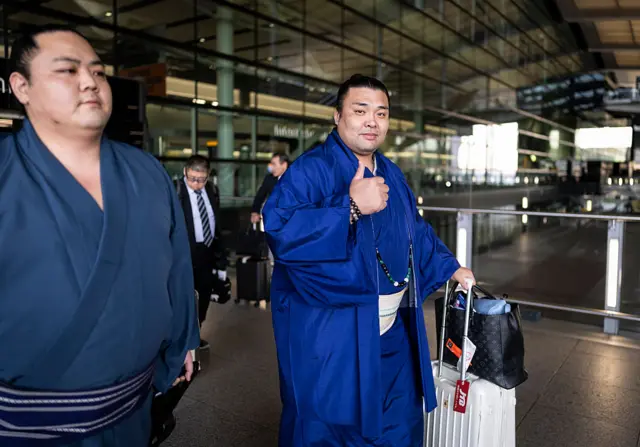 Image source, Getty Images
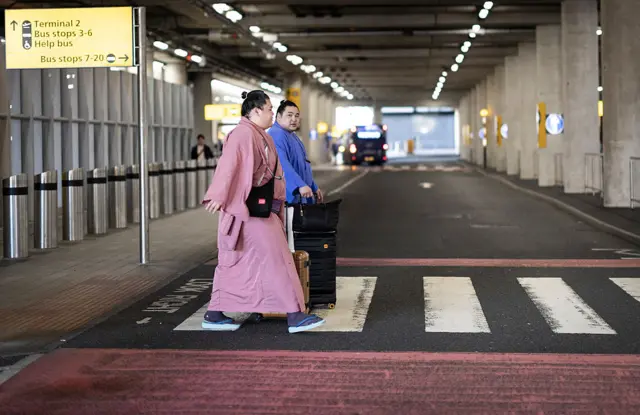 Image source, Getty Images
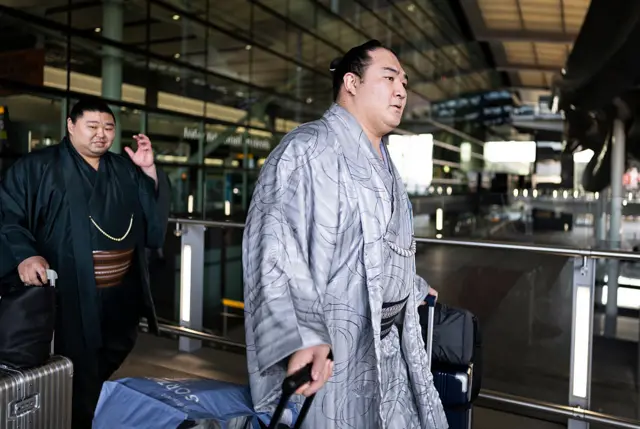 Image source, Getty Images
Tell us your thoughts, where you're watching from via WhatsApp on 03301231826 or text 81111 (UK only, standard message rates apply)
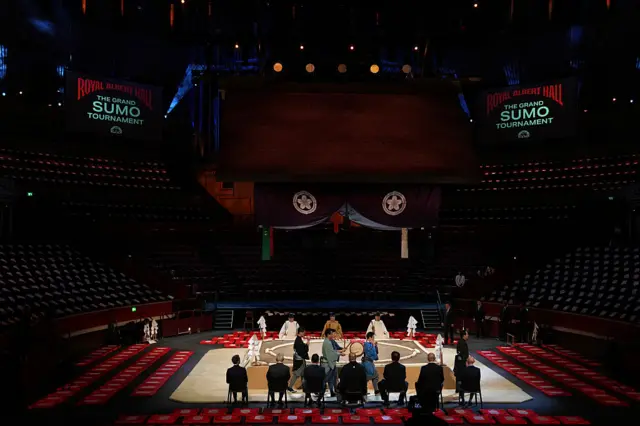 Image source, Getty Images
Kimura Shonosuke, the head 'gyoji' or sumo referee, leads the Dohyo-Matsuri, ring blessing ceremony, with other gyoji.
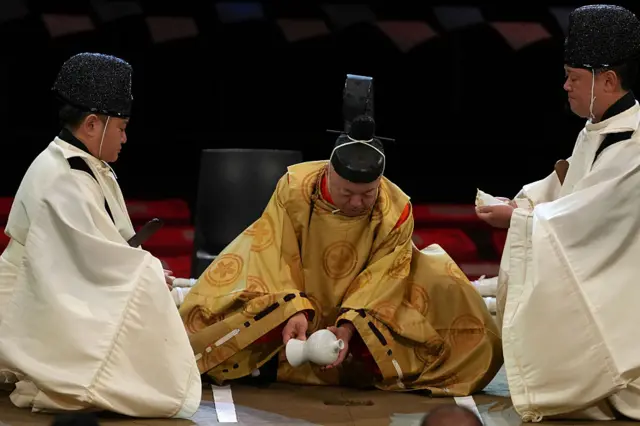 Image source, Getty Images
What is sumo wrestling and how much they eat in a day?
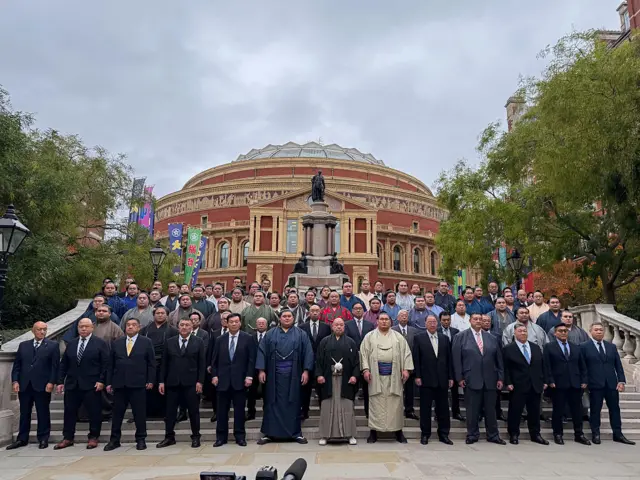 Image source, Getty Images
Stepping into a world of extraordinary strength, and rich tradition as one of the world’s oldest sports returns to one of London's historic venues, The Royal Albert Hall.
For five days, BBC Sport will be showing live coverage across BBC platforms.
Over 40 of Japan’s elite maku-uchi rikishi (wrestlers) will compete, bringing with them the 1,500-year legacy of Sumo.
What is sumo wrestling and how much they eat in a day?
The Grand Sumo Tournament returns to London for the first time in 34 years as over 40 of Japan’s elite maku-uchi rikishi (wrestlers) will compete in the event. The Royal Albert Hall takes centre stage in the Sumo world between 15th – 19th October on Red Button, the BBC Sport website and app.
So what is it?
Sumo is the iconic national sport of Japan, but it is also a mix of tradition, discipline and Shinto religious rituals going back more than 1,000 years.
It is a combat sport with two wrestlers – called rikishi – fighting inside a raised circular ring – a dohyo – 4.55m (14.9 ft) large. Rituals and ceremonies are performed before and after each bout, highlighting the traditional nature of the sport.
Traditionally before a match, a hole is made in the centre of the dohyo and filled with nuts, squid, seaweed and sake by Shinto priests.
The hole is closed, enshrining inside a spirit. Sumo wrestlers then perform a ritual stamp and clap to scare away bad spirits.
Professional sumo is ruled by a rigid ranking system, and the wrestlers who participate dedicate their entire lives to it - living and training communally.
Written by Thomas Fabbri, BBC News
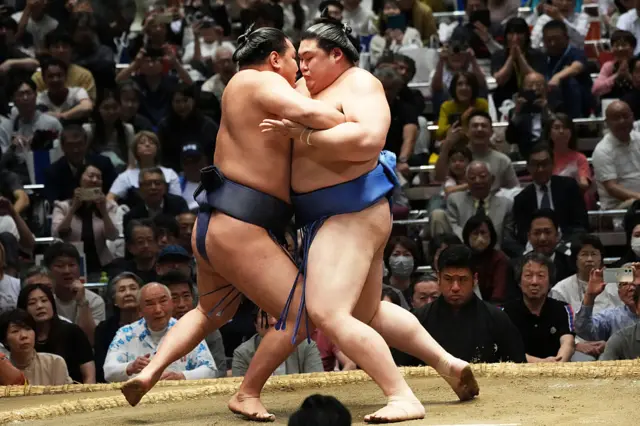 Image source, Getty Images
The basic rules of sumo are quite simple. The bout is decided when a rikishi is forced out of the dohyo or touches the floor of the ring with anything other than the sole of his feet. Bouts can be over in a fraction of a second or last over two minutes.
There are two main fighting styles in sumo. Pusher-thrusters tend to shove their opponents out of the ring by force, while belt-fighters prefer to grapple the other rikishi and use judo-like throws.
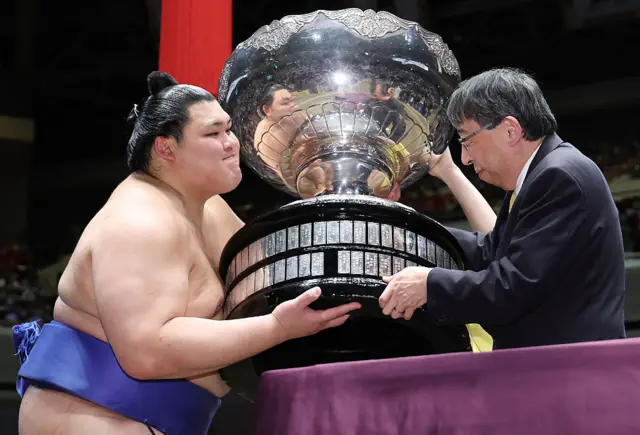 Image source, Getty Images
High-ranking rikishi often excel in more than one type of combat and are able to adapt to their opponents.
There are 82 winning techniques, ranging from audacious throws to clever side-steps. The variety of techniques and strategies keeps fans fascinated, so surprises and upsets can happen in any bout.
There are no weight classes in sumo, so it is normal to see rikishi with huge size differences. Sumo rankings determine who is fighting who, rather than physical attributes.
While women can and do compete in amateur sumo wrestling around the world, they cannot enter the ring at Tokyo's 11,000 Ryogoku Kokugikan arena, or compete in professional tournaments.