African leaders sign $25bn Nigeria-Morocco Atlantic Gas Pipeline - wetin e mean
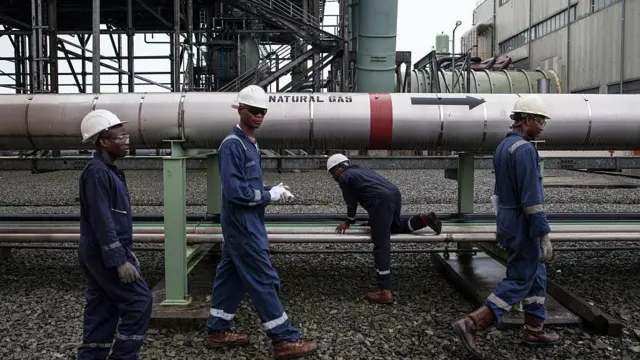
Wia dis foto come from, AFP via Getty Images
- Author, Chris Ewokor
- Role, BBC Africa
- Reporting from, Abuja
- Published
- Read am in 5 mins
Dem don sign off one of Africa most ambitious energy infrastructure projects as West African leaders formally endorse di long-awaited Nigeria-Morocco Atlantic Gas Pipeline.
"No dey surprise wen di gas come your way," Julius Maada Bio, Sierra Leone President and di current Head of West Africa regional bloc Ecowas, tok afta Sunday ceremony for Freetown.
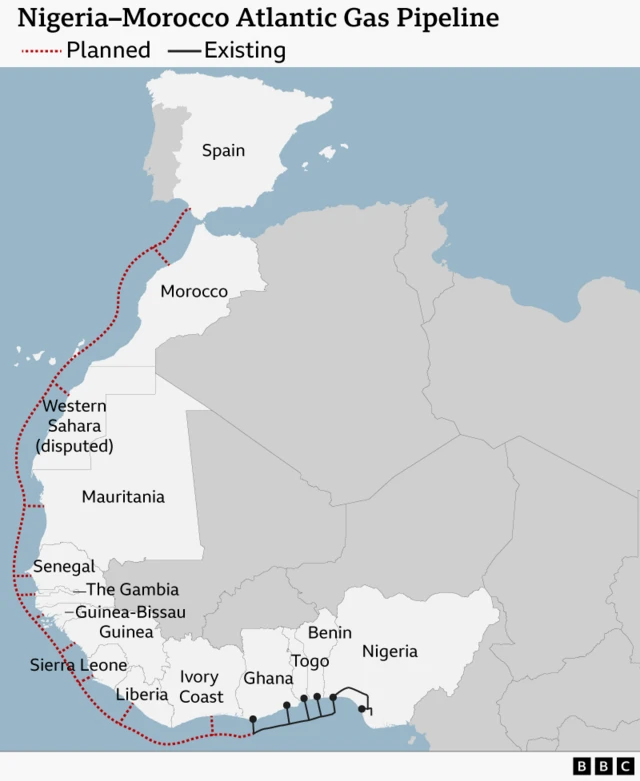
Di Nigeria-Morocco Atlantic Gas Pipeline na 6,000km (3,700 miles) pipeline wey go run along di Atlantic coast of 14 African nations.
E go carry Nigerian gas go Morocco bifor e go link into Europe existing gas network through Spain.
Di construction dey expected to begin for 2028 wit total estimated cost of $25 billion (£19 billion).
Wetin di Nigeria-Morocco Atlantic Gas Pipeline go mean
Di Nigeria-Morocco Atlantic Gas Pipeline signal change from di current models, wia dem go carry gas wey dem extract from African nations, go refine and process for abroad.
Afta dat, dem go ship back di gas to African nations at three or four times di price, according to energy expert and former Nigerian govment advisor Charles Majomi.
Dat practice suppose end, becos na "complete devaluation of di resource wey dey endowed for places like Nigeria and oda kontris," e tell BBC.
"Beyond energy security, e go open up Africa as corridor to international markets," Prof Ganiyat Adejoke Adesina-Uthman, of di National Open University of Nigeria say.
Na symbol of wetin Africa fit achieve wen kontris collaborate and work togeda, she add.
If all plan go well, whopping 30bn cubic metres of gas per year go pass through di Nigeria-Morocco Atlantic Gas Pipeline wey go serve 400 million consumers.
E go make am one of di world longest offshore gas pipelines wey go reshape West Africa energy landscape.
Di agreement dey come afta almost one decade of negotiations wey involve more dan dozen kontris.
E establish di legal and governance framework for di pipeline and e dey widely seen as di last major political wahal bifor finance and construction decisions.
While construction neva begin, di project don enta more advanced political and technical phase pass di first time wey dem propose am for 2016.
E dey expected say dem go build di project in phases ova several years instead of make dem build am at once.
Some sabi pipo say di project fit no start from Nigeria, becos say dem don mark di kontri as stumbling block.
"Di plan na to finance di project in segments starting wit di Morocco-Mauritania-Senegal axis, den move to di Ghana-Côte d'Ivoire axis... den di final connection na to Nigeria wey go provide di gas," energy expert Majomi say.
Unlike di Trans-Saharan Gas Pipeline through Niger and Algeria, dis Atlantic route largely avoid di Sahel most insecure regions, although offshore construction go increase costs.
Dem don also agree di route wey di pipeline go pass through.
Finance fit dey tight, as di project dey eye $25bn cost but inflation fit push am up, plus di success of project of dis scale rely on all 13 member nations (plus di disputed territory of Western Sahara) to play dia part to protect di infrastructure from attacks.
Wetin di gas pipeline mean for Nigeria and di challenges
Nigeria state oil firm and Morocco national mining body dey jointly lead di pipeline project.
Regional institutions wey dey support di initiative include Ecowas, di Islamic Development Bank and di Opec Fund for International Development.
Beyond exports to Europe, e go also supply natural gas to kontris wey dey currently rely on expensive imported fuels, support new power generation, fertiliser plants, petrochemical industries and manufacturing along di Atlantic coast.
For Nigeria, e go offer opportunity to monetise di vast gas reserves while e go strengthen economic ties across West Africa and North Africa.
Despite strong political momentum, significant obstacles still remain. To finance di project and secure di pipeline route as well as ensuring political stability across participating kontris go get major challenges even bifor construction fit start.
Oda challenges include di problem of long offshore engineering sections, plus di competition from oda export routes - including liquified natural gas (LNG) projects and di Nigeria-Algeria Trans-Saharan Gas Pipeline.
Beyond all of dis, na di kwesion ova future European gas demand as di continent start dia transition to renewable energy.
"Nigeria get di gas and market access from Morocco to Europe dey. No be just to extract energy, e go lead to access to clean energy for many kontris wit Morocco as gateway," sabi pesin Prof Adesina-Uthman tok.
"E go also create industries, job opportunity and ultimately global market. E no be just for regional integration but global project."