
Home > Opinion > Fighting the fat rolls
Tom Shakespeare

Tom is a Research Fellow at Newcastle University. His non-fiction books include Genetics Politics: from Eugenics to Genome and The Sexual Politics of Disability.
Fighting the fat rolls
29th June 2009
My physiotherapist is pleased with me. Attentive readers will remember (a) that I became paraplegic in August 2008 and (b) that I now work part-time with the World Health Organization (WHO) in Geneva. Well, I went back to see my physio recently, after an interval of a month during which I had been working away from home. I didn’t think I’d made any progress, I explained, even though I did my exercises dutifully almost every morning: stretching and kicking my legs, opening and closing my knees and, on a good day, squeezing my glutes as if my life depended on it.
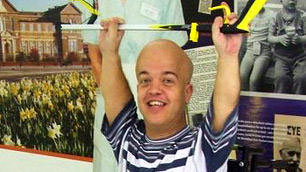
Having gone through my repertoire of twists, flexes and tenses for her, to my surprise she reported that I had definitely improved. Apparently, I could now do moves which weeks ago were impossible. I was undoubtedly going in the right direction, and pretty soon we would be able to practise some standing up. Most gratifying. "But what about this?" I asked, pointing to the small roll of fat around my midriff.
Now, I have to put this in context. Us achondroplasics look to be on the chunky side at first glance. Short fat legs, with prominent backsides. But don’t make the mistake of thinking that this is all fat. Not in the slightest: it’s just the full complement of adult muscle, but squeezed onto a smaller frame. Or at least, that was always my story.
Now, I have to put this in context. Us achondroplasics look to be on the chunky side at first glance. Short fat legs, with prominent backsides. But don’t make the mistake of thinking that this is all fat. Not in the slightest: it’s just the full complement of adult muscle, but squeezed onto a smaller frame. Or at least, that was always my story.
In truth, short folks do tend to become bulky if they neglect the exercise or overdo their intake of food (and alcoholic beverages, come to that). My father, a doctor, always counseled me to watch my weight, and himself never ate second helpings or cream. The danger is that once you become a bit fat, it’s hard to get rid of it. As for keeping fit and active, I spent the first forty years of my life running around at top speed doing stuff. I walked briskly, cycled to work, swam occasionally, and generally never had time to pile on the pounds.
Paralysis changed all that. Not at first, though: weeks of lying around in hospital with dysfunctional neurology means that the muscles of your butt and legs wither away. My partner had always liked my taut glutes, but now my bum became skin and bones – not least because hospital food is worse than inedible. Becoming spinal cord injured initially means becoming much thinner.
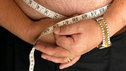
Fast forward six months. Now I am in a chair, and I've got shoulders and arms like Geoff Capes. All that wheeling and transferring has done wonders for my upper body. But meanwhile, a stealthy fat roll has appeared around my waist - the rather familiar pot belly of the wheelchair user.
But I don’t want to be podgy! I may be unconventional, but I’ve always been vain about my weight and don’t want to blow my good record now that I’m paraplegic. I want to be able to do up my old trousers. More to the point, excess fat makes it harder to succeed in rehab. Which is why I wanted to find out from Sue, my physiotherapist, how I could get rid of the excess tummy.
The obvious answer is to eat less, of course. But I love cooking, I spend half my time in Geneva - a city with dozens of excellent French restaurants - and I am just beginning to appreciate fine wines. So I’m reluctant to ration myself too much. Although I am prepared to give up the puddings, if it comes to that.
Then there's exercise. Swimming, of course, is pretty useless. I can still get up and down the pool at a reasonable pace, and I tend to go about once a month. But as I understand it, twenty minutes of swimming burns the calorific equivalent of one banana, so evenings à la piscine would not be my best option.
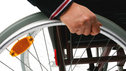
Another approach is to go for long rolls in my chair. But while wheeling is great for strength and stamina, it doesn’t seem to burn enough calories, at least not compared to walking or cycling. There are also a lot of hills around both Geneva and Newcastle (where I live in the UK) and a fair few cobbles, neither of which are particularly enjoyable for wheelchair users. Perhaps it would help if I got a hand cycle and raced around Switzerland's enormous Lake Léman, but I’ve never been particularly sporty.
No, what I need is regular aerobic exercise. Which isn't easy to achieve when you're paralysed - although bedroom activities can be relied upon for working up a sweat. My physio, however, did have one horizontal suggestion of a less intimate kind. “Roll across the floor”, she recommended.
I was taken aback, but she was serious. Apparently, if you roll briskly from one side of the room to another, you’re pretty soon doing aerobic exercise. Unfortunately, you are also getting dusty, bruised and disturbing the occasional tables into the bargain.
So I turn to you, gentle and well-toned Ouch! reader, for advice. How does a novice paraplegic maintain the trim figure of his dreams? Should I roll around the endless corridors of the WHO to get my weekly physical activity? Must I put my days of foie gras and pommes dauphinoise behind me? Or is there an easier and more comfortable way? Over to you ...
So I turn to you, gentle and well-toned Ouch! reader, for advice. How does a novice paraplegic maintain the trim figure of his dreams? Should I roll around the endless corridors of the WHO to get my weekly physical activity? Must I put my days of foie gras and pommes dauphinoise behind me? Or is there an easier and more comfortable way? Over to you ...
Bookmark with...
Live community panel
Our blog is the main place to go for all things Ouch! Find info, comment, articles and great disability content on the web via us.
Listen to our regular razor sharp talk show online, or subscribe to it as a podcast. Spread the word: it's where disability and reality almost collide.
More from the BBC

All the latest news from the paralympics.

News and views for people who are blind or partially sighted.

Weekdays 12.40pm. Radio 4's consumer affairs programme.

~RS~q~RS~_bbc_=0&__ip__=54.77.33.255&dnainitialtitle=Fighting%20the%20fat%20rolls&dnahostpageurl=http://www.bbc.co.uk/ouch/opinion/fighting_the_fat_rolls.shtml&dnauid=ouch:article:2037&s_baseHeadingLevel=1&dnashow=10&dnafrom=-3&dnato=6&dna_encoding=utf-8&s_sssicomponent=1&s_sssiCommentCount=&dnacommentforumlistprefix=%5B_%5D&dnarecentcommentsprefix=%5B_%5D&s_commentprofileurl=/dna/mbouch/CommentProfile?dnafrom=-2&dnato=7&s_contact=0~RS~z~RS~29~RS~)
Comments
Eat more pies take no notice of the grass eaters. Sit on them :)
Complain about this comment
Electric ABS pads are the future - good enough for Bruce Lee, good enough for Bruce Almighty grasshopper!
Complain about this comment
ABS pads are the future - good enough for Bruce Lee, good enough for Bruce Almighty grasshopper!
Complain about this comment
I think that we should try the ABS pads on the moderators first, to see if they now notice the difference between grass eater and GRASSHOPPER
Complain about this comment
I have yet to make a comment, so I think that a computer is moderating tonight as it is too quick at blocking ANYTHING written.
Complain about this comment
There is a problem with this site,as it is blocking everything when i have yet to make a comment
Complain about this comment
I meant to post this 2 weeks ago but the comments weren't working...
pilates is excellent for tone but I struggle to get a good cardiovascular work out from it now my movement is so restricted. There are several pilates dvds available which are suitable for wheelchair users but I would second the advice about learning the techniques with a good instructor first.
Paddling works for me. I canoe in an open rather than a kayak, mainly because I can not get into a kayak without a huge amount of pain. The best technique involves using as much as your body as you can but certainly in the open boats you can paddle flat water seated (rather than kneeling) and get a really nice workout whilst looking at nice scenery. I'm the only physically disabled member of my club and everyone has been very helpful adapting things for me. Excellent if you already have good upper body strength, then it's up to you how hard you push it.
Complain about this comment
There is a treatment similar to FES which is called TES for Theraputic Electrical Stimulation, and it is essentially the same thing as FES but you wear the equipment at night and it delivers a very small electrical pulse which you don't really notice while sleeping. It actually is calming and helps some people fall asleep. The stim sometimes helps with pain, also.
FES and TES will keep your muscles from atrophying and sometimes even helps nerves to regrow, but to a limited amount. My son used this for 5 years and it helped him go from using forearm crutches to walking independently with braces. He developed more sensation in his lower legs also. It also greatly improved his bowel and bladder control, but you have to apply the TES to the hip and abdomen area, as well as the thighs and lower legs.
I suggest music. The developer of TES, Dr. Karen Pape, Director of the Magee Clinic in Toronto, Canada, also uses TES for Cerebral Palsy patients and then uses music to help them use the muscles that have become stronger in a more coordinated fashion.
I think bicycling with a hand-powered bike is a good exercise because it is fast, and the bikes have GEARS which make getting outside in a wheeled fashion much more fun. Here we have some great trails out of the way of motorized traffic, and the fresh air and sunshine is great for recovery, and a good way to get your vitamin D.
It helps to have an exercise/weight loss buddy. Doing things together helps a lot. You can encourage each other, as well as commiserate together. This can be on-line or on the phone or in-person.
Learn to cook from scratch. Cooking from scratch (aka slow food) makes the entire eating experience more enjoyable with the eating part being only one aspect of the event. Invite someone over to enjoy food together, and you can talk and cook more and eat less.
Eat fresh. Fresh food tastes better. If you can do some gardening, like container gardening, this is a great way to make the food that is good for you taste better. Start with fresh herbs, and then try growing some leaf lettuce. They are easy and taste best when you pick it just before eating it.
For me, I figure that if I am going to obsess about food, I might as well think about it (and enjoy it) from the ground up...through growing, cooking as well as the eating part.
I recently lost 40 pounds this way....so it can work. Just don't give up -- you can do it. Take care.
Complain about this comment
I hope you found some cardio you could do. Your article made me smile because I have found physiotherapists do make some 'odd' suggestions, and rolling on the floor is last resort stuff, or would be for me (not that I'm in your position).
Complain about this comment
Hi Tom,
As a wheelie for coming on 30 years I know the joys of tummy bulge. I used to do over 100 sit ups everyday to keep it toned, but my last spine op put pay to that. My spine is now fixed but I have found you don't need to actually do the sit up for the muscles to improve. Just laying down and semi-sitting up kind of works.
I tried the toning machines, but as my muscles were put together funny during my spine ops, it meant I twisted weird every time I used it. So that got given away. But I'm afraid that the wheelie tummy is a part of age and paralysis mate.
Anyway, hope everything else is going OK? Oh and welcome to the club.
Mik S
Complain about this comment
View these comments in RSS