
Local navigation
Use the tabs below to find out about each section of the orchestra, watch video clips, and read interviews with musicians.
This section of the orchestra got its name from the fact that many of its instruments were originally made from wood. Now they can be made from plastic, silver, gold - even platinum!
The clarinet is played with a reed, which is a very thin piece of wood that vibrates when you blow through it. A relative youngster in the orchestra, the clarinet is only about 300 years old!
It is a long tube made of wood (or plastic) and has metal keys to press. The bottom of the clarinet is shaped like a bell.
The clarinet player is sometimes called upon to play the saxophone or the bass clarinet.
Saxophone - the saxophone was developed from the clarinet by Adolphe Sax in 1840.
Bass Clarinet - The bass clarinet makes a lovely, deep, rich sound.
In order to see this content you need to have both Javascript enabled and Flash installed. Visit BBC Webwise for full instructions
Watch
Listen
Related instruments
Meet the orchestra
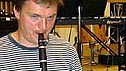
John Bradbury, Clarinet
BBC Philharmonic
-
How old were you when you first started playing?
I took up the clarinet at the age of thirteen. -
Why did you choose this instrument specially?
My dad played the clarinet and I really liked the sound. -
Do you play any other instruments?
I play the piano. -
What do you like most about playing in an orchestra? Is it fun?
It's the most gregarious form of music making, which is good socially and gives a great sense of achievement through team-work. -
Do you play any other kind of music?
No -
What's your favourite music?
Brahms' symphonies. -
Do you have any hobbies? What are they?
Geology and swimming.
Have you been listening to an orchestra without realising it?
Spot the orchestraLearning events diary
Events coming up
-
[an error occurred while processing this directive]
Radio & TV
Most recent
-
Available to listenDeborah Bull explores ballet music in late Victorian London, at the music hall theatres.
-
Available to listenSara Mohr-Pietsch explores Britten's choral works.
-
Available to listenAndrew McGregor explores Mahler's Das klagende Lied.
-
Available to listenSarah Walker explores Rachmaninov's choral works.
Coming up
Explore Radio 3
-

Live music and the arts at the BBC.
Learn an instrument
-

Tips and advice on how to get started.
