Charity's warning after asylum seeker death decisionpublished at 06:11 GMT 15 March 2024
Henok Zaid Gebrsslasie died while under the care of a mental health centre in Coventry.
Read MoreHenok Zaid Gebrsslasie died while under the care of a mental health centre in Coventry.
Read MoreA selection of the best photos from across the African continent this week.
Read MoreShipwreck survivors tell rescuers they had set sail from Libya a week earlier.
Read MoreAs turmoil grips the Caribbean nation, how countries from the US to Kenya react will be critical.
Read MoreOfficers said that Ishmael Chokurongerwa led an Apostolic sect with more than 1,000 members in Harare.
Read MoreWe'll be back next week
That's all from the BBC Africa Live team for this week.
We're back on Monday, but until then there'll be an automated service here, plus you can get the latest news on our website or listen to our podcasts - Africa Daily and Focus on Africa.
Our African proverb of the day:
Quote MessageWisdom is like hair, everyone has their own."
A Swahili proverb sent by Bruno Onindo in Canada, Winnie Muthoni in Kenya, and Tez Lore in Kenya
And we leave you with this picture of a worker smelting platinum in South Africa:
 Image source, Reuters
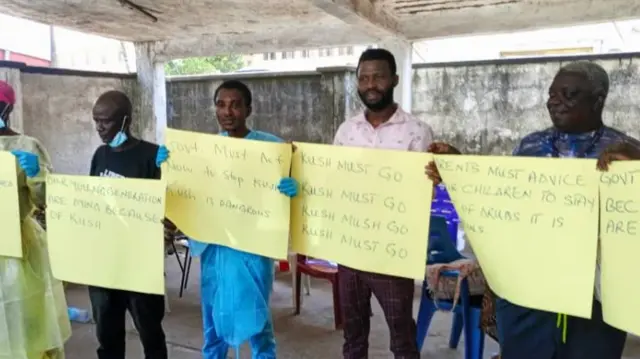 Image source, Sinneh Kamara
Ahead of the burial health workers carried signs demanding more to be done to tackle Kush
The bodies of 32 unidentified people - 25 men and seven women - who had all died after taking the drug known as Kush were buried in Sierra Leone's capital, Freetown, on Thursday, Sinneh Kamara, who works with the ministry of health to conduct the funerals, told the BBC.
They are just the latest people to die as a result of the narcotic - a synthetic cannabinoid mixed with other dangerous chemicals - that has become popular in the country.
Mr Kamara estimates that his team picks up two to three corpses a day, but because many do not carry identification they often lay unclaimed in the morgue.
Many young people living in desperate circumstances have become addicted to Kush.
In 2022, medical staff in Freetown told the BBC's Africa Eye programme that 90% of the male admissions to the central psychiatric ward are due to use of the drug.
Mr Kamara said that the authorities must take strong action in dealing with anyone who imports Kush, but police are struggling to contain the problem.
The patients were not let through the Rafah crossing despite being named on authorised departure lists.
Read MoreRecent kidnappings in Nigeria ignite memories of past abductions
The recent kidnapping of more than 280 students from a school in northern Nigeria has been sparking memories of similar incidents in the country, which has been hit by a series of mass abductions.
Friday’s daughter was taken from a college in Kaduna state in 2021.
The students were eventually released after the parents paid what they could towards the ransom.
This was before paying a ransom was made illegal in Nigeria, but Friday and the other parents felt they had no other option if they wanted to see their children again.
Friday has been telling the BBC's What in the World podcast about what happened on the day of the kidnap.
“All of us parents were asking, where do we go? Is it how our children are going to go, the way the Chibok girls went? We asked God, have mercy,” he said.
His daughter, Rejoice, talked about what happened to her.
“We just finished reading and went to our rooms. I was on my bed when they came in and asked all of us to go outside, and they took us into the bush.
"We were walking for four hours, then they brought bikes.
"I was afraid, they had guns. The first thing I thought was: 'Is that how I’m going to go?'
"We were there for nearly two months. There were snakes and scorpions, sometimes no food. Thank God we are back."
Read more on Nigeria's kidnapping:
Moses Kollie Garzeawu
Journalist, Monrovia
Liberia is one of the countries hit by the internet outage that has had an impact on West Africa and other parts of the continent.
The telecoms authority confirmed the problem in a statement to customers.
It said the situation was a result of a disruption to a sub-sea cable near Ivory Coast.
Liberians are unable to access basic internet services as well as social media apps.
This morning, mobile operators sent text messages to customers alerting them to the issue and warning of a disruption to mobile money services.
Most Liberians depend on this service for transacting business.
“It seems like 50% of my life is gone today,” businessman Benjamin Garkpah told the BBC.
Fatumata Barry said that her business has come to a standstill.
The telecoms authority says it is working to try and resolve the problem.
People in West and Central Africa are experiencing problems connecting to the internet with Ivory Coast being the worst-affected country, the monitoring group NetBlocks reports, external.
It says that the companies operating the sub-sea cables linking the region to the internet are reporting multiple failures. But the exact cause of the problems is not clear, the Reuters news agency says.
NetBlocks says that the internet in Ivory Coast is operating at just 4% of its expected level.
Liberia, Benin, Ghana and Burkina Faso have also been badly affected, it reports.
Users in South Africa are also reporting slow speeds, website News24 says, external.
It quotes a spokesperson from telecoms company Vodacom saying that "multiple sub-sea cable failures between South Africa and Europe were impacting network providers".
 Ahmed Rouaba
BBC News
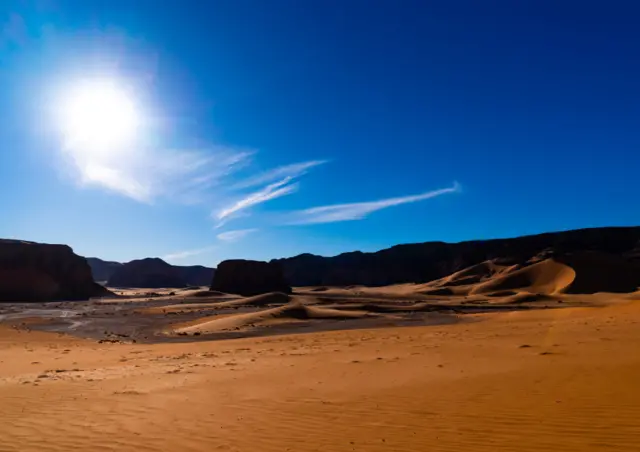 Image source, Getty Images
The Sahara is the world's largest hot desert
Algeria, a major oil and gas exporter, has awarded contracts to local and international companies to develop two solar energy projects with a combined capacity of 3,000 MW.
Given the strength of the sun over Algeria, the south of the country could have some of the most productive solar power plants in the world.
In an effort to reduce its reliance on oil and gas, the North African country aims to reach a renewable capacity of 15,000 MW and produce 27% of its electricity from wind, solar and hydro by 2035.
Currently only 3% of its energy comes from these sources.
The companies developing the new power plants are required by the contracts to source at least 35% of their construction components in Algeria in order to promote local development.
Women in Geneina in Sudan's West Darfur state are saying that they have been sexually assaulted by militants linked to the Rapid Support Forces (RSF) because of their ethnicity, the UK's Guardian newspaper reports, external.
The RSF has been fighting Sudan's army in the country's 11-month civil war that has left a humanitarian disaster in its wake.
It began in the capital, Khartoum, but spread across the country, including to Darfur in an echo of the conflict there two decades ago.
The sexual assaults began in Geneina after an army garrison there was overrun in November.
Most of those raped were from the the Masalit community, reporter Zeinab Mohammed Salih says.
She describes them as a darker-skinned ethnic African tribe.
The perpetrators are alleged to be Arab fighters but traditional leaders deny this, the Guardian says.
A local chief tells the BBC some of the 280 abducted schoolchildren are in a "critical condition".
Read MoreWhile Senegal prepares for the upcoming presidential elections one school in Dakar went ahead and held its very own elections.
Read More Dorcas Wangira
Africa health correspondent, Nairobi
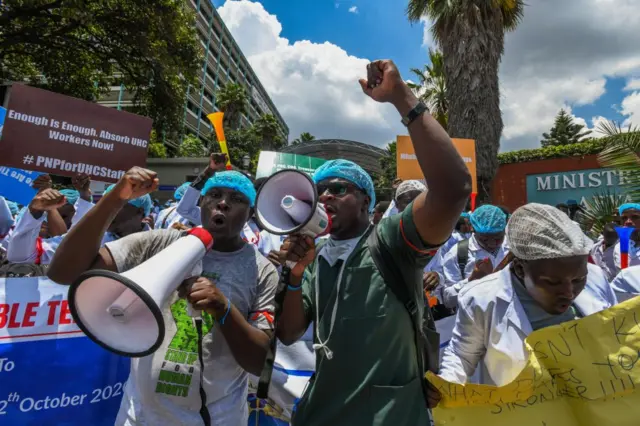 Image source, Getty Images
Doctors gathered in Nairobi to make their demands earlier this month
Doctors in Kenya have started a week-long strike over delays by the government to deploy medical interns. They are also complaining about the poor working conditions they say they have to work under.
The Labour Court had earlier issued an order to halt the industrial action to make room for negotiations. The judge asked the labour minister to hold talks with the doctors' union and employers on Thursday to find a solution.
But the union says it did not get the court order.
Kenya is facing a huge public health crisis.
With doctors in state medical facilities on strike, patients who need help will suffer.
More than 1,000 interns - doctors who have finished their training and need to work for a year before getting their licences - have not been placed since January.
The health ministry says it does not have enough money to pay them.
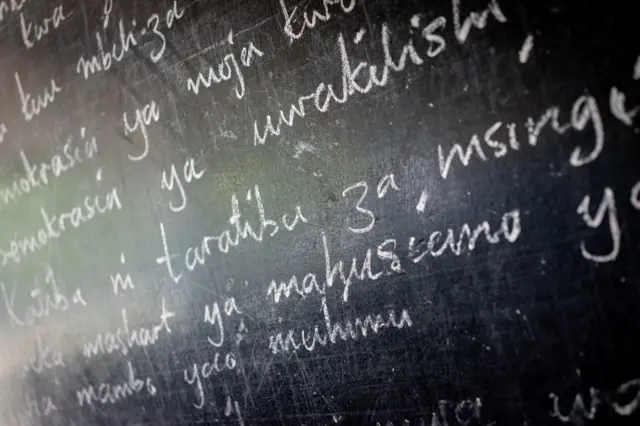 Image source, Getty Images
All Ugandan ministers are now required to attend mandatory weekly Kiswahili lessons
The Ugandan government has allocated $800m (£625m) to promote and teach the Kiswahili language in the country, as part of efforts to foster regional integration.
Civil servants including doctors, nurses and border workers will be given priority in the yet to be unveiled Kiswahili training programme, Uganda's Minister for East African Affairs Rebecca Kadaga said.
The minister did not give further details on when and how the training programme will be unveiled.
As part of the efforts to popularise the language in the country, Ms Kadaga said all senior government officials, including cabinet ministers and judges, were taking compulsory weekly lessons.
In July 2022, the Uganda government approved the adoption of Kiswahili as an official language and directed that it be made a compulsory subject in primary and secondary schools.
But the language is currently taught in a few secondary schools in the country.
About 200 million people speak Kiswahili in the world and in 2021, the language received its biggest boost when the UN designated 7 July as World Kiswahili Language Day.
It is also the official language of the East African regional bloc, the EAC.
In 2019, Kiswahili became the only African language to be recognised by the Southern African Development Community (Sadc).
There are also efforts to introduce it in classrooms across South Africa and Botswana.
Read more on the spread of Kiswahili:
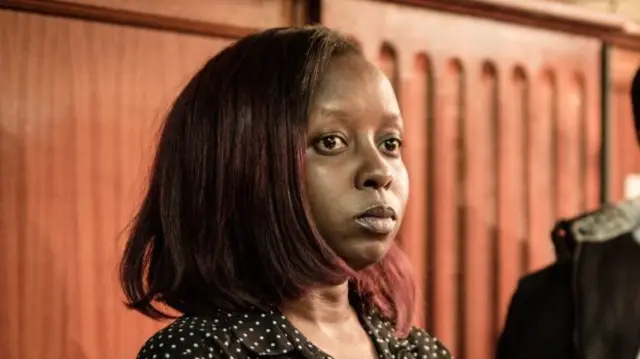 Image source, AFP
Jacque Maribe's ex-fiance Joseph Irungu was on Wednesday sentenced to death
The agency in charge of public appointments in Kenya has denied reports that it hired a popular former TV anchor who was recently acquitted of murder.
Public Service Minister Moses Kuria had last weekend told the Nation news website that the Public Service Commission (PSC) appointed ex-TV anchor Jacque Maribe as the head of communications in his ministry.
The announcement prompted widespread criticism on social media as questions were raised about whether Ms Maribe's appointment followed the appropriate hiring process.
The PSC on Thursday denied Mr Kuria's claim, saying that it has not appointed Ms Maribe or received a request to employ her.
"For the record, the said position will be filled through a competitive process should a vacancy arise," PSC chairperson Anthony Muchiri said in the statement shared on social media.
Ms Maribe was last month cleared of murdering businesswoman Monica Kimani after a six-year trial that gripped Kenyans.
She and her former fiancé Joseph Irungu, also known as "Jowie", had been charged in the murder of the businesswoman, who was found with her throat slit at her apartment in Nairobi in 2018.
Irungu was sentenced to death on Wednesday after the court found him guilty of the murder.
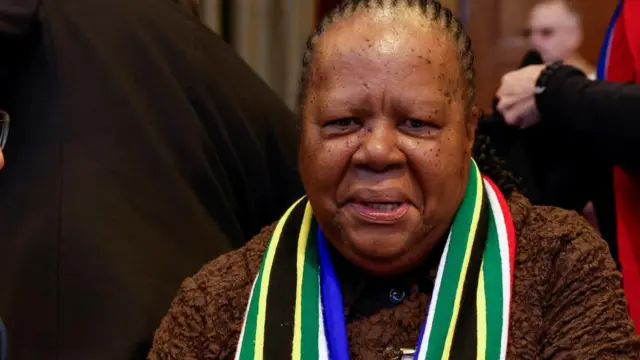 Image source, Reuters
Foreign Minister Naledi Pandor was at the ICJ in January when South Africa brought a case against Israel
South Africa's Foreign Minister Naledi Pandor has said that its citizens who have been fighting in Gaza with the Israeli Defence Forces (IDF) will be arrested on their return to the country, the AP news agency reports.
“I have already issued a statement alerting those who are South African and are fighting... We are ready. When you come home, we are going to arrest you,” she is quoted as telling a Palestinian solidarity event earlier this week.
It is not clear how many people this could affect.
South Africa had already warned last year that its citizens that they may be liable to prosecution if they fought with the IDF.
The Haaretz newspaper on Wednesday quoted a military statement saying that the "IDF is working to provide a response to possible security and legal risks when soldiers travel abroad. The IDF is monitoring the issue on an ongoing basis, in coordination and cooperation with the relevant government ministries.”
South Africa has been at the forefront of the diplomatic opposition to Israel's war in Gaza, which was sparked by the killing of more than 1,200 people and kidnapping of more than 200 others in October.
It launched a case at the International Court of Justice to consider whether Israel is committing genocide against Palestinians in Gaza.
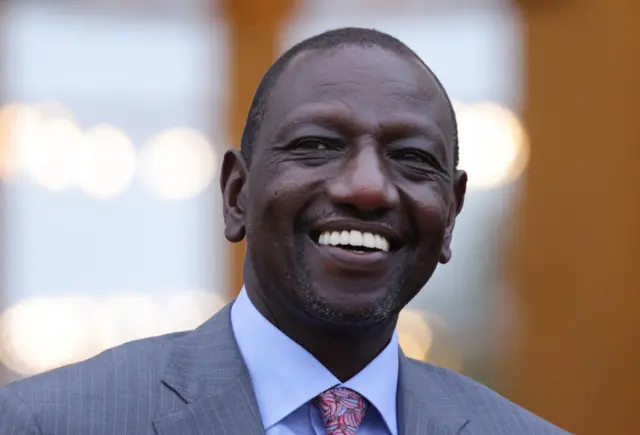 Image source, Getty Images
Kenya delayed the deployment plans after Haiti's prime minister announced he would be stepping down
Kenya's President William Ruto has said that a planned deployment of police officers to Haiti will go ahead as soon as the Caribbean country puts in place a transitional presidential council.
Authorities in Kenya earlier this week said the planned deployment was on hold following the announcement that Haiti's Prime Minister Ariel Henry would be stepping down.
Mr Ruto and US Secretary of State Antony Blinken on Tuesday discussed "the expeditious deployment" of the officers, "including immediate next steps to facilitate deployment", US Department of State Spokesperson Matthew Miller said on Wednesday.
"I assured Blinken that Kenya will take leadership of the UN Security Support Mission in Haiti to restore peace and security in Haiti as soon as the presidential council is in place under an agreed process," Mr Ruto said on social media on Wednesday.
He added that Mr Blinken had informed him that the council "will be formed shortly".
However, Haitian media report that the creation of the council could take time as it is facing opposition from some political parties.
The council will be tasked with appointing an interim prime minister and council of ministers to lead Haiti until the country holds elections.
The new administration would also work with the Kenyan-led international police force to combat gang violence.
More on Haiti: