Summary

  • US stock markets have seen steep falls, while several states have reported rising Covid-19 caseloads

  • Texas saw a one day record of more than 2,500 new cases on Wednesday

  • Shutting US economy again to deal with a surge is not a viable option, the US Treasury Secretary says

  • UK Health Secretary Matt Hancock says the Test and Trace system is "critical" to control the virus

  • More than 31,000 close contacts identified during the first week of the test and trace system in England

  • Number of confirmed cases in Russia passes 500,000 - third highest in the world, behind the US and Brazil

  • There have been more than 7.3 million infections globally and more than 416,000 deaths

  1. Toronto to make masks on public transport mandatorypublished at 19:33 BST 11 June 2020

    Officials in Canada's largest city say masks will be made mandatory on public transport by 2 July, as soon as the city's transport agency approves the measure.

    Mayor John Tory said the mandate would help prevent the spread of Covid-19 as more people use the transport system as businesses reopen. Transport officials will also distribute one million masks to residents, particularly those in low-income areas.

    Similar policies have been put in place in other Canadian cities.
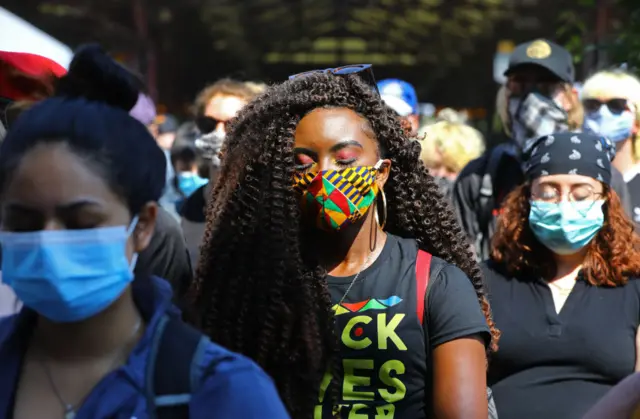
  2. Americans fear surge after protests - pollpublished at 19:26 BST 11 June 2020

    Boston demonstratorsImage source, Getty Images

    A new Axios-Ipsos poll, external found one in 10 Americans said they had an immediate family member or close friend who had attended a protest within the last week, even as most of the country feared a rise in coronavirus cases.

    Americans in the 18 to 29 age range, those who identified as Democrats and people in urban areas were the groups more likely to say they knew protest attendees.

    The majority of those polled - 86% - see the demonstrations as a moderate or large health risk. Half of those interviewed said they were either extremely or very concerned about the virus in the wake of these protests, including 60% of Democrats.

    Overall, the poll found Americans were feeling that gatherings with friends, eating at restaurants and shopping were less risky than before, though more than half still said these posed a large or moderate risk.

  3. Virgin pilots 'await redundancy email'published at 19:16 BST 11 June 2020

    Tom Burridge
    Transport correspondent

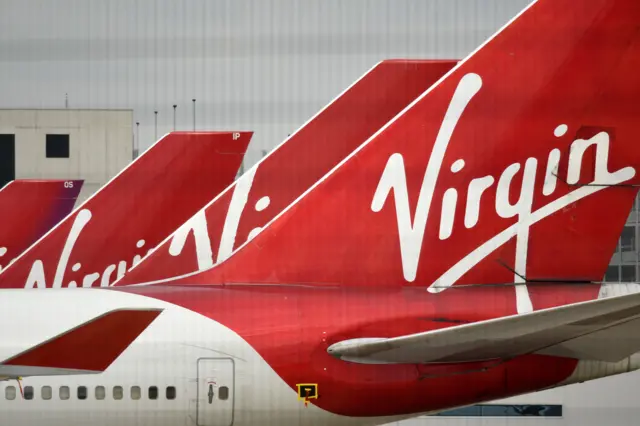
    Virgin Atlantic planes, pictured at Manchester AirportImage source, Getty Images

    Virgin Atlantic has confirmed that it will be making staff redundant this week, including around 300 of its 1,050 pilots.

    The redundancies are part of the job cuts announced by the airline in early May. Back then the airline announced that around 3,150 jobs were at risk.

    A source at the airline said pilots were expecting to receive emails by Friday confirming whether they were being made redundant or not.

    Virgin Atlantic requested a bailout from the government several weeks ago. The Treasury has still not confirmed whether it is providing the airline with emergency loans.

    Most of the staff who will be issued with redundancy notices this week are UK-based.

  4. Isle of Man drops social distancingpublished at 19:07 BST 11 June 2020

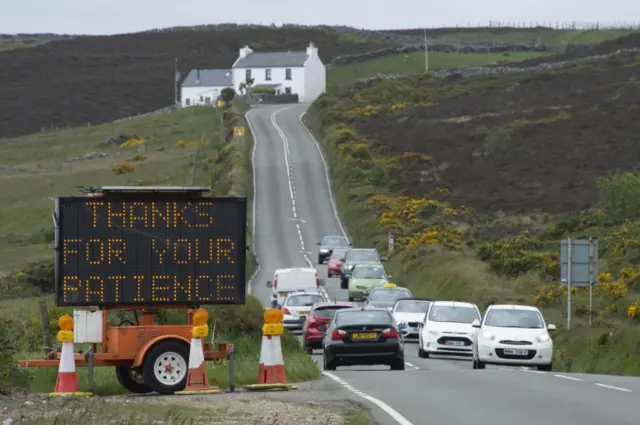
    Kate's Cottage, on the Isle of ManImage source, Getty Images
    Image caption,

    Temporary speed restrictions were introduced on the island during the coronavirus pandemic

    The Isle of Man has become the first place in the British Isles to drop social distancing.

    Social distancing measures for the general public will be scrapped from Monday - but rules will remain in place for those working in health care and care homes for the elderly.

    Chief minister Howard Quayle said the decision had been taken to "get society back to normal".

    Quayle described it as a "bold move", but stressed the decision could be reversed should new cases of the virus emerge.

    Twenty-four people have died from coronavirus on the island, but there have been no new cases for 22 days.

    The island's border will remain closed, pending a decision by the Council of Ministers at a later stage.

  5. Doctor in Brazil: Reopening of shops 'irrational'published at 18:52 BST 11 June 2020

    BBC OS

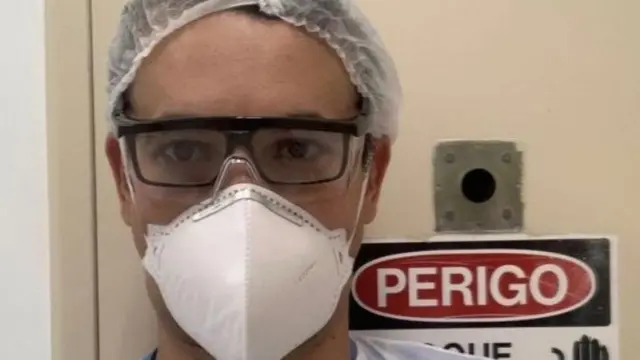
    Dr Gerson Salvador
    Image caption,

    Dr Gerson Salvador

    Lockdown measures are being relaxed in parts of Brazil, and stores and shopping centres are reopening in São Paulo and Rio de Janeiro.

    The country has the second-highest number of confirmed cases of Covid-19 in the world - more than 700,000 - but the number is thought to be much higher because of insufficient testing.

    Dr Gerson Salvador works in the emergency department and intensive care unit at São Paulo University Hospital.

    He said the reopening of shops was an "irrational" measure and he could not support it.

    "We have a lot of people coming in every day with very severe symptoms. Our hospital has the resources but this isn't the reality in the whole of Brazil."

    He links the spread to the attitude of President Jair Bolsonaro who dismissed the threat posed by the virus, having previously described it as "a little flu".

    "Assisting patients with Covid-19 is challenging for any doctor in the world but in Brazil it's a big challenge. People don't know whether to listen to the president or to health authorities. They don't respect our advice."

  6. Safeguarding proposals for BAME community not publishedpublished at 18:42 BST 11 June 2020

    A report containing measures to protect ethnic minority groups from coronavirus has been drawn up for government, BBC News' Rianna Croxford has learned.

    Public Health England (PHE) published a review last week confirming coronavirus kills people from ethnic minorities at disproportionately high rates.

    But a senior academic claims a second report, containing safeguarding proposals to tackle this, also existed.

    Raj Bhopal, an emeritus professor of public health, from the Usher Institute at Edinburgh University, said PHE had asked him to peer-review a late-stage draft of a 64-page government report - containing recommendations, as well as evidence, from 4,000 individuals and organisations.

    The published PHE review was widely criticised by MPs for not including any recommendations to protect BAME communities.

    Prof Bhopal told BBC News: "The public has expressed a great deal of disappointment, as well as the people who were part of this consultation, asking, 'Where have our voices gone?'"

    "If you consult the public, you must publish the results.

    "Otherwise, you've wasted their time, you've wasted your own time, you've wasted taxpayers money, and you've lost trust."

    A PHE official said one of its doctors, Prof Kevin Fenton, had listened to the views, concerns and ideas of a significant number of individuals and organisations within ethnic-minority communities to create the draft report.

    "This important engagement work will inform the work the equalities minister is now taking forward."

    "We intend to both formally submit this work to the minister next week and will publish it at the same time," the official said.

    Read the full story.

    Media caption,

    Speaking last week, Equalities Minister Kemi Badenoch said more time was needed to collect and analyse the relevant data

  7. Latest news from Latin Americapublished at 18:33 BST 11 June 2020

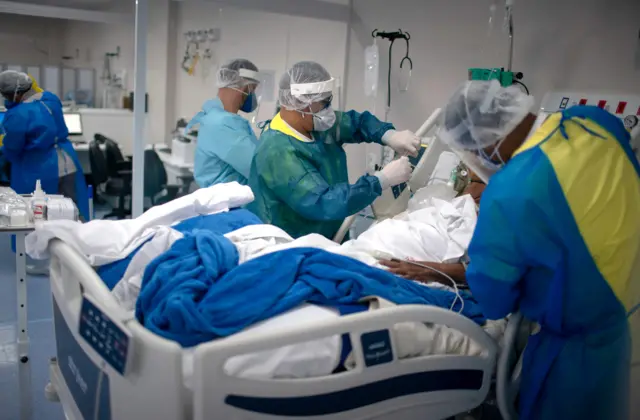
    Health professionals check a patient infected with COVID-19 at the Intensive Care Unit (ICU) of the Doctor Ernesto Che Guevara Public Hospital in Marica, Rio de Janeiro stateImage source, Getty Images
    Image caption,

    Health experts say Brazil is still weeks away from its peak

    Many countries in Latin America have not yet reached the peak of the outbreak, but cases continue to rise rapidly across the region. Here are some of the latest updates:

    • Brazil's President Jair Bolsonaro, who has been criticised for his handling of the outbreak, has created a new government department - the Ministry of Communications. It follows a Supreme Court ruling forcing the government to publish official coronavirus figures on the health ministry's website. The country has recorded almost 40,000 deaths and more than 750,000 confirmed infections
    • Mexico's death toll has surpassed 15,000 deaths and a government official has warned that case predictions for the country have been revised upwards. The capital, Mexico City, plans to increase testing to a target of 100,000 tests a month in an effort to start reopening the economy
    • Peru's exports of ginger root have increased almost threefold during the pandemic. Ginger is seen as an immune-system booster but there is no evidence to suggest it protects against coronavirus
  8. Under-30s hit hardest by fall in income during lockdownpublished at 18:23 BST 11 June 2020

    Kevin Peachey
    Personal finance reporter

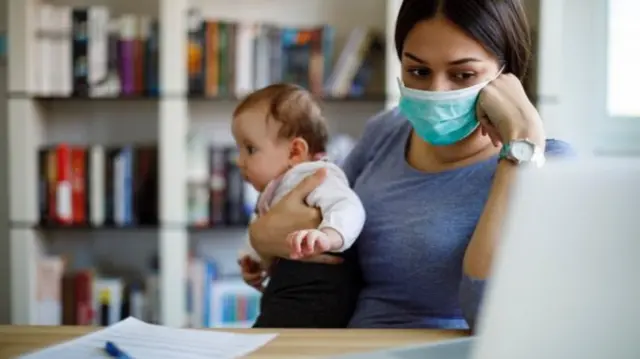
    Young woman with baby sits at computerImage source, Getty Images
    Image caption,

    Younger women have been hit financially by lockdown

    The Office for National Statistics (ONS) has calculated, external, for the first time, the effect of the coronavirus outbreak on household spending.

    It found that a typical household in the UK normally spent an average of £182 a week on activities, such as travel, holidays and meals out, which have been mostly curtailed during the virus outbreak.

    Many households have been saving that money or using it to cover any loss of income - but there remains the need for about 53% of income to be spent on essentials, such as food and housing.

    For young people, as well as renters and those living in London, a greater proportion of their income goes on essentials than other groups.

    With little in savings and less chance to cut spending, the under-30s are likely to be hit the hardest if their income drops.

    Read more.

  9. Analysis: Only time will tell if test and trace is really workingpublished at 18:15 BST 11 June 2020

    Nick Triggle
    Health Correspondent

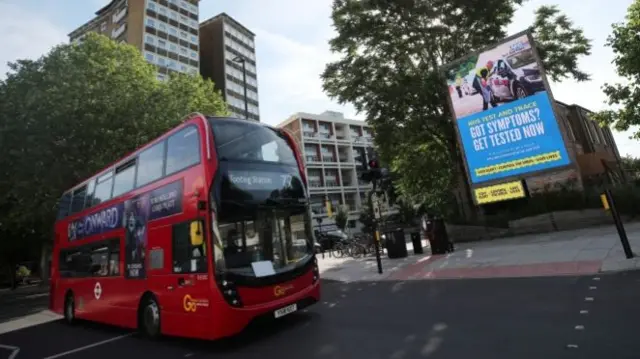
    NHS Test and Trace advert seen on a billboard in LondonImage source, Reuters

    Not surprisingly lots of questions about test and trace at the UK's daily government briefing

    It is very early days to judge the service - and the officials themselves acknowledge it will improve.

    At the end of the day, there are really two crucial numbers to keep an eye on in coming weeks.

    Firstly, the number of new cases diagnosed each day.

    And secondly, the surveillance screening carried out by the Office for National Statistics.

    Both show infections are continuing to fall.

    These measures will only just have started picking up some of the impact of the relaxation in restrictions.

    The coming weeks will be crucial – and will be the true test of the test and trace system, not only in England, but those being rolled out across the other UK nations too.

  10. What's happened to the contact tracing app?published at 18:10 BST 11 June 2020

    Reality Check

    Media caption,

    What is contact tracing and how does it work?

    A contact tracing app was originally scheduled for launch in mid-May, alongside a human team of tracers.

    When a pilot of the app launched on the Isle of Wight at the start of May, Health Secretary Matt Hancock said it would be an "incredibly important part" of the fight against the virus.

    The manual contact tracers began their work in England on 28 May, but there was no sign of the app being more widely deployed, although minister Nadhim Zahawi recently suggested it would be in place by the end of June.

    At the government's briefing this afternoon Hancock said the government wanted to be "confident people are following the advice given by human beings" before the app was introduced.

  11. The UK app isn't happening, yetpublished at 18:03 BST 11 June 2020

    Chris Mason
    Political Correspondent

    Not long ago, there was no end of talk of the National Health Service contact tracing app.

    It would be no less than "world beating" - ambitious, undoubtedly, but leaving little headroom for surprise in the upside and the potential for plenty in the opposite direction.

    So far, there's a website, external and there's a trial on the Isle of Wight.

    But not much else.

    It's crossed the Solent once but it is yet to cross back.

    A week ago, Business Minister Nadhim Zahawi told the BBC the app should be in place by the end of this month.

    But asked by BBC Health Editor Hugh Pym today, the Health Secretary for England, Matt Hancock, offered no detail whatsoever on the timeframe for its roll-out.

  12. IMF chief: 100 million face extreme povertypublished at 17:54 BST 11 June 2020

    Andrew Walker
    World Service economics correspondent

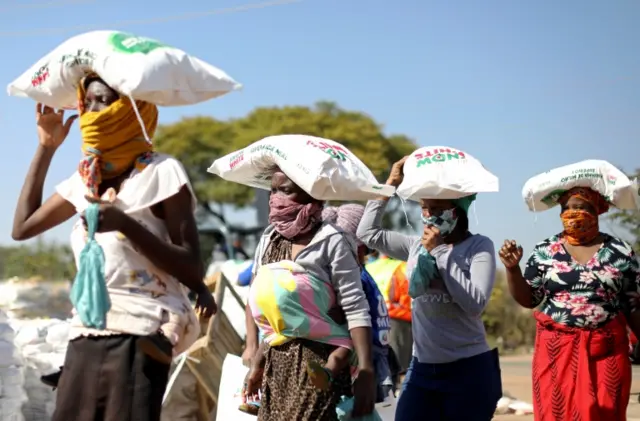
    Women collect  food aid at the Itireleng informal settlement, near Laudium suburb in Pretoria, South Africa, May 20, 2020Image source, Reuters
    Image caption,

    More people around the world could be reliant on food aid, the IMF warned

    The managing director of the International Monetary Fund (IMF) says that governments around the world have spent $10tn (£8tn) tackling the pandemic and its economic consequences.

    But Kristalina Georgieva said they needed to do more, and she warned that up to 100 million people could be pushed into extreme poverty.

    In a blog, the IMF's top official, external said it was good news that governments had taken what she called "extraordinary policy measures" to save lives and protect livelihoods. But she said the crisis was inflicting most pain on those who were already most vulnerable.

    Further stimulus from government budgets would be needed during the recovery, she argued, including on healthcare to minimise the risks from future epidemics.

    She also called for more investment in education, warning about children whose education had been disrupted by the virus and who were at risk of what she called "learning poverty".

  13. What did we learn from today's UK briefing?published at 17:46 BST 11 June 2020

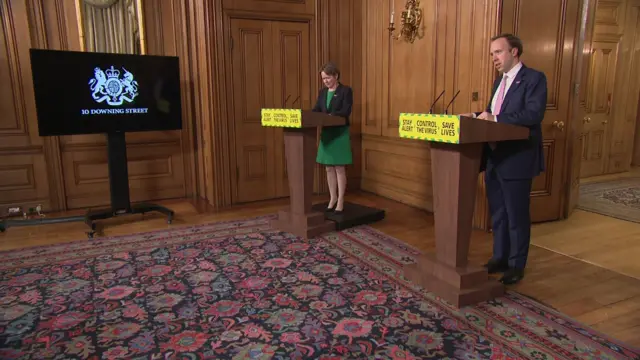
    Today's government news conference was held by Health Secretary Matt Hancock, joined by Dido Harding, who is chairing the NHS test and trace programme in England.

    Here's what they told us:

    • Anyone who has coronavirus symptoms can get a test by calling 119. The test and trace scheme relies on people reporting their symptoms and following instructions from the NHS
    • In the first week of the test and trace programme, more than 8,000 people had their contacts traced. More than 31,000 contacts were traced, and nearly 27,000 of them (85%) agreed to self-isolate. The government is not planning an enforcement mechanism for people who do not follow an instruction to self-isolate but is not ruling it out
    • If businesses follow the government's Covid-secure guidelines, it may help employees avoid having to self-isolate if one of the employees tests positive. Social distancing is crucial to this
    • Contact tracers are adapting to make the scheme more effective, for example by changing what time of day they get in touch with the public. The tracing app is still being tested on the Isle of Wright and will be rolled out when human contact tracers are at their most effective
    • ONS survey data suggests 70-80% of people who have coronavirus antibodies - indicating they have had the disease - did not have symptoms. This is why people are being told to isolate for the full 14 days
  14. Harding: Businesses are supported to contain small outbreakspublished at 17:43 BST 11 June 2020

    John Walker from the Birmingham Post and Newcastle Chronicle asks about councils and powers to enforce local lockdowns.

    Hancock says they "do have powers to do things locally" if they need to take local action.

    Baroness Harding adds that local authorities across the country "are doing this now".

    "A whole host of people are supporting businesses and other organisations that have small outbreaks and they are successfully containing them," she says.

  15. Are contact tracers twiddling their thumbs?published at 17:40 BST 11 June 2020

    Reality Check

    Media caption,

    NHS contact tracing: How does it stop coronavirus?

    Health Secretary Matt Hancock says he is pleased there is spare capacity in the test and trace system.

    There are 25,000 people employed in England who the government says can trace the contacts of 10,000 people per day between them.

    In the system’s first week, they had to track down the contacts of 5,407 people in the whole week.

    That amounted to 31,794 contacts, of whom 26,985 were reached and agreed to isolate themselves. That’s about one person traced per tracer.

    But Baroness Dido Harding, who is in charge of the system, said it was no great surprise that there had not been many contacts to trace in the first week, because a severe lockdown was still in place, so you would not expect many people to have had close contact with anybody outside their household.

    “We will over time need the capacity as we head towards winter,” she said.

    But she said she had been surprised at how many people were prepared to interact with the contact tracing system online, which meant there was less work for the tracers to do on the phone.

    How does contact tracing work in England? Read about it here.

  16. Hancock: Isolation advice so importantpublished at 17:37 BST 11 June 2020

    Baroness Harding and Matt Hancock

    Laura Hughes from the Financial Times asks what officials have discovered so far through antibody tests for healthcare workers.

    Hancock says there are some people who don't have symptoms but do have the virus.

    He says an ONS study showed 70-80% of people who test positive for the virus don't have symptoms and "that is a significant finding".

    He says this is why 14-day isolation "is so important".

    Baroness Harding adds they are routinely testing staff with swab tests (which show whether someone has the virus) and they are rolling out that approach to other "high-contact professionals" - including those who spend time in an enclosed space, including taxi drivers.

  17. Hancock 'not ruling out' mandatory tracing schemepublished at 17:33 BST 11 June 2020

    There's another question about people who don't willingly co-operate with the test and trace scheme by sharing contacts - and whether compliance will be made mandatory.

    Matt Hancock says he is "not ruling it out" - but adds that ministers "don't think we need it at the moment".

    Dido Harding says the priority at the moment is encouraging people to get tested - adding they should feel "safe and confident" to do so.

    On whether contacts traced under the scheme should also be tested, Hancock says the "clinical advice" is that even with a test people would still be need to isolate for 14 days anyway.

  18. Analysis: Test and trace pleapublished at 17:32 BST 11 June 2020

    Chris Mason
    Political Correspondent

    It is striking how clear the message is at the news conference this afternoon: we need you to embrace this or it will not work.

    Pleas for acting in a socially responsible way are one thing in the acute stage of a crisis - such as during the early days of the lockdown.

    But the messaging from the government is necessarily more subtle now in the long chronic stage of coronavirus - encouraging people to head out and about again, etc etc, but simultaneously driving home the idea that you might only be a phone call away from a fortnight's domestic incarceration.

    Note the language from Matt Hancock: the defence metaphor, a comparison with radar.

    "You have your part to play. Participation is your civic duty."

  19. Hancock: Easing lockdown plans 'are safe'published at 17:31 BST 11 June 2020

    ITV's Tom Clarke asks whether the easing of lockdown on Monday in England is a dangerous step for both public health and the economy?

    Hancock replies: "No, it's not."

    He says he has "renewed confidence" in the statistics.

    England will have a "world class" test and trace system - "It's started in pretty good shape but of course it has to get better and better."

    He says the plan "is clearly working".

  20. Tracing scheme 'beat my expectations'published at 17:27 BST 11 June 2020

    Matt Hancock is asked whether he is concerned that details could not be found for contacts from around a third of people who tested positive.

    He says the figures posted by the scheme so far "beat my expectations", and it will get "better and better".

    Dido Harding says contact tracing teams are continuing to learn about the best time of the day to get in touch with people.

    She also says the system will continue to improve.