Summary

Media caption,
'Putin showing no signs of compromise', says BBC's Steve Rosenberg
  1. Nato needs 'unwavering vigilance' against Russia - Ruttepublished at 14:43 GMT 3 December 2025

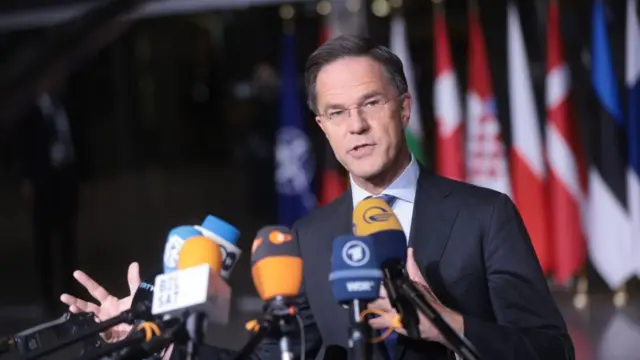
    The media conference with Nato Secretary General Mark Rutte has started. He warns of the "real and lasting dangers" Europe faces from Russia.

    He says that Nato needs "unwavering vigilance" in the face of Russia's "increasingly reckless behaviour" towards Nato through violations of airspace and cyber attacks.

    He adds that allies "must do more" and pull their weight, which is why ministers discussed their plans to invest "5% of GDP annually" in defence spending.

    Rutte adds that every inch of Nato territory must be defended.

    • For context: at the 2025 Nato summit in The Hague, Nato countries pledged to be investing 5% of their GDP on defence by 2035.
  2. Nato chief Mark Rutte to speak to media shortlypublished at 14:30 GMT 3 December 2025

    Nato chief Mark Rutte speaks at a press conference with several microphones in front of him.Image source, EPA

    We're expecting to hear from Nato Secretary General Mark Rutte at a media conference scheduled to begin at 14:30 GMT.

    He's in Brussels, where he's meeting Nato foreign ministers.

    We'll be bringing you all the key lines here, and a reminder that you'll be able to watch live at the top of the page.

  3. Zelensky says 2026 budget passage 'clear evidence' of Ukraine's stabilitypublished at 14:27 GMT 3 December 2025

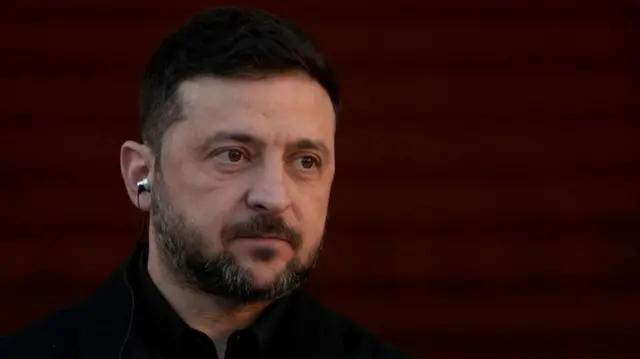
    Zelensky in a black jumperImage source, PA Media

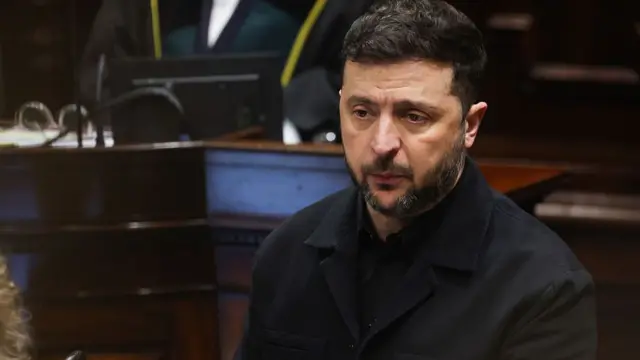
    President Volodymyr Zelensky says that the Ukrainian parliament's approval of its 2026 budget - which it did earlier today - is "clear evidence" for all allies that there are "no internal grounds for instability" in Ukraine.

    In the statement on Telegram, he says the budget's passage is an "important signal of Ukraine's stability and stable financial provision" for the next year - adding that he is working with partners to attract the necessary financial support for Ukraine.

    Zelensky's comments come at a rocky time for the Ukrainian government, with his chief of staff Andriy Yermak resigning just days ago following an anti-corruption raid on his home.

  4. The lead-up to the latest peace talkspublished at 14:23 GMT 3 December 2025

    In recent weeks there's been renewed momentum in efforts to negotiate an end to the war in Ukraine. Let's break down the key moments:

    19 November: Details of a 28-point US plan are leaked after reports surfaced that the US and Russia had prepared a new proposed framework to end the war, requiring major concessions from Ukraine.

    21 November: Ukrainian President Volodymyr Zelensky warns his country "might face a very difficult choice: either losing dignity, or risk losing a key partner". Putin says the plan could form the basis of a peace agreement, and describes it as a ”modernised” version of a plan discussed with Trump at a summit in Alaska in August.

    22 November: Trump says the plan is not his “final offer” after Ukrainian allies express concern.

    23-24 November: Senior Ukrainian and US officials meet in Geneva and hold what both sides describe as “highly productive” talks. Reports emerge of a counter proposal from Ukraine’s European allies.

    26 November: Trump defends envoy Steve Witkoff after a leaked recording appears to show him advising a Russian official on how to appeal to the US president.

    27 November: A US deadline for Ukraine to accept the plan passes without incident or agreement. Putin doubles down on his core demands, and Zelensky accuses Russia of having “scorned” efforts to “truly end the war”.

    28 November: Zelensky’s chief of staff, Andriy Yermak, who had played a leading role in the negotiations, resigns following an anti-corruption raid on his home.

    30 November: The US holds talks with Ukraine’s new lead negotiator, Rustem Umerov, in Florida.

    2 December: Witkoff and external adviser Jared Kushner hold talks with Putin, Yuri Ushakov and Kirill Dmitriev at the Kremlin.

    3 December: Kremlin spokesman Dmitry Peskov says "it wouldn't be correct" to say that President Putin rejected US proposals for peace during the talks.

  5. No hiding US and Europe's fundamentally different viewspublished at 14:17 GMT 3 December 2025

    Nick Beake
    Reporting from Brussels

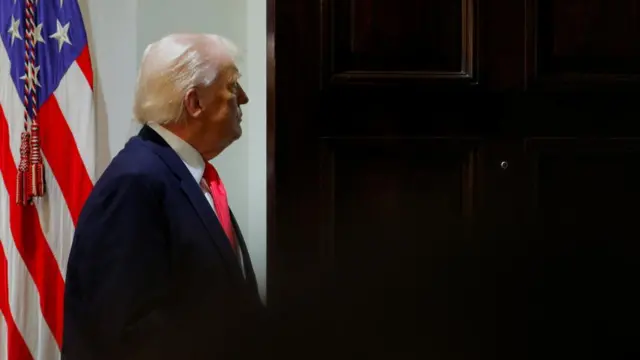
    A side-on view of US President Donald Trump walking through an open door after a cabinet meeting.Image source, Reuters

    We’ve seen handshakes, hugs and smiles as these mostly European allies meet under the Nato banner.

    But there’s no disguising the fact that the US and Europe hold fundamentally different views on how to end this war.

    And that leads to a sense of unease for many in Brussels today, despite what may be said in public.

    Donald Trump – open in his ambitions to win the Nobel Peace Prize – wants an end to the war as soon as possible, arguing thousands of Russian and Ukrainian troops on both sides are being killed needlessly each week.

    He has stopped giving weapons to Ukraine and instead has been selling them via Europe, although the Americans are now musing out loud that they can’t keep on sending their stockpiles abroad.

    Trump says both sides must make sacrifices to secure a peace deal, although his initial 28-point plan was viewed as very much skewed in Moscow’s favour.

    Key European leaders also say the war must end, but crucially they claim Russia will only agree to a peace deal after suffering further economic and military damage.

    That means more weapons and loans to Kyiv and more sanctions on Moscow. And that does not point to a quick fix.

  6. Putin aide says US negotiators agree 'to take account of' key Russian positionspublished at 14:08 GMT 3 December 2025

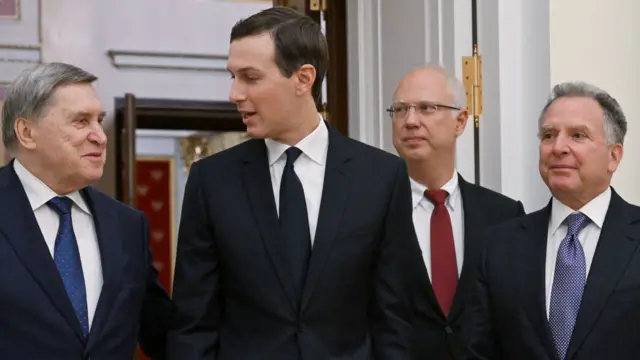
    Yuri Ushakov (L) at the talks on Tuesday with Steve Witkoff and Jared KushnerImage source, Reuters
    Image caption,

    Yuri Ushakov (L) at the talks in Moscow with Steve Witkoff and Jared Kushner

    Putin's long-time foreign policy adviser Yuri Ushakov says that US negotiators signalled they would take into account key Russian positions on the war with Ukraine during talks in the Kremlin on Tuesday.

    Ushakov was present at the talks Steve Witkoff and Jared Kushner.

    "The Americans have confirmed their readiness to take account of our considerations and key proposals," he says, according to Russian state media.

    "The conversation was very positive in nature... a very useful conversation... contacts will continue," he adds.

    While he did not elaborate, the two sides talked about a number of issues at the meeting, including territorial concessions, Ukraine's membership of Nato and limiting the numbers of the Ukrainian soldiers.

  7. Meanwhile in Beijing, Macron to use Xi talks to broach Ukrainepublished at 14:00 GMT 3 December 2025

    Stephen McDonell
    China correspondent, reporting from Beijing

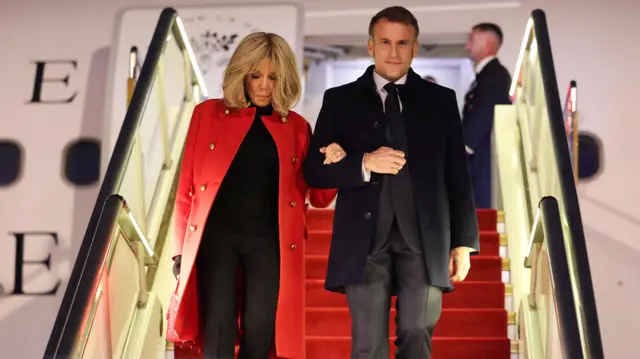
    France's President Emmanuel Macron and his wife Brigitte Macron disembark from their plane upon their arrival at the Capital International Airport in Beijing, China, December 3, 2025.Image source, Ludovic Marin/Pool via Reuters

    Taking you further afield now, French President Emmanuel Macron is in Beijing for an official state visit to China, and the war in Ukraine is thought to be high on the agenda for talks over the coming days.

    Macron is expected to use his standing in China to call on Xi Jinping – and the entire Chinese leadership – to do more to end the war in Ukraine.

    Russia relies on economic backing from Beijing – which has been accused of offering hidden support for Vladimir Putin’s invasion – so the Chinese government is thought to be crucial in convincing Russia’s leader to back down.

    Apart from buying large quantities of Russia’s raw materials, at time of sanctions on the Kremlin, China is said to be delivering dual use technologies across the border: equipment which may have a civilian application, but which could also be used to maintain fighter jets or other machines of war.

    However, hopes of getting China to apply pressure on the Russian leader may be forlorn.

    Apart from the fact that Beijing officially maintains it is neutral when it comes to the conflict, many analysts believe that Xi's administration sees the advantages the invasion brings in terms of challenging Western power and locking in Russia’s reliance on Chinese goods.

  8. No 10 dismisses Putin war readiness claims as 'Kremlin claptrap'published at 13:42 GMT 3 December 2025

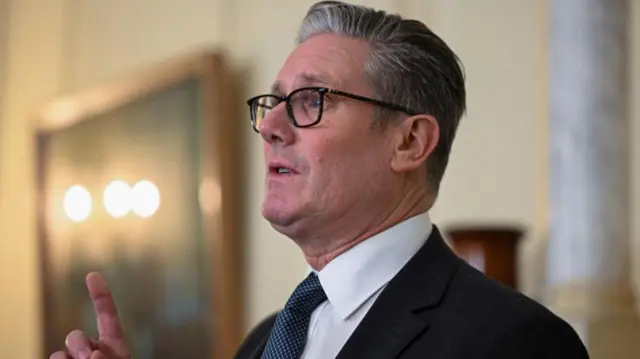
    A side-on view of a serious-looking Prime Minister Keir Starmer, who has his right hand and index finger raised.Image source, PA Media

    As we've reported, Vladimir Putin said on Tuesday that if Europe "wants to go to war and starts one, we are ready right now".

    Downing Street has now dismissed Putin's comments as nonsense, saying it is "yet more Kremlin claptrap from a president who isn't serious about peace".

    Asked if the UK is ready for war, Prime Minister Keir Starmer's spokesperson said that the government's "investment in defence is clear for all to see" and that "our armed forces always stand ready to defend this country".

    The official also stressed European nations stood "united in supporting Ukraine" and Nato is "ready to respond to any threats with unity and strength".

  9. EU proposes using Russian assets for 'two thirds' of Ukraine's needspublished at 13:29 GMT 3 December 2025

    European Commission President Ursula von der Leyen standing in front of a wall that reads 'Addressing Ukraine's Financial Needs For 20[continues off-screen]'Image source, Reuters
    Image caption,

    European Commission President Ursula von der Leyen valued the loan package at £79bn

    The European Commission has proposed to fund Ukraine with immobilised Russian assets, in what its president called a "reparations loan".

    Ursula von der Leyen earlier told a media conference the EU would cover "two thirds of Ukraine's financing needs" for the next two years - which she valued at €90bn (£79bn) - with the remaining amount to be covered by international partners.

    Belgium, where the majority of the Russian assets are located, criticised the proposal - but von der Leyen assured that "almost all" of their concerns were taken into account.

    "We have strong safeguards in place throughout to protect member states and reduce risks as much as possible," she added.

  10. Ukraine claims to hold Pokrovsk against Russian advancepublished at 13:21 GMT 3 December 2025

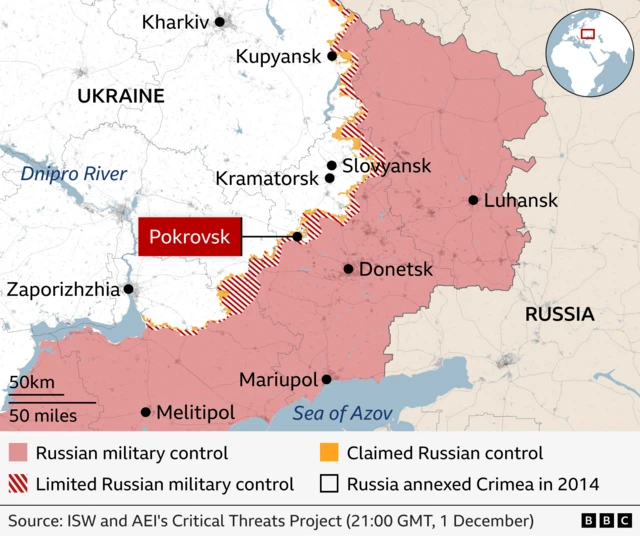
    Map showing Pokrovsk in relation to other eastern Ukrainian cities

    We've been hearing about the eastern city of Pokrovsk, which Russia claims to have taken but Ukraine denies.

    Earlier this week, Moscow said it had taken control of the city, with videos circulating online showing Russian soldiers unfurling a Russian flag in the town.

    But while Ukraine's armed forces say the situation in Pokrovsk "is extremely difficult" they claim the army continues to hold parts of the strategic city.

    Quoted by Ukrinform, spokesman for the Ukrainian armed forces Dmytro Lykhovii says Ukraine continues to hold the northern part of the city, "approximately along the railway line".

    BBC Verify also spoke to analysts on Tuesday to get their assessment.

    George Barros at the Institute for the Study of War (ISW), a US-based think tank, said Vladimir Putin claimed that troops had seized control of Pokrovsk prematurely “as part of a cognitive warfare effort in order to shape the US-Russian negotiations in Moscow”.

  11. Hungary says Russian gas phase-out would leave it 'vulnerable'published at 12:49 GMT 3 December 2025

    One thread we've been following today is the European Union's provisional agreement to phase out Russian gas by 2027. Now Hungary's foreign minister Péter Szijjártó says his country, along with Slovakia, will challenge it in the Court of Justice.

    Speaking to reporters after the provisional agreement was announced this morning, Szijjártó says it would leave the country "vulnerable", endanger its energy security and massively increase energy bills for Hungarian families.

    He says it is "impossible" for Hungary to accept and implement such a deal by 2027, and legal proceedings will be launched once the EU decision is finalised.

    Elsewhere, Kremlin spokesman Dmitry Peskov claims the deal would condemn the EU to higher energy costs and accelerate its economic decline.

  12. Ukrainian foreign minister and Nato chief discuss 'next steps' to end warpublished at 12:38 GMT 3 December 2025

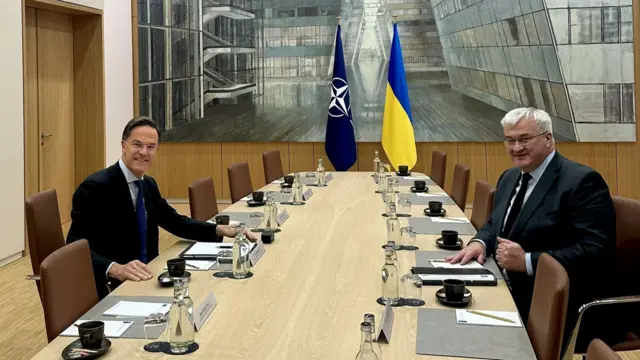
    Mark Rutte and Andrii Sybiha pictured at opposite ends of a table at Nato HQImage source, X / Andrii Sybiha

    A little earlier, we brought you comments from Nato foreign ministers who are in Brussels as part of ongoing talks to end the war in Ukraine.

    We can update you that Ukrainian Foreign Minister Andrii Sybiha, who is part of a working lunch with the alliance's foreign ministers, met Nato chief Mark Rutte.

    In a post on social media platform X, he says the pair discussed "the latest details on our progress in peace efforts and next steps to put an end to the war".

    Czech foreign minister Jan Lipavsky also says on X that the top of the agenda today will be support for Ukraine, "the threat of Russia and the growing challenge posed by China".

    And Lithuanian Foreign Minister Kestutis Budrys tells reporters that even after a future ceasefire in Ukraine, "Russia is and will remain a direct military threat to Nato".

  13. What are the territorial sticking points?published at 12:19 GMT 3 December 2025

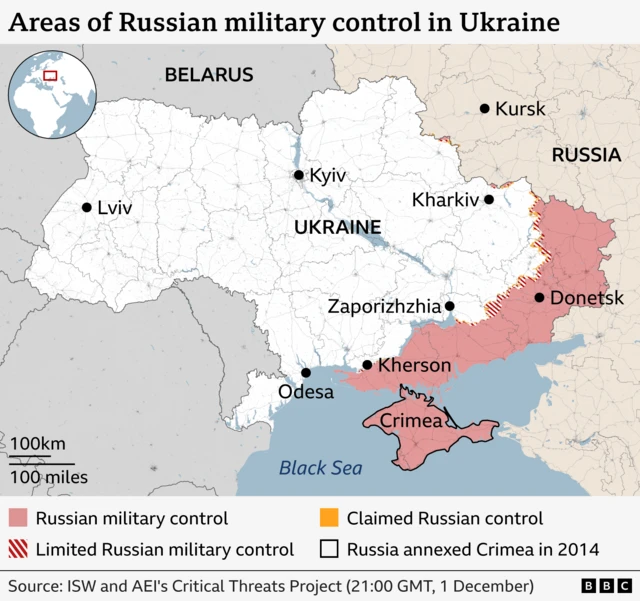
    The issue of territory remains at the heart of negotiations for both sides. Ukrainian President Volodymyr Zelensky said the "territorial issue is the most difficult" element of the peace deal.

    The Kremlin continues to push for Ukraine to cede territory it still controls in the east - something Kyiv has long-maintained it will never do.

    Our defence correspondent Jonathan Beale, reporting from Kyiv, has reported that ceding territory where at least a quarter of a million Ukrainians live - the Donetsk "fortress belt" cities of Slovyansk, Kramatorsk and Druzhkivka - will not be acceptable to most Ukrainians.

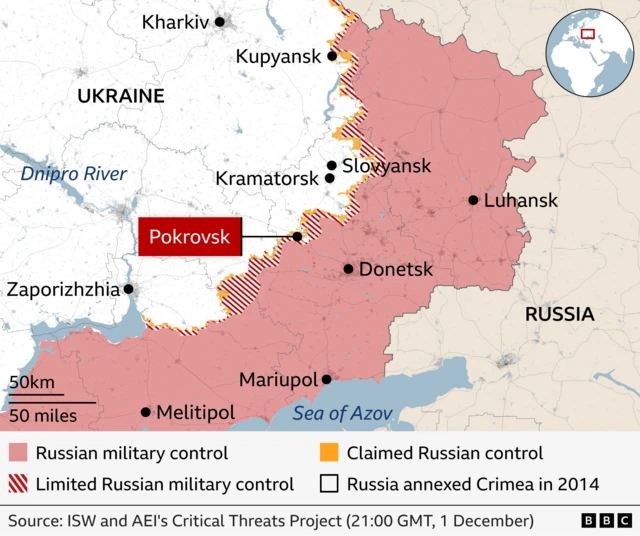
    Fighting has been raging on for the strategic town of Pokrovsk, which Russia says it has captured. Ukraine rejected this, saying fighting was ongoing.

    Map showing which areas of east of Ukraine are under Russian military control or limited Russian control.

    The US-backed draft peace plan proposes that Crimea, Luhansk and Donetsk would be recognised "as de facto Russian, including by the United States". This would mean Ukraine and other countries would not need to recognise Russian control by law.

    The draft also suggests that in the southern regions of Kherson and Zaporizhzia, the front lines would be frozen and Russia would relinquish areas it has occupied elsewhere in Ukraine - a reference to the north-eastern Kharkiv and Sumy regions, as well the Mykolaiv region in the south.

    Zelensky has previously said that allowing Moscow to seize land by force would set a dangerous precedent.

    Map showing which areas of Ukraine are under Russian military control or limited Russian control.
  14. Analysis

    Russia's territorial demands remain keypublished at 11:59 GMT 3 December 2025

    Paul Adams
    Diplomatic correspondent, reporting from Dnipro, Ukraine

    Two lines last night from Vladimir Putin’s foreign policy adviser Yuri Ushakov highlight the essence of Russia’s attitude towards Ukraine and its approach to negotiations with Donald Trump.

    “Territorial issues were discussed specifically, without which we do not see a resolution of the crisis,” Ushakov told reporters.

    “Of course,” he went on, “the enormous prospects for future economic co-operation between the two countries were also discussed.”

    In other words, Russia’s territorial demands, which include Ukraine relinquishing parts of the Donbas that Russia has not yet been able to conquer, remain key. There is nothing in Russia’s public pronouncements to date to suggest that these have changed in any way.

    On the flip side, Putin continues to dangle the prospect of mutually attractive economic co-operation in front of Donald Trump’s commercially minded envoys, in the hope that the president’s mercenary instincts will distract him from pressuring Russia into reaching a less favourable deal.

    The heavily pro-Russian 28-point plan leaked two weeks ago talked of long-term economic co-operation between the US and Russia, including “energy, natural resources, infrastructure, artificial intelligence, data centres, rare earth metal extraction projects in the Arctic, and other mutually beneficial corporate opportunities”.

    Trump’s commercial interest in Russia goes back decades. Vladimir Putin knows this and his envoys are clearly playing to it.

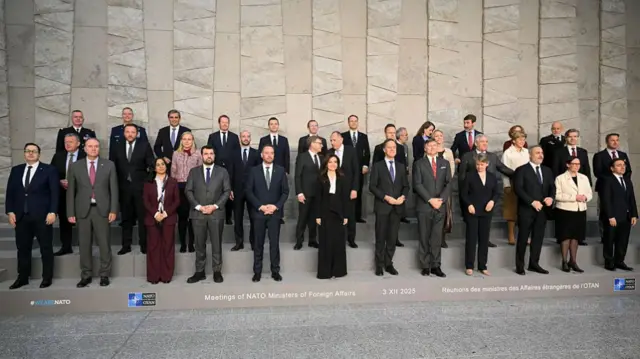
  15. Nato foreign ministers pose for group photopublished at 11:42 GMT 3 December 2025

    NATO Secretary General Mark Rutte (C-R) and participants pose for a family photograph following a meeting of NATO Ministers of Foreign Affairs at NATO headquarters in Brussels on December 3, 2025.Image source, Getty Images

    Foreign ministers from Nato countries have just posed for their usual "family photo".

    As a reminder of today's timings, up next is a working lunch between the Nato delegates and Ukrainian Foreign Minister Andrii Sybiha and EU High Representative Kaja Kallas.

    That will be followed by a news conference led by Nato chief Mark Rutte - expected at 15:30 local time (14:30 GMT).

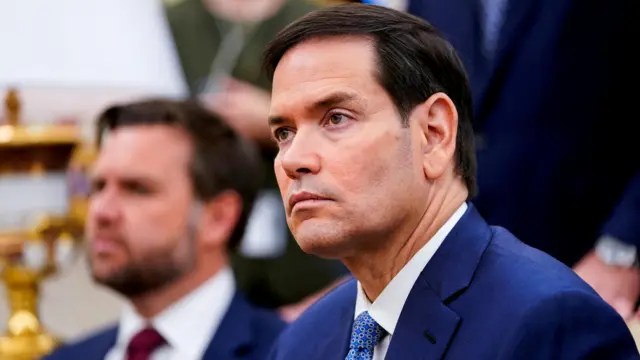
  16. Rubio: Some progress in peace talks but 'we're not there yet'published at 11:27 GMT 3 December 2025

    FILE PHOTO: U.S. Secretary of State Marco Rubio in a meeting in the Oval Office at the White House in Washington, D.C., U.S., July 14, 2025.Image source, Reuters

    While we've heard from several Nato countries and Russia about yesterday's peace talks in Moscow, the US hasn't yet shared its view on how the meeting with Russian officials in Moscow went.

    This morning, US Secretary of State Marco Rubio is notably absent from the Nato meeting in Brussels, with his deputy, Christopher Landau, attending instead.

    In an interview aired on Fox News last night, Rubio said the US is trying to work out what Ukraine and Russia will agree to - and said there's been "some progress, but we're not there yet".

    Rubio criticised the "irrational" view that the US shouldn't engage with Moscow, adding: "You can't end a war between Russia and Ukraine without talking to Russia." He said it's "not realistic" to expect the US to "just continue to fund Ukraine unlimited amounts for as long as the war takes".

    The secretary of state said that the final decision is up to Ukraine and Russia.

    "At the end of the day, you know, it's not up to us. It's not our war. We're not fighting it."

  17. Ukraine to send officials to US as Nato meeting under way in Brussels - recappublished at 11:13 GMT 3 December 2025

    Gabriela Pomeroy
    Live reporter

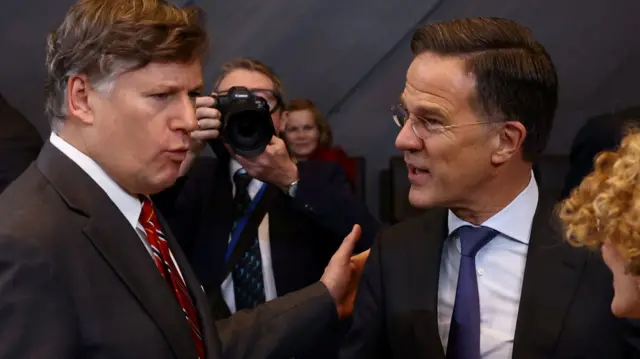
    US Deputy Secretary of State Christopher Landau and Nato Secretary General Mark Rutte at the summitImage source, Reuters
    Image caption,

    US Deputy Secretary of State Christopher Landau (L) and Nato Secretary General Mark Rutte at the Brussels summit

    Here are this morning's key developments:

    Russia's Vladimir Putin met President Trump's envoy Steve Witkoff in Moscow on Tuesday, but the meeting ended with no breakthrough. However, Kremlin spokesman Dmitry Peskov says "it wouldn't be correct" to say the Russian president rejected US proposals for peace.

    Meanwhile, Ukrainian President Volodymyr Zelensky says he's sending his officials to meet President Trump's team in the US.

    The two Ukrainian envoys will also brief delegations at the Nato summit in Brussels today, where foreign ministers are meeting to discuss efforts to end the Ukraine war.

    In another major development, the EU says it will stop importing Russian gas by autumn 2027.

    We're expecting more updates at a Nato news conference led by Nato Secretary General Mark Rutte at 15:30 local time (14:30 GMT).

    Before that, we'll continue to update you with the latest key lines. Stay with us.

  18. In pictures: As peace talks under way, strikes continuepublished at 10:56 GMT 3 December 2025

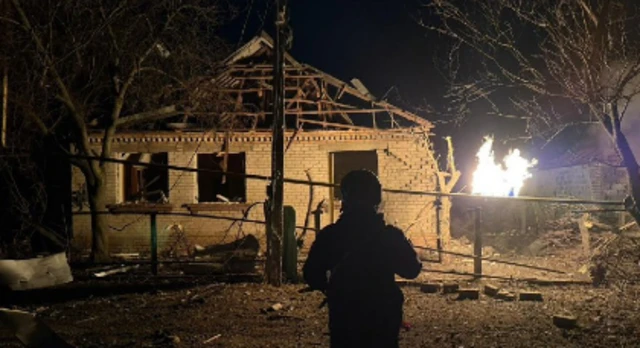
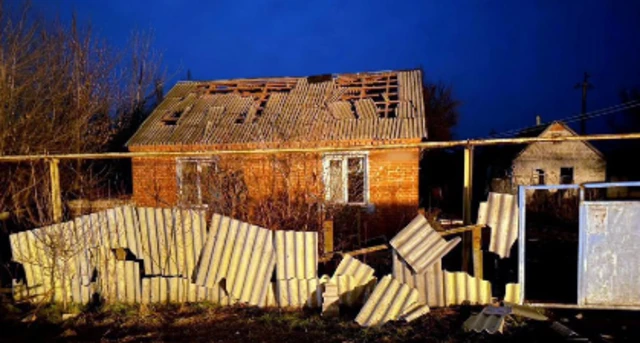
    As we've been reporting, both Ukraine and Russia have reported strikes overnight.

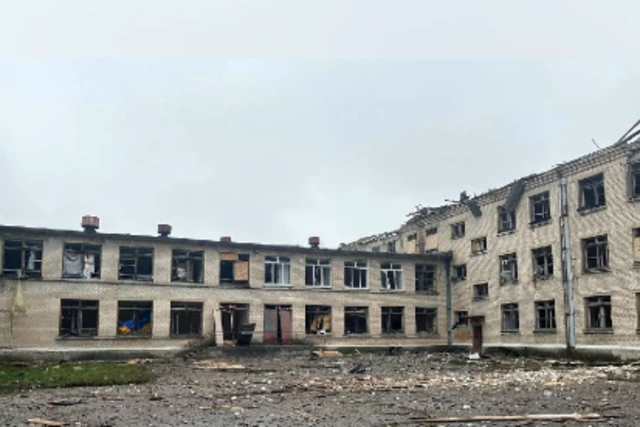
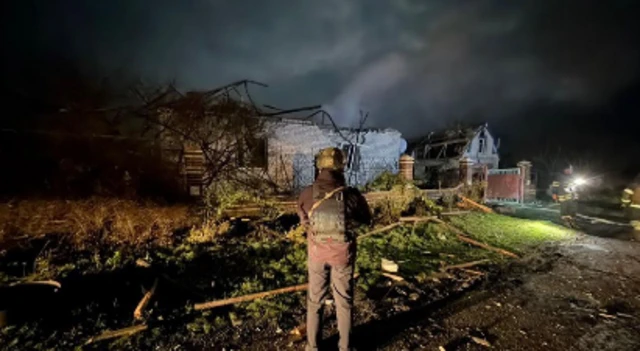
    Ukraine's national police service has shared photos showing the aftermath of strikes in the Donetsk region - specifically in Kostyantynivka, Sloviansk, Oleksiyevo-Druzhkivka and Vodyanske.

    The police say five residential buildings were destroyed in the attacks, with two people killed in the area.

    A house with a completely damaged roof and a fire besides itImage source, National Police of Ukraine
    A broken fence outside a house with damage to its roofImage source, National Police of Ukraine
    Damaged building with rubble surrounding itImage source, National Police of Ukraine
    Damaged buildings in a dark skyImage source, National Police of Ukraine
  19. Analysis

    Russian gas phase out would mark important milestonepublished at 10:44 GMT 3 December 2025

    Vitaliy Shevchenko
    Russia editor, BBC Monitoring

    As we've reported, the EU has reached a provisional agreement to phase out its remaining imports of Russian gas by 2027.

    Phasing out Russian gas exports to Europe would mark an important milestone in stopping Western money from contributing to Vladimir Putin's war effort.

    In the wake of the February 2022 invasion, Ukraine's allies imposed sanctions on Russian hydrocarbons. The US and UK banned Russian oil and gas, while the European Union (EU) banned Russian seaborne crude imports, but not gas.

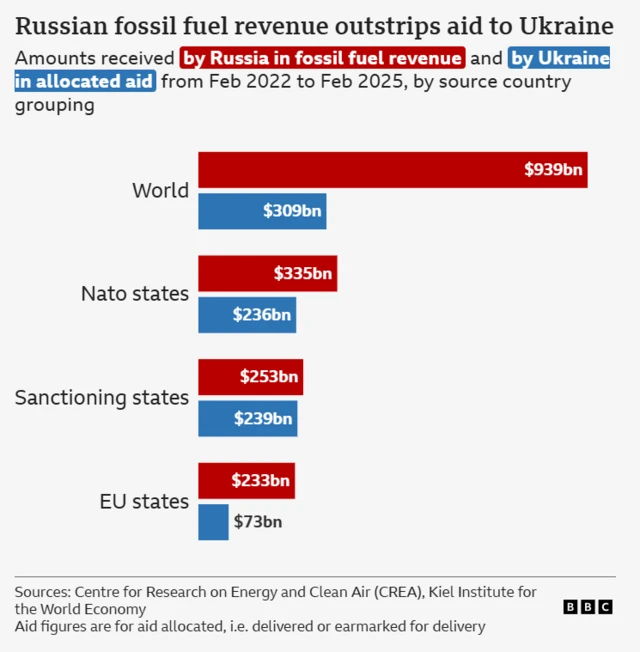
    As a result, since that time Russia has made €107bn, external (£94bn) by selling gas to the EU - that's more than half of Russia's total gas export revenue.

    Proceeds made from selling oil and gas are key to keeping Russia's war machine going. Oil and gas account for almost a third of Russia's state revenue and more than 60% of its exports.

    A chart showing Russain fossil fuel revenue
    Image caption,

    Russia has made billions from fossil fuel exports to the West, data shows, helping to finance its full-scale invasion of Ukraine

  20. Zelensky: Ukraine prepares for meetings with Trump's envoys in USpublished at 10:25 GMT 3 December 2025

    Zelensky speaking in Dublin's parliamentImage source, AFP/Getty Images

    Ukraine's President Volodymyr Zelensky says his delegation will prepare for a meeting with Trump's envoys in the US after foreign ministers meet in Brussels.

    While in Brussels, the Ukrainian delegation - made up of National Security Secretary Rustem Umerov and Chief of the General Staff of the Armed Forces Andrii Hnatov - will brief their European counterparts on the Moscow talks and discuss the "necessary security architecture", Zelensky says.

    "As always, Ukraine will work constructively in pursuit of a real peace," Zelensky writes on social media.