Summary

Media caption,
Supreme Court's birthright ruling is major blow to Trump
  1. Supreme Court releases closely watched birthright citizenship decisionpublished at 15:34 BST
    Breaking

    The US Supreme Court has released its decision in the birthright citizenship case, known as Trump v Barbara.

    The decision could radically reshape who could become a US citizen.

    Stay with us as we sift through the ruling.

  2. Court issues second decision of the daypublished at 15:28 BST
    Breaking

    We still haven't heard the birthright citizenship ruling, but in the meantime, the court has released another decision.

    In this case, the court has struck down a ban on the coordination of expenditures between political parties and individual campaigns for office.

    This was a Republican-led challenge on federal limits on campaign spending, originally brought by Vice President JD Vance and other Republicans.

    The last decision we are waiting for is the birthright citizenship case.

  3. US Supreme Court upholds bans on transgender women in female school and college sportspublished at 15:23 BST

    In its first decision of the day, the US Supreme Court has ruled that states can ban transgender women from competing in female school and college sports.

    The court considered cases from students in two different states who had challenged bans on participation. The two states, Idaho and West Virginia, enacted laws that required public school and college sports teams to compete in accordance with their sex recorded at birth.

    One of the two challenges says the ban violates equal rights protections in the US Constitution. The other says it contradicts civil rights laws.

    More than two dozen states have enacted bans since Idaho did so in 2020.

    You can read more about the cases and the rulings here.

  4. Court issues first decision of the daypublished at 15:08 BST
    Breaking

    The Supreme Court has released the first decision of the day.

    The court has ruled that states can ban transgender athletes from competing in women's and girls' sports in colleges and schools.

    We'll bring you more details about this case shortly.

    We're still waiting for the birthright citizenship decision, which we'll bring to you when the court issues it.

  5. Government faces uphill battle in birthright citizenship case - legal expertpublished at 14:57 BST

    Kwasi Gyamfi Asiedu
    Live reporter

    Trump's executive order aiming to prohibit birthright citizen sought to do away with a constitutional provision dating back to 1868 and provided citizenship to enslaved people born in the US.

    "All persons born or naturalized in the United States, and subject to the jurisdiction thereof, are citizens of the United States and of the State wherein they reside," Section 1 of the 14th Amendment to the US Constitution says.

    David Leebron, professor of legal studies at Rice University and former dean of Columbia University's law school, says the executive order called into question "a very well established rule of American constitutional law - one that was adopted for very important historical purposes."

    The distinct clarity in the text and the longstanding acceptance of its meaning presents an uphill battle in the government's attempts to overturn it, Professor Leebron says.

    "I think the challenge the government has always faced here is there is no widely accepted theory of constitutional law that would uphold the government's position, including originalist and textualist theories of constitutional law."

    In just a few moments, we will learn how the nine US Supreme Court justices rule on the matter.

  6. What does it look like at the Supreme Court right now?published at 14:54 BST

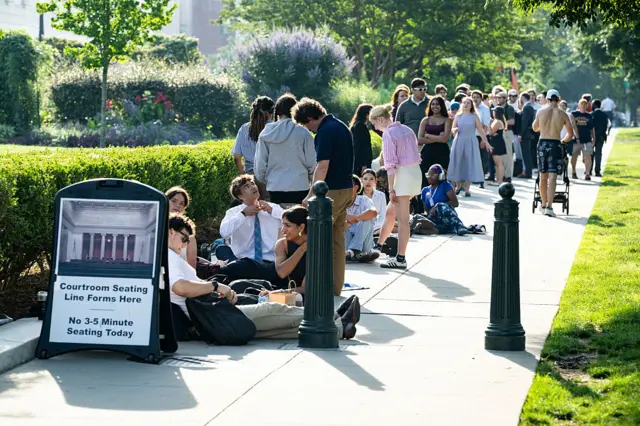
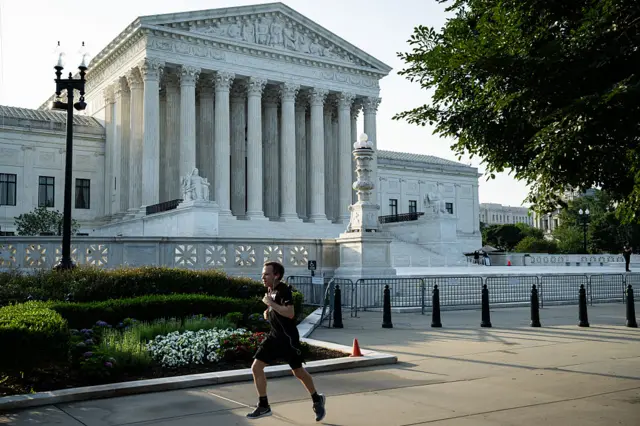
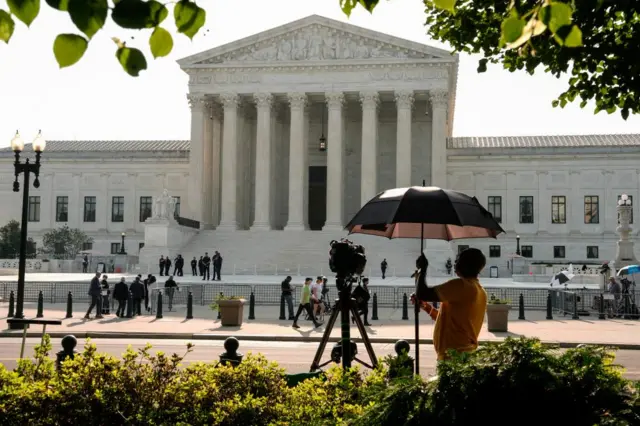
    It's a hot day in Washington DC, but a mixture of journalists, protesters and interested bystanders have gathered outside the Supreme Court awaiting the outcome of the biggest case of the court's term.

    People sit in a line on the sidewalk outside the Supreme CourtImage source, Getty Images
    Image caption,

    People wait in line to get a seat inside the Supreme Court

    A man runs past the Supreme CourtImage source, Getty Images
    Image caption,

    For some it's business as usual, morning runs continue despite the major news

    Man sets up TV camera outside Supreme CourtImage source, Reuters
    Image caption,

    There are dozens of television cameras outside the court

  7. How did birthright citizenship start in the US?published at 14:48 BST

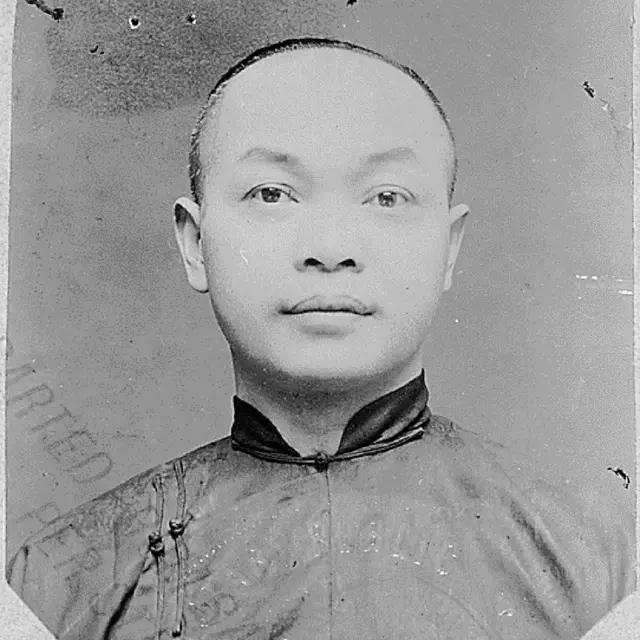
    A photo of Wong Kim Ark, which is housed in the National Archives from a federal immigration investigation case conducted under the Chinese Exclusion ActsImage source, National Archives
    Image caption,

    A photo of Wong Kim Ark, which is housed in the National Archives from a federal immigration investigation case conducted under the Chinese Exclusion Acts

    The concept of birthright citizenship, also known by the legal term "jus soli", is based in English common law and was generally accepted to apply to white men throughout early American history.

    However, it did not become part of the Constitution until 1868, when the 14th Amendment was passed in the wake of the US Civil War in order to settle the question of the citizenship of freed, American-born former slaves.

    Previous Supreme Court cases, like Dred Scott v Sandford in 1857, had determined that African Americans could never be US citizens. The 14th Amendment overrode that.

    In 1898, the US Supreme Court ruled that birthright citizenship applies to the children of immigrants in the case of US v Wong Kim Ark.

    Wong was a 24-year-old child of legal Chinese immigrants who was born in the US, but denied re-entry when he returned from a visit to China.

    Wong successfully argued that because he was born in the US, his parents' immigration status did not affect the application of the 14th Amendment.

    The court ruled in Wong's favour and outlined a few limited exceptions to birthright citizenship, such as for children of diplomats.

  8. Trump called the US 'stupid' for allowing birthright citizenshippublished at 14:40 BST

    When the court was hearing arguments on this case in April, Trump posted on social media that: "We are the only Country in the World STUPID enough to allow 'Birthright' Citizenship!"

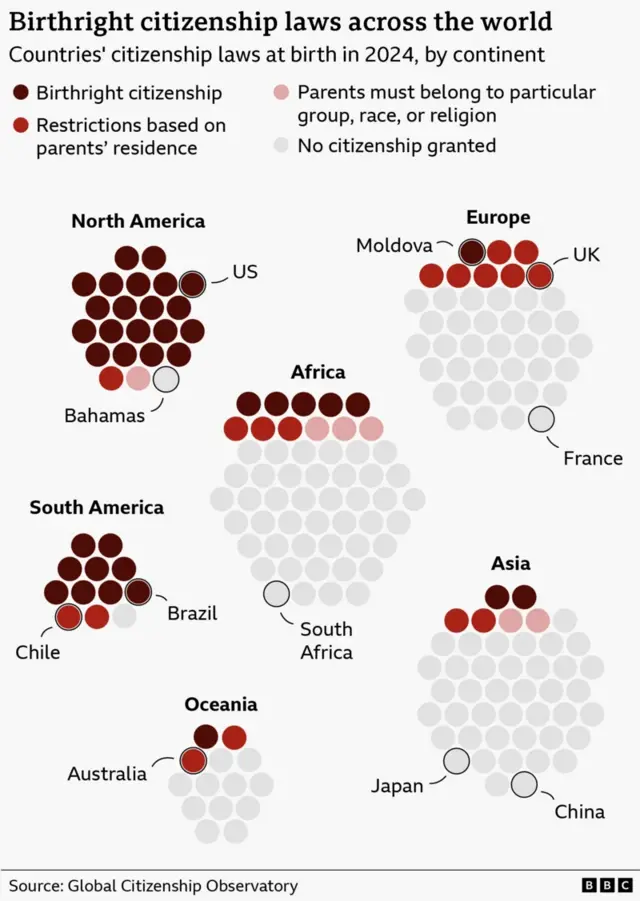
    The US is one of about 30 countries - mostly in the Americas - that grant automatic citizenship to anyone born within their borders.

    In contrast, many countries in Asia, Europe, and parts of Africa adhere to the jus sanguinis (right of blood) principle, where children inherit their nationality from their parents, regardless of their birthplace.

    • Read more about which countries have birthright citizenship here
    A graphic showing regions in the world that have birthright citizenship
  9. A reminder of how we got herepublished at 14:34 BST

    Today's case stems from an executive order President Donald Trump signed in January 2025 on his first day back at the White House.

    It sought to end automatic citizenship for children born to parents who were in the US temporarily or illegally. The Trump administration argues the order will clamp down on illegal immigration.

    Hours after Trump signed it, various lawsuits were launched by Democratic-run states and cities, civil rights groups and individuals.

    Three federal judges tried to block the order from taking effect by issuing nationwide injunctions.

    After the Supreme Court ruled against the injunctions, the case came back as a class action lawsuit - which is where multiple similar claims are brought together into a single suit.

    The court first heard oral argument on this case - called Trump v Barbara - in April.

  10. US Supreme Court to rule on birthright citizenshippublished at 14:30 BST

    Welcome to our live coverage of this year's final day of opinions by the US Supreme Court.

    The court is expected to release its most anticipated ruling - on whether the President Donald Trump can limit birthright citizenship, the law that grants those born on US soil automatic citizenship.

    The ruling could uphold or upend 150 years of precedent enshrined in the US Constitution.

    We will also hear how the court rules on transgender athletes in women's and girls' sports.

    The justices will convene at 10:00 ET (15:00 BST, 14:00GMT).