Summary

  • Women in Afghanistan are answering your questions about their lives after five years of Taliban rule - follow live as we bring you their stories

  • "I'm living my life blindly because I can't watch my future," writes 20-year-old Lima, who says she is "out of hope"

  • The BBC's Lyse Doucet, in Kabul, says harsh Taliban edicts are erasing women and girls from public life - this timeline shows how life has changed since 2021

  • Ela, a dental assistant in Kabul province, doesn't want her younger sisters "to go through what I have experienced"

  • Manizha, an Afghan woman who was flogged for her relationship, tells us: "In prison, I experienced things that I have never even told my mother"

  • Many of the women we're speaking to are not using their own names because they fear repercussions

Have a question about life under the Taliban?

  1. Afghan girls intentionally failing lessons so they can stay in schoolpublished at 14:44 BST
    Hafizullah Maroof
    BBC Afghan Languages
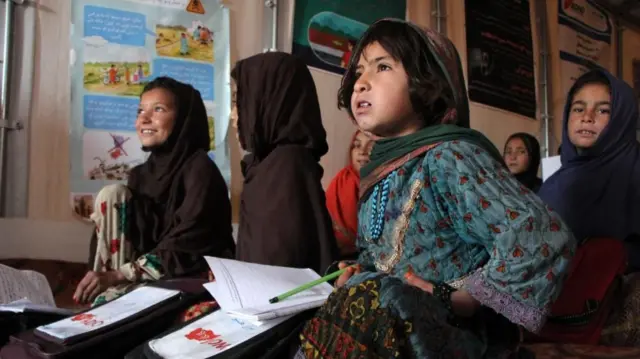
    Half a dozen young girls wearing headscarves are shown sitting on the floor with lesson books and pencils.Image source, EPA-EFE/REX/Shutterstock
    Image caption,

    Afghan children attend class in Kandahar, Afghanistan, in January 2025 - the Taliban only allows girls to be educated up to sixth grade

    I have been to Afghanistan nearly a dozen times and have travelled across many provinces over the past five years since the Taliban returned to power.

    Even in Kandahar, the southern province widely regarded as the Taliban's strongest stronghold, many families urged the Taliban government to allow their daughters to attend school.

    I spoke with many girls who intentionally failed in Grade 6 in order to remain in school for another year.

    Fatima (name changed), a 12-year-old girl from eastern Afghanistan, told me she was trying to fail for the second time.

    "My only wish is to stay in school," she said.

    Today, she is out of school. She was unable to fail a second time because she had grown older and advanced beyond the grade level she hoped to repeat.

    For millions of girls like Fatima, going to school is now only a dream in Afghanistan.
  2. Millions of girls denied education in Afghanistanpublished at 14:29 BST

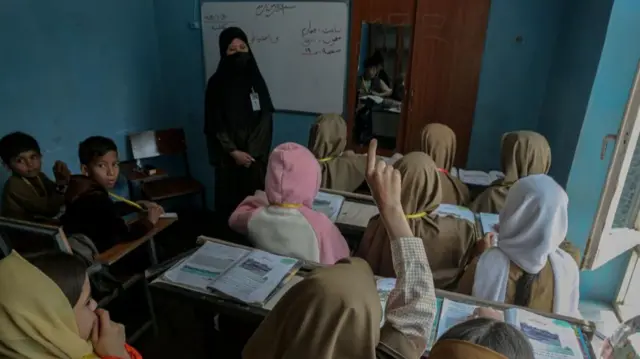
    A group of young students are pictured from behind in a classroom, with boys segregated to the left and girls on the right. One of the girls has her hand raised.Image source, EPA/Shutterstock
    Image caption,

    Students at the 'Mansoor Rasa Mohammad' private school in Kabul in April. The Taliban only allows girls to attend school until sixth grade

    Afghanistan is currently the only country in the world where girls are officially banned from secondary and higher education.

    According to information the BBC has obtained from Unicef, around 2.6 million girls in Afghanistan are now unable to attend school beyond Grade 6, with a further 400,000 reaching secondary-school age each year.

    By 2030, more than four million girls will be denied education beyond Grade 6.

    Unicef analysis published earlier this year warns that if these restrictions continue, Afghanistan could lose around 20,000 female teachers and 5,400 female health workers by 2030.

    By 2035, the country could lose around 9,600 female health workers.

    This Flourish post cannot be displayed in your browser. Please enable Javascript or try a different browser.

  3. Afghan women living 'blindly' tell the BBC of life under Taliban rulepublished at 14:21 BST

    Joe Coughlan
    Live reporter

    As we approach early evening in Afghanistan, women across the country have spoken of being imprisoned, abused and humiliated since the Taliban resumed control in 2021.

    Our chief international correspondent Lyse Doucet tells us of harsh Taliban edicts erasing women and girls from public life, such as restrictions to education and jobs, as the UN says "deep-rooted barriers" have held women back long before the Taliban retook power.

    Lima, a 20-year-old former student, tells the BBC she is living her life "blindly" and has lost all hope, while dental assistant Ela says "survival has become the priority".

    The situation has left most Afghan women describing their mental health as "bad" or "very bad", the UN reports, as other factors such as an ongoing hunger crisis and the rise of corporal punishments exacerbate the issue.

    We have been passing your questions on to the women we've been speaking to today, including how their husbands or brothers feel about the current state of play in the country.

    Get in touch if you would like to ask a question about life under Taliban rule.

  4. Analysis

    Little chance sanctions will be lifted until Taliban address universal rights concernspublished at 14:03 BST

    Lyse Doucet
    Chief international correspondent, in Kabul

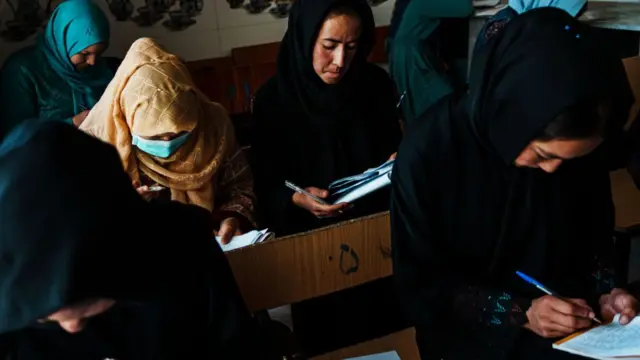
    A group of girls wearing veils and abayas sit down at wooden desks taking notes on exercise booksImage source, Getty Images

    Five years after the Taliban took charge, the world is still divided over if, and how, to engage with this ultra-conservative Islamist movement.

    United Nations officials admit they’ve made little progress on issues such as reopening girls’ schools, more inclusive governance, and counter-terrorism.

    Human rights groups, and Afghan activists, insist there shouldn’t be any dialogue on issues other than desperately needed humanitarian aid until the Taliban offer something in return.

    The acting head of the UN's mission in Kabul, Georgette Gagnon, told us “a stalled process is better than no process”.

    So far, only Russia has formally recognised Taliban rule. But dozens of countries, including China, India, and other neighbours, have accredited their diplomats and signed investment deals. It amounts to de facto recognition.

    The Taliban chief spokesman, Zabihullah Mujahid, told us “if the West wants to resolve these issues, it can’t do it from a distance".

    The Taliban want sanctions lifted, assets unfrozen, and what they see as their rightful seat at the UN in New York.

    That won’t happen until they sign up to what the world, including Islamic nations, regards as universal rights – including the rights of women and girls to education and work.

  5. Going to work 'was part of my identity and life'published at 13:49 BST

    A blue banner with the words 'Zuhal, 32. Former journalist from central province'
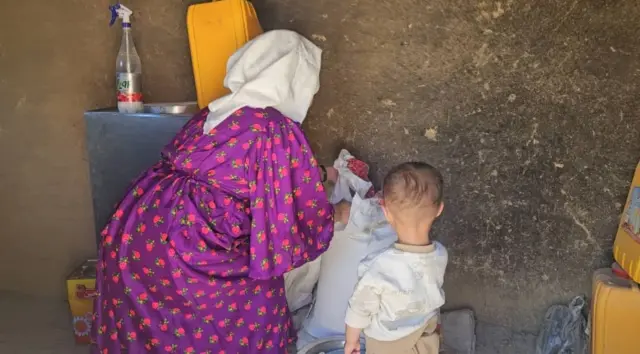
    A woman and child from behind, kneeling down while picking something up from the floor

    During the republic, my life was completely different. Every morning when I woke up, I would get ready to go to work with enthusiasm.

    I would get dressed, tidy myself up, and leave the house with energy. For me, going to television was not just going to a workplace, it was part of my identity and life.

    When I entered television, I felt that I had a place and value in society. I read the news, I connected with people, and I felt that my voice was heard.

    I was very passionate about my work and did it with love. Every time I sat in front of the camera and read the news, I felt proud and happy.

    I had plans for my future and had many dreams. I thought that I would gain more experience day by day, progress, and maybe I could find a better place in work and society in the future.

    My life was full of hope and I worked hard every day to achieve my goals.

  6. 'I'm living my life blindly... I lost all of my hope'published at 13:28 BST

    A blue banner with the words "Lima, 20. Former student, from a north-eastern province"

    Lima was in the 10th grade, and dreamed of being a doctor, when the Taliban reclaimed power over Afghanistan in 2021.

    Now the 20-year-old, from a north-eastern province bordering Tajikistan, says she is "out of hope".

    I’m living my life blindly because I can’t watch my future, and everything I could have is flying away.

    Even right now I can’t imagine anything else. I lost all of my hope.

    How am I feeling today? Nothing special.

    I’m kind of tired, the weather is too hot: 33 or 34 degrees. And I’m not going anywhere. I’m just at home.

  7. For Afghan women, jobs are few and far betweenpublished at 13:16 BST

    Charlotte Scarr
    Senior South Asia producer, reporting from Kabul

    The private sector is where some women in Afghanistan are able to find opportunities to work.

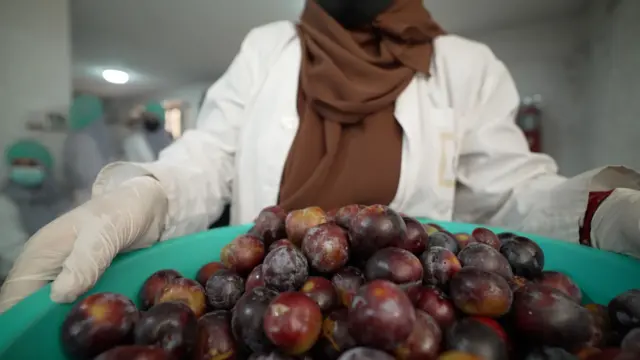
    We drove to a small village on the outskirts of Kabul to visit a jam workshop. Down a flight of stairs, in the basement of a house we found over a dozen young women preparing plum jam.

    All dressed in long white coats wearing hair nets and face masks, they gathered around a large cauldron where the jam mixture was bubbling. Its sweet smell consumed the room.

    For many working of the women there, this is not the job that they dreamt of doing.

    Noori, 24, told us that she had two semesters left of her university degree when the Taliban took over.

    “I really wanted to finish my degree,” she told us.

    “Now when I apply for jobs and offer my CV or go to interviews, they first ask me to bring my university degree. But the university won’t give it to me. Because of that, wherever I go, they tell me that I am only a school graduate.”

    Even though jobs like these are allowed by the Taliban, women business owners face a litany of restrictions. They can’t sell their products or attend trade fairs - they need to send a man in their place.

    A woman, whose face is obscured, carries a large tub of fruit in a factory.
  8. 'I don't want my sisters to go through what I've experienced'published at 13:05 BST

    A blue banner with the words 'Ela. Dental assistant from Kabul province'

    We've had questions come in for the women we've been speaking to today. Get in touch if you would like to ask your own.

    Matthew asks: What do your husbands or brothers or fathers feel about the situation?

    Dental assistant Ela from Kabul province says:

    "I don’t have any brothers, and my father is now 70 years old. I have been working since I was 16.

    "As for myself, I don’t have much hope anymore, but I don’t want my younger sisters to go through what I have experienced.

    "I wish there were language scholarships available so I could send them to England to learn English and continue their education."

    In general, "only a small percentage of men in Afghan families are concerned about this situation", she adds.

    "Many fathers and brothers are also satisfied with the restrictions on girls’ education and freedom to go outside."

    BBC Your Voice banner (white wording on purple background)
  9. Mental health is 'bad' or 'very bad' for most Afghan women, UN sayspublished at 12:48 BST

    Yogita Limaye
    Afghanistan correspondent

    Even before the Taliban takeover, the UN estimates that one in two people – most of them women – suffered from psychological distress in war-torn Afghanistan.

    The severe restrictions imposed on women and girls by the Taliban government since 2021 has further exacerbated the mental health crisis in the country.

    UN Women says seven in 10 women describe their mental health as ‘bad’ or ‘very bad’. A psychologist had described it to us as a "pandemic of suicidal thoughts".

    Over the past few years, we have spoken to women and girls who told us how they attempted to take their own lives because they could no longer study or work.

    “Most of the girls who were in my class have had suicidal thoughts. We are all suffering from depression and anxiety. We have no hope,” one woman said.

    • If you are affected by any of the issues in this post, information and support is available at BBC Action Line
  10. Public punishments have risen sharply under the Talibanpublished at 12:24 BST

    BBC Afghan Languages

    After returning to power in August 2021, the Taliban resumed the public implementation of corporal punishments.

    The number of public punishments rose sharply after 13 November 2022, when Taliban leader Hibatullah Akhundzada instructed the group’s judicial institutions to review defendants’ cases “carefully” and implement Islamic punishments against them.

    In all of these cases, flogging was part of the sentence, and some of those convicted were also sentenced to imprisonment.

    According to statistics published by the Taliban Supreme Court, in 2024 at least 241 people, including 210 men and 31 women, were publicly punished for various offenses.

    In 2025, that number increased to 395 people, including 317 men and 78 women.

    Not all cases of public punishment are recorded or published on the Taliban Supreme Court’s website and official notices, so the actual number of such punishments is likely higher.

  11. 'We wanted to get married, but unfortunately we were arrested'published at 12:02 BST

    A blue banner with the words "Manizha. Flogged by Taliban - age & region held for security reasons".

    For the first time since the Taliban's reintroduction of public lashings, the BBC Afghan Forensic team has exclusively spoken to women about their experiences of being publicly punished.

    For security reasons their names have been changed and the dates and locations of the incidents have been withheld.

    Some audiences may find these accounts distressing.

    They tied my hands and covered my face at the court of appeals.

    In front of all the visitors, they flogged me. I received 39 lashes. They counted them themselves.

    The document that listed my alleged offense and charges also stated the punishment.

    I was in a friendship and getting-to-know-you relationship with someone. We wanted to get married, but unfortunately we were arrested.

    I do not know how the Taliban intelligence found out, or whether someone reported us.

  12. Exiled Afghan women show up for sports teams around the worldpublished at 11:43 BST

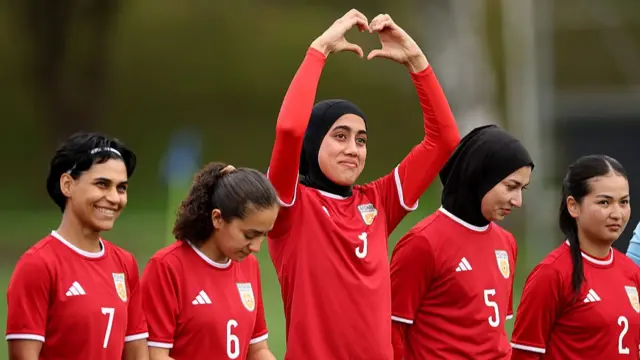
    Five female football players are pictured in red shirts. The women in the centre holds her hands above her head in a heart gesture.Image source, Getty Images
    Image caption,

    Khursand Azizi of Afghan Women United gestures a heart during a match against the Cook Islands in June 2026 in Auckland, New Zealand

    Banned from playing sport in their own country, Afghan women in exile are continuing to show up for their teams around the world.

    Last week a 23-player squad, selected from Afghan players now living abroad, travelled to New Zealand for a training camp and to play two unofficial friendly games against the Cook Islands.

    It was the first time they have been together since football governing body Fifa ruled in April that they could represent their country in official matches in the future.

    "If I wasn't a footballer, I would still be in Afghanistan, one of millions of girls who are not allowed to study, speak up or choose their own future," says Mursal Sadat, who now lives in Australia.

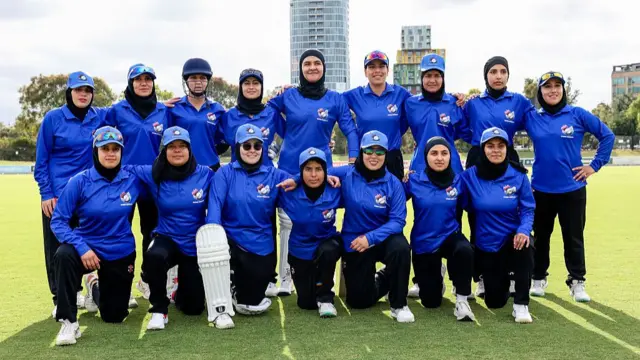
    A group of women in cricket gear and headscarves are pictured on a cricket pitch.Image source, Getty Images
    Image caption,

    Afghanistan Women's XI players pose for a team photo in Melbourne in January 2025

    A month earlier, it was announced that an Afghanistan women's cricket refugee team based would have their funding extended under a combined programme from cricket boards in England, Australia and India, plus the International Cricket Council (ICC).

    Since settling in Australia, where they now live and train, Afghanistan's women's players have repeatedly called on the ICC to recognise them once again as an international team and commit to long-term funding.

  13. 'I want to hear my own voice again'published at 11:28 BST

    A blue banner with the words "Zuhal, 32. Former journalist from central province".
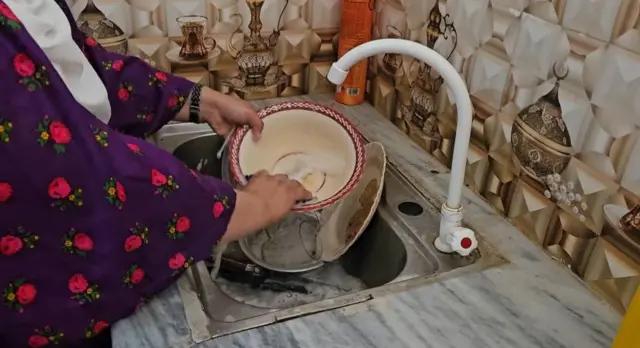
    A woman washing up a bowl in a sink - her face is not shown

    Despite all these hardships, I have not completely lost my dreams. Maybe today I cannot work, like I used to, but I still have the same passion and motivation in my heart.

    I still want to work again, learn, be present in society and feel that I make decisions for my own life. I don’t want my whole life to be limited to the four walls of my house.

    I want to feel that my abilities and talents are valuable again. I want to wake up in the morning with excitement and get ready to do what I love. I want to hear my own voice again and know that I can be useful to society.

    These five years were not just five years of my life for me. They were years when a part of my youth, work opportunities, social experiences and many of my dreams stopped.

    However, I still hope that this is not the end of my story. I believe that if one day a second chance is provided for women, I can start again.

    Maybe the path back will be difficult. Maybe I will have to start from scratch but I am willing to try again.

  14. Has the Taliban successfully enforced a ban on opium cultivation?published at 11:16 BST

    Yogita Limaye
    Afghanistan correspondent

    Prior to the Taliban supreme leader’s diktat in 2022 banning the cultivation of opium poppy, Afghanistan used to produce more than 80% of the world’s opium.

    In 2023, after the ban was implemented, cultivation fell by 95% according to the United Nations.

    We travelled to Helmand and Kandahar, which at the time were some of the biggest producers of opium, to find that the ban had been strictly enforced. We were also given access to a patrol in the Nangarhar province, where Taliban men slashed poppy crops.

    Media caption,

    Taliban razing an opium poppy field to the ground.

    Three years since the ban, the UN says the overall production of opium poppy still remains a fraction of what it was in 2022.

    While there have been instances of violent skirmishes between the Taliban and locals over the ban in areas like the north-eastern province of Badakhshan, the authorities appear to have been largely successful in enforcing the diktat.

    However, the UN has found that the production and trafficking of synthetic drugs, especially methamphetamine, has been increasing since the ban.

  15. 'They took me away in a vehicle and threw a blanket over me'published at 11:00 BST

    A blue banner with the words "Shaima. Flogged by Taliban - age & region held for security reasons".

    For the first time since the Taliban's reintroduction of public lashings, the BBC Afghan Forensic team has exclusively spoken to women about their experiences of being publicly punished.

    For security reasons their names have been changed and the dates and locations of the incidents have been withheld.

    Some audiences may find these accounts distressing.

    It was 12 noon on a Friday when seven or eight people came to our house. Without knocking, they opened the door and entered.

    My children were terrified. Even now, when I remember that terrible day, my whole body trembles.

    During the struggle, my headscarf fell off. Before I even had a chance to cover myself properly, they took me away in a vehicle and threw a blanket over me.

    About an hour later, they brought me a full-body veil, which I put on.

    Before they publicly put me on trial, they beat me severely and pulled out my hair.

    They brought a paper and forced me to confess that: “Yes, I am an apostate woman. I am collaborating with infidels and have spoken with unrelated men.”

  16. Analysis

    For many Afghans there’s little cause for celebrationpublished at 10:41 BST

    Lyse Doucet
    Chief international correspondent, in Kabul

    Five years ago, Kabul was plunged into chaos as Taliban fighters swept into this city.

    Today, the capital is festooned with their white flags and banners as they celebrate their victory.

    They’re oozing confidence, and in control.

    But they’re still under international sanctions, foreign assets are still frozen, and only one country, Russia, has formally recognised their rule.

    Media caption,

    Hunger, women's rights and the economy: Lyse Doucet on life under the Taliban

    Their chief spokesman Zabihullah Mujahid told us in an interview of their relations with regional and Islamic countries; he accused the West of treating the Taliban as if they were still at war.

    Afghanistan is more peaceful now – the Taliban is no longer attacking and foreign forces are gone. But millions of Afghans are finding it hard to make ends meet.

    We saw in villages outside Kabul the ravages of drought, how foreign aid is drying up.

    Harsh Taliban edicts are erasing women and girls from public life. Girls can’t go to school beyond grade six, women can’t go to university, and can’t do many jobs. For many Afghans, there’s little cause for celebration on this anniversary.

  17. 'Today becoming a pilot feels almost impossible for me'published at 10:28 BST

    A blue banner with the words "Shakiba, 18. Jewellery maker in Kabul".

    When schools were closed to girls I did not want to give up.

    I joined an online school and continued my education. Despite all the difficulties, I have recently completed my school education online.

    For some people, finishing school might seem like an ordinary achievement but for me it is a very important victory, because I had to continue studying while carrying the sadness of not knowing what my future would look like.

    Since I was a child I dreamed of becoming a pilot.

    Whenever I looked at the sky I imagined myself flying an airplane and seeing the world from above.

    I wanted to fly freely and experience a world without limits.

    But today becoming a pilot feels almost impossible for me, because I am a girl living in Afghanistan.

  18. Analysis

    The stark reality of Afghanistan's hunger crisispublished at 10:10 BST

    Yogita Limaye
    Afghanistan correspondent

    This post contains distressing details.

    Afghanistan is facing one of the world’s most severe hunger crises in the world. It is seeing record levels of hunger and malnutrition.

    3.7 million children are expected to suffer from acute malnutrition this year, according to the United Nations.

    This is a crisis caused by a swirl of factors - staggering aid cuts, the Taliban government’s policies, natural disasters such as drought and floods, as well as the return of millions of Afghans from Iran and Pakistan.

    Over the years we have witnessed the humanitarian situation worsening. Families in remote areas have told us they have been forced to make unimaginable choices – even selling their daughters into marriage so that they can buy food for their other children.

    Media caption,

    The BBC's Yogita Limaye speaks to Afghan fathers forced to make impossible choices

    Mothers have told us they give their babies sedatives, and in some cases, even antidepressants, so that they sleep despite being hungry.

    In hospitals, we have witnessed first-hand a surge in the rate of newborn deaths, of malnourished babies born to malnourished mothers.

  19. A jewellery maker, dental assistant and former journalist share their storiespublished at 09:50 BST

    Rachel Flynn
    Live reporter

    It is early afternoon now in Afghanistan and we have been hearing from women across the country about their lives under the ultra-conservative Taliban rulers.

    The BBC is one of the few media organisations that has consistently had access to the country since the Taliban re-gained control in 2021 - two decades after being removed from power by a US-led military coalition. Our Afghanistan correspondent Yogita Limaye has been explaining what it's like to be a foreign woman reporting from the country.

    We've also been hearing from former journalist, Zuhal, 32, who says when the Taliban retook control "it was as if all the hopes and dreams that I had worked for for years were suddenly buried under the ground".

    Shakiba, an 18-year-old jewellery maker, tells the BBC it was "the worst and most painful day of [her] life".

    Ela, a dental assistant from Kabul province, says "challenges go beyond restrictions on women’s education" - read more about how her life has changed.

    We'll bring you more stories from women in Afghanistan throughout the day.

  20. 'I was sentenced to 39 lashes and spent more than nine months in prison'published at 09:31 BST

    A blue banner with the words "Manizha. Flogged by Taliban - age & region held for security reasons".

    For the first time since the Taliban's reintroduction of public lashings, the BBC Afghan Forensic team has exclusively spoken to women about their experiences of being publicly punished.

    For security reasons their names have been changed and the dates and locations of the incidents have been withheld.

    Some audiences may find these accounts distressing.

    We were alone in a car when two men from the local command office approached us and asked what we were doing, what our relationship was, and where we were going.

    He was from one village and I was from another. Since our villages were far apart, they questioned us extensively. On the way to the command office, they kept calling me a bad woman and a prostitute.

    They took us to the command office and then referred us to the court of appeals. I was sentenced to 39 lashes and spent more than nine months in prison.

    In prison, I experienced things that I have never even told my mother about, and I still cannot bring myself to speak of them.

    I was deeply humiliated.

    Taliban government officials have consistently strongly denied allegations of mistreatment of female prisoners and have emphasised that accused individuals are dealt with in accordance with the laws of Islamic Sharia, and that women’s prisons are administered by women.