Summary

  1. Peace discussions called off as Trump says Iran can 'call' if they want to talkpublished at 09:25 BST 27 April
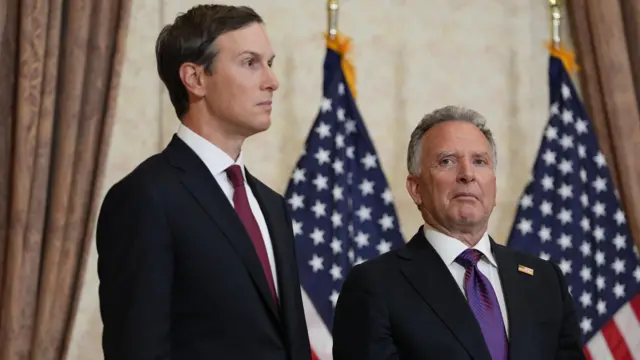
    Jared Kushner and Steve Witkoff stand in suits next to each otherImage source, Reuters
    Image caption,

    Jared Kushner (L) and Steve Witkoff (R) had planned to travel to Islamabad for peace talks before their trip was cancelled

    Talks between the US and Iran failed to materialise over the weekend, after President Donald Trump cancelled a planned trip by US officials to Pakistan.

    Shortly after Tehran's delegation had left Islamabad, Trump announced on Saturday that special envoy Steve Witkoff and Jared Kushner would be wasting "too much time" by taking a flight to Pakistan's capital.

    Iranian Foreign Minister Abbas Araghchi held talks with mediator Pakistan over the weekend, saying afterwards he had shared Iran's position on ending the war but was yet to see whether the US was "truly serious about diplomacy".

    "If they want to talk, all they have to do is call," Trump said on Saturday. He suggested the US has "all the cards" while in Iran "there is tremendous infighting and confusion within their 'leadership'".
  2. Araghchi blames US's demands for talks failure as he lands in Russiapublished at 08:55 BST 27 April

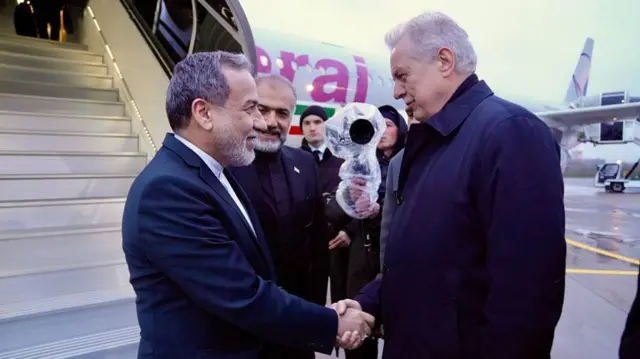
    Abbas Aragchi shakes hands with official next to a planeImage source, Iranian Foreign Ministry/Getty Images
    Image caption,

    Images appeared to show Araghchi landing in Russia for talks earlier today

    Iranian Foreign Minister Abbas Araghchi says the US’s excessive demands have caused peace negotiations to fail in Islamabad, in comments to local reporters after arriving in Russia.

    Touching down in St Petersburg, Araghchi says he will consult with Russian allies about the war in the Middle East, in an interview in Persian and shared on his Telegram channel.

    As we’ve been reporting, Araghchi's arrival in Russia comes after talks with mediators in Islamabad. He told reporters that the discussions addressed the conditions under which the negotiations can continue.

    The foreign minister also mentioned the ongoing Iranian closure of the Strait of Hormuz. He said safe passage through the crucial waterway remains a global issue and calls for neighbours including Oman to work closely on their mutual interest in the strait.

    Araghchi suggested that there is a lot of common ground between Iran and Oman, and adds that agreement has been reached for further talks on the strait between the two.

  3. Oil prices continue to rise as Strait of Hormuz remains restrictedpublished at 08:34 BST 27 April

    Emer Moreau
    Business reporter

    Oil prices have continued to rise as peace talks stalled and the Strait of Hormuz remains effectively closed.

    Brent crude, the global benchmark, was trading at $107.50 (£79.45) a barrel first thing on Monday.

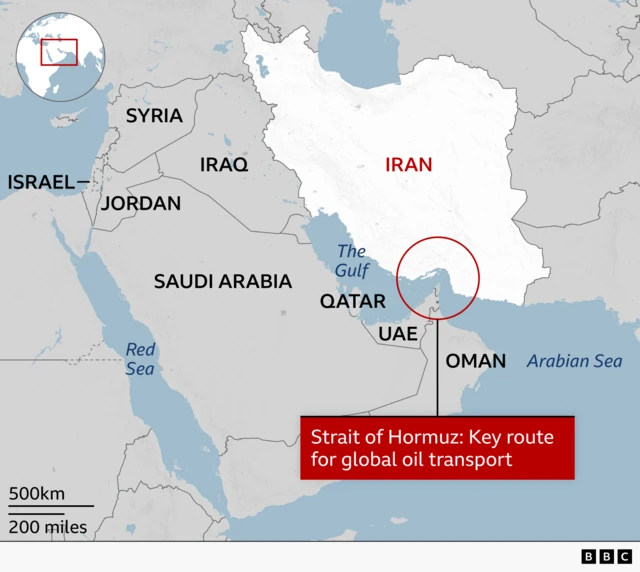
    Around a fifth of the world's crude oil and liquefied natural gas (LNG) usually passes through the Strait of Hormuz.

  4. Seafarers stuck in strait with 'no certainty as to when they'll return home', trade body sayspublished at 08:07 BST 27 April

    Around 2,400 seafarers remain stuck on over 105 tankers in the closed Strait of Hormuz, according to a trade association for tanker firms.

    Iran has said the key shipping route, through which about 20% of the world's oil and liquefied natural gas (LNG) usually passes, cannot be reopened due to "blatant violations of the ceasefire" by the US and Israel.

    Speaking to BBC Radio 4's Today programme, managing director of tanker trade association Intertanko Tim Wilkins describes how this closure has resulted in seafarers becoming stranded off the coast of Iran.

    Wilkins explains there is a "huge amount of anxiety, stress, and fatigue on board” as crews must manage basic supplies including food and water and practical tasks like garbage removal.

    "Many are stuck on board with no certainty as to when they'll be able to return home," he adds.

    Despite a ceasefire agreement between Iran and the US, clashes have continued over the waterways in the region.

    Iran last week announced that it had seized two cargo ships in the strait for "inspection", while other vessels have reported coming under attack as they attempted to navigate the strait.

    Meanwhile, the US has intercepted multiple ships after imposing a blockade on maritime traffic entering and leaving Iranian ports on 13 April.

    Map showing where the Strait of Hormuz is in the Gulf of Oman, a key route for global oil transport. The strait lies between Iran and the peninsula of the United Arab Emirates and Oman. The map also shows countries in the wider Middle East region including Saudi Arabia, Iraq, Jordan and Israel
  5. Israeli strikes kill 14 in Lebanon amid ongoing ceasefire, health ministry sayspublished at 07:56 BST 27 April

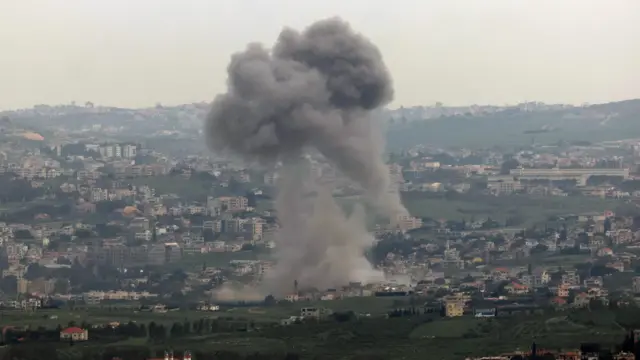
    A wide shot of smoke rising from across the Israel border into southern LebanonImage source, EPA/Shutterstock
    Image caption,

    Smoke could be seen rising in southern Israel on Sunday amid Israeli military operations in the region

    Strikes between Hezbollah and Israel in Lebanon have continued over the weekend, amid the precarious ceasefire.

    The ceasefire deal took effect on 16 April, and has since been extended by three weeks.

    Lebanon's Ministry of Health says Israeli strikes on the country on Sunday killed 14 people, including two children and two women, and injured 37.

    Evacuation warnings issued in southern Lebanon by the Israeli military were followed by aerial strikes on sites the Israel Defense Forces (IDF) claimed were used "to advance attacks against IDF soldiers".

    In a separate update, the Israeli military says a 19-year-old IDF soldier had been killed and six others injured by a Hezbollah drone attack in Lebanon.

  6. Iranian foreign minister arrives in Russia as peace talks show little progresspublished at 07:26 BST 27 April

    Adam Goldsmith
    Live reporter

    Aragchi wears a dark suit and shakes hands with officialsImage source, TELEGRAM/REUTERS
    Image caption,

    Images appeared to show Araghchi shaking hands with officials as he arrived in St Petersburg

    We’re resuming our live coverage as Iranian Foreign Minister Abbas Araghchi has arrived in Russia, following talks with other nations over the weekend.

    He is set to meet Russian President Vladimir Putin, the BBC's US partner CBS News reports.

    Araghchi's visit comes after a trip to Oman, where he says talks focused on "ways to ensure safe transit that is to benefit of all dear neighbours and the world" in the Strait of Hormuz.

    Over the weekend, the foreign minister also said he had a “very fruitful” visit to Islamabad, where he “shared Iran's position concerning workable framework to permanently end the war on Iran”.

    “Have yet to see if the US is truly serious about diplomacy,” he wrote on social media on Saturday.

    Araghchi’s comments were followed by news that Donald Trump had cancelled plans for US envoys Steve Witkoff and Jared Kushner to visit Islamabad for peace discussions with Iran.

    Both sides remain locked in a standoff over the Strait of Hormuz despite Trump's extension of a ceasefire that had been due to expire on 22 April to allow talks to continue.

    Meanwhile in Lebanon, Israel and Hezbollah continued to trade strikes amid a precarious ceasefire.

    Lebanon’s health ministry says Israeli strikes on the country on Sunday killed 14 people, including two children and two women, and injured 37.

    The Israeli military says a 19-year-old soldier had been killed and six others injured by a Hezbollah drone attack in Lebanon.